Pinitol.
A sweet-tasting cyclitol from carob and soy that your body converts to D-chiro-inositol, one of the messengers involved in normal insulin signalling.
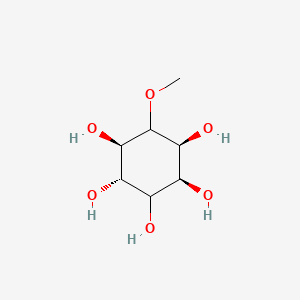 Compound
- Category
- Compound
What Pinitol is, and what it does.
- Does it work
- Suits people supporting healthy glucose metabolism who already look at inositols. Also of interest to anyone eating a lot of carob, which is where most of it comes from.
- How much to take
- No daily amount is on record for pinitol. Start from your label, and check whether it lists pure D-pinitol or carob extract with the pinitol counted inside it.
- Time to feel it
- Plasma levels rise within hours of a single dose, which shows it is absorbed. Any effect on glucose handling reads out on a meter or a panel across weeks.
- The first dose
- Day one is quiet. Absorption happens the same day and shows up in blood, while glucose readings move over a longer stretch than a single day.
- With regular use
- Weeks of daily use is where inositol work is measured, with changes appearing in fasting glucose and insulin numbers rather than as a feeling.
- How well tolerated
- Generally well tolerated, and it's a normal part of carob and legumes. If you take glucose-lowering medication, talk to your doctor first, since the effects can add up.
- How it feels
- Mildly sweet on the tongue and otherwise neutral. There's no lift and no crash to it, and what it does shows up on a glucose reading.
- The overlooked benefit
- Plants make it to survive drought, and humans barely burn it for fuel. Most of it leaves unchanged in urine, so it lends sweetness without contributing energy.
The proof, claim by claim.
What these words mean
These words describe the research, not the molecule's worth. Research strength is how much work stands behind one claim, and it is never a product score.
- Healthy glucose metabolismRandomised trial
- Insulin signalling through inositol phosphoglycan mediatorsNarrative review
3 more claims
- Intact oral absorption and plasma appearanceRandomised trial
- Body composition support in active peopleRandomised trial
- Osmolyte function in drought-stressed plantsNarrative review
Why these belong in the same formula, 10 pairings
Why these belong in the same formula. Each row says what the basis is, from settled biochemistry through to a trial that measured the pair.
Pinitol is 3-O-methyl-D-chiro-inositol, and demethylation in the body releases D-chiro-inositol, so the two sit in a direct precursor relationship. Myo-inositol is separately converted to D-chiro-inositol by an epimerase, meaning both routes feed the same downstream pool. The ratio between the two isomers is tissue specific and is not something a supplement can be assumed to set correctly, which is why loading one heavily is not obviously better than balancing them.
Inositol monophosphatase and the kinases that phosphorylate inositols are magnesium-dependent, and inositol monophosphatase is the enzyme lithium famously inhibits. Magnesium status therefore sits underneath inositol phosphate turnover generally. This is background enzymology rather than a reason to expect a combination effect.
Chromium and pinitol appear together in blood sugar formulas because both are proposed to act on insulin signalling, though through different proposed routes. Neither has a settled effect size in people, and the pinitol trials disagree with each other. Anyone using such a formula while already managing blood sugar with medication should watch their readings rather than assume nothing is happening.
Berberine lowers post-meal glucose in human trials, and a single acute dose of pinitol reduced post-load glucose in one study while two other trials failed to detect any effect on insulin-mediated glucose disposal. Combining them stacks two agents aimed at the same variable. That matters most for anyone already on glucose-lowering medication, where the additive direction is the relevant one to flag.
Gymnema is a standard component of blood sugar blends and is often paired with inositol-family ingredients. The combination has not been studied, so the pairing is formulation convention. The practical point stands regardless: two agents pointed at the same reading should be introduced one at a time.
Cinnamon extract and pinitol occupy the same shelf and the same product blends. Neither has an effect size large enough to be relied upon, and the combination has not been tested. Cassia cinnamon also carries coumarin, which is its own reason to check the source.
Alpha-lipoic acid is used for the same purpose and has its own modest human literature on glucose handling. The combination is formulation practice, not a tested pair. As with any stack aimed at one reading, the additive direction is what to watch for.
Mulberry deoxynojirimycin slows carbohydrate breakdown in the gut while pinitol is proposed to act after absorption on insulin signalling, so the two would hit different parts of the same curve. That logic is why they get blended. It has not been demonstrated in a trial of the combination.
Pinitol has been co-ingested with creatine in a small number of human trials on the reasoning that it might affect creatine uptake into muscle, and it appears in some commercial creatine blends for that reason. The findings are limited and the studies are small. This is the origin story of a formulation habit rather than a settled result.
The picolinate salt is the form of chromium most often blended with inositol-family ingredients in commercial products. The pairing is a formulation choice. Anything said about the combination should be read as marketing arrangement rather than as tested pharmacology.
Nothing specific on file for Pinitol. Match the label to the daily amount above, and tell your doctor what you take.
Not medical advice. Show the label to your pharmacist.What Pinitol actually does.
It is a sugar-like ring molecule plants make to survive dry spells, and carob pods and soy are the richest food sources.
3 more mechanisms
Once inside you, it loses a methyl group and becomes a compound involved in how insulin passes its message along.
High blood sugar competes with inositol for the same doorway into cells, so less gets in when glucose is high.
The body makes one inositol from the other, and different organs keep different balances of the two.
Where Pinitol comes from.
It comes from carob pods and soybeans, which store it to cope with drought. Making the pure version means washing it out with water, stripping out the sugars and colour, and crystallising what is left. The cheaper version is just concentrated carob with the pinitol counted.
What this route gives you
Made from a plant. What ends up in the capsule tracks the harvest, so batch testing and a stated marker matter more here than with a made molecule.
6 steps on record
Ceratonia siliqua pods from the Mediterranean, or soy processing streams, both of which accumulate pinitol as a stress osmolyte
Pinitol is freely water soluble and comes out readily, along with sugars, tannins and other cyclitols
Sugars and polyphenols removed by resin treatment and activated carbon, which is what separates an isolate from a crude extract
Concentrated liquor crystallised to yield the pure cyclitol, recrystallised where high purity is specified
Extracts declared as a percentage of pinitol, isolates as a purity figure, with other cyclitols as the relevant impurities
Free-flowing powder for capsules and drink mixes, or a spray-dried carob extract carrying the accompanying pod constituents
Getting Pinitol from food.
The whole-food sources on file. A supplement closes the gap, it does not replace dinner.
A gram-for-gram figure (how much of each you would eat to match a dose) will appear here once it is sourced and reviewed. This page will not print a number it cannot cite.
The forms it comes in.
4 more forms
The essence, in one line each.
- A single 6.0g dose of pinitol from a food ingredient reduced post-load glucose and circulating insulin in healthy adults, but lower doses of 2.5g and 4.0g did not.Randomised trial. Hernández-Mijares A et al., 2013 (Food Chemistry). PMID 23790912 ↗
7 more findings
- In a trial with 15 older, nondiabetic adults, a single dose of pinitol raised its own levels in the blood but did not detectably change whole-body glucose tolerance or the activation of insulin signalling proteins in muscle.Randomised crossover trial. Stull AJ et al., 2009 (Hormone and Metabolic Research). PMID 19221977 ↗
- Pinitol supplementation did not produce a detectable change in insulin-mediated glucose metabolism or in muscle insulin receptor content in older adults without a diagnosed blood-sugar condition.Randomised trial. Campbell WW et al., 2004 (The Journal of Nutrition). PMID 15514265 ↗
- In a 12-week randomised trial in 90 adults with a diagnosed condition of fat accumulation in the liver, pinitol was found to reduce markers of oxidative stress and fatty acid accumulation.Randomised trial, in subjects with non-alcoholic fatty liver disease. Lee E et al., 2019 (The Journal of Nutritional Biochemistry). PMID 31030165 ↗
- A review positions D-pinitol as the constituent most often credited for carob's reported effects on glucose handling and energy balance.Narrative review. Torres-Oteros D et al., 2026 (Nutrients). PMID 42123959 ↗
- D-pinitol acted on a defined signalling axis and restored mitochondrial measures in a model of kidney cell ageing.Animal study. Yin X et al., 2026 (Biomedicines). PMID 42193415 ↗
- In adults with a diagnosed difficulty processing sugar, a carob-pod-derived sweetener taken for six weeks increased a protein involved in insulin secretion by 1.83-fold compared to a sucrose drink, an effect that was not seen in healthy volunteers.Randomised trial. Lambert C et al., 2018 (Nutrients). PMID 29495516 ↗
- A review of bioactive dietary components lists pinitol among compounds proposed to support muscle and metabolic measures in older adults.Narrative review. Elvina L et al., 2025 (Nutrients). PMID 41373947 ↗
Chosen from the 10 we read for Pinitol.
The studies, linked.
4 sources behind our Pinitol verdict, every one linked to PubMed, the journal or ClinicalTrials.gov.
- Clinical trialA Randomized, Double-blind, Placebo-controlled Study on the Influence of Pinitol on Carbohydrate, Lipid and Inflammatory Parameters, Endothelial Function and Oxidative Stress in Diabetic, Impaired and Normal Fasting Glucose SubjectsClinicalTrials.gov ↗120 participants, Completed
3 more linked trials
- Clinical trialA Single Site, Randomized, Double-blind, Placebo Controlled Trial of NIC5-15 in Subjects With Alzheimer's DiseaseClinicalTrials.gov ↗Phase 2, 30 participants, Completed
- Clinical trialEffects of Different Doses of Pinitol on Carbohydrate Metabolism Parameters in Healthy Subjects: a Randomized Cross-over Placebo-controlled StudyClinicalTrials.gov ↗30 participants, Completed
- Clinical trialDevelopment of NIC5-15 in the Treatment of Alzheimer's DiseaseClinicalTrials.gov ↗Phase 2, 15 participants, Completed
From clinical trials and PubMed, ranked by study type and citation weight, not cherry-picked.
FDA Disclaimer: These statements have not been evaluated by the Food and Drug Administration. This information is for educational purposes only and is not intended to diagnose, treat, cure, or prevent any disease. Consult your healthcare provider before starting any supplement regimen.