Procyanidol.
Grape seed and pine bark oligomers that support blood vessel tone and add antioxidant capacity to your day. Most of what circulates is what your gut bacteria make from them.
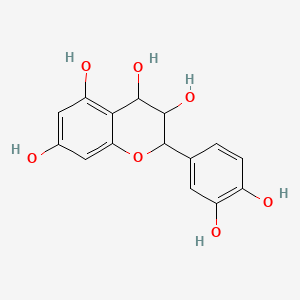 Compound
- Category
- Compound
What Procyanidol is, and what it does.
- Does it work
- Suits people looking after circulation and capillary strength, and anyone whose diet runs light on cocoa, red grapes and berries.
- How much to take
- No daily amount is on record for this one, so follow the serving on your label. Start with the lower serving, with water, and keep it in the same slot each day.
- Time to feel it
- Nothing sharp. Vessel and antioxidant measures move over weeks of daily use, and they read on measurements rather than as a sensation.
- The first dose
- Day one is quiet. A powder will taste dry and astringent, and the rest of the activity is happening in your gut where you cannot feel it.
- With regular use
- Weeks of daily use keep a steady supply of microbial phenolic metabolites in circulation, which is where the vessel and antioxidant work is measured.
- How well tolerated
- Generally well tolerated. It binds iron in the gut, so space it from an iron serving, and check with your doctor if you take blood thinners.
- How it feels
- Mostly nothing you can point to. The one honest sensation is astringency, that mouth-drying pucker you know from red wine or strong tea.
- The overlooked benefit
- Chain length matters more than the percentage on the label. Short dimers get absorbed, longer chains travel to the colon and become a different set of active metabolites.
The proof, claim by claim.
What these words mean
These words describe the research, not the molecule's worth. Research strength is how much work stands behind one claim, and it is never a product score.
- Blood pressure already in the normal rangeMeta-analysis
- Blood flow and endothelial functionMeta-analysis
4 more claims
- Leg vein and capillary comfortRandomised trial
- Antioxidant capacity in circulationRandomised trial
- Skin resilience through sun exposureRandomised trial
- Binding of non-haem iron in the gut lumenNarrative review
Why these belong in the same formula, 12 pairings
Why these belong in the same formula. Each row says what the basis is, from settled biochemistry through to a trial that measured the pair.
When a procyanidin donates a hydrogen atom it becomes a phenoxyl radical, and ascorbate can reduce that radical back to the parent phenol. This is well described in solution chemistry and is the reason the two are formulated together. Whether the same recycling proceeds at physiological concentrations in tissue is less settled than the chemistry alone suggests.
Alpha-tocopherol works inside the lipid membrane, procyanidins work at the aqueous side, and the tocopheroxyl radical can be reduced at that interface. The three way arrangement with ascorbate is the textbook antioxidant network. It is a mechanistic description, not a demonstrated clinical benefit of the combination.
Condensed tannins bind ferric iron tightly through their adjacent phenolic hydroxyls, forming complexes that are not absorbed. This is the same mechanism that makes tea with a meal lower iron uptake, and it is one of the better quantified food interactions there is. Anyone taking iron for low iron status should separate the two by a couple of hours.
Zinc is bound by polyphenol hydroxyl pairs in the gut lumen, reducing the fraction available to transporters. The effect is smaller than for iron but real, and it scales with the polyphenol dose rather than being a threshold effect. Separating doses solves it.
Condensed tannins precipitate proline-rich proteins on contact, which is why red wine feels drying. Co-dosing with a protein load ties up a fraction of the polyphenol before it reaches the gut wall. It also removes the astringency, so the same reaction that reduces free polyphenol makes the drink more palatable.
Procyanidins beyond the dimer stage are barely absorbed intact. The colonic microbiota ring-fission them into phenyl-gamma-valerolactones and smaller phenolic acids, which are what appears in plasma and urine. This makes the personal microbiota a real source of between-person variation in response.
Phytosome style complexes pair the polyphenol with a phospholipid to improve passage across the intestinal barrier. Plasma metabolite figures for phospholipid complexed flavonoid extracts run higher than for the plain extract in several pharmacokinetic comparisons. Higher plasma metabolites is a pharmacokinetic marker, not by itself a better outcome.
Both are handled by intestinal and hepatic UGT and SULT enzymes, and at high combined doses they compete for the same conjugation capacity. Competition for conjugation can raise the free fraction of either, which cuts both ways. Read it as a plausible pharmacokinetic interaction rather than a benefit.
Procyanidins reduce platelet aggregation in ex vivo work, and long-chain omega-3 fatty acids do the same by a separate route through eicosanoid balance. Stacked at high doses the effects are additive. This matters mainly for anyone already on antiplatelet or anticoagulant medication or approaching surgery.
Condensed tannins bind and inhibit carbohydrate and lipid digesting enzymes, which is the basis of interest in them around post-meal glucose. Taken alongside a supplemental digestive enzyme blend, they work directly against it. If both are in a regimen for different reasons, separate them.
Procyanidol is the compound class, grape seed extract is one of the materials that carries it. Stacking them is double counting the same molecules under two names. Count total oligomeric procyanidins across the formula, not each label separately.
Pine bark extract carries the same flavan-3-ol oligomer class, with a different monomer profile and a higher share of simple phenolic acids. Running both alongside a standalone procyanidol source triples the label count without tripling the distinct chemistry. Add up the oligomer content.
Nothing specific on file for Procyanidol. Match the label to the daily amount above, and tell your doctor what you take.
Not medical advice. Show the label to your pharmacist.What Procyanidol actually does.
They are chains built from the same building block found in cocoa and green tea. How long the chain is matters as much as how much there is.
3 more mechanisms
The short chains get in. The long ones do not, and travel on to the large intestine instead.
Your gut bacteria break the chains into smaller pieces. Those pieces are what actually ends up in your blood.
The same feature that mops up free radicals also grips onto minerals. You do not get one without the other.
Where Procyanidol comes from.
Mostly it comes from grape seeds left over from winemaking, or from pine bark. The plant material is soaked, the useful fraction is caught on a resin and washed off with alcohol, and the result is dried. The percentage on the label depends entirely on which test the supplier ran.
What this route gives you
Made from a plant. What ends up in the capsule tracks the harvest, so batch testing and a stated marker matter more here than with a made molecule.
5 steps on record
Grape seed comes as a by-product of winemaking, pine bark from maritime pine forestry in south-west France, cocoa from bean processing. Each source gives a distinct oligomer distribution.
Milled material is drawn with water or water and ethanol at controlled temperature. Higher temperature raises yield and degrades the longer oligomers, so this step is a direct trade between quantity and profile.
The crude extract is passed over a macroporous adsorption resin to strip sugars, acids and protein, then eluted with ethanol. This is where a 20 percent crude becomes a 95 percent extract.
Content is fixed by DMAC, vanillin, total phenolics or HPLC by degree of polymerisation. These methods disagree with each other, so the method has to travel with the number.
Dried to a free-flowing powder, sometimes complexed with phosphatidylcholine. The powder is hygroscopic and darkens on exposure to air and heat.
Getting Procyanidol from food.
The whole-food sources on file. A supplement closes the gap, it does not replace dinner.
A gram-for-gram figure (how much of each you would eat to match a dose) will appear here once it is sourced and reviewed. This page will not print a number it cannot cite.
The forms it comes in.
3 more forms
FDA Disclaimer: These statements have not been evaluated by the Food and Drug Administration. This information is for educational purposes only and is not intended to diagnose, treat, cure, or prevent any disease. Consult your healthcare provider before starting any supplement regimen.