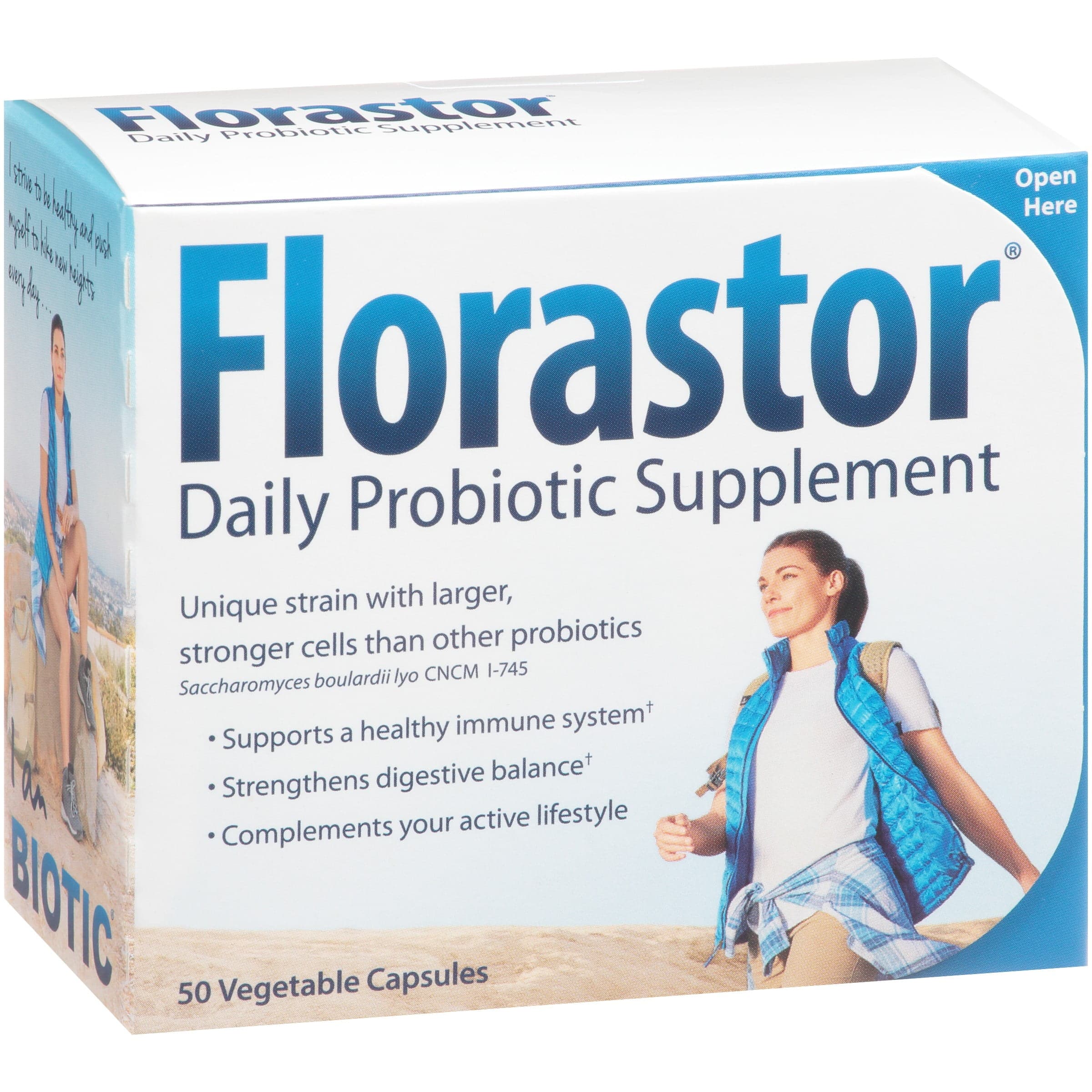
S. boulardii CNCM I-745.
Probiotic yeast. Antibiotic-resistant gut support. A named probiotic yeast strain that passes through the gut supporting normal regularity and digestive comfort. Antibacterial medicines do not affect it, because it is not a bacterium.
Reviewed March 2026
- Category
- Probiotic
- Also filed under
- DiarrheaC. diffTravelers
What S. boulardii CNCM I-745 is, and what it does.
- Does it work
- Suits people who want the exact strain behind most of the research, particularly around travel and through a course of antibiotics.
- How much to take
- We hold no dose figure for this strain, so follow the label. It is supplied by living cell count, and because it clears within days of stopping, daily intake is what matters.
- Time to feel it
- About three days to reach steady levels in the gut, with most reports of steadier regularity inside the first week of daily use.
- The first dose
- Little happens on day one beyond the first cells arriving. Numbers build over roughly three days, so day one is the start of that ramp.
- With regular use
- It does not colonise, so long-term use means keeping levels topped up. What it supports tracks intake and fades within days of stopping.
- How well tolerated
- Well tolerated by most people. Because it is a live yeast, anyone immunocompromised, with a central venous line, or with a yeast allergy should ask a clinician first.
- How it feels
- Nothing sharp. People describe a gut that behaves predictably, with occasional mild gas in the first couple of days.
- The overlooked benefit
- It is one of very few probiotics that can be taken at the same time as an antibacterial course rather than spaced away from it, because antibacterials do not touch a yeast.
1,000,000,000 to 10,000,000,000 CFU a day is where S. boulardii CNCM I-745 works.
Source: ISAPP consensus statement 2019 + Ford 2014 meta-analysis
The proof, claim by claim.
These words describe the research, not the molecule's worth. Research strength is how much work stands behind one claim, and it is never a product score.
Based on 50 human trials.
- bowel regularity during and after a course of antibioticsMeta-analysis
- digestive comfort while travellingRandomised trial
- gut microbial balanceRandomised trial
- brush-border disaccharidase activityAnimal study
- binding of gut bacteria to cell wall mannansIn vitro study
Questions people ask about S. boulardii CNCM I-745.
- When should I take it?
- Timing matters less than consistency. Pick a time that works for you and take it daily.
- How long until I notice something?
- GI effects can show within days. Immune and mood benefits take 4-8 weeks of consistent use.
- Do I need to refrigerate it?
- Depends on the brand. Shelf-stable formulas exist and work fine. But if it says refrigerate, do it. Dead bacteria don't help anyone.
- Should I take it with food?
- With or right before a meal, ideally. The food buffers stomach acid and gives the bacteria a better chance of surviving the trip down.
- Can I take it with other supplements?
- Usually fine. The main thing to watch is not doubling up on the same ingredient from different products. If you're on prescription meds, check with your pharmacist first.
Why these belong in the same formula. Each row says what the basis is, from settled biochemistry through to a trial that measured the pair.
The two occupy different niches: a yeast that is not affected by antibacterial pressure and a lactic acid bacterium that colonises transiently and lowers luminal pH. Combining them broadens the range of conditions under which at least one member stays viable.
S. boulardii is a yeast and does not compete with lactobacilli for the same substrates or adhesion sites. That non-overlap is why the two are routinely blended in one capsule.
Bifidobacteria ferment oligosaccharides into short-chain fatty acids in the colon while the yeast acts in the small intestine and secretes proteases at the mucosal surface. The two act at different sites of the same tract.
Glutamine is the preferred fuel of the enterocyte and supports normal tight junction protein expression. It works on the host side of the same barrier that the yeast supports from the lumen.
Zinc carnosine adheres to the mucosal surface and supports normal epithelial repair and mucus quality. That is complementary to a yeast acting in the lumen rather than on the epithelium.
Butyrate is the main energy source of the colonocyte and supports barrier integrity, and S. boulardii shifts the flora toward more butyrate-producing species. Supplying it directly covers the same endpoint from the other side.
A yeast and a lactic acid bacterium occupy different niches and are unaffected by each other's growth requirements. Multi-strain products combine them for that complementarity, and the yeast is unaffected by antibacterial agents that would suppress the bacterium. The combination itself has not been isolated as a variable in the located sources.
Bifidobacteria are strict colonisers of the colon while this yeast passes through transiently without colonising. The two therefore act at different points and on different timescales. Products pair them on that reasoning rather than on a head-to-head combination trial.
Caprylic acid disrupts fungal cell membranes and has documented activity against Saccharomyces and other yeasts in culture. Taken at the same time as a live yeast preparation it can reduce the number of viable organisms delivered. This is an anti-synergy worth flagging on a label, and separating the doses is the usual response.
Carvacrol and thymol permeabilise fungal membranes and inhibit Saccharomyces in vitro. A concentrated oregano oil taken alongside a live yeast preparation works against it rather than with it. The in vitro activity is well described. The extent of the effect in the gut has not been quantified in the located sources.
Allicin and its breakdown products inhibit yeast growth in culture through thiol-reactive chemistry. High-allicin garlic preparations therefore sit in tension with a live yeast product taken at the same moment. Ordinary culinary garlic is a different proposition from a concentrated extract.
Berberine shows broad antimicrobial activity in culture that includes yeasts as well as bacteria. Co-dosing with a live organism is at least theoretically self-defeating. The magnitude at oral intakes in the gut lumen has not been measured, so this is a caution rather than a finding.
Activated charcoal adsorbs a wide range of organic material in the gut lumen, and a live preparation taken in the same window is caught up in that non-selective binding. Standard practice is to separate any charcoal dose from other oral products by a couple of hours. The same logic applies to bentonite clay.
Clay binders act by surface adsorption and ion exchange and do not discriminate between what they bind. Dosing them together with a live yeast preparation reduces what actually reaches the intestine. Spacing the two is the practical answer.
Zinc is required for normal enterocyte turnover and tight-junction protein assembly, an established nutritional relationship. The yeast is studied for its own effects on barrier markers. The two act on the same tissue by different routes, and the combination has not been isolated in the located literature.
Lactoferrin sequesters free iron in the gut lumen and limits the growth of iron-dependent organisms while leaving the yeast unaffected, since Saccharomyces has its own iron-uptake systems. The pairing is a rational one on those grounds. No combination study was located.
Bovine colostrum supplies immunoglobulins and growth factors that act in the gut lumen, and the yeast is studied for effects on secretory IgA and barrier markers. The rationale is complementary rather than overlapping. Nothing in the located sources tests them together.
Soluble fibre is fermented by the bacterial community to short-chain fatty acids, which is a bacterial process rather than a yeast one, since this organism does not depend on those substrates. The pairing supports the resident bacteria alongside a transient yeast. Calling the fibre a prebiotic for the yeast itself would be wrong.
Inulin feeds bifidobacteria and other fructan-fermenting bacteria. The yeast is not a fructan fermenter and takes no direct benefit. What the pairing does is combine a transient organism with substrate for the resident community. That is a real formulation logic and not a synergy in the strict sense.
Psyllium forms a viscous gel that holds water and increases stool bulk, an established physical effect independent of any microbe. It is combined with live preparations for that complementary, non-microbial mechanism. The two do not interact chemically.
This yeast is studied for effects on brush-border disaccharidase activity, and supplemental lactase performs the same hydrolysis directly in the lumen. The two reach the same end point by different routes. The enzyme's own action is established. The yeast's effect on enzyme activity is a measured marker in the research literature.
The Saccharomyces cell wall is built largely from beta-1,3 and beta-1,6 glucans and mannoproteins, which are the same structures isolated and sold as yeast beta-glucan. A live preparation therefore delivers those wall polysaccharides along with the living organism. Isolated beta-glucan supplies the structure without the viability.
Vitamin D receptor signalling is part of normal intestinal immune regulation and epithelial barrier maintenance. That role is established for vitamin D on its own. No study pairing it with this yeast strain was located, so the row records a plausible complement rather than a measured one.
Nothing specific on file for S. boulardii CNCM I-745. Match the label to the daily amount above, and tell your doctor what you take.
Not medical advice. Show the label to your pharmacist.What S. boulardii CNCM I-745 actually does.
This one is a yeast, taxonomically a variety of Saccharomyces cerevisiae, so antibacterial agents don't touch whether it survives. Antifungal agents do.
It doesn't set up shop in your gut. Levels plateau within a few days of regular dosing and clear within days of stopping, so the effect only lasts while you keep taking it.
It grows happily at close to human body temperature, which sets it apart from ordinary baking and brewing yeasts and is the reason it survives the trip through you at all.
The cell wall is built from beta-1,3 and beta-1,6 glucans plus mannoproteins. Those surface mannans give some bacteria and their surface lectins something to stick to, so the yeast can carry them along through the gut.
Where S. boulardii CNCM I-745 comes from.
The yeast is grown in a tank on a sugar-based feed, spun down and washed, then freeze-dried with a protective sugar so the cells survive drying. The dried powder is counted for living cells and filled into capsules or sachets.
Built by fermentation, the same way vitamin B12 and many amino acids are made at scale. Controlled conditions, consistent output.
The strain is deposited in a national culture collection and every batch traces to a working bank drawn from that single deposit, which is what a strain designation guarantees.
Cells are grown in sequential fermenters on a carbohydrate medium, typically molasses or glucose with a nitrogen source, under controlled temperature, pH and aeration.
Centrifugation concentrates the cells into a cream and removes spent medium. Washing reduces residual substrate.
The cream is mixed with a protectant such as lactose or a similar sugar, frozen and dried under vacuum so that a viable fraction of cells survives dehydration.
CFU per gram is measured by plate count and the concentrate is diluted with a carrier to hit the declared count, with an overage set against expected shelf-life decline.
Filled at controlled low humidity and packaged with a moisture barrier, since water activity is the main determinant of survival on the shelf.
The identity of the cryoprotectant, the size of the manufacturing overage, and whether the declared count applies at manufacture or at expiry are often left off the label.
Getting S. boulardii CNCM I-745 from food.
The whole-food sources on file. A supplement closes the gap, it does not replace dinner.
A gram-for-gram figure (how much of each you would eat to match a dose) will appear here once it is sourced and reviewed. This page will not print a number it cannot cite.
The forms it comes in.
The essence, in one line each.
- In adults with sudden onset loose stools, the CNCM I-745 strain shortened the time taken for stool form and bowel frequency to return to normal compared with usual care.Randomised trial. Salazar-Parra et al., 2023 (BMC Gastroenterology). PMID 37400812 ↗
- In preterm infants, the CNCM I-745 strain improved feeding tolerance and shortened time to full feeds. Growth measures did not differ detectably between groups.Randomised trial. Xu et al., 2016 (Jornal de Pediatria). PMID 26946967 ↗
- In students supplemented ahead of examinations, the yeast shifted stress-related blood markers, while examination performance itself did not differ detectably from placebo.Randomised trial. Karbownik et al., 2020 (Nutrients). PMID 32438624 ↗
- In a prospective randomised study, co-administering the yeast with an antibacterial course was associated with smaller shifts in stool microbiota composition than the antibacterial course alone.Randomised trial. Kabbani et al., 2017 (Gut Microbes). PMID 27973989 ↗
- Pooling trials of a four-drug antibacterial regimen with and without the yeast, the authors report differences in reported digestive complaints during therapy.Meta-analysis. Chen et al., 2024 (Frontiers in Medicine). PMID 38695028 ↗
- A real-world registry analysis reports effectiveness and tolerability figures for the yeast used as an adjunct. Being observational, it describes association within routine practice and not causation.Cohort study. Nyssen et al., 2026 (Helicobacter). PMID 41923280 ↗
- The strain was associated with smaller functional shifts in the gut microbiome after antibacterial exposure in the model studied, measured as metagenomic function rather than a clinical endpoint.Animal study. Huang et al., 2025 (Gut Microbes). PMID 41200858 ↗
- The authors report that the strain acts together with small-intestinal microbiota to increase aryl hydrocarbon receptor ligand signalling, a mechanistic marker.Animal study. Kan et al., 2026 (Gut Microbes). PMID 42068034 ↗
- Cell-free supernatant from the strain was associated with improved gut barrier and inflammatory markers, indicating secreted factors rather than the live organism carried the measured effect.Animal study. Filipe Rosa et al., 2025 (Pharmaceuticals). PMID 40872558 ↗
- Short-term supplementation with a Bacillus strain and Saccharomyces boulardii was associated with immunomodulatory marker changes in the animals studied.Animal study. Santos et al., 2021 (Veterinary Immunology and Immunopathology). PMID 34029878 ↗
- A review summarising the clinical literature on this strain for stool-frequency and gut-microbiota measures, presenting the authors' reading of the evidence rather than new data.Narrative review. Nardone et al., 2026 (Microorganisms). PMID 41597668 ↗
- An umbrella meta-analysis of probiotics in children with acute digestive upset names Saccharomyces boulardii among the strains with supporting data on stool-frequency measures. The strain is mentioned within a broader analysis rather than tested on its own.Meta-analysis. Fan et al., 2026 (Journal of Integrative and Complementary Medicine). PMID 42080229 ↗
These are the studies our verdict leans on, chosen from the 182 we read for S. boulardii CNCM I-745. The full linked list is below.
The studies, linked.
1 source behind our S. boulardii CNCM I-745 verdict: peer-reviewed studies and registered clinical trials. Every one links straight to PubMed, the journal, or ClinicalTrials.gov. Read them yourself.
- Clinical trialEffects of Saccharomyces Boulardii CNCM I-745 on Intestinal Barrier FunctionClinicalTrials.gov ↗Early phase 1, 56 participants, Completed
Evidence surfaced via Semantic Scholar (Allen Institute for AI) and ClinicalTrials.gov. Ranked by study type and citation weight, not cherry-picked.
FDA Disclaimer: These statements have not been evaluated by the Food and Drug Administration. This information is for educational purposes only and is not intended to diagnose, treat, cure, or prevent any disease. Consult your healthcare provider before starting any supplement regimen.