Salicin.
Salicin is the willow bark compound your gut bacteria and liver convert into salicylic acid. It is used for everyday muscle and joint comfort after effort.
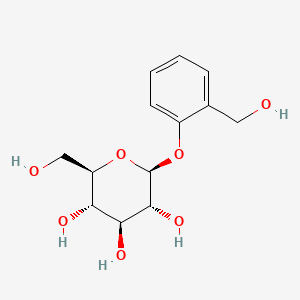 Compound
- Category
- Compound
What Salicin is, and what it does.
- Does it work
- It suits adults wanting a botanical route to everyday joint and muscle comfort. Not for children, and ask a clinician if you take anything that affects bleeding.
- How much to take
- No amount is on record here. Willow preparations are standardised to total salicin, and that label figure is what tells you what a serving delivers.
- Time to feel it
- Slower than a salicylate medicine, since gut bacteria have to free the active first. Think an hour or more, and it varies with your own microbiota.
- The first dose
- Some people notice easier movement within a few hours. For others day one is quiet, because conversion depends on the bacteria you happen to carry.
- With regular use
- Across weeks it is studied for ongoing back and joint comfort. Sustained salicylate exposure keeps the stomach caution live, so it suits defined courses.
- How well tolerated
- Salicylates lower the prostaglandins that protect the stomach lining, so irritation is the main issue. Avoid alongside blood thinners or aspirin sensitivity, and in children.
- How it feels
- Astringent and bitter as a tincture. When it lands, it is a quiet easing of stiffness rather than anything you would call a rush.
- The overlooked benefit
- Salicin does not acetylate cyclooxygenase the way aspirin does, so it leaves platelets working normally. It is a different exposure, not a herbal aspirin.
The proof, claim by claim.
What these words mean
These words describe the research, not the molecule's worth. Research strength is how much work stands behind one claim, and it is never a product score.
- Low back and joint comfort with standardised willow bark extractRandomised trial
- Conversion of salicin to salicylic acid in humansNarrative review
3 more claims
- Reversible cyclooxygenase inhibition by salicylic acidIn vitro study
- Gastric mucosal irritation from salicylate exposureNarrative review
- Muscle soreness after unaccustomed exerciseRandomised trial
Why these belong in the same formula, 11 pairings
Why these belong in the same formula. Each row says what the basis is, from settled biochemistry through to a trial that measured the pair.
Salicin is a glucoside and is inactive as swallowed. Gut bacteria have to cleave the sugar to release saligenin before the liver can oxidise it to salicylic acid. That dependence on microbial enzymes is a large part of why onset is slow and why the response varies between people, including after a course of antibiotics.
Salicylic acid derived from salicin inhibits cyclooxygenase reversibly, while long-chain omega-3 fatty acids alter the eicosanoid precursor pool. Both nudge platelet aggregation in the same direction. Combining them matters most for anyone already on an anticoagulant or facing a procedure.
Ginkgolide B antagonises platelet activating factor, a route entirely separate from cyclooxygenase inhibition. Stacked with a salicin source the two effects add rather than overlap. Bleeding case reports exist for ginkgo alone, so the combination deserves a flag on any label carrying both.
Garlic constituents reduce platelet aggregation in a dose-related way, independent of the cyclooxygenase route salicylate uses. The two together push further than either alone. Relevant mainly at concentrated extract doses rather than culinary intake.
Nattokinase acts on fibrin while salicylate acts on platelets, so the two hit different points of the same process. Combining them raises bleeding risk more than either does alone. Anyone on warfarin or a direct oral anticoagulant should not be stacking either without clinical oversight.
Gingerols show antiplatelet activity in laboratory and small human work, and ginger is a common partner in joint formulas that also carry willow bark. The additive effect is modest at culinary intake and more relevant at concentrated extract levels. Worth naming on a label that combines the two.
Curcuminoids and salicylate both act on prostaglandin production, though at different points in the cascade. Joint formulas routinely combine them, so the overlap is common in practice. The same overlap means the platelet effect adds up, which is the part that usually goes unmentioned.
Boswellic acids inhibit 5-lipoxygenase, a different branch of arachidonic acid metabolism from the one salicylate acts on. That non-overlap is the stated rationale for pairing them in joint comfort formulas. The mechanistic logic is sound. Head-to-head human data on the combination is thin.
Caffeine has been combined with salicylates in analgesic products for decades and improves the response to a given salicylate dose. Whether the same holds for the slow, low-level salicylate exposure from salicin has not been shown. Read the pairing as pharmaceutical precedent rather than evidence for the herbal form.
Salicylate exposure reduces protective prostaglandin production in the gastric mucosa, which is why salicylates irritate stomachs. Mucilage-bearing herbs are added to soften that. The mucilage also slows absorption of co-ingested material, so timing matters.
Alpha-tocopherol at doses well above nutritional intake reduces platelet adhesion and has been linked to increased bleeding in trial settings. Layered onto a salicylate source the effects add. Ordinary dietary or low-supplement intake is not the concern here. The high-dose products are.
Nothing specific on file for Salicin. Match the label to the daily amount above, and tell your doctor what you take.
Not medical advice. Show the label to your pharmacist.What Salicin actually does.
Salicin is a plant compound made of a sugar attached to a related molecule called saligenin, found in willow and poplar bark as a natural defense chemical.
3 more mechanisms
Salicin itself doesn't do anything until gut bacteria remove the sugar, and the liver then converts what's left into salicylic acid, which is the active form.
Salicylic acid blocks an inflammation-related enzyme temporarily, unlike aspirin, which locks onto it permanently, so it doesn't cause the same lasting effect on platelets.
Because it has to pass through gut bacteria and the liver first, salicin acts more slowly and lasts longer than aspirin, and how much you get depends on your own gut bacteria.
Where Salicin comes from.
Salicin is the compound in willow bark that the body turns into salicylic acid, the same family aspirin belongs to. It is not aspirin. Your gut bacteria have to cut the sugar off it first, then the liver finishes the job, which makes it slower and less predictable. The same cautions apply: stomach irritation, bleeding risk when stacked with anything else that thins blood, and it is not for children recovering from a virus.
What this route gives you
Made from a plant. What ends up in the capsule tracks the harvest, so batch testing and a stated marker matter more here than with a made molecule.
5 steps on record
Bark is stripped from young branches, where salicinoid content is highest. Populus species are a secondary source with a related profile
Dried, milled bark is extracted with water or ethanol and water. Higher ethanol pulls more of the accompanying flavonoid fraction
The extract is clarified, concentrated under vacuum, and dried onto a carrier for powder forms. Isolated salicin requires chromatographic separation
Quantified by liquid chromatography and expressed as total salicin, which converts the related salicinoids to a common basis
Most commercial material is a dry extract standardised to a stated salicin percentage, used alone or inside joint comfort formulas
The forms it comes in.
4 more forms
The essence, in one line each.
- A double-blind placebo-controlled trial of a multi-ingredient supplement reported reduced joint discomfort in community adults. Salicin-bearing willow bark was one component among several, so no effect can be assigned to it alone.Randomised trial. Nieman DC et al., 2013 (Nutrition Journal). PMID 24274358 ↗
3 more findings
- Sodium nitroprusside and vinasse increased salicin accumulation and shoot regeneration in Salix safsaf tissue culture, which speaks to sourcing rather than to any effect in people.In vitro study. Yousef RS et al., 2024 (3 Biotech). PMID 39310031 ↗
- Leaf beetles use tryptophan to detoxify the salicinoid defences of poplar, which illustrates that salicin is a plant defence compound and that specialised metabolic machinery is needed to handle it.Animal study. Peng X et al., 2025 (PNAS). PMID 41397128 ↗
- Wilting and additives changed fermentation characteristics and the metabolome of the ensiled material, with salicin appearing among the metabolites tracked.In vitro study. Di F et al., 2026 (BMC Microbiology). PMID 41519713 ↗
Chosen from the 4 we read for Salicin.
Problems people have reported.
Read this carefully. These are 125 voluntary, unverified reactions reported to the FDA (openFDA). The number mostly reflects how popular Salicin is, not how risky it is. A report is not proof Salicin caused anything. It is a signal of what to watch for, nothing more.
3 more reported effects
Source: openFDA adverse-event reports. Voluntary reporting, not an incidence rate.
FDA Disclaimer: These statements have not been evaluated by the Food and Drug Administration. This information is for educational purposes only and is not intended to diagnose, treat, cure, or prevent any disease. Consult your healthcare provider before starting any supplement regimen.