Scopoletin.
Scopoletin is a plant coumarin from noni fruit and chicory. In chemical assays it donates hydrogen to free radicals, so it's used as a named antioxidant constituent.
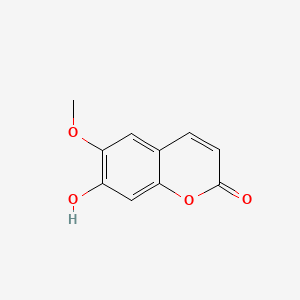 Compound
- Category
- Compound
What Scopoletin is, and what it does.
- Does it work
- Suits people who like a single named plant compound alongside a polyphenol-rich diet. Human outcome trials are thin, so it works as a supporting ingredient rather than a headline one.
- How much to take
- No human daily amount is on record for isolated scopoletin. Noni and chicory extracts are usually standardised to it, so the extract amount is what you actually measure.
- Time to feel it
- Nobody has measured a time course in people. Antioxidant chemistry of this kind shows up in laboratory measures rather than on a clock you could watch.
- The first dose
- Day one passes quietly. What happens is absorption and rapid conjugation in the gut wall and liver, which is chemistry you'd read on an assay rather than notice.
- With regular use
- Weeks of daily use with a standardised extract keep a steady low level of the conjugated compound circulating. Long-term human outcome data hasn't been collected yet.
- How well tolerated
- Well tolerated in the fruit and root extracts that carry it. If you take a blood thinner, check with your doctor first, since anything labelled coumarin deserves that conversation.
- How it feels
- There's no sensation attached to it. People take it inside a noni or chicory extract and judge the whole extract rather than this one molecule.
- The overlooked benefit
- The coumarin name worries people. This is a simple hydroxycoumarin, not the 4-hydroxycoumarin structure behind vitamin K antagonist drugs, so it isn't that chemistry at all.
The proof, claim by claim.
What these words mean
These words describe the research, not the molecule's worth. Research strength is how much work stands behind one claim, and it is never a product score.
- radical scavenging antioxidant activityIn vitro study
- marker compound used to standardise noni fruit extractsNarrative review
2 more claims
- signalling that supports a healthy inflammatory responseAnimal study
- conjugation to glucuronide and sulfate forms after an oral doseAnimal study
Why these belong in the same formula, 5 pairings
Why these belong in the same formula. Each row says what the basis is, from settled biochemistry through to a trial that measured the pair.
Catechol and hydroxy-substituted coumarins secreted by roots solubilise ferric iron by chelating it and shifting its redox state. That same chemistry means scopoletin taken alongside an iron salt can bind the metal in the gut lumen rather than leaving it free for uptake. Direction in humans has not been measured, so this is a formulation consideration and a spacing note, not a demonstrated absorption effect either way.
Once scopoletin donates an electron it becomes a phenoxyl radical, and ascorbate can reduce it back. The pair also interacts with the iron chemistry above, because ascorbate favours the ferrous form that coumarins release. The combination is standard antioxidant chemistry rather than a tested clinical pairing.
Scopoletin and quercetin are both glucuronidated and sulfated on their phenolic hydroxyls by UGT and SULT enzymes in the gut wall and liver. Co-dosing them at high amounts means each can slow the other's clearance by occupying the same enzymes. The practical consequence is that plasma levels of a polyphenol blend are not simply the sum of its parts. Size of the effect in people has not been quantified for this pair.
Scopoletin quenches radicals by donating a hydrogen from its phenolic hydroxyl. Dihydrolipoic acid works through thiol chemistry and regenerates other antioxidants in the network. Because they sit at different points, the two do not simply duplicate each other. No human study has tested the combination.
EGCG is a well-documented binder of non-heme iron in the gut. Scopoletin adds a second chelating structure to the same meal. For someone building iron status this stacking matters more than either compound alone, and the practical answer is spacing rather than avoidance. For someone not managing iron intake it is not a concern.
Nothing specific on file for Scopoletin. Match the label to the daily amount above, and tell your doctor what you take.
Not medical advice. Show the label to your pharmacist.What Scopoletin actually does.
Scopoletin is a simple plant compound from the coumarin family, found in noni fruit, chicory, some artemisia plants and quite a few others.
3 more mechanisms
In the plant it's mostly stored attached to a sugar molecule. enzymes need to remove that sugar to release the free form, which is the version that carries the antioxidant chemistry.
A specific hydroxyl group on the molecule lets it hand off a hydrogen atom to a free radical, which is the structural reason it shows antioxidant activity in chemistry lab tests.
Plants use this kind of compound at their roots to pull iron out of the soil. that's a plant nutrition mechanism, and it doesn't by itself tell us anything about how it might affect iron levels in a person.
Where Scopoletin comes from.
It is a coumarin that plants make, most famously noni fruit. You either pull it out of the plant and split off its sugar, or you build the same molecule in a reactor. Either route can be purified to the same compound, and what differs between products is the purity and what else is left alongside it.
What this route gives you
The same molecule is reached more than one way. Which route a given product used is a manufacturing choice, and the finished compound is the same either way.
6 steps on record
Extraction routes start from noni fruit, chicory root or Artemisia herb. The synthetic route starts from a substituted phenol.
In the extraction route, enzymatic or acid hydrolysis converts stored scopolin to free scopoletin. In the synthetic route, a Pechmann-type condensation builds the coumarin ring onto a methoxy-hydroxy phenol.
Aqueous ethanol or methanol recovers the coumarin fraction from the milled plant material.
Column chromatography separates scopoletin from other coumarins including esculetin, and recrystallisation raises purity for isolated material.
Content is quantified by high performance liquid chromatography with ultraviolet detection, usually against a reference standard.
Supplied either as an isolated crystalline powder or as a botanical extract carrying a stated scopoletin percentage.
Getting Scopoletin from food.
The whole-food sources on file. A supplement closes the gap, it does not replace dinner.
A gram-for-gram figure (how much of each you would eat to match a dose) will appear here once it is sourced and reviewed. This page will not print a number it cannot cite.
The forms it comes in.
2 more forms
The essence, in one line each.
- Scopoletin supplementation reduced markers of liver fat accumulation and inflammatory signalling in the animals studied.Animal study. Choi RY et al., 2017 (Phytotherapy Research). PMID 28921708 ↗
2 more findings
- Dietary scopoletin was associated with changes in antioxidant enzyme activity and meat quality measures in broilers.Animal study. Ha SH et al., 2021 (Foods). PMID 34209795 ↗
- Scopoletin altered inflammatory and oxidative stress markers in a reserpine-induced rodent model, with matching changes in behavioural readouts.Animal study. Qnais E et al., 2025 (Neuromolecular Medicine). PMID 40581693 ↗
Chosen from the 3 we read for Scopoletin.
FDA Disclaimer: These statements have not been evaluated by the Food and Drug Administration. This information is for educational purposes only and is not intended to diagnose, treat, cure, or prevent any disease. Consult your healthcare provider before starting any supplement regimen.