Sesquiterpenes.
A large family of fifteen-carbon plant aromatics behind the smell of chamomile, hops, ginger and black pepper. What one does depends entirely on which one it is.
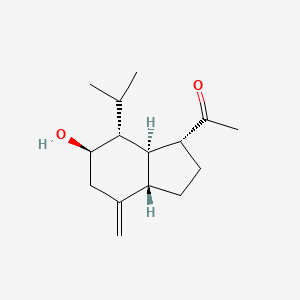 Compound
- Category
- Compound
What Sesquiterpenes is, and what it does.
- Does it work
- Useful when a product names the actual compound, say alpha-bisabolol or beta-caryophyllene. The class name alone tells you very little about what is inside.
- How much to take
- No dose figure is on record, and one number cannot cover hundreds of molecules. Start with the amount stated for the named compound in the product you have.
- Time to feel it
- Aroma and taste register immediately. Anything systemic depends on which compound, and it has not been mapped for the class as a whole.
- The first dose
- Mostly a sensory day: smell, warmth, a peppery or bitter note. Whether anything measurable shifts in 24 hours has not been studied class-wide.
- With regular use
- Nobody has measured weeks of daily intake of the class, because it is not one substance. Members like beta-caryophyllene each carry their own small literature.
- How well tolerated
- Concentrated oils can irritate. These hydrocarbons autoxidise in air and light into peroxides and epoxides, which is where most sensitisation from aged oils comes from.
- How it feels
- Warm, aromatic, sometimes sharply peppery. Concentrated oil on an empty stomach can feel harsh, so food helps.
- The overlooked benefit
- Plants make more of these after wounding and stress, so growing conditions, harvest timing and handling change how much ends up in the finished oil.
The proof, claim by claim.
What these words mean
These words describe the research, not the molecule's worth. Research strength is how much work stands behind one claim, and it is never a product score.
- Aroma and flavour of plant volatile fractionsNarrative review
- Antioxidant activity in laboratory systemsIn vitro study
3 more claims
- Inflammatory signalling in animal modelsAnimal study
- Skin sensitisation from oxidised fractionsNarrative review
- Antimicrobial activity of essential oil fractions in cultureIn vitro study
Why these belong in the same formula, 5 pairings
Why these belong in the same formula. Each row says what the basis is, from settled biochemistry through to a trial that measured the pair.
Sesquiterpenes are lipophilic hydrocarbons with poor water solubility, so they are dispersed in a lipid carrier for oral or topical delivery. Medium chain triglycerides dissolve them readily and keep them dispersed in a capsule or a dropper bottle. This is a delivery relationship rather than an added biological effect. The carrier does not change what the terpene does once absorbed.
Phospholipid emulsifiers let a volatile oil fraction disperse in an aqueous product instead of separating at the top. Lecithin is used for this in beverages, softgels and self-emulsifying systems carrying essential oil constituents. The relationship is physical. It affects dispersion and dose uniformity, not potency.
Sesquiterpene hydrocarbons oxidise over time into peroxides and other secondary products, which is why aged essential oils smell and behave differently from fresh ones. Tocopherols are added to the oil phase to slow that chain reaction. The benefit is to the material in the bottle rather than to the person taking it. Storage temperature and headspace matter as much as the antioxidant.
Ginger is one of the common dietary sources of sesquiterpene hydrocarbons, so pairing an isolated sesquiterpene fraction with ginger extract raises total intake of the same chemical class. Anyone stacking several volatile-oil botanicals is compounding a single exposure rather than adding independent ones. That is worth noting on a label for dose accounting. It says nothing about whether the higher total does more.
Peppermint oil is mostly monoterpene, and sesquiterpene fractions are frequently blended with it in the same softgel or enteric capsule. The pairing is a formulation habit driven by shared solubility and shared delivery constraints. Both classes can cause reflux or a warm sensation at higher volumes, so the combination compounds the tolerability question. There is no controlled work on the pair.
Nothing specific on file for Sesquiterpenes. Match the label to the daily amount above, and tell your doctor what you take.
Not medical advice. Show the label to your pharmacist.What Sesquiterpenes actually does.
Sesquiterpenes are a class of plant compounds built from three repeating building blocks, put together by a specific plant enzyme that folds a precursor molecule into the finished ring shape.
3 more mechanisms
Their precursor molecule is made through the same core cellular pathway that also produces sterols and coenzyme q, so it shares its supply chain with those other compounds.
A single plant enzyme can turn out several different related compounds from the same starting material, which is why a plant's essential oil usually contains a whole mix of related hydrocarbons rather than just one.
These compounds are fat-loving and evaporate easily, they dissolve into fats, evaporate from an open container, and are typically extracted using steam distillation or solvents rather than water-based methods.
Getting Sesquiterpenes from food.
The whole-food sources on file. A supplement closes the gap, it does not replace dinner.
A gram-for-gram figure (how much of each you would eat to match a dose) will appear here once it is sourced and reviewed. This page will not print a number it cannot cite.
The forms it comes in.
4 more forms
The essence, in one line each.
- The review catalogues sesquiterpene aryl esters among the characteristic bioactive metabolites produced by Armillaria species and describes the molecular basis of their formation.Narrative review. Duan Y et al., 2026 (Biology). PMID 42345810 ↗
1 more finding
- Sesquiterpene content in hop cones shifted with light supplementation regime, showing that growing conditions change the terpene profile of the harvested material.Narrative review. Neves CS et al., 2025 (Plants). PMID 41304667 ↗
Chosen from the 2 we read for Sesquiterpenes.
FDA Disclaimer: These statements have not been evaluated by the Food and Drug Administration. This information is for educational purposes only and is not intended to diagnose, treat, cure, or prevent any disease. Consult your healthcare provider before starting any supplement regimen.