Tyrosol.
Tyrosol is one of the phenols behind olive oil's peppery bite. It adds to the antioxidant load you take in from an olive rich way of eating.
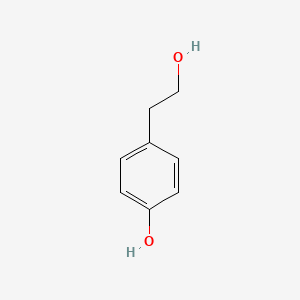 Compound
- Category
- Compound
What Tyrosol is, and what it does.
- Does it work
- It suits people building an olive polyphenol routine or eating little olive oil. If your kitchen already runs on extra virgin oil, you're taking it in with dinner.
- How much to take
- No daily amount is on record for isolated tyrosol. Start with what your standardised olive phenol extract declares, rather than a figure nobody has published.
- Time to feel it
- Nobody has measured a time to effect for tyrosol alone. Polyphenol intake generally registers in blood measures over weeks rather than in same day sensation.
- The first dose
- Day one is quiet. It's absorbed within hours and circulates mostly as sulfate and glucuronide conjugates, a laboratory observation rather than something you notice.
- With regular use
- Over weeks it feeds into the total olive phenol intake that has been tracked alongside markers of oxidative status. The change reads on a panel, not in how you feel.
- How well tolerated
- Well tolerated at the amounts food supplies. Concentrated extracts are less studied, so check with your clinician if you're pregnant, breastfeeding or on medication.
- How it feels
- Nothing subjective to report. In the oil it tastes bitter and peppery at the back of the throat, which is the sensory cue that phenols are present.
- The overlooked benefit
- Yeast makes it during alcoholic fermentation, so wine and beer carry it with no olive involved at all.
The proof, claim by claim.
What these words mean
These words describe the research, not the molecule's worth. Research strength is how much work stands behind one claim, and it is never a product score.
- Contribution to the antioxidant capacity of olive oilNarrative review
- Markers of oxidative status with olive phenol intakeRandomised trial
2 more claims
- Free radical scavenging in cell systemsIn vitro study
- Rapid sulfation and glucuronidation after absorptionNarrative review
Why these belong in the same formula, 10 pairings
Why these belong in the same formula. Each row says what the basis is, from settled biochemistry through to a trial that measured the pair.
Tyrosol carries a single phenolic hydroxyl and can be converted to the catechol hydroxytyrosol by hydroxylation, which is part of why the two rise and fall together after olive oil intake. Because they are almost never studied separately, most reported effects belong to the pair rather than to tyrosol alone. Hydroxytyrosol is the stronger radical scavenger of the two by virtue of the catechol group.
In olive fruit and leaf the phenols are stored mostly as secoiridoid esters. Ligstroside hydrolyses to give tyrosol and oleuropein gives hydroxytyrosol, and this hydrolysis proceeds during fruit ripening, oil storage and digestion. That is why free tyrosol content in an olive oil climbs as the oil ages while total phenol content falls.
Alpha-tocopherol and the olive phenols both interrupt lipid peroxidation chains, and phenolics can regenerate the tocopheroxyl radical back to tocopherol in model lipid systems. The pairing exists naturally in extra virgin olive oil rather than being a formulation invention. The chemistry is well characterised in vitro, with less direct measurement of the recycling step in people.
Ascorbate sits in the aqueous phase and can reduce phenoxyl radicals formed when a phenol quenches a radical, returning the phenol to its active form. Tyrosol is amphiphilic enough to sit at that interface. This is standard antioxidant network chemistry rather than a claim about a health outcome.
A substantial share of ingested olive secoiridoids reaches the colon intact, where bacteria release the free phenols and convert them further. Reviews of polyphenol and microbiota interaction place tyrosol inside that two-way relationship. What is described is a bidirectional interaction, not a demonstrated benefit of combining the two.
Tyrosol is amphiphilic, more water soluble than most olive phenols but still delivered in nature within an oil. A lipid vehicle mimics the matrix in which the human data on olive phenols was generated. Isolated tyrosol powder in water is a different exposure situation from the same amount inside an oil.
EPA and DHA carry many double bonds and oxidise readily both in the bottle and after absorption. Phenolic antioxidants co-formulated in the oil phase slow that oxidation. The rationale is formulation stability and lipid protection, which is a marker-level argument rather than an outcome-level one.
Ubiquinol works within membranes and lipoproteins where tyrosol and its relatives also partition. Regeneration relationships between lipid-phase antioxidants are established as a class behaviour. The specific tyrosol and ubiquinol pairing has not been characterised.
Squalene and the olive phenols travel together in olive oil and are both concentrated in olive pomace and vegetation water streams. The co-occurrence is a sourcing fact. It is not evidence of a combined biological effect.
Both are small phenols cleared rapidly by sulfation and glucuronidation in the gut wall and liver, and both circulate mainly as conjugates rather than as the free compound. Loading two such phenols together means competition for the same conjugating capacity, which can raise free levels of either. Whether that reaches a meaningful magnitude at supplement intakes has not been measured.
Nothing specific on file for Tyrosol. Match the label to the daily amount above, and tell your doctor what you take.
Not medical advice. Show the label to your pharmacist.What Tyrosol actually does.
Tyrosol is a simple phenolic compound found in olives, olive oil and wine. It has one phenolic group, which is the structural difference from hydroxytyrosol and the reason its direct antioxidant strength is lower.
3 more mechanisms
In olive tissue, tyrosol is mostly stored bound to another compound. Free tyrosol gets released as the fruit ripens, gets milled, the oil sits in storage, and during digestion, so free versus bound amounts shift over an oil's shelf life.
Once absorbed, tyrosol is quickly modified by the liver and circulates mostly as those modified forms rather than as the free compound. So effects measured on the free form in cell studies need care before assuming they apply the same way in the body.
Tyrosol dissolves in water better than most olive compounds. That's why it partitions between the oil and the watery byproduct during olive milling, and why that watery byproduct can be a source for recovering it.
Where Tyrosol comes from.
One of the phenol compounds that gives olive oil its slightly bitter, peppery edge. It also turns up in wine and beer, because yeast makes it during fermentation.
What this route gives you
The same molecule is reached more than one way. Which route a given product used is a manufacturing choice, and the finished compound is the same either way.
6 steps on record
Traditional sourcing uses Olea europaea fruit, leaf, pomace and vegetation water. The fermentation route instead starts from sugar or tyrosine fed to an engineered microorganism.
In plant material, enzymatic or acid hydrolysis of the secoiridoid ester releases free tyrosol. In fermentation, tyrosine is decarboxylated and oxidised through the Ehrlich pathway to the phenolic alcohol.
Because tyrosol is water tolerant, aqueous and subcritical water methods recover it well from pomace and vegetation water without organic solvent.
Membrane filtration and adsorbent resin concentrate the phenol fraction. Single-compound grades go on to chromatographic purification and crystallisation.
Content is assayed by HPLC, usually reported alongside hydroxytyrosol, since regulatory and label conventions in this category centre on hydroxytyrosol rather than tyrosol.
Reaches the consumer as olive oil, as a standardised olive phenol extract in capsules, or as a purified compound in defined-dose products.
Getting Tyrosol from food.
The whole-food sources on file. A supplement closes the gap, it does not replace dinner.
A gram-for-gram figure (how much of each you would eat to match a dose) will appear here once it is sourced and reviewed. This page will not print a number it cannot cite.
The forms it comes in.
4 more forms
The essence, in one line each.
- Pooled randomised trial data on oleuropein, hydroxytyrosol and tyrosol reporting effects on cardiometabolic risk markers, with the olive phenols assessed largely as a group.Meta-analysis. Frumuzachi O et al., 2025 (Critical Reviews in Food Science and Nutrition). PMID 39828996 ↗
5 more findings
- Reviews how hydroxytyrosol and tyrosol interact with gut microbiota and inflammatory signalling relevant to arterial plaque biology.Narrative review, in cells. Morvaridzadeh M et al., 2025 (Nutrients). PMID 41374074 ↗
- Reports that gut-microbiota-derived tyrosol reduced radiation-induced intestinal injury by acting on the SCD1 and monounsaturated fatty acid axis in the models used.Animal study. Jin X et al., 2026 (International Journal of Biological Sciences). PMID 41800257 ↗
- Characterises a subcritical water extract of olive pomace and reports effects on blood lipid measures in the animal model used.Animal study. Ochoa-Acosta A et al., 2026 (Molecules). PMID 41900093 ↗
- Describes systems metabolic engineering of Escherichia coli to produce hydroxytyrosol, a route that runs through tyrosol as an intermediate.In vitro study. Jiang W et al., 2026 (Applied and Environmental Microbiology). PMID 41995320 ↗
- Reports high-yield hydroxytyrosol production by metabolic engineering of Yarrowia lipolytica, giving a fermentation route to the olive phenol family.In vitro study. Chen B et al., 2026 (Synthetic and Systems Biotechnology). PMID 41766957 ↗
Chosen from the 8 we read for Tyrosol.
The studies, linked.
5 sources behind our Tyrosol verdict, every one linked to PubMed, the journal or ClinicalTrials.gov.
- Clinical trialThe Effects of Tyrosol and Creatine on Endurance, Strength, and Fatigue Resistance in Healthy Adults: A Randomized, Double-Blind, Placebo-Controlled TrialClinicalTrials.gov ↗50 participants, Completed
4 more linked trials
- Clinical trialEffect of Red Yeast Rice, Phytosterols and L-tyrosol on Lipid Profile and Endothelial Function: a Double-blind, Placebo-controlled, Randomized Clinical TrialClinicalTrials.gov ↗50 participants, Completed
- Clinical trialFoods Such as Virgin Olive Oil Rich in Phenolic Compounds, and Prebiotic Supplementation: Dietary Strategy to Tackle Sarcopenia in Early Elderly Subjects (FOOP-Sarc)ClinicalTrials.gov ↗39 participants, Completed
- Clinical trialA Single-center, Crossover, Randomized and Controlled Nutritional Intervention Clinical Trial. A Nutritional Intervention StudyClinicalTrials.gov ↗33 participants, Completed
- Clinical trialThe Effects of Tyrosol and Creatine on Exercise Performance and Cognition in Healthy Adults: A Randomized, Double-Blind, Placebo-Controlled TrialClinicalTrials.gov ↗60 participants, Recruiting
From clinical trials and PubMed, ranked by study type and citation weight, not cherry-picked.
Problems people have reported.
Read this carefully. These are 38 voluntary, unverified reactions reported to the FDA (openFDA). The number mostly reflects how popular Tyrosol is, not how risky it is. A report is not proof Tyrosol caused anything. It is a signal of what to watch for, nothing more.
3 more reported effects
Source: openFDA adverse-event reports. Voluntary reporting, not an incidence rate.
FDA Disclaimer: These statements have not been evaluated by the Food and Drug Administration. This information is for educational purposes only and is not intended to diagnose, treat, cure, or prevent any disease. Consult your healthcare provider before starting any supplement regimen.