
The people it speaks toFieldwork 2019
36.5% of US adults
aged 18 and over had pain in a hip, knee, or foot in the past 3 months, in the 2019 National Health Interview Survey.
CDC National Center for Health Statistics, 2020Chloride is the lead active here, studied most for cartilage and joint cushioning. Potassium is the most studied active here, with 16 human studies behind it, each one cited. Each serving carries 1,500 mg of Glucosamine Sulfate 2KCI, inside the range the published research used. Who it fits: for everyone, adults.
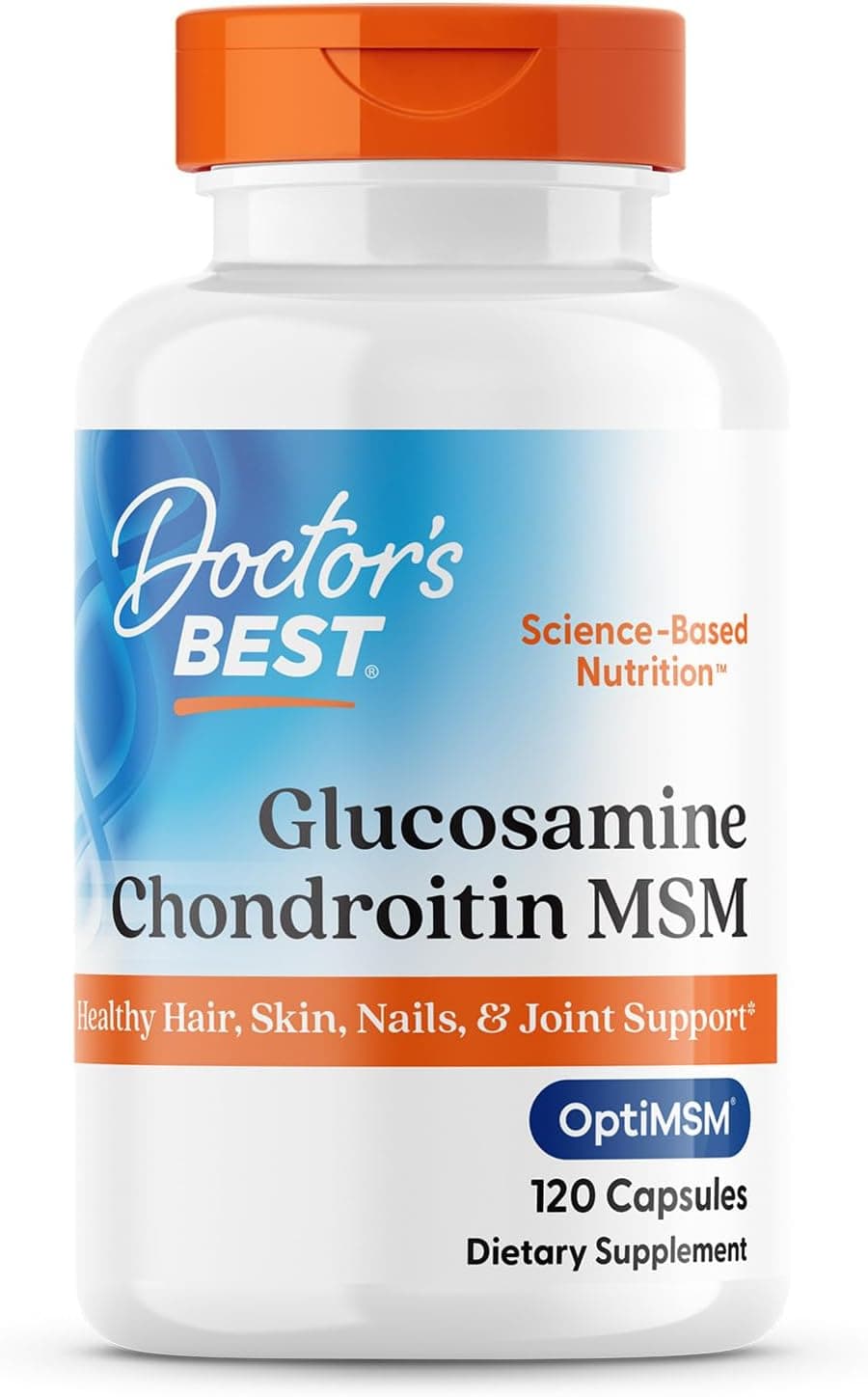 Verified by IngredientMD
The panel on the left is the one we evaluated, line by line.
All 6 actives checked against the clinical evidence: dose, form, and what the research actually shows.
Doses, ratios, and how the ingredients work together. That assessment is the verdict above: "Strong evidence, strong dose".
The verdict is public and identical whether or not a brand pays. A formula that does not clear the bar gets nothing.
Read by the engine against 2.1 million data points from clinical trials, PubMed and more than a hundred vetted sources. No individual reviewer is named or implied.
Cross-checked against 430 documented interactions for these actives.
Public health figures the engine matched to this formula's ingredients. Reported by their source, cited and dated, never written by the brand.
36.5% of US adults
aged 18 and over had pain in a hip, knee, or foot in the past 3 months, in the 2019 National Health Interview Survey.
CDC National Center for Health Statistics, 202030.7% of US adults
aged 18 and over had pain in a shoulder, elbow, wrist, or hand in the past 3 months, in the 2019 National Health Interview Survey.
CDC National Center for Health Statistics, 202057.6%
During 2017 to 2018, 57.6% of US adults aged 20 and over reported using a dietary supplement in the past 30 days.
CDC National Center for Health Statistics30.2% of non-Hispanic white women
aged 18 and over reported pain, aching, or stiffness in or around a joint lasting more than 3 months, in the 2013 to 2014 National Health Interview Survey.
CDC National Center for Health Statistics, 201628.4% of non-Hispanic white men
aged 18 and over reported pain, aching, or stiffness in or around a joint lasting more than 3 months, in the 2013 to 2014 National Health Interview Survey.
CDC National Center for Health Statistics, 201695% of US adults
aged 19 and over had vitamin D intake from food and beverages below the Estimated Average Requirement, in National Health and Nutrition Examination Survey data from 2005 to 2016.
National Health and Nutrition Examination Survey analysis, 202018.8% of US adults aged 75 and over
needed the help of another person to carry out routine daily tasks outside the home, and 10.6% needed help with basic daily tasks like bathing or dressing, in the 2014 National Health Interview Survey.
CDC National Center for Health Statistics, 201659 to 66 days
was the median time it took adults to make a new daily health habit automatic across the studies a 2024 review pooled, with individuals ranging from 4 to 335 days.
Systematic review and meta-analysis, 202461% to 74%
About 61 to 74 percent of adults refilling a long-term medicine on their own stopped within a year, versus 33 to 44 percent on one set pickup day.
Cohort study, 2015Meta-analysis, 2020
Pooling nutraceutical trials in adults with knee joint wear, the authors found small average improvements in reported joint discomfort and day-to-day physical function, with wide variation between trials.
Scientific reportsRandomised trial, 2019
In 60 adults with knee pain and extra weight, 600 mg of plant-based chondroitin daily for 12 weeks improved knee function by 10.6 points and symptom scores by 12.2 points.
NutrientsRandomised trial, 2023
In 88 healthy adults who reported mild knee discomfort, 2 g of methylsulfonylmethane daily for 12 weeks improved total knee questionnaire scores compared with placebo (p = 0.046).
NutrientsRandomised trial, 2025
In ten runners, a month of MSM shifted activity of 29 immune-related genes after a half marathon, a lab signal, not measured recovery.
NutrientsCohort study, 2025
In a propensity-score-matched cohort, regular glucosamine use was associated with lower incidence of several age-related chronic conditions. An association in observational data, not a demonstrated cause.
Aging Clinical and Experimental ResearchSystematic review and meta-analysis, 2024
Pooling 13 chondroitin sulfate trials, it found lower reported joint pain intensity and improved everyday physical function compared with placebo.
InflammopharmacologyCohort study, 2025
Reported glucosamine use was associated with slower progression of elevated liver fat and related endpoints in this analysis. An observational association, with the usual healthy-user confounding.
Clinical NutritionRandomised trial, 2026
Compared combined beta-alanine plus sodium bicarbonate against each alone on physical capacity measures in trained participants. The design is what makes the comparison informative for stacking decisions.
International Journal of Sports Physiology and PerformanceSystematic review and meta-analysis, 2015
Across 43 trials and about 4,900 people, chondroitin improved joint comfort by roughly 8 points on a 0 to 100 pain scale versus placebo in shorter studies, a small to moderate difference.
Cochrane Database of Systematic ReviewsMeta-analysis, 2025
In a network meta-analysis of supplements taken by adults with knee joint discomfort and stiffness, methylsulfonylmethane ranked among the options associated with better reported comfort and function, with the certainty of the pooled evidence rated low.
Frontiers in nutritionRandomised trial, 2025
A double-blind trial compared a multi-nutrient supplement plus exercise against exercise alone in older adults with age-related knee joint wear. Glucosamine was one component of the blend, so its individual contribution cannot be separated.
Age and AgeingSystematic review and network meta-analysis, 2018
Across trials of 12 months or longer, glucosamine sulfate was linked to a small reduction in knee pain versus placebo, and it was the only form whose pain benefit held after excluding higher-bias trials.
JAMASystematic review, 2025
A systematic review of human trials of glucosamine and chondroitin alone or combined, concluding that tolerability was generally good across the included studies while efficacy findings varied by outcome measure and product.
NutrientsCohort study, 2024
A genetic analysis linked genetically predicted glucosamine use to cognitive and muscle-mass traits, reflecting inherited variation rather than a proven effect of taking the supplement.
Frontiers in EndocrinologySystematic review, 2026
A systematic review catalogued gastrointestinal symptoms reported across sodium bicarbonate dosing protocols and described how symptom burden varies with dose, timing and whether the dose is split or given with food.
European Journal of Sport ScienceNarrative review, 2021
The authors conclude that oral glucosamine reaches the colon in part and is associated with shifts in microbial composition and gut barrier markers, and that human outcome data remains limited.
NutrientsRandomised trial, 2020
In a controlled dietary intervention in adults, changing sodium and potassium intake shifted how the body handled calcium and phosphate, indicating that sodium intake affects normal mineral balance.
The Journal of Clinical Endocrinology and MetabolismRandomised trial, 2026
Microencapsulated sodium butyrate was tested against abdominal symptom scores and carbohydrate metabolism markers in adults with high blood sugar. Again a butyrate trial in which sodium is the carrier salt.
Scientific ReportsRandomised trial, 2025
This pilot crossover compared plasma pharmacokinetics of two glucosamine presentations and reported the measured exposure profile for each. A pharmacokinetic marker, not a clinical outcome, and the sample was a pilot.
NutrientsRandomised trial, 2022
In 24 adults with knee joint pain, adding glucosamine and chondroitin sulfate to four weeks of manual therapy and resistance training produced no detectable extra gain in pain, function, range of motion or strength over the therapy alone.
Journal of the Pakistan Medical AssociationCohort study, 2023
An association was reported between habitual glucosamine use and major cardiovascular events in cohort data, with the authors noting this could reflect healthy-user behavior rather than a true effect.
Mayo Clinic ProceedingsCohort study, 2024
No association was detected between glucosamine supplementation and later neurological diagnoses in this prospective cohort. A failure to detect a relationship, which is not evidence that none exists.
Journals of Gerontology Series ARandomised trial, 2015
In athletes recovering from knee ligament reconstruction, the authors reported their measured cartilage turnover and functional endpoints between glucosamine and placebo arms. A single small trial in a narrow population.
Research in Sports MedicineRandomised trial, 2026
A randomised trial tested an algorithm-driven sodium supplementation protocol against usual care and measured growth in infants born preterm.
Pediatrics Open ScienceRandomised trial, 2017
In 22 half-marathon runners, 3 g of methylsulfonylmethane daily for three weeks showed no detectable difference from placebo in oxidative stress or muscle damage markers, and the muscle and joint pain reductions crossed a 10 mm threshold on a 100 mm scale without reaching statistical significance.
Journal of the International Society of Sports NutritionRandomised trial, 2021
In 22 adults carrying excess body weight, 3 g of methylsulfonylmethane daily raised HDL cholesterol at 8 and 16 weeks relative to their own baseline.
NutrientsRandomised trial, 2025
In a trial of 104 very preterm infants, oral sodium supplementation raised daily weight gain by 3.6 grams per kilogram compared with placebo.
BMJ Paediatrics OpenPopulation figures from public health data. Context for the category, not a statement about any individual and not a claim about this product.
Each line below was derived from this formula's own record at the time of verification. Nothing here was written by the brand, and nothing can be added that the evidence does not carry.
Time-to-effect windows the engine read from the trial record. Each is a window a named study measured, cited and dated, never written by the brand.
After a single 1500 mg oral dose of glucosamine sulfate in a randomized crossover study of 10 healthy adults, glucosamine was followed in blood over 24 hours, and its metabolite glucosamine-6-sulfate peaked at 6 to 8 hours with a longer half-life.
In an open-label, single-arm trial of 29 healthy adults taking 1500 mg glucosamine hydrochloride daily, stool characteristics changed within the 2 weeks of intake.
In the excretion studies the EFSA reference opinion reviews, urinary output closely tracked dietary sodium once intake was held steady: 98% of dietary sodium appeared in 24-hour urine in a 3-day study, and 86% of sodium ingested over 4 weeks was recovered in 24-hour urine collected during the same period.
In the controlled metabolic study the EFSA reference opinion reviews, young men held at constant sodium intakes for 29 days per level showed rising average daily urinary aldosterone excretion as intake was stepped down from 4.9 g/day to 2.5 g/day.
Windows measured in the cited trials. Context for how the active behaves over time, not a statement about any individual and not a claim about this product.
Five ingredients, from each one's own page.
The change is gradual and shows up as less stiffness in the first hour of the day rather than as a sensation you can time.
Fast. Sodium shifts fluid within an hour or two, which is why an electrolyte drink lands quickly when you have been sweating.
Cramp steadiness and hydration can shift within a day or two of raising intake. The blood pressure side, within the normal range, reads out over four to six weeks.
Joint comfort studies read out at eight to twelve weeks, and that is the honest window. Nothing here works on the day you take it.
Before there is much to notice. Comfort changes arrive quietly, as an easier first hour of the morning rather than a sudden shift.
How each ingredient usually behaves over time, from its own page on IngredientMD. General timing for the ingredient, not a measurement of this product.
What each form is, and where it fits in a formula. Measured findings carry the study that reported them.
Glucosamine paired with a sulfate group, most often co-processed with potassium chloride or sodium chloride, which holds the otherwise moisture-hungry salt as a dry crystalline powder. The crystalline label describes that same sulfate salt held in a defined crystal structure.
In a randomised, double-blind, crossover pilot in ten healthy adults, a single 1500 mg dose of crystalline glucosamine sulfate showed no statistically significant difference in glucosamine or glucosamine-6-sulfate plasma exposure (AUC) versus the regular potassium or sodium chloride stabilised sulfate.
The sodium salt of chondroitin sulfate, a sulfated glycosaminoglycan built from repeating disaccharide units of N-acetylgalactosamine and glucuronic acid carrying sulfate groups. Extracted from bovine or porcine cartilage such as trachea, it is predominantly sulfated at the 4-position (chondroitin-4-sulfate, the CS-A type).
Descriptions of the form itself, read from the cited studies. Not a comparison between products and not a statement about any individual.
It is a capsule, so the amount per serving is fixed and travels without measuring.
Put an earned verification on your own product page.
These statements have not been evaluated by the Food and Drug Administration. This product is not intended to diagnose, treat, cure, or prevent any disease. This record is not medical advice. Always consult your healthcare provider before starting any supplement regimen.