
CiticolineNHANES 2009 to 2012
Fewer than 1 in 10 Americans
take in enough choline to meet the adequate intake.
Peer-reviewed analysisPhosphatidylserine is the lead active here, studied most for memory and recall. Zeaxanthin Isomers is the most studied active here, with 17 human studies behind it, each one cited. Each serving carries 500 mg of Lion's Mane, inside the range the published research used. Who it fits: for everyone, adults.
 Verified by IngredientMD
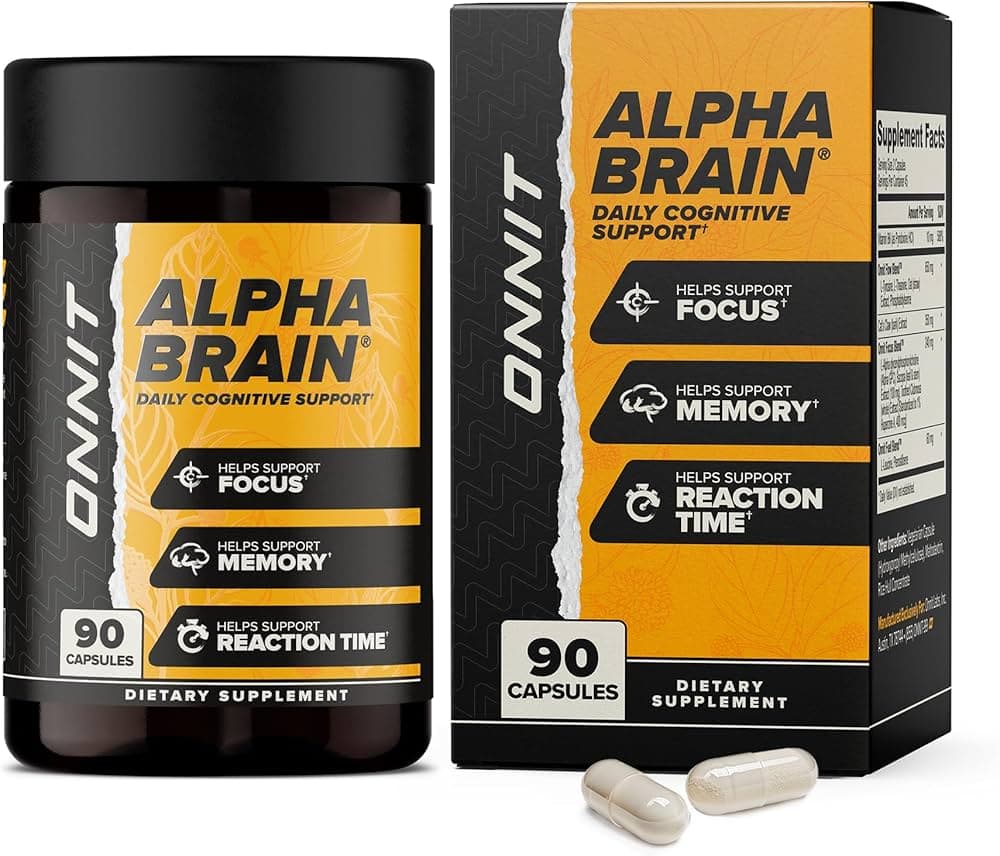
The panel on the left is the one we evaluated, line by line.
All 9 actives checked against the clinical evidence: dose, form, and what the research actually shows.
Doses, ratios, and how the ingredients work together. That assessment is the verdict above: "Strong evidence, strong dose".
The verdict is public and identical whether or not a brand pays. A formula that does not clear the bar gets nothing.
Read by the engine against 2.1 million data points from clinical trials, PubMed and more than a hundred vetted sources. No individual reviewer is named or implied.
Cross-checked against 1,217 documented interactions for these actives.
Public health figures the engine matched to this formula's ingredients. Reported by their source, cited and dated, never written by the brand.
Fewer than 1 in 10 Americans
take in enough choline to meet the adequate intake.
Peer-reviewed analysis25% of employed US adults
reported difficulty focusing at work in the past month, in the American Psychological Association's 2024 Work in America survey.
American Psychological Association and The Harris Poll, 202412.7% of US adults aged 60 and over
in 21 states reported increased confusion or memory loss in the preceding 12 months, in the 2011 Behavioral Risk Factor Surveillance System.
CDC, MMWR Surveillance Summaries, 201517% of US adults
reported trouble focusing over the past year, in a 2017 Ipsos poll of 1,008 adults.
Ipsos, 201757.6%
During 2017 to 2018, 57.6% of US adults aged 20 and over reported using a dietary supplement in the past 30 days.
CDC National Center for Health Statistics7.4% of US adults
reported serious difficulty concentrating, remembering or making decisions in 2023, up from 5.3% in 2013, and among adults aged 18 to 39 the share nearly doubled, from 5.1% to 9.7%, in the Behavioral Risk Factor Surveillance System.
Neurology, 2025More than 1 in 4 US adults aged 50 to 73
regularly take a supplement for their brain health, rising to 36% of those over 74, and memory is the reason 71% give, in AARP's 2019 survey.
AARP, 201953% of US adults
say they spend too much time on their smartphone, about 7 in 10 of adults under 30, in a Pew Research Center survey of 9,750 adults in 2026.
Pew Research Center, 202659 to 66 days
was the median time it took adults to make a new daily health habit automatic across the studies a 2024 review pooled, with individuals ranging from 4 to 335 days.
Systematic review and meta-analysis, 202461% to 74%
About 61 to 74 percent of adults refilling a long-term medicine on their own stopped within a year, versus 33 to 44 percent on one set pickup day.
Cohort study, 2015Randomised trial, 2024
Over 28 days, 15 healthy adults with moderate stress taking a branded L-theanine ingredient had perceived-stress scores fall 17.98%, alongside routine safety monitoring.
Neurology and TherapyMeta-analysis, 2018
Pooling ten trials each, caffeine produced a small increase in maximal muscle strength (SMD 0.20) and in muscle power measured by vertical jump (SMD 0.17) compared with placebo.
Journal of the International Society of Sports NutritionNetwork meta-analysis, 2024
Across 38 randomised trials, lutein-containing antioxidant combinations increased macular pigment density and low-spatial-frequency contrast sensitivity, and a lutein plus zeaxanthin combination shortened photostress recovery time by about 5.75 seconds.
Advances in NutritionRandomised trial, 2025
Over five days, 15 young women with menstrual discomfort drinking a chamomile and theanine beverage had self-reported pain ratings fall 57.17%, with mood and sleep ratings also changing.
Journal of Food and Drug AnalysisRandomised trial, 2026
In 38 active men, caffeine before a 10 km run or 40 km cycling improved completion time by 1.8 percent, though a gene difference in caffeine levels didn't affect performance.
European Journal of Sport ScienceMeta-analysis, 2016
Across 20 trials, lutein, zeaxanthin and meso-zeaxanthin raised a measure of eye pigment density by about 0.09 units in healthy adults, with more showing more effect.
NutrientsRandomised trial, 2010
Over 15 weeks, older adults with memory complaints taking phosphatidylserine bound to omega-3 improved immediate verbal recall compared with placebo, in a trial of 157 participants.
The paperSystematic review, 2020
Across 9 trials, 200 to 400 mg a day of L-theanine may help lower stress and anxious feelings in people facing stressful situations.
Plant Foods for Human NutritionSystematic review, 2019
Across 10 studies at matched doses, caffeine gave similar aerobic and fatigue benefits to men and women, while 4 of 7 studies found bigger strength and sprint gains in men.
NutrientsMeta-analysis, 2022
Across 21 trials at 3 to 9 mg per kg, caffeine lengthened time to exhaustion in running and shortened race completion time compared with placebo.
NutrientsRandomised trial, 2021
In healthy older adults, daily citicoline for 12 weeks improved memory test scores compared with placebo.
The Journal of nutritionRandomised trial, 2023
In healthy adults, a single 1 gram dose of lion's mane sped up reaction time on memory and attention tests two hours later, compared with placebo.
NutrientsSystematic review, 2021
Across 37 blinded crossover studies, caffeinated drinks improved several aspects of sports performance once the drink supplied at least 3 mg of caffeine per kg of body mass.
NutrientsSystematic review, 2025
Pooling the controlled trials, participants taking lion's mane showed a combined weighted mean rise of 1.17 points on the Mini-Mental State cognitive scale versus placebo.
Frontiers in NutritionMeta-analysis, 2025
In healthy adults, across trials, L-theanine with caffeine modestly improved accuracy on an attention-switching task, and L-theanine alone modestly sped up choice reaction time.
Nutrition ReviewsRandomised trial, 2019
In a 4-week trial in 30 healthy adults, 200 mg a day of L-theanine improved sleep quality scores, with faster sleep onset and less disturbance.
NutrientsRandomised trial, 2025
In 117 adults with extra weight around the middle, 10 mg of lutein a day for 32 weeks lowered cholesterol, LDL and other blood markers tied to aging cells.
Food and FunctionRandomised trial, 2021
In 48 adults with excess weight, 20 mg of lutein daily for 10 weeks cut body fat and cholesterol more than control, with no clear change in waist size.
British Journal of NutritionSystematic review, 2010
In a Cochrane review of 13 randomized trials in shift workers, caffeine improved orientation and attention (SMD -0.55) and reduced the number of errors made during simulated night or shifted work versus placebo.
Cochrane Database of Systematic ReviewsSystematic review, 2019
A review of trials in adults with age-related eye changes found that taking lutein-type nutrients raised a pigment density marker, though effects on actual vision were less consistent.
PLoS OneMeta-analysis, 2014
Across trials, lutein and zeaxanthin raised a marker of eye pigment density and were linked to better vision in adults with age-related eye changes, an association not a cause.
Investigative Ophthalmology and Visual ScienceMeta-analysis, 2025
Pooling the randomised trials, L-theanine was linked to small improvements in self-reported sleep quality, while objective sleep measures showed no detectable difference.
Meta-analysisOpen-label trial, 2008
Citicoline was associated with changes in frontal-lobe high-energy phosphate measures on phosphorus magnetic resonance spectroscopy, which are bioenergetic markers and not cognitive outcomes.
NMR in BiomedicineRandomised trial, 2024
Over six months, lutein plus zeaxanthin and meso-zeaxanthin raised blood carotenoid levels and lowered several inflammation markers compared with placebo, though these are blood markers, not health outcomes.
Nutrition, Metabolism and Cardiovascular DiseasesRandomised trial, 2026
Oral phosphatidylserine was reported to change vascular function measures in adults with high blood sugar. These are vascular markers rather than clinical events.
Journal of Applied PhysiologyRandomised trial, 2019
In healthy adolescent males, 28 days of citicoline was associated with faster motor speed and more accurate attention performance than placebo.
Journal of attention disordersRandomised controlled trial, 2024
In a 180-day trial, children given 10 mg lutein and 2 mg zeaxanthin raised eye pigment density and scored higher on focus and memory, with less eye strain than placebo.
Advances in TherapyRandomised trial, 2025
A trial of sunflower-derived phosphatidylserine measured cognitive test scores in healthy children, using the sunflower form, not the usual soy-based one.
Nutrition JournalSystematic review and meta-analysis, 2021
Pooling three trials in children, 200 to 300 mg a day produced a small improvement in attention ratings versus placebo (effect size 0.36), while overall and hyperactivity measures did not reach significance.
Journal of Alternative and Complementary MedicineRandomised trial, 2026
In 82 teenagers with heavy screen use and low fruit and vegetable intake, six months of 10 mg lutein with 2 mg zeaxanthin raised macular pigment optical density in both eyes and improved attention and processing speed scores, with no detectable change in visual reasoning, memory or self-reported sleep.
Nutrition ResearchMeta-analysis, 2022
The meta-analysis pooled neonatal supplementation trials and reported no detectable difference in the pooled retinal measure. The pooled sample was small, so this is a failure to detect rather than a demonstration of no effect.
The Journal of Maternal-Fetal & Neonatal MedicineSystematic review, 2025
This Cochrane review of lutein and zeaxanthin in preterm infants did not detect a clear effect on the outcomes assessed. That is a failure to detect a difference in the available trials, not a demonstration that none exists.
The Cochrane Database of Systematic ReviewsRandomised trial, 2008
In a crossover trial of ten healthy men, 600 mg a day for ten days lowered the peak cortisol rise from moderate cycling by about 39 percent versus placebo.
Journal of the International Society of Sports NutritionRandomised trial, 2023
In 41 healthy adults aged 18 to 45, a single 1.8 g dose of lion's mane sped up Stroop task performance at 60 minutes (p = 0.005), and 28 days of use showed a trend toward lower self-reported stress that did not reach significance (p = 0.051).
NutrientsRandomised trial, 2025
In 18 healthy adults aged 18 to 35, a single 3 g dose of a 10:1 lion's mane fruiting body extract produced no detectable change in overall cognition or mood scores at 90 minutes, with improvement limited to the pegboard dexterity task.
Frontiers in NutritionRandomised trial, 2009
Adults aged 50 to 80 taking 3 g of lion's mane daily scored significantly higher on a cognitive function scale from week 8 through week 16, and scores fell again 4 weeks after they stopped.
Phytotherapy ResearchSystematic review and meta-analysis, 2021
Combining 46 studies in 3,189 adults with healthy eyes, higher lutein and zeaxanthin intake raised a marker of eye pigment density more than lower intake did.
Advances in NutritionPopulation figures from public health data. Context for the category, not a statement about any individual and not a claim about this product.
Each line below was derived from this formula's own record at the time of verification. Nothing here was written by the brand, and nothing can be added that the evidence does not carry.
One pairing in this formula has been studied as a combination in human trials. Each finding below is what a named study measured, cited and dated, never written by the brand.
In the AREDS2 trial long-term follow-up, lutein and zeaxanthin taken together were associated with a modestly lower risk of progression to late age-related macular degeneration, while the trial original primary analysis was not significant.
Research strength. Research strength says how much work stands behind the combination. It is never a product score.
Fail closed. Where actives were studied on their own rather than together, each shows on its own evidence, never a combined effect no trial measured.
Independent record. Every finding is cited to a named trial, dated, and never written by the brand.
Findings from trials that studied these actives as a combination. Context for how the actives were tested together, not a statement about any individual and not a claim about this product.
Time-to-effect windows the engine read from the trial record. Each is a window a named study measured, cited and dated, never written by the brand.
Two small studies measured a same-day effect. In a randomised, double-blind, placebo-controlled parallel-groups pilot in 41 healthy adults aged 18 to 45, a single 1.8 g dose of lion's mane was followed by quicker Stroop task performance at 60 minutes after dosing (p = 0.005). In a separate randomised, double-blind, placebo-controlled crossover study, a single 1 g dose of Nordic-grown lion's mane was followed by changes in working memory, complex attention and reaction time measures two hours after ingestion. Both samples are small. A third acute crossover in 18 adults using a 3 g dose of a 10:1 fruiting body extract found no effect on composite cognition or mood at 90 minutes, with a change only on an individual pegboard test.
Phosphatidylserine with DHA was safe and well tolerated in a double-blind placebo-controlled trial of 157 non-demented elderly adults at 300 mg per day for 15 weeks, and at 100 mg per day through a 30-week open-label extension.
Two double-blind placebo-controlled crossover trials measured attention at a fixed interval after one oral dose. In 24 overnight sleep-deprived adults aged 20 to 25, a 200 mg dose tested 45 minutes post-dose reduced false alarms on a traffic-scene recognition task and raised target-distractor discriminability. In 27 healthy young adults tested 50 minutes post-dose, 400 mg shortened the parietal P3b event-related potential latency against placebo, with no significant change at 100 or 200 mg. Both trials measured task and electrophysiological markers, not a subjective feeling.
In a double-blind placebo-controlled crossover trial, 15 resistance-trained women took 4 mg per kg body mass of caffeine 60 minutes before a strength and power battery. Squat one-repetition maximum rose 4.5 percent and countermovement jump height 7.6 percent against placebo. A separate crossover trial in 11 active adults began its cycling tests 45 minutes after a 3 mg per kg capsule and recorded a peak-power increase of about 4 percent on the first day of ingestion.
One crossover trial mapped the day-to-day time course in 11 healthy active adults taking 3 mg per kg per day for 20 consecutive days. Peak cycling power in the incremental test stayed about 4.0 percent above placebo for the first 15 days and the difference then lessened. Wingate peak power was still raised on days 1, 4, 15 and 18 by about 4.9 percent. The authors describe the shrinking margin as progressive tolerance. This is one trial with 11 participants.
In a randomised crossover trial in 24 healthy adults aged 20 to 65, serum lutein rose about 2.4-fold after 15 days of 6 mg per day of lutein from marigold extract and held near that level through day 60.
In a 6-month randomised, double-blind, placebo-controlled trial, 82 teenagers aged 13 to 18 with high screen use took lutein 10 mg with zeaxanthin 2 mg daily. Macular pigment optical density rose in both eyes against placebo, tests of attention and processing speed improved, other cognitive measures did not differ, and the supplement was well tolerated.
Windows measured in the cited trials. Context for how the active behaves over time, not a statement about any individual and not a claim about this product.
9 ingredients, from each one's own page.
Often one to two hours after a dose, as a mild lift in drive rather than stimulation. Fertility and hormone measures run on a slower clock, around three months.
Before most people describe a cognitive change. Nothing about it behaves like a stimulant on day one.
Attention measures in trials shift across four to eight weeks of daily use. Some people notice clearer focus inside the first week or two.
Trials measuring recall and the stress hormone response took readings around that point, and the change builds gradually.
For most people, with blood levels peaking inside the first hour. Nothing accumulates, so each dose stands on its own.
Fifteen to forty five minutes for most people, peaking around the hour. How long it lasts depends on liver enzyme activity and varies several fold between people.
Often the same day. Huperzine A has a long half-life, so one dose covers much of a working day, while trial outcomes read out across weeks.
Macular pigment density climbs measurably across roughly 8 to 12 weeks of daily intake. It is a change an eye exam picks up rather than a sensation.
Macular pigment measurements climb over roughly three to six months of daily intake. It is a slow build, read on an instrument.
How each ingredient usually behaves over time, from its own page on IngredientMD. General timing for the ingredient, not a measurement of this product.
What each form is, and where it fits in a formula. Measured findings carry the study that reported them.
The single L-enantiomer as a free amino acid, the form found in tea leaf and the form used in essentially all human trials.
Dry crystalline free base with no water of crystallisation, close to a hundred percent caffeine by weight
Descriptions of the form itself, read from the cited studies. Not a comparison between products and not a statement about any individual.
It is a capsule, so the amount per serving is fixed and travels without measuring.
Because the effect builds and holds only with continued daily use, a steady recurring supply is the practical way to keep it going.
Put an earned verification on your own product page.
These statements have not been evaluated by the Food and Drug Administration. This product is not intended to diagnose, treat, cure, or prevent any disease. This record is not medical advice. Always consult your healthcare provider before starting any supplement regimen.