
The people it speaks toFieldwork August 2023
74% of US adults
take dietary supplements, and 55% are regular users, in the Council for Responsible Nutrition's 2023 consumer survey of 3,192 adults.
Council for Responsible Nutrition and Ipsos, 2023Vitamin B12 is the lead active here, studied most for vitamin B12 status. 17 human studies on Vitamin B12 back this formula, each one cited. Each serving carries 108 mg of Niacin, inside the range the published research used. Who it fits: skews toward women, adults.
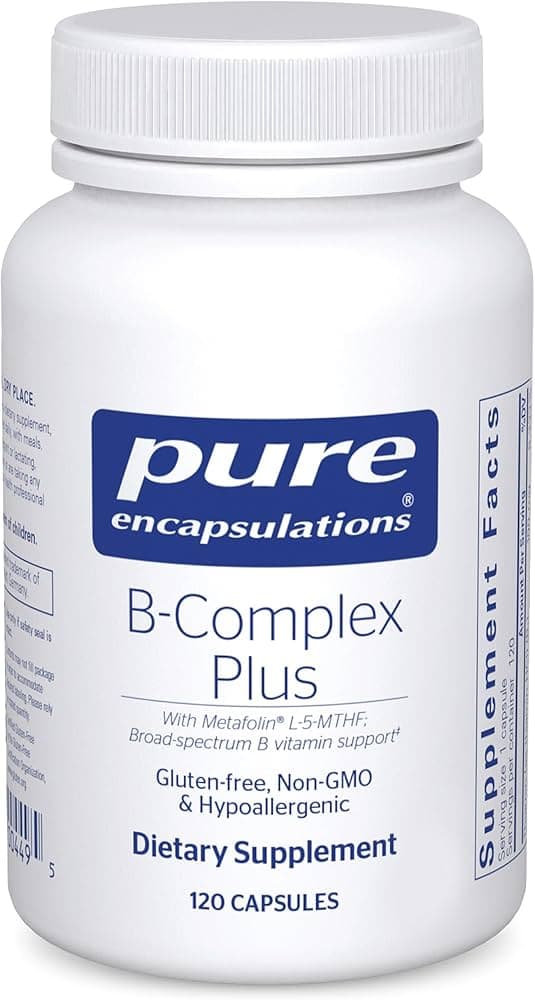 Verified by IngredientMD
The panel on the left is the one we evaluated, line by line.
All 8 actives checked against the clinical evidence: dose, form, and what the research actually shows.
Doses, ratios, and how the ingredients work together. That assessment is the verdict above: "Strong evidence, strong dose".
The verdict is public and identical whether or not a brand pays. A formula that does not clear the bar gets nothing.
Read by the engine against 2.1 million data points from clinical trials, PubMed and more than a hundred vetted sources. No individual reviewer is named or implied.
Cross-checked against 1,200 documented interactions for these actives.
Public health figures the engine matched to this formula's ingredients. Reported by their source, cited and dated, never written by the brand.
74% of US adults
take dietary supplements, and 55% are regular users, in the Council for Responsible Nutrition's 2023 consumer survey of 3,192 adults.
Council for Responsible Nutrition and Ipsos, 202392% of US supplement users
agree that dietary supplements are essential to maintaining their health, in the Council for Responsible Nutrition's 2023 consumer survey.
Council for Responsible Nutrition and Ipsos, 202312.3% of US adults
met the fruit intake recommendation and 10.0% the vegetable recommendation in 2019, in the Behavioral Risk Factor Surveillance System across 49 states.
CDC, MMWR, 202215% of US adults
aged 20 and over ate no breakfast on the day of their dietary recall, in the 2017 to March 2020 What We Eat in America survey.
USDA Agricultural Research Service, 202457.6%
During 2017 to 2018, 57.6% of US adults aged 20 and over reported using a dietary supplement in the past 30 days.
CDC National Center for Health Statistics60.2% of US adults aged 20 and over
took a dietary supplement in the past 30 days, and 38.7% took two or more, in the 2021 to 2023 National Health and Nutrition Examination Survey.
CDC National Center for Health Statistics, 202659 to 66 days
was the median time it took adults to make a new daily health habit automatic across the studies a 2024 review pooled, with individuals ranging from 4 to 335 days.
Systematic review and meta-analysis, 202461% to 74%
About 61 to 74 percent of adults refilling a long-term medicine on their own stopped within a year, versus 33 to 44 percent on one set pickup day.
Cohort study, 2015USDA advises fortified foods or supplements after 50
In its national intake tables USDA notes that "it is advised that individuals over 50 meet their B12 requirement with fortified foods or supplements".
NHANESClinical trial, 1990
In people with weak, splitting nails, oral biotin increased nail thickness by about 25 percent under scanning electron microscopy and the nail surface became more regular.
Journal of the American Academy of DermatologyRandomised trial, 2014
An oral pantothenic acid supplement significantly lowered total facial blemish count versus placebo after 12 weeks, with fewer inflammatory blemishes.
Dermatology and TherapyMeta-analysis, 2025
In a network meta-analysis of 19 trials with 1,658 participants, biotin-containing preparations were among the supplements linked to greater hair density, though most individual trials were small.
Frontiers in nutritionSystematic review, 2017
Across 18 reported cases, all involving an existing deficiency or related condition, hair and nail growth improved after biotin, with limited evidence of benefit in people who are not deficient.
Skin Appendage DisordersRandomised trial, 2007
In 818 adults aged 50 to 70 with raised homocysteine, 3 years of daily folic acid at 800 micrograms improved memory and information-processing speed scores compared with placebo.
The LancetRandomised trial, 2023
One month of daily supplementation raised blood riboflavin by 0.77 standard deviation units and cut the proportion of women with low riboflavin status.
PLoS MedicineMeta-analysis, 2005
Across 30 trials in 4,749 people, niacin raised HDL cholesterol by about 16 percent, lowered triglycerides by about 20 percent, and lowered LDL cholesterol by about 14 percent.
Journal of the American College of CardiologyRandomised trial, 2014
Pantethine, a vitamin B5 derivative, lowered LDL cholesterol by about 11 percent from baseline versus placebo over 16 weeks in adults at low to moderate cardiovascular risk.
Vascular Health and Risk ManagementSystematic review and meta-analysis, 2016
Across 14 placebo-controlled trials totaling about 9,000 people, extended-release niacin lowered blood lipoprotein(a) by about 23 percent.
MetabolismSystematic review and meta-analysis, 2014
Across 7 trials of 441 people, niacin improved a blood vessel dilation test by about 2 percentage points.
Vascular MedicineSystematic review and meta-analysis, 2021
Across 22 trials in 41,633 people, folic acid supplements lowered the top blood pressure number by about 1.1 points and the bottom by about 0.2 points.
Critical Reviews in Food Science and NutritionSystematic review and meta-analysis, 2023
Across 21 trials in 2,025 adults, folic acid improved flow-mediated dilation, a measure of how well arteries widen, by about 2.6 percentage points.
Nutrition JournalMeta-analysis, 2024
In a dose-response analysis of trials, riboflavin was linked to about 1.3 fewer severe recurring headache attacks per month compared with control.
Neurological SciencesRandomised trial, 2015
Pantethine lowered blood triglycerides by about 17 percent from baseline over 8 weeks in adults with moderate dyslipidemia, while a related compound, coenzyme A, lowered them further.
Journal of Clinical LipidologyMeta-analysis, 2020
Across eight trials in 2,110 adults with high blood sugar, niacin shifted cholesterol, triglycerides, LDL and HDL by 0.28 to 0.42, with no detected change in blood sugar or HbA1c.
MedicineMeta-analysis, 2023
Pooling 20 studies, adults with impaired glucose handling carried lower circulating thiamine than adults with normal glucose handling (standardised mean difference -0.97), an association rather than a demonstrated cause.
MetabolismSystematic review and meta-analysis, 2025
Across 16 studies in 6,098 people, vitamin B12 supplementation raised serum B12 by about 403 pg/mL, and oral or sublingual doses raised it about as much as intramuscular injections.
Frontiers in PharmacologyMeta-analysis, 2019
Fortifying staple foods with multiple micronutrients including thiamine raised blood micronutrient levels across general populations.
The Cochrane database of systematic reviewsRandomised trial, 2025
In 72 adults eating a plant-only diet, four months of a multinutrient supplement raised blood flavin adenine dinucleotide, a marker of riboflavin status rather than a health outcome, more than placebo, while several other vitamin markers showed no between-group difference.
European Journal of NutritionSystematic review, 2025
In adults with low B12 status, oral and injected B12 were both reported to raise blood B12, to a broadly similar degree across the included studies.
Systematic reviewAbout 23 percent lower plasma homocysteine at 0.8 mg daily, with 0.2 mg and 0.4 mg reaching roughly 60 and 90 percent of that
Lowers homocysteine, a blood marker tied to heart risk. Measured in adults, standardised to a pretreatment homocysteine of 12 micromol per litre (95% CI 21 to 26 percent).
Meta-analysisMeta-analysis, 1998
Across 12 trials in 1,114 people, adding about 0.5 mg of B12 daily cut homocysteine, a blood marker, by a further 7% beyond folic acid's 25% drop.
BMJMeta-analysis, 2000
Across 12 randomized trials in 1,114 people, daily folic acid of 0.5 to 5 mg lowered blood homocysteine concentrations by about 25 percent.
Indian Heart JournalRandomised trial, 2013
In adults with the MTHFR 677TT genotype, riboflavin at 1.6 mg a day lowered systolic blood pressure by about 5.6 mmHg over 16 weeks.
The paperCohort study, 2026
Reported associations between dietary thiamin, riboflavin and niacin intake and blood pressure measures including pulse pressure. These are observational associations, not evidence that changing intake changes blood pressure.
MedicineOpen-label trial, 2025
A human study of a fibre rather than of biotin, where biotin surfaces only through the gut microbiome readout.
European journal of nutritionMeta-analysis, 2021
Across trials in adults who were not deficient, B12 supplementation showed no detectable improvement in cognitive test scores, mood scores or tiredness.
Meta-analysisRandomised trial, 2021
Chronic pantothenic acid supplementation did not produce a detectable change in muscle coenzyme A content or cycling performance, which is a failure to detect a difference rather than a demonstration that none exists.
Applied Physiology, Nutrition, and MetabolismMeta-analysis, 2022
Across six trials in 364 adults with raised blood sugar, thiamine or benfotiamine did not shift long-term blood sugar control or fasting glucose, while HDL cholesterol rose by about 0.10 mmol/L at three months.
BMJ OpenSystematic review, 2025
An umbrella review of water-soluble vitamins, biotin among them, found only small and inconsistent changes in blood sugar and insulin sensitivity measures in adults with raised glucose.
Asia Pacific journal of clinical nutritionMeta-analysis, 2019
Multiple-micronutrient supplements containing thiamine during pregnancy were linked to higher infant birthweight and fewer small-for-gestational-age births than iron and folic acid alone, with thiamine one component among many.
The Cochrane database of systematic reviewsSystematic review, 2024
Maternal thiamine intake tracked with thiamine levels in breast milk across the reviewed studies, unlike several other nutrients.
The British journal of nutritionSystematic review, 2023
Across 18 studies, pyridoxine on its own and in combinations improved nausea scores in pregnancy on both the Rhode and PUQE scales, a use with a long clinical track record.
Archives of Gynecology and ObstetricsMeta-analysis, 2026
A review assessed vitamin B12 supplements for growth, development and thinking skills in children, reporting the pooled findings with their certainty level.
Meta-analysisMeta-analysis, 2026
Pooling 26 studies, about 26.9 percent of adolescent girls worldwide had low folate status, rising to 35.5 percent in Africa, with wide variation between settings.
PLoS OneSystematic review, 2024
B12 taken during pregnancy raised maternal and infant B12 status, with no clear difference detected in birth weight or infant growth.
Systematic reviewRandomised trial, 2023
Across several centres, infant formula supplemented with biotin raised infants' blood biotin levels into the range seen with adequate intake.
Pediatrics internationalRandomised trial, 2025
Twelve months of a multiple-micronutrient powder containing thiamine did not detectably change haemoglobin or growth in children, a failure to detect a difference rather than proof of none.
NutrientsRandomised trial, 2025
In 43 adults, 100 mg vitamin B1 taken together with 100 mg vitamin B2 daily for four weeks lowered perceived stress scores from 21.5 to 15.5 and improved sleep quality scores, with no detectable change in anxiety scores. The two vitamins were given as one combination, so B2 alone was not isolated.
NutrientsPopulation figures from public health data. Context for the category, not a statement about any individual and not a claim about this product.
Each line below was derived from this formula's own record at the time of verification. Nothing here was written by the brand, and nothing can be added that the evidence does not carry.
One pairing in this formula has been studied as a combination in human trials. Each finding below is what a named study measured, cited and dated, never written by the brand.
In a 2025 network meta-analysis of 16 randomized trials in healthy adults, folic acid taken together with vitamins B6 and B12 lowered blood homocysteine more than any single supplement, with the 1 mg folic acid plus 7.2 mg B6 plus 20 micrograms B12 arm ranked most effective versus placebo (mean difference -1.03 micromol/L, 95% CI -1.71 to -0.36).
Research strength. Research strength says how much work stands behind the combination. It is never a product score.
Fail closed. Where actives were studied on their own rather than together, each shows on its own evidence, never a combined effect no trial measured.
Independent record. Every finding is cited to a named trial, dated, and never written by the brand.
Findings from trials that studied these actives as a combination. Context for how the actives were tested together, not a statement about any individual and not a claim about this product.
Time-to-effect windows the engine read from the trial record. Each is a window a named study measured, cited and dated, never written by the brand.
An expert consensus on vitamin B6 use, developed by a six-member Delphi panel with a structured evidence-quality assessment, calculated from pharmacokinetic parameters that complete clearance of vitamin B6 from the body takes a washout period of about 20 to 40 days after intake stops.
A systematic review and Bayesian meta-analysis drew on 108 articles from 14,002 screened records and modelled blood folate against folic acid intake using one-compartment pharmacokinetic models. Red blood cell folate rose 1.78 fold from baseline to steady state at 375 to 570 ug folic acid per day, and reaching that steady state took a median of 36 weeks, 95% credible interval 27 to 52 weeks. Serum or plasma folate rose 11.6% for every 100 ug per day of folic acid intake, 95% credible interval 8.4 to 14.9.
A kinetic study in six healthy men aged 22 to 31 gave 3.6 umol per day, 1.6 mg, of deuterium-labelled folic acid for four weeks, with folate tracked in serum, erythrocytes and urine by microbiological assay and gas chromatography mass spectrometry. Serum folate reached its maximum concentration in about 18 days, while isotopic labelling of erythrocyte folate kept rising across the whole four weeks. After supplementation stopped, red blood cell folate and urinary folate excretion declined linearly, and serum folate fell with a slow-phase half-life of 18.7 days. One study, six men, no control group.
A randomised, double-blind, parallel-group dose-finding trial in 120 older people with mild vitamin B12 deficiency, defined as serum B12 of 100 to 300 pmol/L with methylmalonic acid at or above 0.26 umol/L, gave daily oral cyanocobalamin at 2.5, 100, 250, 500 or 1000 ug for 16 weeks. Mean plasma methylmalonic acid fell 16%, 16%, 23%, 33% and 33% across those doses. Daily doses of 647 to 1032 ug accounted for 80% to 90% of the estimated maximum reduction. The window was measured on a blood marker of B12 status, not on a symptom.
An open-label randomised single-dose pharmacokinetic study in 20 healthy men aged 20 to 45, conducted and authored by staff of Emisphere Technologies, the developer of the SNAC carrier under test, measured serum vitamin B12 after one 5 mg cyanocobalamin tablet, with six men on the marketed tablet. Time to peak serum B12 was 6.83 hours for the marketed tablet and 0.5 hours for the carrier coformulation. Absolute bioavailability was 2.16% and 5.09% respectively. One trial, six men per arm. Serum concentration was measured, not any symptom.
In an open trial with no placebo arm, 71 patients with brittle or splitting fingernails took 2.5 mg of biotin a day. Of the 45 cases that could be evaluated, 41 were rated as having firmer and harder nails after an average of 5.5 months of treatment, standard deviation 2.3 months. The rating was clinical judgement rather than an instrument reading, and there was no control group, so the window describes when the raters recorded change, not a placebo adjusted effect.
Windows measured in the cited trials. Context for how the active behaves over time, not a statement about any individual and not a claim about this product.
8 ingredients, from each one's own page.
Absorbed within an hour, but the timeline that counts is two to four weeks. Whole blood thiamin diphosphate is where the change gets read.
Bright yellow urine turns up within hours, which is simply surplus clearing. Status markers such as glutathione reductase activity respond across a few weeks of daily use.
Nothing to wait for at everyday amounts. Niacin status shows up on blood work rather than as a sensation. The flush from the nicotinic acid form arrives within 30 minutes.
There's no onset you would time. It feeds coenzyme A within days, and the effect sits in metabolism and blood levels rather than in a sensation.
Nothing quick. Conversion to the active coenzyme happens within hours, but plasma pyridoxal 5-phosphate takes a couple of weeks to settle at a new level.
Red cell folate climbs over roughly four to eight weeks. It's a blood panel change rather than a sensation.
Markers move first. Methylmalonic acid and homocysteine start shifting within a week or two, while anything you would notice takes several weeks of daily use.
Fingernails grow around 3mm a month, so it takes roughly 8 to 12 weeks before enough new plate has grown out to judge the difference by eye.
How each ingredient usually behaves over time, from its own page on IngredientMD. General timing for the ingredient, not a measurement of this product.
What each form is, and where it fits in a formula. Measured findings carry the study that reported them.
The free-acid form of vitamin B3, pyridine-3-carboxylic acid. It is the reference form of niacin, a small water-soluble molecule carrying a bare carboxylic acid group on the pyridine ring.
The free acid form of vitamin B5, an amide of pantoic acid and beta-alanine, supplied as a viscous hygroscopic oil or a stabilised liquid rather than a dry salt.
Descriptions of the form itself, read from the cited studies. Not a comparison between products and not a statement about any individual.
It is a capsule, so the amount per serving is fixed and travels without measuring.
Because the effect builds and holds only with continued daily use, a steady recurring supply is the practical way to keep it going.
Put an earned verification on your own product page.
These statements have not been evaluated by the Food and Drug Administration. This product is not intended to diagnose, treat, cure, or prevent any disease. This record is not medical advice. Always consult your healthcare provider before starting any supplement regimen.