Acetoglyceride.
A coating fat rather than an active. Swapping part of an ordinary fat for an acetate group makes it soft and film-forming, so it coats tablets and shields fragile oils from air.
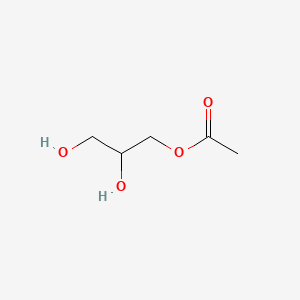 Compound
- Category
- Compound
What Acetoglyceride is, and what it does.
- Does it work
- This one is for the formulator more than the shopper. If it's on a label, it's doing its job inside the capsule rather than inside you.
- How much to take
- There's no dose to take, and no dose figure is on record. It's used at additive-level amounts, so a supplement contributes a tiny slice of your daily fat intake.
- Time to feel it
- Nothing to wait for. Its work is finished by the time the tablet is coated and the capsule is sealed.
- The first dose
- Day one is the same as any day carrying a trace of dietary fat. Its contribution shows up in the tablet holding together, not in you.
- With regular use
- Over weeks its role stays the same: keeping the actives it coats away from oxygen and moisture so the label amount is still there at the end of shelf life.
- How well tolerated
- Well tolerated at the amounts used in supplements. It's a food-grade fat digested like any other glyceride, with no meaningful caution at additive levels.
- How it feels
- It has no taste or texture of its own in a finished capsule. Where it registers is in a tablet that does not stick and an oil that stays fresh.
- The overlooked benefit
- It melts and sets over a narrow, low temperature range, so it can seal a capsule without the heat that would damage the delicate oils inside.
The proof, claim by claim.
What these words mean
These words describe the research, not the molecule's worth. Research strength is how much work stands behind one claim, and it is never a product score.
- Use as a tablet coating, plasticiser and release agentNarrative review
- Oxidative protection of encapsulated oilsIn vitro study
2 more claims
- Pancreatic lipase hydrolysis of acetylated monoglyceridesIn vitro study
- Melting and setting behaviour of acetylated fatsIn vitro study
Why these belong in the same formula, 5 pairings
Why these belong in the same formula. Each row says what the basis is, from settled biochemistry through to a trial that measured the pair.
Acetylated monoglycerides stay pliable at room temperature, so they work as a carrier phase for oil-soluble actives that would crystallise out of a harder fat. Tocopherols dissolve fully in that phase and sit shielded from air during handling. This is a formulation relationship. It is not a claim that either raises the other's blood levels.
Beta-carotene degrades on contact with oxygen and light. A continuous acetylated glyceride film puts a low-permeability lipid layer between the pigment and the air. The gain is physical protection over shelf life. Read it as manufacturing practice rather than a nutritional interaction.
Lecithin lowers interfacial tension between water and fat while the acetylated monoglyceride supplies the plastic lipid body of the film. Together they give a smoother, less brittle coat than either gives alone. The pairing is formulation convention. No ingested-dose interaction is implied.
Medium chain triglycerides are liquid and thin, while acetylated monoglycerides are waxy and film-forming. Adding enough MCT softens or dissolves the coat and can undo the barrier the acetoglyceride was there to create. Formulators balance the two rather than stacking them. This is a physical incompatibility, not a metabolic one.
Astaxanthin bleaches quickly when exposed to oxygen. Encapsulation in an acetylated glyceride matrix slows that exposure. The evidence here is formulation experience rather than measured human absorption. Any claim beyond physical protection would be going past what is known.
Nothing specific on file for Acetoglyceride. Match the label to the daily amount above, and tell your doctor what you take.
Not medical advice. Show the label to your pharmacist.What Acetoglyceride actually does.
These are glycerol-based fats where one or two spots carry a short acetyl group instead of a long fatty acid, which lowers the melting point and lets the fat form a bendable film instead of a hard crystal.
3 more mechanisms
Because that short group shortens the effective chain, these fats melt and set over a narrow, low temperature range, which is why they're used for coatings rather than as an energy source.
These fats are used in tiny amounts as a coating or release agent, so what you'd actually get from a supplement is a small fraction of your daily fat intake.
Our digestive enzyme removes the long fatty acid from these fats first, so almost all the calories we get from them come from that long-chain part, with the short acetyl piece released separately.
Where Acetoglyceride comes from.
It starts as ordinary cooking oil. Chemists swap part of the fat for a small acetate group, which turns it into a soft, waxy coating fat that keeps tablets from sticking and shields fragile oils from air.
What this route gives you
The same molecule is reached more than one way. Which route a given product used is a manufacturing choice, and the finished compound is the same either way.
6 steps on record
Palm, soybean, sunflower or rapeseed oil is the usual source of the long-chain fatty acid. Tallow-derived grades exist, which matters for vegetarian and religious dietary status.
Supplies the acetyl group. It is normally produced synthetically.
The oil is reacted with glycerol under heat and alkaline catalysis to yield a monoglyceride-rich mixture.
Free hydroxyls on the glycerol are esterified with acetic anhydride, either partially or fully depending on the grade wanted.
Catalyst residues and free acid are removed, and distillation concentrates the monoglyceride fraction in the higher grades.
Sold as flakes, beads or a melt for coating lines.
The forms it comes in.
3 more forms
FDA Disclaimer: These statements have not been evaluated by the Food and Drug Administration. This information is for educational purposes only and is not intended to diagnose, treat, cure, or prevent any disease. Consult your healthcare provider before starting any supplement regimen.