Agar.
Agar is a seaweed fibre that holds many times its weight in water. In the gut that means bulkier, softer stool and a fuller stomach. In a capsule it stands in for gelatin.
 Compound
- Category
- Compound
What Agar is, and what it does.
- Does it work
- A good fit if you want more bulk in your day or a plant-based capsule shell. Anyone with a narrowed or obstructed gut should leave bulking agents alone.
- How much to take
- No dose figure is on record, so we won't invent one. Start low and take it with plenty of fluid, since the effect comes from water held rather than powder weight.
- Time to feel it
- Bulking fibres act on the next day or two of transit, so any change in regularity usually shows up inside 48 hours.
- The first dose
- A fuller feeling after a serving, some gurgling as it hydrates, and often a bulkier, easier bowel movement by the next morning.
- With regular use
- Daily use keeps stool mass and water steady. Because human enzymes can't break its linkages, it passes through and adds essentially no absorbable energy.
- How well tolerated
- Well tolerated with enough fluid. Taken dry or with too little liquid it can swell and lodge in the throat, and anyone with a narrowed gut should avoid it.
- How it feels
- Mild fullness and an easier bowel movement. There is nothing stimulating about it. The effect is physical bulk rather than anything you feel in your head.
- The overlooked benefit
- Agar sets at 32 to 40 degrees but won't melt again until around 85, so agar jellies hold at room temperature where gelatin ones would slump.
The proof, claim by claim.
What these words mean
These words describe the research, not the molecule's worth. Research strength is how much work stands behind one claim, and it is never a product score.
- Stool bulk and regularityRandomised trial
- Fullness and appetite regulationRandomised trial
3 more claims
- Negligible absorbable energy contributionNarrative review
- Gelling and capsule-forming functionNarrative review
- Water binding and viscosity in the gut lumenIn vitro study
Why these belong in the same formula, 9 pairings
Why these belong in the same formula. Each row says what the basis is, from settled biochemistry through to a trial that measured the pair.
Human digestive enzymes cannot cut the alpha 1,3 linked 3,6 anhydro-L-galactose units in agarose, so intact agar reaches the colon. A minority of gut bacteria carry agarase and porphyranase enzymes, mostly acquired from marine bacteria, and can ferment it to neoagaro-oligosaccharides. Whether that happens depends on whether a person carries those organisms at all. It is a substrate relationship that only some people can use.
Agar gives a firm, sharply setting gel with a clean break, and pectin gives a softer set that depends on sugar and acid balance. Gummy formats use both to hit a chewy rather than brittle texture without gelatin. The combination is standard in plant based gummy supplements. The relationship is entirely about mouthfeel and shelf stability.
Both hold large amounts of water and increase stool bulk, agar by swelling and psyllium by forming a viscous gel. Taken together the water demand adds up and adequate fluid becomes more important, not less. The failure mode with any bulking agent is taking it with too little liquid. Count the total gel forming load across products.
Glucomannan swells dramatically at low doses and agar adds further gelling on cooling. Stacking two strong gel formers raises the risk of a mass that expands before it has been swallowed, which is the documented hazard with viscous fibre tablets. Anyone with swallowing difficulty or a narrowed gut should avoid the combination. This is a caution row, not a benefit row.
A viscous gel in the small intestine slows diffusion of dissolved minerals toward the absorptive surface, and agar's sulfated galactan structure can bind divalent cations. Taken in the same dose as a calcium supplement, some of the calcium may not be available for uptake. Separating them by a couple of hours removes the question. The effect size in people has not been well quantified.
Iron absorption is already fragile and is reduced by anything that traps it in a viscous or anionic matrix before it reaches the duodenal transporter. Agar's sulfate groups give it that anionic character. This argues for spacing iron away from a gelling fibre rather than avoiding either. The concern is mechanistic and has not been measured with agar specifically.
Inulin is fermented rapidly and broadly across the gut microbiota, producing gas early in the colon. Agar is fermented slowly and only by the minority of people carrying agarase competent bacteria. Combining them gives a fast and a slow substrate rather than double the effect. Someone who gets bloating from inulin will not necessarily get it from agar.
Gellan forms a gel at very low concentration and holds particles in suspension, while agar contributes firmness and a higher melting point. Beverage and gummy formulations use them together to keep an active suspended and the format stable at room temperature. This is manufacturing chemistry. Neither is acting on the body.
Oat beta glucan raises viscosity in solution without forming a set gel, whereas agar sets firmly on cooling. Blends use them to get a thick but pourable texture. Their fermentation profiles differ, so the gut effects are not interchangeable either. Read the pairing as texture work.
Nothing specific on file for Agar. Match the label to the daily amount above, and tell your doctor what you take.
Not medical advice. Show the label to your pharmacist.What Agar actually does.
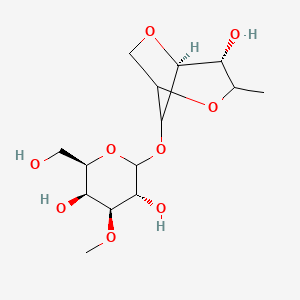
It is a sugar chain from seaweed, in two fractions: one neutral and gel forming, one charged.
3 more mechanisms
You cannot digest it, so it delivers effectively no calories.
Once set it stays set until it is nearly boiling, unlike gelatin which melts in your hand.
It soaks up a lot of water, which is useful in the gut and a real problem if it swells before it goes down.
Where Agar comes from.
Agar comes from red seaweed. The seaweed is boiled so the gelling sugar dissolves out, the liquid is set into a gel, the water is squeezed or frozen out, and what is left is dried into powder. It is graded by how firmly it sets, not just by weight.
What this route gives you
Made from a plant. What ends up in the capsule tracks the harvest, so batch testing and a stated marker matter more here than with a made molecule.
5 steps on record
Gelidium and Gracilaria species harvested from wild beds or farmed in coastal waters, principally in East Asia, Chile and Morocco
Gracilaria seaweed is soaked in alkali, which converts sulfated L-galactose to 3,6 anhydro-L-galactose and raises the gel strength of the finished agar
The washed seaweed is boiled under pressure so the galactan dissolves, then the residue is filtered off
The extract is set to a gel and then either frozen and thawed or pressed, which expels water along with soluble salts and colour
The dewatered gel is dried and milled to powder, flakes or bars, then assayed for gel strength in grams per square centimetre
The forms it comes in.
4 more forms
The studies, linked.
1 source behind our Agar verdict, every one linked to PubMed, the journal or ClinicalTrials.gov.
- Clinical trialInterleukin-15 Armored Glypican-3-specific Chimeric Antigen Receptor Expressing Autologous T Cells as Immunotherapy for Children With Solid TumorsClinicalTrials.gov ↗Phase 1, 14 participants, Active not recruiting
From clinical trials and PubMed, ranked by study type and citation weight, not cherry-picked.
FDA Disclaimer: These statements have not been evaluated by the Food and Drug Administration. This information is for educational purposes only and is not intended to diagnose, treat, cure, or prevent any disease. Consult your healthcare provider before starting any supplement regimen.