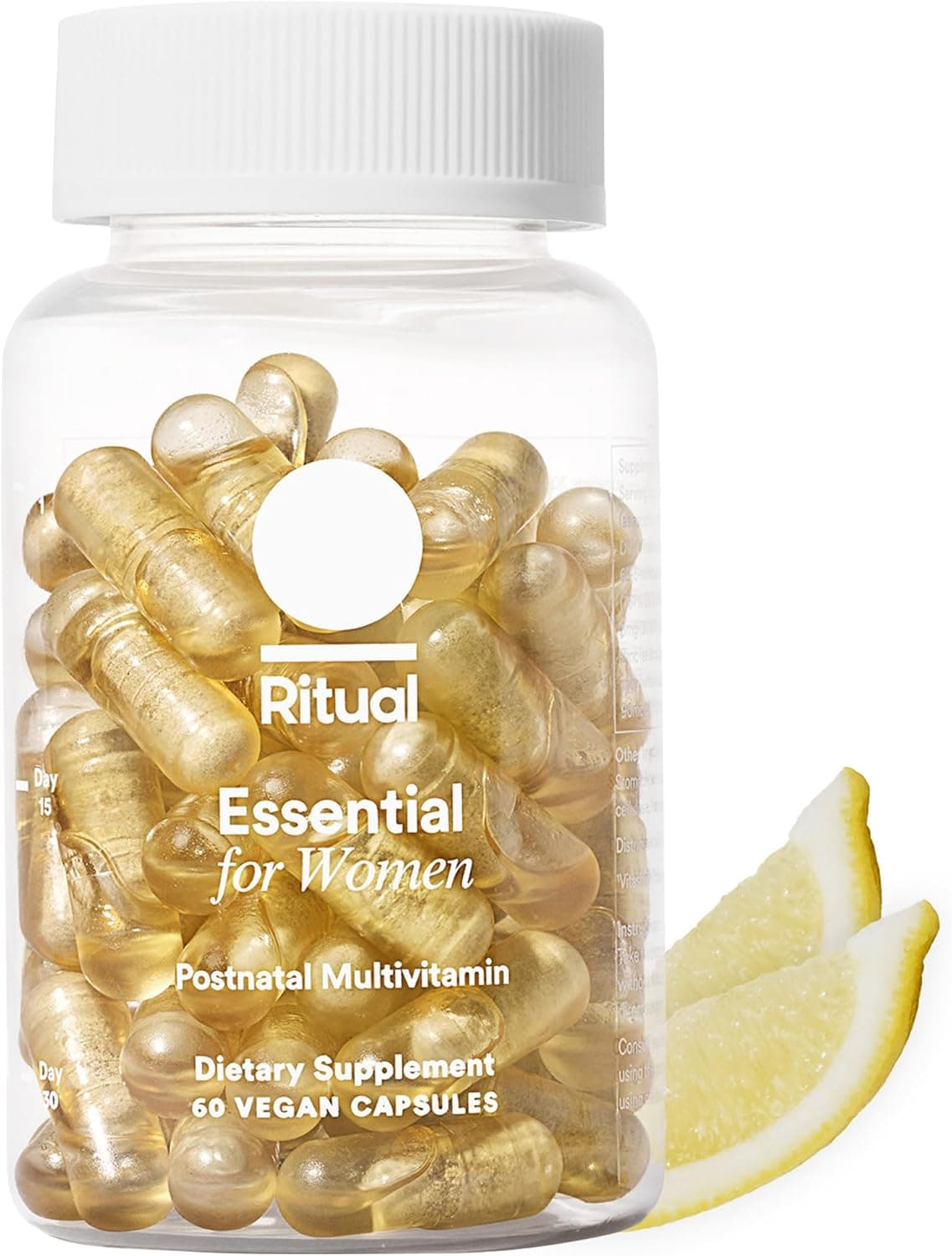
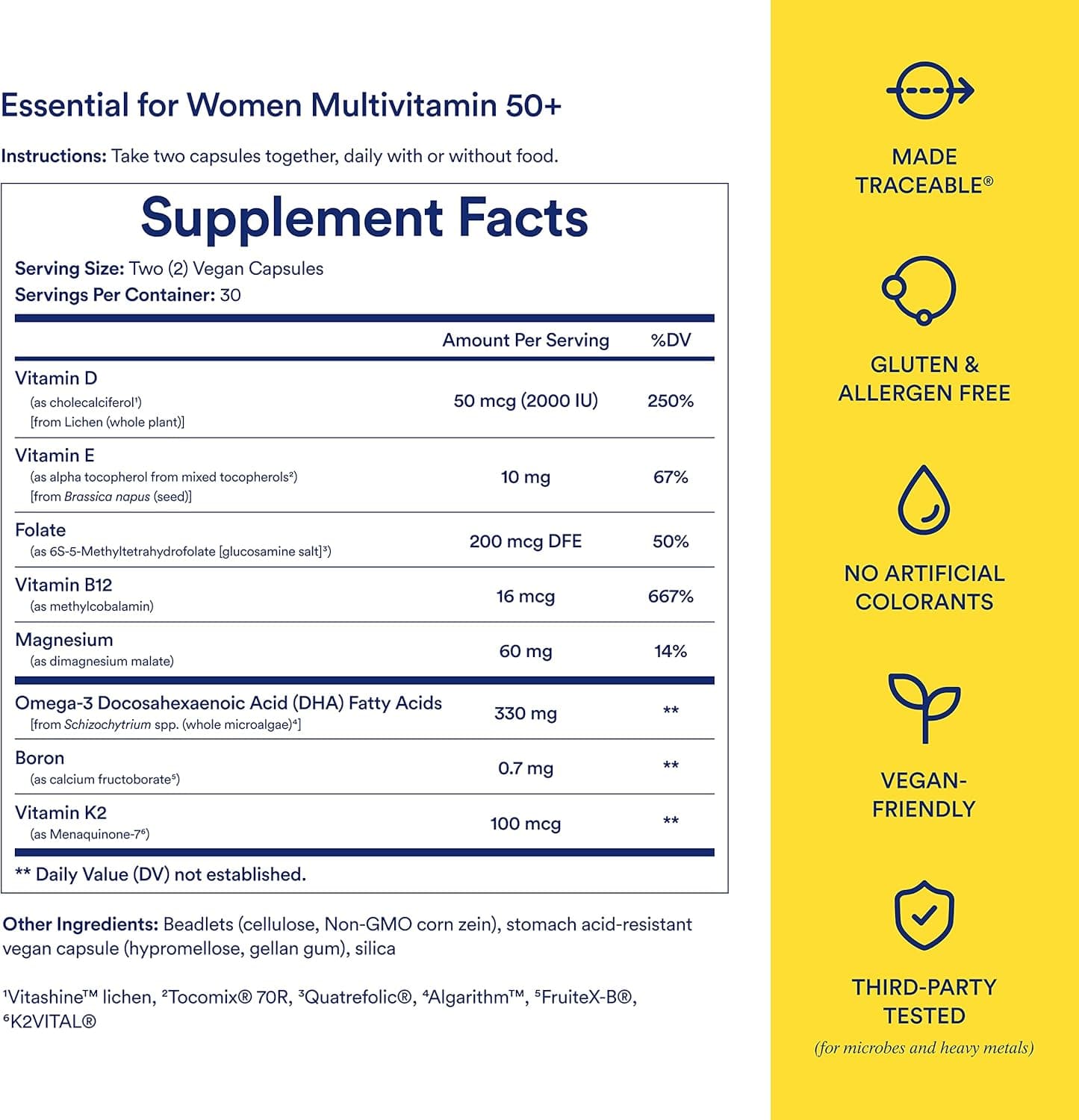
Gellan Gum.
A plant-based gelling agent that gives gummy supplements their texture. Technically a fiber, practically a filler. Creates gel structures in gummy vitamins and stabilizes liquid supplement formulations.
Reviewed March 2026
- Category
- Fiber
- Also filed under
- Gelling and stabilizing agentTechnically a soluble fiber
What Gellan Gum is, and what it does.
- Does it work
- Excellent at its job (texture). No health value at supplement doses.
- How much to take
- There's no daily amount for a texturiser. What's in a product is whatever sets the gel or holds particles in suspension, usually a fraction of a percent of the formula.
- Time to feel it
- It does its work the moment the product is made, setting a gel or holding particles in suspension, then passes through undigested. It's not an active and has no onset.
- The first dose
- Nothing beyond the texture of whatever you're taking.
- With regular use
- It passes through undigested every time, so nothing accumulates. Its contribution stays what it was on day one: the texture and stability of the product carrying it.
- How well tolerated
- FDA GRAS. EFSA approved. Well-tolerated. May cause mild bloating in very sensitive individuals.
- How it feels
- Chewy, if it's in a gummy. Otherwise invisible.
- The overlooked benefit
- Far below gelling levels it forms a weak fluid gel, so calcium or protein stays suspended in a thin drink. The last mouthful carries what the first one did.
The proof, claim by claim.
These words describe the research, not the molecule's worth. Research strength is how much work stands behind one claim, and it is never a product score.
- Well tolerated gelling agentFDA GRAS; EFSA 2018
Questions people ask about Gellan Gum.
- Is gellan gum natural?
- It's produced by bacterial fermentation, similar to how yogurt or vinegar is made. Not synthetic, but also not something you'd find growing on a tree.
- Is it vegan?
- Yes. No animal products involved. It's made by bacteria eating sugar.
- Does it have fiber benefits?
- Technically it's a soluble fiber, but you'd need grams for gut benefits. Supplements contain milligrams.
- Is it the same as xanthan gum?
- Similar concept (both are bacterial fermentation products), but different bacteria and different gel properties. Gellan gum makes firmer gels.
- Can it cause digestive issues?
- Very unlikely at supplement doses. Some people with sensitive guts notice bloating from gums in general, but the amounts here are tiny.
- Why is it in my supplement?
- If it's a gummy or liquid, gellan gum is creating the texture. It's the thing making your gummy chewy and your liquid smooth.
Why these belong in the same formula. Each row says what the basis is, from settled biochemistry through to a trial that measured the pair.
Low acyl gellan sets when divalent cations bridge its helices, and calcium does this most strongly. A calcium fortified beverage and gellan are a paired system, with calcium level driving gel strength.
Calcium carbonate is insoluble and settles out of a still beverage. The fluid gel gellan builds holds the particles in suspension without adding much viscosity.
Magnesium ions crosslink gellan helices in the same way calcium does, though less strongly. Adding a magnesium salt changes set point and texture, so the two are formulated against each other.
Monovalent cations such as potassium screen the charge on gellan chains and promote gelation, at higher concentrations than calcium needs. Electrolyte drinks carrying potassium reach gel set at lower gum levels.
Sodium ions screen the carboxyl charge along the gellan backbone and let the double helices associate. A salted electrolyte base changes how much gellan is needed for the same suspension.
Creatine monohydrate has limited solubility and drops out of a ready to drink format. Gellan builds a weak yield stress that keeps the crystals dispersed between shakes.
Below the protein isoelectric point whey carries a positive surface charge and the anionic gellan associates with it, which can either stabilise or flocculate the drink. The pairing is managed deliberately in protein beverage design.
Gellan adsorbs to casein micelles through charge interaction and bridges them, which suspends cocoa and mineral particles in dairy style drinks. Too much gum flips this into bridging flocculation.
Gellan sets a short, brittle gel that breaks cleanly, while xanthan gives a shear-thinning fluid that holds particles without setting. Blended, the two build a weak gel network that keeps insoluble actives suspended in a drink yet still pours. This is a texture and stability pairing, not a physiological one.
Alginate and gellan are both anionic polysaccharides that firm up in the presence of calcium ions, so a shared calcium source can set a mixed network. Formulators combine them to make beads and capsules with a controlled release rate. Neither polymer is absorbed.
Ubiquinone is lipid-soluble and creams or sediments in water-based formats. Gellan builds enough yield stress to hold an emulsified oil phase in place without a heavy gum texture. A suspension aid only. No claim about uptake is intended.
Astaxanthin is delivered as an oil dispersion, which separates in a still beverage. A gellan network stabilises the droplets and slows creaming. This is physical stability in the bottle.
Gellan is used as an encapsulation matrix for live cultures because it gels at ambient temperature once cations are present, which avoids a hot processing step. The gel bead also buffers cells against moisture and acid during storage and transit. Whether a given product delivers more live organisms depends on that product, not on the polymer alone.
The glucuronic acid units in gellan carry a negative charge and bind divalent cations, which is exactly how the gel sets. In a shared gut lumen the same carboxyl groups can associate loosely with iron, so a heavily gelled matrix is a plausible place for mineral binding. This is chemistry, not a measured reduction in iron status, and gellan is normally used at fractions of a percent.
Zinc is a divalent cation and is drawn to the same anionic sites on the gellan chain that calcium uses to set the gel. At the low use levels typical in beverages the amount of zinc involved is small. Flagged as a chemical interaction to be aware of when formulating a mineral drink, not as an observed effect on zinc status.
Both add non-starch polysaccharide and both raise the viscosity of the fluid phase of a meal, so the effects on thickness stack. In practice the combination is used to reach a target texture at a lower total gum load. Higher total viscous fibre also means more attention to fluid intake.
Inulin is readily fermented by colonic bacteria, while the gellan backbone is not a substrate human enzymes handle and is fermented only to a limited degree. Combining them separates the viscosity job from the fermentation job. The two contribute to total fibre through different routes rather than reinforcing each other.
Hyaluronic acid is another anionic polysaccharide that raises solution viscosity at low concentration. Co-formulated with gellan it contributes slip and body in a liquid or topical base. The pairing is textural.
Cholecalciferol is fat-soluble and is added to ready-to-drink formats as an oil-based or beadlet form that tends to rise or settle. A gellan fluid gel holds it in place so each serving carries the labelled amount. Nothing here changes vitamin D metabolism.
Talk to a doctor before taking Gellan Gum if any of these apply to you: Not an active ingredient at supplement doses, May cause mild bloating in sensitive individuals. These are flags to check first, not effects Gellan Gum is known to cause.
Not medical advice. Show the label to your pharmacist.What Gellan Gum actually does.
Gellan is a long sugar chain that carries a small negative charge. Add minerals such as calcium or potassium and the chains link together, which is what makes the liquid set.
The body has no enzyme that breaks gellan apart, so it travels through the gut as fibre rather than being digested.
Leave the natural side groups on and you get a soft springy gel. Strip them off and the same polymer sets firm and brittle. Two different textures from one ingredient.
A tiny amount makes a drink just structured enough to stop powders sinking, without making it feel thick.
Where Gellan Gum comes from.
A bacterium is fed sugar in a tank and secretes this gum as slime. The gum is washed out, dried and milled into powder.
Built by fermentation, the same way vitamin B12 and many amino acids are made at scale. Controlled conditions, consistent output.
Glucose or sucrose with nitrogen and mineral salts, prepared as a sterile broth.
The bacterium secretes gellan as an extracellular polysaccharide into the broth, which thickens as the polymer accumulates.
Cells are removed or lysed and the polymer is precipitated with alcohol or isopropanol.
Alkaline treatment at this stage removes the acetyl and glyceryl groups to give low acyl gellan. Omitting it keeps the high acyl form.
The recovered polymer is dried, milled to a defined particle size and standardised for gel strength.
The forms it comes in.
The studies, linked.
3 sources behind our Gellan Gum verdict: peer-reviewed studies and registered clinical trials. Every one links straight to PubMed, the journal, or ClinicalTrials.gov. Read them yourself.
- Clinical trialEffects of Gellan Gum on the Glycemic, Gastrointestinal and Appetitive Responses to a White Rice Meal Assessed by MRIClinicalTrials.gov ↗12 participants, Completed
- Clinical trialThe Effects of Gellan Gum on the Acute Glycaemic and Appetitive Responses to a White Rice Meal and Impact on Energy Intake Over 7 DaysClinicalTrials.gov ↗8 participants, Completed
- Clinical trialEffectiveness and Safety of a Hydrating Gel Containing Aqua, Carrageenan, Polyvinyl Pyrrolidon, Algin, Gellan Gum, and Hyaluronic Acid Applied After and Without Fractional CO₂ Laser TherapyClinicalTrials.gov ↗51 participants, Not yet recruiting
Evidence surfaced via Semantic Scholar (Allen Institute for AI) and ClinicalTrials.gov. Ranked by study type and citation weight, not cherry-picked.
FDA Disclaimer: These statements have not been evaluated by the Food and Drug Administration. This information is for educational purposes only and is not intended to diagnose, treat, cure, or prevent any disease. Consult your healthcare provider before starting any supplement regimen.