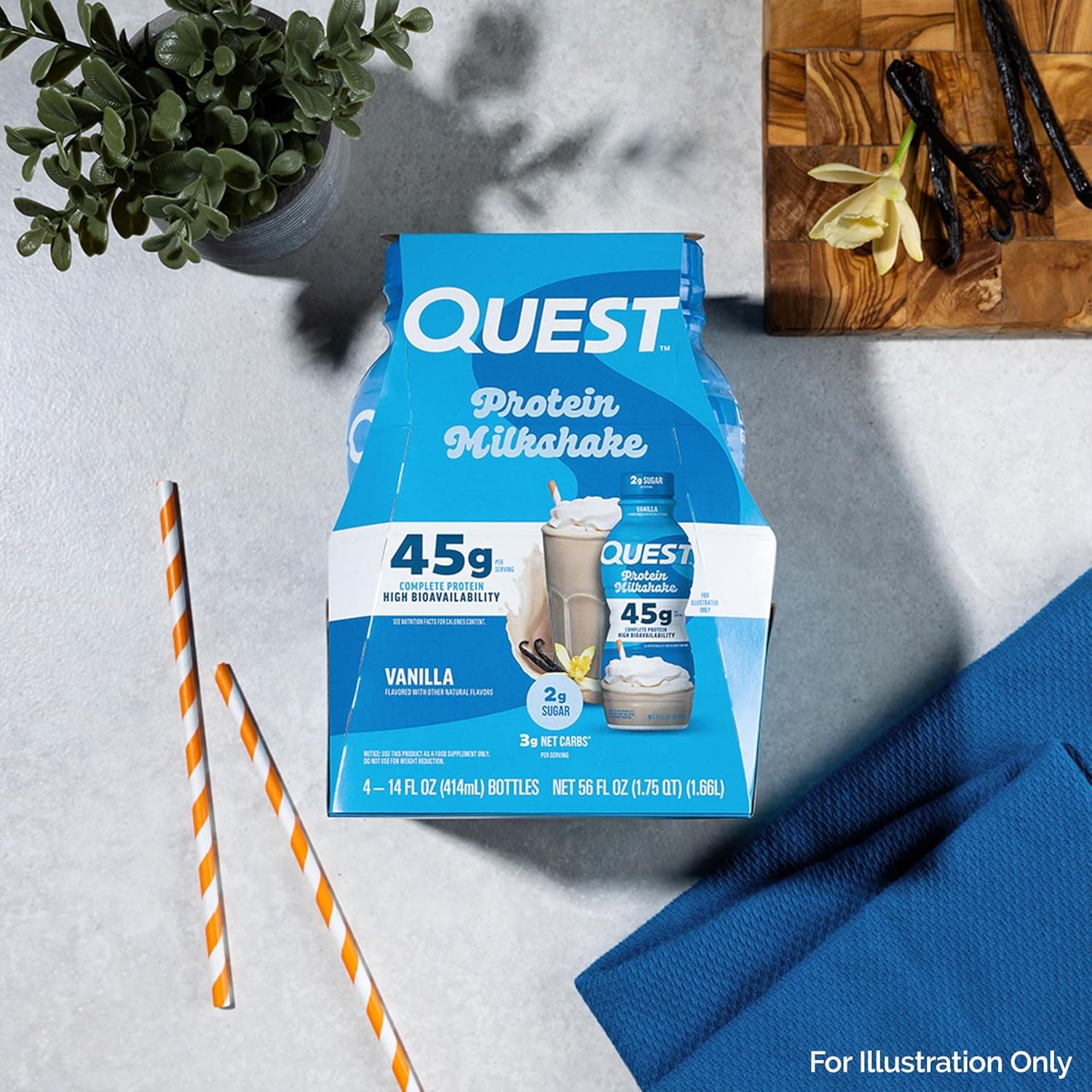
Whey Protein Concentrate.
The gold standard for muscle protein synthesis. Complete protein with high leucine content that your body absorbs fast. Delivers fast-absorbing, leucine-rich protein to trigger muscle protein synthesis. Helps you build muscle, recover from workouts, and hit your daily protein target when food alone falls short.
Reviewed March 2026
- Category
- Amino acid
- Also filed under
- Stimulates muscle protein synthesisSupports post exercise recoveryComplete essential amino acid profileMay support weight management (increased satiety)Contains immunoglobulins and lactoferrin
What Whey Protein Concentrate is, and what it does.
- Does it work
- It suits anyone training who struggles to hit a daily protein target from food, or who wants a fast leucine hit after a session. Whole food protein does the same job when you can eat it.
- How much to take
- 20-40g per serving. 20g is enough for most people post-workout (provides about 2.5g leucine). If you're over 40 or weigh more than 200 lbs, aim for 40g to maximize muscle protein synthesis.
- Time to feel it
- Plasma amino acids peak within about an hour of a serving. The training results build across weeks, and most trials read them at eight to twelve weeks.
- The first dose
- You might notice less post-workout soreness if you take it right after training. Mostly you'll just feel fuller for a couple hours. No dramatic acute effects.
- With regular use
- Over three to four months alongside resistance training, meta-analyses show extra lean mass and strength versus training alone. The driver is total daily protein.
- How well tolerated
- Well tolerated for healthy people. May cause bloating or gas if you're lactose-sensitive (concentrate has more lactose than isolate). No evidence that high protein intake damages healthy kidneys.
- How it feels
- Post-workout shake gives a pleasant sense of refueling. Some people get mildly bloated. Over time, you just notice you're less sore and recovering faster between sessions.
- The overlooked benefit
- Whey is the highest cysteine food protein there is, and cysteine is the rate limiting input to glutathione. A daily shake quietly supports that pathway as well as muscle.
20 to 40g a day is where Whey Protein Concentrate works.
Source: Morton et al. 2018 Br J Sports Med meta-analysis (49 RCTs); Jager et al. 2017 JISSN position stand.
The proof, claim by claim.
These words describe the research, not the molecule's worth. Research strength is how much work stands behind one claim, and it is never a product score.
- Builds muscle when combined with resistance training
- Faster absorbing than other proteins
- Superior to plant protein for muscle building
Questions people ask about Whey Protein Concentrate.
- Concentrate vs isolate: what's the real difference?
- Concentrate is 80% protein with some fat and lactose. Isolate is 90%+ protein with almost no lactose. For most people, concentrate works just as well and costs 30-40% less.
- Does the anabolic window matter?
- It exists but it's about 4-6 hours, not 30 minutes like gym bros claim. As long as you have protein within a couple hours of training, you're fine.
- Can I take whey on rest days?
- Absolutely. Your muscles repair on rest days. Hitting your daily protein target matters more than timing around workouts.
- Will whey make me bulky?
- No. Whey provides protein, not magic muscle. Without serious resistance training and a caloric surplus, you won't accidentally become a bodybuilder.
- Is whey bad for your kidneys?
- Not if your kidneys are healthy. This myth has been debunked repeatedly. If you have existing kidney disease, talk to your doctor about total protein intake.
- How many scoops per day?
- Most people need 1-2 scoops (20-40g each). Focus on total daily protein: aim for 0.7-1g per pound of body weight from all sources combined.
What the trials show about these together.
Outcomes the engine found studied for these actives as a combination, not one at a time. Each is a finding a named trial measured, cited and dated, never written by the brand.
- Early
In a meta-analysis of three randomized trials in adults with sarcopenia, whey protein with leucine and vitamin D increased appendicular muscle mass compared with control, while grip strength and physical performance improved only in the trials that also ran an exercise program.
Chang and Choo, 2023 (Nutrients)PMID 36771225
Research strength. Research strength says how much work stands behind the combination. It is never a product score.
Fail closed. Where actives were studied on their own rather than together, each shows on its own evidence, never a combined effect no trial measured.
Independent record. Every finding is cited to a named trial, dated, and never written by the brand.
Findings from trials that studied these actives as a combination. Context for how the actives were tested together, not a statement about any individual and not a claim about this product.
Why these belong in the same formula. Each row says what the basis is, from settled biochemistry through to a trial that measured the pair.
Concentrate retains roughly 3 to 6 percent lactose depending on protein grade, and lactase hydrolyses that lactose into glucose and galactose in the small intestine.
Concentrate carries the same leucine-rich amino acid profile that switches on mTORC1 signalling. Free leucine lifts the blood leucine peak that drives it.
Protein supplies building substrate while creatine loads the phosphocreatine pool for ATP regeneration. Separate systems, separate transport, no competition.
Concentrate carries milk minerals, so each serving adds meaningful calcium to daily intake, and that calcium load is also what blunts non-heme iron uptake in the same meal.
The milk calcium and casein-derived peptides in concentrate bind non-heme iron in the gut lumen and lower its absorption. Concentrate interferes more than isolate because it carries more mineral.
Collagen is high in glycine and proline but carries no tryptophan and little leucine, and whey supplies exactly those. The two profiles fill each other's gaps.
Concentrate retains more of the native cysteine-rich whey fractions than isolate, feeding the same rate-limiting substrate for glutathione synthesis that NAC supplies.
Whey protein is already a substantial source of glutamine and glutamate, so free glutamine adds to a pool the protein supplies in part.
HMB sits downstream of leucine metabolism, and concentrate already delivers leucine in bulk, so the two share one signalling route.
Added proteases hydrolyse whey peptides ahead of the brush border, and lactase in the same blend acts on the residual lactose that concentrate retains.
Whey stays soluble at gastric pH and empties quickly, so plasma amino acids rise sharply and fall back. Casein clots in acid and empties slowly, giving a lower and longer rise. Blending them spreads amino acid availability over more of the day. The kinetic difference is settled measurement. Which pattern suits a given eating schedule is a practical question, not a ranking.
Lactoferrin is one of the minor proteins already present in whey, and concentrates retain more of these native fractions than heavily processed isolates do. Adding purified lactoferrin raises the amount of that one protein well above what the concentrate carries. Heat during processing denatures it, so the amount surviving in a given powder depends on how it was made.
Transaminases, which move amino groups between amino acids and keto acids, all run on pyridoxal 5-phosphate. A large protein load therefore raises the demand on B6-dependent enzymes handling the amino acids that are not used for protein synthesis. This is a cofactor requirement, not a claim that B6 makes protein work better.
Whey is unusually rich in the sulfur amino acids cysteine and methionine, and the final step of their catabolism is sulfite oxidation by sulfite oxidase, a molybdenum-dependent enzyme. Molybdenum is therefore part of how a sulfur-rich protein load is processed. Ordinary diets cover the requirement. The point here is the pathway, not a dosing suggestion.
Methionine from a protein load passes through homocysteine, which is either remethylated or committed to cysteine synthesis. Betaine donates a methyl group in the betaine-homocysteine methyltransferase route, one of the two remethylation paths. This describes where a dietary methionine load goes. Homocysteine is a marker and no clinical outcome is claimed here.
Methionine synthase needs B12 as its cofactor and 5-methyltetrahydrofolate as its methyl donor to convert homocysteine back to methionine. A high protein intake increases traffic through that junction. The relationship is a cofactor requirement of the pathway, stated at the level of biochemistry rather than an effect.
5-methyltetrahydrofolate is the methyl donor that methionine synthase uses on homocysteine derived from dietary methionine. Whey supplies a generous methionine load, so the folate-dependent step carries more traffic. Homocysteine concentration is a marker of how that pathway is running, not an outcome in itself.
A plant protease cuts intact whey proteins into shorter peptides before brush-border peptidases finish them. Studies of protease co-ingestion with whey read out as postprandial plasma amino acid concentrations, which measure how fast amino acids appear rather than how much muscle is built. Whether the faster appearance matters depends on whether digestion was the limiting step to begin with.
Bromelain is a cysteine protease active across a wide pH range, so it can begin cleaving whey in the stomach as well as further along. Marketed protein powders add proteases for that reason. The measurable endpoint is plasma amino acid appearance, a marker, and the effect size varies with the enzyme amount and the meal.
Pepsin only works in an acid stomach, and betaine hydrochloride lowers gastric pH toward that range. For someone with low stomach acid this is a plausible route to more complete protein breakdown. Whether that changes amino acid uptake from a whey serving in a normally acidic stomach has not been shown.
Pepsin makes the first cuts in dietary protein in the stomach, before pancreatic proteases continue the work. Whey passes through that stage quickly because it does not clot. Adding pepsin is a mechanistic pairing. The outcome measurable from it is the rate amino acids appear in plasma.
Tannins cross-link and precipitate proteins, which is the same chemistry that clouds tea with milk. Mixing a tannin-rich extract into a whey drink binds part of the protein into complexes. The precipitate is less accessible to proteases, so this is a formulation problem more than a nutritional one.
Catechins bind milk proteins, which is why adding milk to green tea changes both taste and the measurable free catechin content. In a combined drink each ingredient masks part of the other. Neither is destroyed, but the free catechin available for absorption falls.
Viscous fibre slows gastric emptying, which flattens the sharp rise in plasma amino acids that makes whey a fast protein. That is a change in kinetics rather than in total absorption. Whether it matters depends on whether the fast rise was the point of taking whey.
Glucomannan forms a very high viscosity gel that slows the movement of a meal out of the stomach. Taken in the same drink as whey it would blunt the rapid amino acid appearance whey is used for. This is a predicted kinetic effect, not one measured for this pair.
Protein that escapes small intestinal absorption is fermented in the colon to ammonia, branched-chain fatty acids and sulfur compounds, and the resident community decides which. Supplementation studies with animal and plant proteins report shifts in microbial community structure. Predicted metabolic potential from sequencing is an inference about what a community could do, not a measurement of what it did.
When fermentable carbohydrate is available, colonic bacteria use it in preference to protein, which shifts fermentation away from ammonia and sulfur products. Pairing a fibre with a high protein intake is the practical version of that. The mechanism is well described in fermentation work. The pairing has not been measured with whey concentrate specifically.
Protein supplies the substrate for muscle protein synthesis while vitamin D status is associated with muscle function measures, so trials in older adults often give both. Combination trials cannot attribute a result to one component. Where a nutrient is already sufficient, adding more of it is not expected to add anything.
Hundreds of enzymes and transcription factors involved in protein turnover carry structural or catalytic zinc. Dairy protein also contributes some zinc of its own, though calcium in the same matrix competes for uptake. The relationship is a cofactor one. Nothing here says extra zinc adds to a training result.
Whey is insulinotropic, meaning a serving raises insulin, which is part of how amino acids are driven into tissue. Chromium is studied for insulin signalling markers. Both touch the same signalling readouts, and glucose and insulin values are markers rather than outcomes.
Citrulline raises plasma arginine and nitric oxide availability, which is studied for blood flow to working muscle, while whey supplies the amino acids that arrive with that flow. The pairing is common in training products. Delivery and substrate are different limitations and the combination has not been isolated in the studies retrieved here.
Colostrum and whey concentrate overlap in their minor protein content, including immunoglobulins and lactoferrin, because both come from milk. Stacking them mostly increases the amount of the same fractions. Both also carry lactose, which is the practical consideration for anyone who reacts to it.
Leucine is the amino acid that switches on muscle protein synthesis through the mTOR pathway, and whey is the protein source richest in it. Adding free leucine to a whey serving raises the leucine dose without raising the total protein, which is why the two travel together in muscle-support formulas.
Talk to a doctor before taking Whey Protein Concentrate if any of these apply to you: Not suitable for those with milk allergy, May cause GI issues in lactose-sensitive individuals (contains some lactose), Quality varies between brands. These are flags to check first, not effects Whey Protein Concentrate is known to cause.
Not medical advice. Show the label to your pharmacist.What Whey Protein Concentrate actually does.
Whey stays dissolved in stomach acid and moves through fast, so amino acids show up in plasma as a quick, high, short-lived rise. Casein does the opposite, clotting in acid and emptying slowly. That's all fast and slow protein means, a measured timing property rather than a judgement on either.
Whey is rich in leucine, and leucine is the amino acid that signals through mTORC1 to switch on muscle protein synthesis. The signal and the building material arrive in the same serving, which is the biochemical basis for using it around training.
A whey serving lifts insulin along with amino acids. Insulin drives those amino acids into tissue, so the insulin response is part of how the protein gets handled rather than a side issue.
Concentrate is defined by what ultrafiltration leaves in, not only by what it keeps out. It retains part of the lactose, fat and milk minerals that isolate removes, so it carries more lactose, and lactose tolerance is the practical dividing line between the two.
Getting Whey Protein Concentrate from food.
The whole-food sources on file. A supplement closes the gap, it does not replace dinner.
A gram-for-gram figure (how much of each you would eat to match a dose) will appear here once it is sourced and reviewed. This page will not print a number it cannot cite.
The forms it comes in.
The essence, in one line each.
- Pools trials of whey and of soy protein supplementation alongside resistance training in young adults and reports strength and lean mass changes. Where a between-source comparison finds nothing, that is a failure to detect a difference and not a demonstration that the sources match.Systematic review. Davis et al., 2026 (Journal of Dietary Supplements). PMID 41454445 ↗
- Compares longer-term animal-derived and plant-derived protein supplementation on body composition, muscle strength and physical performance. The review is the place to read the direction and size of any difference, and a null comparison does not license a superiority claim in either direction.Systematic review. Yimam et al., 2026 (Frontiers in Nutrition). PMID 41994089 ↗
- Co-ingesting an oral microbial protease with whey protein changed postprandial plasma amino acid concentrations. Plasma appearance is a marker of digestion and absorption rate, not a measure of muscle protein accrual.Randomised trial. Huang et al., 2025 (The Journal of Nutrition). PMID 40675336 ↗
- Reports postprandial plasma amino acid and appetite ratings when whey or pea protein was added to a low-protein breakfast. Amino acid curves and appetite scores are markers taken over hours, not body composition outcomes.Randomised trial. Korzepa et al., 2025 (European Journal of Nutrition). PMID 39932545 ↗
- Reports blood cholesterol and related lipid measures with oral whey protein concentrate and with its hydrolysates. Circulating lipids are markers and the two preparations are reported separately because processing changes the peptide profile.Randomised trial. Paik et al., 2026 (Clinical Nutrition Research). PMID 41837400 ↗
- Animal-derived and plant-derived protein supplementation shifted gut microbial community structure and the metabolic potential predicted from sequence data. Predicted potential is a computational inference about capability, not measured metabolite production.Randomised trial. Kroplewski et al., 2026 (Nutrients). PMID 41829938 ↗
- Whey protein concentrate lowered oxidative stress markers in brain tissue of ageing rats. Tissue markers in an animal model, which grounds a mechanism and is not human evidence for any effect.Animal study. Garg et al., 2018 (Applied Physiology, Nutrition, and Metabolism). PMID 29199432 ↗
- Combines computational docking of whey protein concentrate peptides with measurements in an animal model. Docking predicts binding and nothing more, and the animal arm carries the only biological measurement.Animal study. Al-Rashedi et al., 2026 (Frontiers in Nutrition). PMID 42211111 ↗
- Compares collagen hydrolysate protein complexes on endurance, glucose handling and kidney measures in rodents, with whey appearing as one comparator protein. Animal endpoints, and whey is not the intervention under study.Animal study. Kurkin et al., 2026 (Nutrients). PMID 42280377 ↗
These are the studies our verdict leans on, chosen from the 9 we read for Whey Protein Concentrate. The full linked list is below.
The studies, linked.
10 sources behind our Whey Protein Concentrate verdict: peer-reviewed studies and registered clinical trials. Every one links straight to PubMed, the journal, or ClinicalTrials.gov. Read them yourself.
- Clinical trialRandomized Controlled Evaluation of the Impact of Food Supplements on Malnourished HIV-Infected Adult ART Clients and Malnourished, HIV-Infected Pre-ART Adults in KenyaClinicalTrials.gov ↗1,049 participants, Completed
- Clinical trialFeeding Infant Formula With Added Probiotics and Whey Protein ConcentrateClinicalTrials.gov ↗800 participants, Completed
- Clinical trialThe Effects of Different Protein and Amino Acid Supplements of Muscle Hypertrophy After 12 Weeks of Resistance Exercise in Untrained MenClinicalTrials.gov ↗89 participants, Completed
- Clinical trialA Pilot Study to Examine the Effect of Pea Protein on Limiting the Loss of Muscle Mass During Weight LossClinicalTrials.gov ↗60 participants, Completed
- Clinical trialAthlete Whey Protein Sensitivity: Prevalence and PerformanceClinicalTrials.gov ↗36 participants, Completed
- Clinical trialGlycaemic Response and Insulinaemic Response for Nutralys S85 Plus and Whey ProteinClinicalTrials.gov ↗30 participants, Completed
- Clinical trialComparison of High and Low Protein Dose With Multi-ingredient Supplementation for Body Composition and Exercise Performance in Elite Rugby PlayersClinicalTrials.gov ↗20 participants, Completed
- ClinicalTrials.gov ↗
- ClinicalTrials.gov ↗
- Clinical trialBioavailability of Amino Acids and Metabolic Products Following Oral Ingestion of Plant-Based Proteins in Young, Healthy Men and Women Aged 18-35yClinicalTrials.gov ↗10 participants, Completed
Evidence surfaced via Semantic Scholar (Allen Institute for AI) and ClinicalTrials.gov. Ranked by study type and citation weight, not cherry-picked.
FDA Disclaimer: These statements have not been evaluated by the Food and Drug Administration. This information is for educational purposes only and is not intended to diagnose, treat, cure, or prevent any disease. Consult your healthcare provider before starting any supplement regimen.