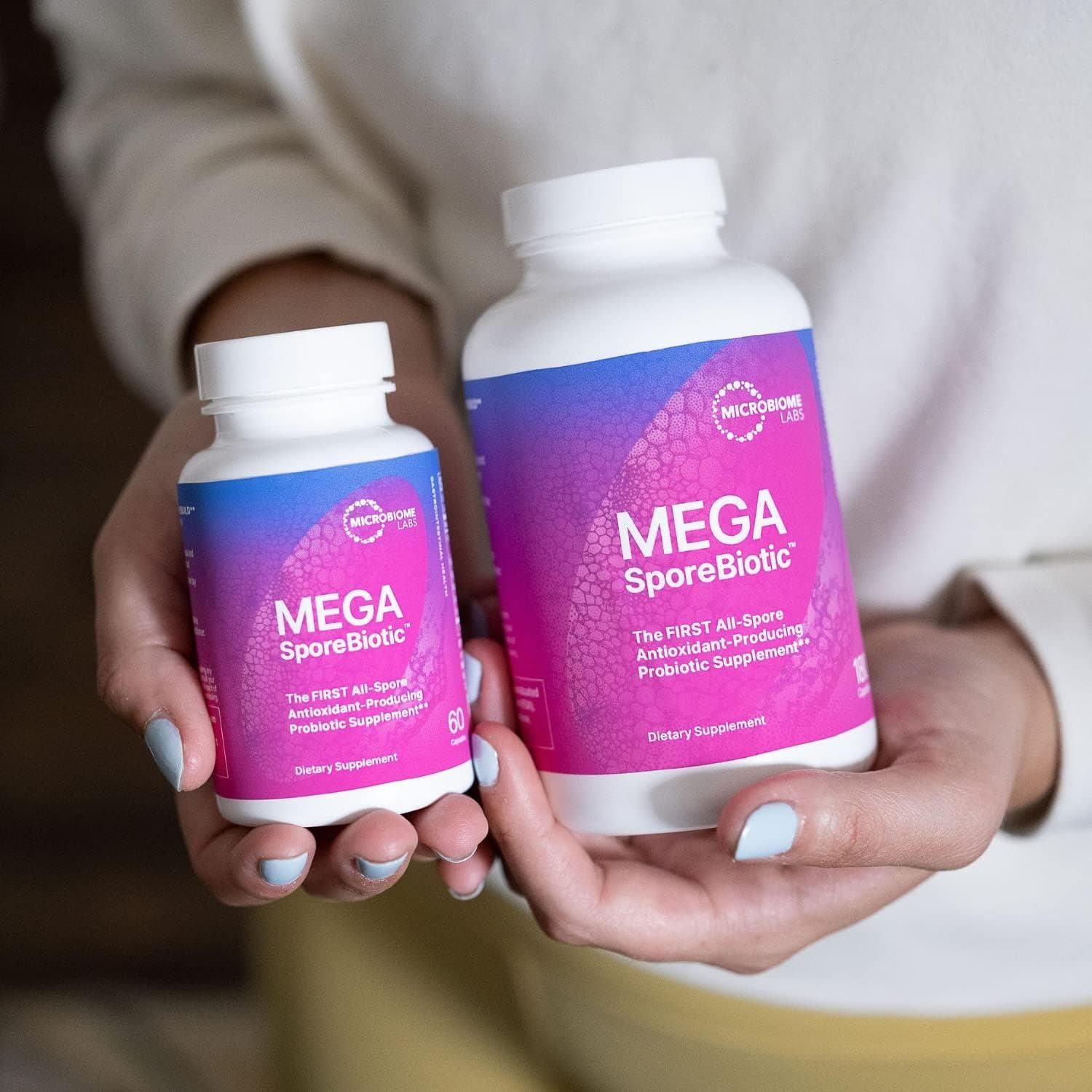
Bacillus indicus.
A spore-forming bacterium that survives stomach acid, germinates in the intestine and passes through over days. It also makes its own orange carotenoid pigment.
- Category
- Probiotic
What Bacillus indicus is, and what it does.
- Does it work
- Suits people who want a probiotic that keeps without a fridge, and travellers. Effects are strain-specific, so the strain code on the label is the thing to read.
- How much to take
- No settled daily amount is on record. Spore probiotics are declared in billions of spores per serving rather than milligrams, so start with the maker's serving.
- Time to feel it
- Digestive changes with spore probiotics generally show up over one to three weeks of daily use. Since the species is transient, effects track continued intake.
- The first dose
- Some people get a bit of extra gas or gurgling on day one as spores germinate. Others notice nothing, and that is normal this early.
- With regular use
- Continued daily intake keeps a transient population moving through. It clears within days of stopping, so this works as a habit rather than a course with an endpoint.
- How well tolerated
- Generally well tolerated in healthy adults. Anyone immunocompromised, on chemotherapy or with a central line should check with a clinician before taking a live organism.
- How it feels
- Little to feel beyond the gut settling, or a bit more gas early on. No energy effect and nothing stimulating.
- The overlooked benefit
- It is the pigmented one. The carotenoids that turn its colonies orange are made by the organism itself, which is what sets it apart from other commercial Bacillus species.
The proof, claim by claim.
What these words mean
These words describe the research, not the molecule's worth. Research strength is how much work stands behind one claim, and it is never a product score.
- spore survival through stomach acid and bileIn vitro study
- room-temperature shelf stability of the spore formIn vitro study
3 more claims
- carotenoid production by the organism in the gutNarrative review
- digestive comfort with spore-forming Bacillus blendsRandomised trial
- transient rather than resident gut passageNarrative review
Why these belong in the same formula, 11 pairings
Why these belong in the same formula. Each row says what the basis is, from settled biochemistry through to a trial that measured the pair.
A germinated Bacillus spore needs fermentable substrate to establish any transient activity in the colon. Inulin passes the small intestine intact and arrives as that substrate. Pairing a spore former with a fructan is the standard synbiotic construction. It supports germination conditions rather than acting on the organism directly.
Short-chain fructans ferment earlier in the colon than long-chain inulin, which shifts where substrate is available. For a spore that germinates in the upper intestine, that earlier availability is the relevant window. The trade-off is more gas for people who are sensitive to fermentable carbohydrate.
Resistant starch survives amylase digestion and ferments distally, supporting activity further along the colon than fructans do. Bacillus species carry amylolytic enzymes that can act on starch substrates. The pairing extends substrate availability rather than changing what the organism is.
Bacillus indicus is a pigmented species, and its orange colour comes from carotenoid compounds it synthesises. That is a defining feature of the organism rather than a demonstrated benefit in people. Counting it alongside dietary carotenoid intake is the honest framing. No human study has measured carotenoid delivery from this species.
Activated charcoal adsorbs organic material broadly across the gut lumen and does not distinguish a probiotic from anything else. Taking the two together in the same window undermines the point of both. Separate them by several hours. This is an anti-synergy worth flagging on the label.
Carvacrol and thymol are active against gram-positive bacteria, which includes Bacillus species. Running an antimicrobial botanical in the same protocol works against a live spore product. Spores tolerate this better than vegetative cells, but germination is the vulnerable step. Stagger them rather than stacking them.
S. boulardii is a yeast and is unaffected by antibacterial pressure that would knock back a Bacillus. Combining organisms from different kingdoms gives a product whose components fail under different conditions. That is a formulation robustness argument, not a demonstrated clinical additive effect.
Commercial spore products almost always combine several Bacillus species rather than using one alone, because different species carry different enzyme and metabolite profiles. B. indicus is usually the pigmented member of such a blend. The clinical literature that exists sits on blends, not on this species by itself.
Bacillus species are the industrial source of long-chain menaquinone, which is how MK-7 is produced commercially through fermentation. Whether a live spore contributes meaningful menaquinone in the gut is a separate and unanswered question. Read the connection as taxonomic rather than as a delivered dose.
Spore formers and lactic acid bacteria survive different parts of the journey, with spores tolerating stomach acid and shelf storage and lactobacilli acting more in the upper intestine. Products combining them cover both windows. The organisms are not interchangeable and their evidence bases do not transfer to each other.
Layered clay minerals bind bacteria and organic compounds in the gut lumen without selectivity. Taken in the same window as a live culture, they reduce what reaches the intestine intact. Space the two apart.
Nothing specific on file for Bacillus indicus. Match the label to the daily amount above, and tell your doctor what you take.
Not medical advice. Show the label to your pharmacist.What Bacillus indicus actually does.
This bacterium forms spores, a dormant dried-out form that can survive stomach acid, bile and room temperature storage in a way that regular live probiotic bacteria can't.
3 more mechanisms
Because the spore form is what's delivered, these products don't need refrigeration, and their labeled potency is based on spore count rather than living active cells.
This species makes pigments that give its colonies an orange color, which is how it's told apart from other Bacillus species used in supplements.
The spores have to wake up into active cells in the gut before they do anything, so factors like bile, nutrients and how fast things move through determine whether a spore product has any effect at all.
Where Bacillus indicus comes from.
A soil-type bacterium that packs itself into a tough dormant spore. That shell is why it survives the stomach and sits on a shelf without a fridge. It is also the orange one, because it makes its own pigment.
What this route gives you
Built by fermentation, the same way vitamin B12 and many amino acids are made at scale. Controlled conditions, consistent output.
5 steps on record
Carbohydrate and nitrogen medium supporting vegetative growth of the isolate
Culture is grown to high density then nutrient-limited so cells commit to endospore formation
Spores separated from vegetative debris and spent medium by centrifugation and washing
Plate counting sets the declared spore count per gram, with overage added to cover shelf-life decline
Blended with a carrier and dried to a stable free-flowing powder for capsules or sachets
The forms it comes in.
2 more forms
The essence, in one line each.
- A Bacillus-based probiotic was assessed for effects on feed intake and digestibility of forage.Animal study. Eyre et al., 2025 (Veterinary and Animal Science). PMID 40496633 ↗
2 more findings
- A Bacillus-based direct-fed microbial was evaluated for feed intake and total tract digestibility endpoints.Animal study. Souza et al., 2026 (Translational Animal Science). PMID 42148377 ↗
- Feeding a Bacillus-based direct-fed microbial before and after calving was associated with improved performance measures in cows and calves.Animal study. Izquierdo et al., 2024 (Journal of Animal Science). PMID 38647379 ↗
Chosen from the 4 we read for Bacillus indicus.
FDA Disclaimer: These statements have not been evaluated by the Food and Drug Administration. This information is for educational purposes only and is not intended to diagnose, treat, cure, or prevent any disease. Consult your healthcare provider before starting any supplement regimen.