Carvone.
The molecule behind spearmint and caraway aroma. In supplements it rides in mint and caraway oils used for after-meal gut comfort, and it is chiefly a flavour compound.
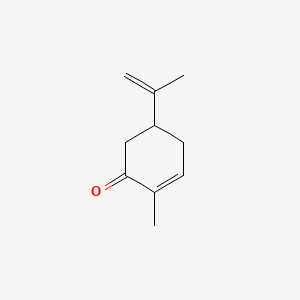 Compound
- Category
- Compound
What Carvone is, and what it does.
- Does it work
- Suits people who want the aromatic fraction of caraway or spearmint named on a label. Most of what is known comes from flavour science and animal work.
- How much to take
- No daily amount is on record. Start with the label amount of the oil that carries it. Delayed-release capsules exist so the oil clears the stomach first.
- Time to feel it
- Aromatic oils act on gut comfort within about half an hour. No human time course has been measured for carvone on its own.
- The first dose
- Mostly taste and smell: spearmint from one form, caraway from the other. Some people get minty burping with plain capsules.
- With regular use
- Long-run human data on carvone alone has not been collected. What use it gets across weeks comes from the oils that carry it.
- How it feels
- Cool and minty, or warm and caraway-like, depending on the form. Beyond taste, most people notice easier comfort after a meal.
- The overlooked benefit
- The two mirror-image forms are the same molecule, and your nose reads one as spearmint and the other as caraway. Which one is in a bottle changes the flavour.
The proof, claim by claim.
What these words mean
These words describe the research, not the molecule's worth. Research strength is how much work stands behind one claim, and it is never a product score.
- relaxation of gastrointestinal smooth muscleIn vitro study
- after-meal digestive comfort from carvone-bearing oilsRandomised trial
3 more claims
- conjugation with thiol groups as a metabolic routeIn vitro study
- antimicrobial activity in laboratory testingIn vitro study
- biosynthesis from limonene through carveolNarrative review
Why these belong in the same formula, 6 pairings
Why these belong in the same formula. Each row says what the basis is, from settled biochemistry through to a trial that measured the pair.
In caraway and dill, limonene is hydroxylated at C6 to carveol, which is then oxidised to carvone. The two therefore travel together in any whole essential oil, and the limonene fraction of a spearmint or caraway oil is not a contaminant but the biochemical parent. Anyone reading a chromatogram should expect both.
Carvone-rich caraway oil and menthol-rich peppermint oil are combined in enteric capsules because both are lipophilic monoterpenes that relax smooth muscle in laboratory preparations. The pairing is a long-standing European formulation convention. Read the combination as pharmacological plausibility plus formulation habit rather than as a demonstrated additive effect in people.
Carvone is a lipophilic volatile with poor water solubility, so it is normally dispersed in a carrier oil before encapsulation. Medium-chain triglycerides dissolve it cleanly and slow evaporative loss during processing. This is a delivery matter, not a claim about what happens after absorption.
Carvone carries an alpha,beta-unsaturated ketone, the structural feature that reacts with thiols. Conjugation to glutathione is a recognised route of handling for this chemical class, which means high exposures draw on thiol pools rather than adding to them. The relevance at culinary or supplemental intakes has not been measured in people.
Lecithin emulsifies volatile terpenes into aqueous beverages and soft gels that would otherwise separate. It also reduces the sharp mouthfeel of a neat monoterpene ketone. The role is entirely formulation.
Caraway and dill, the two main carvone sources, sit alongside ginger in traditional digestive blends across several culinary traditions. The grouping is empirical and old rather than trial-derived. Read it as convention.
Nothing specific on file for Carvone. Match the label to the daily amount above, and tell your doctor what you take.
Not medical advice. Show the label to your pharmacist.What Carvone actually does.
Carvone comes in two mirror-image versions that smell completely different, one smells like spearmint and one like caraway or dill, even though they're the same molecule just flipped.
3 more mechanisms
Plants build carvone from limonene in a couple of chemical steps, which is why limonene and its intermediate show up alongside carvone in natural oils.
Carvone dissolves in fat and evaporates easily, so it tends to escape from open or warm products, which is why it's usually put in a capsule or oil carrier.
Part of carvone's structure makes it chemically reactive toward certain sulfur-containing groups, which is a known way this type of molecule gets processed in the body.
Where Carvone comes from.
Carvone is the molecule behind both spearmint and caraway. Same chemical, flipped like left and right hands, and your nose reads the two versions as completely different smells. Most of what is known about it comes from flavour science and animal work rather than human trials.
What this route gives you
The same molecule is reached more than one way. Which route a given product used is a manufacturing choice, and the finished compound is the same either way.
5 steps on record
Natural carvone is distilled from Carum carvi and Anethum graveolens seed or from Mentha spicata herb. Semi-synthetic routes start from limonene recovered as a citrus processing by-product.
On the semi-synthetic route, limonene is nitrosated and rearranged, or oxidised via carveol, to give carvone of defined handedness.
For the natural route, crushed seed or herb is steam distilled and the volatile fraction separated from the water phase.
Repeated distillation under reduced pressure separates carvone from limonene and other terpenes when an isolate is wanted.
Sold as an enantiopure isolate, as a standardised seed oil, or dispersed in a carrier oil for encapsulation.
Getting Carvone from food.
The whole-food sources on file. A supplement closes the gap, it does not replace dinner.
A gram-for-gram figure (how much of each you would eat to match a dose) will appear here once it is sourced and reviewed. This page will not print a number it cannot cite.
The forms it comes in.
3 more forms
The essence, in one line each.
- The authors report that L-carvone reduced markers of kidney injury and inflammatory signalling in a lipopolysaccharide-challenged mouse model.Animal study. Shareef et al., 2026 (Journal of Taibah University Medical Sciences). PMID 41585603 ↗
Chosen from the 1 we read for Carvone.
FDA Disclaimer: These statements have not been evaluated by the Food and Drug Administration. This information is for educational purposes only and is not intended to diagnose, treat, cure, or prevent any disease. Consult your healthcare provider before starting any supplement regimen.