Cinnamaldehyde.
The compound that makes cinnamon taste and smell like cinnamon. It opens the TRPA1 channel on sensory nerves, which is the warming bite and the nudge to gut movement.
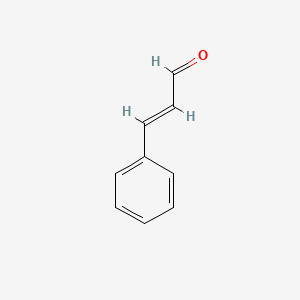 Compound
- Category
- Compound
What Cinnamaldehyde is, and what it does.
- Does it work
- Suits people who want cinnamon's active compound without the coumarin that rides along with bark. Anyone who reacts to fragrance chemicals should be careful with it.
- How much to take
- No daily amount is on record. It's powerful as a flavour at tiny amounts, and in supplements it usually arrives inside a bark extract or a beadlet rather than neat.
- Time to feel it
- The warming, tingling sensation arrives within seconds of tasting it. The slower chemistry that runs through gene expression builds across days to weeks.
- The first dose
- You taste and feel this one immediately: warm, slightly biting, often tingly in the mouth. The rest of its chemistry runs quietly behind that.
- With regular use
- Weeks of daily use keep the Nrf2 driven antioxidant enzymes nudged upward, a change that shows up in laboratory measures rather than as a sensation.
- How well tolerated
- It's a recognised skin sensitiser and a common cause of contact allergy from fragrance exposure, so handle concentrated oil carefully. Check with your doctor about glucose medicines.
- How it feels
- Warm, sharp and unmistakably cinnamon, with a light burn on the tongue. Concentrated oil can feel harsh in the mouth or throat.
- The overlooked benefit
- Almost none of it survives intact. Aldehyde dehydrogenase converts it to cinnamic acid quickly, so what circulates is mostly metabolites rather than the compound itself.
The proof, claim by claim.
What these words mean
These words describe the research, not the molecule's worth. Research strength is how much work stands behind one claim, and it is never a product score.
- Healthy glucose metabolism from cinnamon extractsMeta-analysis
- Antioxidant enzyme expression through Nrf2In vitro study
3 more claims
- TRPA1 activation and gut motilityAnimal study
- Antimicrobial activity in laboratory conditionsIn vitro study
- Contact sensitisation from fragrance and flavour exposureCohort study
Why these belong in the same formula, 10 pairings
Why these belong in the same formula. Each row says what the basis is, from settled biochemistry through to a trial that measured the pair.
Whole cinnamon delivers cinnamaldehyde together with coumarin, cinnamic acid and procyanidins, and the ratio depends heavily on species. Cassia cinnamon carries substantially more coumarin than Ceylon, which is the main reason high-dose cassia intake is limited. Buying isolated cinnamaldehyde and buying cinnamon bark are not the same purchase.
Chromium is involved in insulin signalling amplification, while cinnamaldehyde has been described as an insulin-mimetic in rodent work. Combining them stacks two agents aimed at the same physiology, which is relevant for anyone already on glucose-lowering medication. The rodent evidence for cinnamaldehyde is preclinical and the human evidence is thin. Adults with high blood sugar taking medication should have this combination reviewed by their prescriber.
Berberine has substantially stronger human evidence for glucose effects than cinnamaldehyde does, and the two act through different routes. The additive concern here is the direction of effect rather than a benefit claim: two agents pushing the same way can push further than intended. This is a flag, not a recommendation.
Neat cinnamaldehyde is a mucosal and skin irritant and a recognised contact sensitiser. Dilution in a medium-chain triglyceride brings it to a usable concentration and reduces direct mucosal contact. This is formulation convention rather than a biological interaction.
Carvacrol disrupts bacterial membrane integrity while cinnamaldehyde acts on membrane-bound enzymes and ATPase activity, and the two show additive activity in in vitro antimicrobial testing. In vitro antimicrobial data is a long way from anything happening in a human gut. The pairing is real in food preservation applications.
The alpha, beta-unsaturated aldehyde group makes cinnamaldehyde electrophilic, so it forms adducts with cysteine thiols including glutathione. That reaction is the main route of its detoxification and also part of how it triggers Nrf2 signalling. High doses consume glutathione. The chemistry is settled and needs no trial to state.
Because cinnamaldehyde is disposed of by thiol conjugation, cysteine availability affects the rate of that disposal. NAC feeds that pool. Note that faster conjugation may also blunt the Nrf2 signalling that depends on the same electrophilic reactivity, so this is not straightforwardly beneficial. No human co-supplementation data exists.
Alpha-lipoic acid and cinnamaldehyde both modify cysteine residues on KEAP1, which releases Nrf2 and upregulates phase II enzymes. Combining two agents acting on the same sensor does not obviously double the response, since the pathway saturates. The overlap is mechanistic and untested in combination.
Cinnamaldehyde activates TRPA1 and capsaicin activates TRPV1, two channels co-expressed on the same sensory neurons. Their combined effect on thermogenesis and gut motility is why phytogenic blends usually pair them. A dairy cattle trial tested exactly this blend. The human relevance of that endpoint is nil, but the receptor pharmacology is well established.
Cinnamaldehyde is oxidised to cinnamic acid and conjugated, drawing on the same glucuronidation and glutathione transferase capacity that clears flavonols. At ordinary dietary intakes the competition is unimportant. It becomes worth noting only with concentrated extracts of both taken together.
Nothing specific on file for Cinnamaldehyde. Match the label to the daily amount above, and tell your doctor what you take.
Not medical advice. Show the label to your pharmacist.What Cinnamaldehyde actually does.
Cinnamaldehyde is the main aromatic compound in cinnamon bark oil, usually making up most of it.
3 more mechanisms
Its reactive chemical structure lets it bond to certain protein building blocks, and that single reaction explains most of its biology, including how it activates a specific sensory channel, modifies a stress-response protein, and reacts with a key antioxidant molecule.
Cinnamaldehyde strongly activates a sensory channel that produces the warming, irritant feeling of cinnamon, and this is thought to underlie its effects on gut movement and local blood flow.
After being swallowed, cinnamaldehyde is quickly converted by the body into other compounds and cleared out mostly as a urinary byproduct, so very little of the original compound reaches general circulation.
Where Cinnamaldehyde comes from.
It is the compound that makes cinnamon taste and smell like cinnamon. It can be distilled out of the bark or built in a reactor, and the molecule is identical either way. The bark also brings coumarin along with it. The isolated compound does not.
What this route gives you
The same molecule is reached more than one way. Which route a given product used is a manufacturing choice, and the finished compound is the same either way.
5 steps on record
Natural material comes from the bark oil of Cinnamomum cassia or Cinnamomum verum. Synthetic material starts from benzaldehyde and acetaldehyde.
Bark is steam distilled to yield an oil containing 60 to 90 percent cinnamaldehyde. The synthetic route condenses benzaldehyde with acetaldehyde under base catalysis to give the same molecule.
Either stream is fractionally distilled under reduced pressure to isolate trans-cinnamaldehyde, since heat at atmospheric pressure degrades it.
Assayed by gas chromatography for trans-cinnamaldehyde content and for residual benzaldehyde and cinnamic acid, which accumulate on oxidation.
Supplied as a neat liquid for industrial use, diluted in a carrier oil, or encapsulated in chitosan, cyclodextrin or a starch matrix for oral and feed products.
Getting Cinnamaldehyde from food.
The whole-food sources on file. A supplement closes the gap, it does not replace dinner.
A gram-for-gram figure (how much of each you would eat to match a dose) will appear here once it is sourced and reviewed. This page will not print a number it cannot cite.
The forms it comes in.
5 more forms
The essence, in one line each.
- Cinnamaldehyde, identified as the major bioactive of cinnamon bark, enhanced social approach behaviour in a rodent model.Animal study. Nishi Y et al., 2026 (Food & Function). PMID 42359731 ↗
7 more findings
- Cinnamaldehyde acted as an insulin-mimetic compound and improved glucose metabolism measures in adolescent rodents.Animal study. Gaique TG et al., 2023 (Hormones). PMID 36810755 ↗
- Cinnamaldehyde supplementation improved endothelial function measures in diet-induced excess body weight rat models, with the authors attributing the effect to Nrf2 signalling.Animal study. Sena CM et al., 2022 (Antioxidants). PMID 36670944 ↗
- Cinnamaldehyde supplementation in sows altered colostrum and milk composition and offspring performance measures.Animal study. Jin J et al., 2025 (Journal of Animal Science and Biotechnology). PMID 40457484 ↗
- Perinatal dietary cinnamaldehyde changed reproductive performance and milk composition measures in the same production model.Animal study. Jin J et al., 2025 (Animal Nutrition). PMID 40453238 ↗
- Dietary cinnamaldehyde was associated with changes in growth performance, serum antioxidant capacity and intestinal digestive measures.Animal study. Chen D et al., 2025 (Animals). PMID 40805051 ↗
- A glycerol monolaurate and cinnamaldehyde mixture affected laying performance and egg quality measures.Animal study. Li L et al., 2024 (Journal of the Science of Food and Agriculture). PMID 37919879 ↗
- A blend of cinnamaldehyde, eugenol and capsicum oleoresin was tested for effects on methane emission and lactation performance, with effects reported on the production endpoints measured.Animal study. van Gastelen S et al., 2024 (Journal of Dairy Science). PMID 37709037 ↗
Chosen from the 8 we read for Cinnamaldehyde.
The studies, linked.
12 sources behind our Cinnamaldehyde verdict, every one linked to PubMed, the journal or ClinicalTrials.gov.
- Clinical trialSubacute Effect of Pharmacological Sensory Stimulation of the Oropharynx by Agonists of TRP Receptors in Swallowing Neurophysiology in the Elderly With Oropharyngeal Dysphagia.ClinicalTrials.gov ↗150 participants, Completed
11 more linked trials
- Clinical trialInfluence of Ubrogepant and Sumatriptan on the Dermal Blood Flow Response After a Histamine Skin Prick as Well as After the Topical Application of Cinnamaldehyde and CapsaicinClinicalTrials.gov ↗20 participants, Completed
- Clinical trialIn-vivo Effects of E-cigarette Aerosol on Innate Lung Host DefenseClinicalTrials.gov ↗19 participants, Terminated
- Clinical trialA Randomized, Double-Blind, Placebo-Controlled Study to Evaluate the Effects of Oral Single-Doses of LY3526318 on Cinnamaldehyde-Induced Dermal Blood Flow in Healthy FemalesClinicalTrials.gov ↗Phase 1, 16 participants, Completed
- Clinical trialHigh-concentration L-menthol as a Counter-irritant to TRPA1-induced Neurogenic Inflammation, Thermal and Mechanical Hyperalgesia Caused by Trans-cinnamaldehydeClinicalTrials.gov ↗14 participants, Completed
- Clinical trialThe Effect of Capsaicin and Cinnamaldehyde on Intestinal Permeability, Gallbladder Motility and SatietyClinicalTrials.gov ↗13 participants, Completed
- Clinical trialInfluence of Antipruritics on the Dermal Blood Flow Response After a Histamine Skin Prick as Well as After the Topical Application of Cinnamaldehyde and CapsaicinClinicalTrials.gov ↗13 participants, Completed
- Clinical trialInfluence of H1-antihistamines on the Dermal Blood Flow Response After a Histamine Skin Prick as Well as After the Topical Application of Cinnamaldehyde and CapsaicinClinicalTrials.gov ↗12 participants, Completed
- Clinical trialThe Role of Transient Receptor Potential Channels in Chemotherapy-Induced Peripheral Neuropathic Pain.ClinicalTrials.gov ↗240 participants, Recruiting
- Clinical trialTemporal Profile of the Nociceptive Desensitization Induced by 8% Topical Capsaicin and the Functional Independence of Transient Receptor Potential Ankyrin 1 (TPRA1)- and Vanilloid 1 (TRPV1)-Expressing Nociceptive AfferentsClinicalTrials.gov ↗22 participants, Unknown
- Clinical trialThe Role of Transient Receptor Potential Channels in Diabetic Peripheral NeuropathyClinicalTrials.gov ↗20 participants, Recruiting
- Clinical trialCharacterization of the Toll-like Receptor 7-agonist Imiquimod 3.75% As a New Surrogate Model of ItchClinicalTrials.gov ↗Withdrawn
From clinical trials and PubMed, ranked by study type and citation weight, not cherry-picked.
FDA Disclaimer: These statements have not been evaluated by the Food and Drug Administration. This information is for educational purposes only and is not intended to diagnose, treat, cure, or prevent any disease. Consult your healthcare provider before starting any supplement regimen.