Carvacrol.
The phenol behind oregano oil's smell and its membrane-disrupting activity against microbes in laboratory testing. In formulas it anchors gut and seasonal blends.
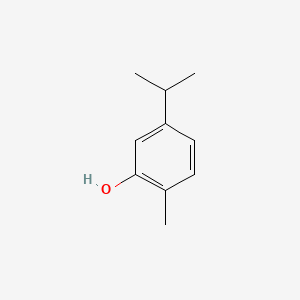 Compound
- Category
- Compound
What Carvacrol is, and what it does.
- Does it work
- Suits people building an oregano-based gut or seasonal formula who want the active named and measured. Most effect data sits in cells, fish and poultry rather than people.
- How much to take
- No daily amount is on record. Start with the label amount, always diluted in a carrier oil or encapsulated, because the neat compound burns mucosa.
- Time to feel it
- Absorption is quick, inside an hour, but no human time course has been mapped for any outcome. Traditional use runs in short courses.
- The first dose
- Expect a strong oregano taste and warmth in the mouth and throat. Some people notice burping or stomach warmth in the first hours.
- With regular use
- Repeated use keeps the gut exposed to the compound. Beyond a few weeks the human data has not been collected, and animal work reports marker changes.
- How well tolerated
- Undiluted it is a mucosal irritant and should never be taken neat. Not for pregnancy or young children. Check with your clinician about narrow dose window medicines.
- How it feels
- Hot, peppery and unmistakably oregano, with a burning warmth if it is poorly diluted. That warmth is a TRP channel response, not damage.
- The overlooked benefit
- A declared carvacrol percentage is a figure at the time of analysis. It falls over shelf life unless the oil is protected from air, heat and light.
The proof, claim by claim.
What these words mean
These words describe the research, not the molecule's worth. Research strength is how much work stands behind one claim, and it is never a product score.
- antimicrobial membrane disruptionIn vitro study
- TRPV3 and TRPA1 receptor activationIn vitro study
3 more claims
- oxidative stress marker changesAnimal study
- digestive comfort from oregano oil preparationsRandomised trial
- gut microbial composition in production animalsAnimal study
Why these belong in the same formula, 6 pairings
Why these belong in the same formula. Each row says what the basis is, from settled biochemistry through to a trial that measured the pair.
Most oregano oil products are specified on carvacrol percentage because that is the constituent the specification hangs on. Taking the whole oil delivers carvacrol alongside p-cymene, gamma-terpinene and thymol, which is a different exposure from the isolate. Reading a carvacrol claim onto an oregano oil product requires knowing the chemotype and the declared percentage. Without that number the dose is unknown.
Cinnamaldehyde is an aldehyde that reacts with microbial surface thiols, while carvacrol works by membrane partitioning, so the two act at different points on the same target. Blend studies in animals commonly pair them for that reason. The human evidence for the pairing is absent. Read it as a formulation rationale carried over from animal and in vitro work.
Carvacrol is extensively conjugated after absorption, and at high exposures phenol oxidation products can consume cellular glutathione. Much of the reported antioxidant behaviour of carvacrol in animal models is measured as changes in tissue glutathione and malondialdehyde, which are markers rather than outcomes. That distinction matters: a marker moving in animals is not evidence of a benefit in people. The direction of the effect also flips with dose, being protective at low exposure and depleting at high.
Undiluted carvacrol is a concentrated phenol and is mucosally irritating, which is the practical reason it is sold diluted in a carrier oil or encapsulated. A medium chain triglyceride carrier disperses it and buffers direct contact with the gastric mucosa. The carrier does not add activity of its own. It changes tolerance and handling.
Carvacrol permeabilises bacterial membranes across gram positive and gram negative species in vitro, and Lactobacillus and Bifidobacterium strains are susceptible in the same assays. Taking an unencapsulated carvacrol or oregano oil preparation in the same swallow as a live culture product risks reducing the viable count delivered. Separating them in time, or using a delayed-release presentation, is the usual formulation answer. No human study was found quantifying the loss, so this is a mechanistic caution rather than a measured effect.
Volatile monoterpene oils oxidise on exposure to air and light, and p-cymene and terpinene fractions oxidise faster than carvacrol itself. Tocopherol added to the oil phase slows that degradation and helps the declared carvacrol figure hold through shelf life. This is protection of the material in the bottle. It says nothing about what happens after swallowing.
Nothing specific on file for Carvacrol. Match the label to the daily amount above, and tell your doctor what you take.
Not medical advice. Show the label to your pharmacist.What Carvacrol actually does.
Carvacrol is a plant compound closely related to thymol. It's fat soluble and can slip into cell membranes, making them leakier and disrupting their internal chemical gradient. That membrane disrupting action is the accepted explanation for why it acts against microbes in lab studies.
3 more mechanisms
When you swallow carvacrol it's absorbed quickly and mostly gets tagged by the liver right away, so very little of the original compound reaches your bloodstream unchanged. That means effects seen at high concentrations on cells in a dish can't be assumed to happen at the much lower levels that reach your tissues after a normal oral dose.
Carvacrol activates certain sensory receptors in skin and mucous membranes, which is why it feels warming or irritating there and why the undiluted oil burns. This is a direct receptor interaction and gets stronger with higher amounts.
Carvacrol is volatile, so it evaporates and breaks down when exposed to air, heat and light. A stated carvacrol percentage on a label reflects the level at the time it was tested, and it drops over time on the shelf unless the product is protected or encapsulated.
Where Carvacrol comes from.
It is the compound that makes oregano oil smell and taste like oregano. It can be pulled out of the plant oil by distillation, or built in a factory from a related terpene. The molecule is the same either way. What differs is everything else that comes along with it.
What this route gives you
The same molecule is reached more than one way. Which route a given product used is a manufacturing choice, and the finished compound is the same either way.
6 steps on record
Botanical route: Origanum vulgare, Thymus species, Satureja and Zataria multiflora aerial parts. Synthetic route: p-cymene derived from turpentine or petrochemical feedstock.
Botanical route only. Aerial parts are steam distilled to the crude essential oil, with carvacrol content set by chemotype and harvest timing.
Synthetic route only. p-Cymene is sulphonated then alkali fused, or hydroxylated, to place the phenol group and give carvacrol identical in structure to the plant compound.
Both routes. Vacuum fractional distillation separates carvacrol from thymol and from the terpene hydrocarbon fraction, since the isomers boil close together.
Gas chromatography sets the carvacrol percentage and the residual thymol and p-cymene figures. This is the number a specification hangs on.
Delivered as standardised oil, as isolate in a carrier, or as an encapsulated powder.
Getting Carvacrol from food.
The whole-food sources on file. A supplement closes the gap, it does not replace dinner.
A gram-for-gram figure (how much of each you would eat to match a dose) will appear here once it is sourced and reviewed. This page will not print a number it cannot cite.
The forms it comes in.
4 more forms
The essence, in one line each.
- Reviews the chemistry, absorption and metabolism of thymol and carvacrol and the molecular pathways proposed for them, and concludes that the pathway work is largely preclinical.Narrative review. Noman AM et al., 2026 (Food Science & Nutrition). PMID 42005330 ↗
5 more findings
- Summarises thymol and carvacrol supplementation in poultry and reports effects on gut microbial populations and growth performance across the reviewed trials.Narrative review, in animals. Gholami-Ahangaran M et al., 2022 (Veterinary Medicine and Science). PMID 34761555 ↗
- Carvacrol and thymol based essential oil feed additives were assessed for carcass characteristics and breast meat quality in broilers.Animal study. Naeem M et al., 2026 (Poultry Science). PMID 42190465 ↗
- Dietary carvacrol was associated with improved resistance to bacterial challenge in Pengze crucian carp, with accompanying changes in metabolite profiles.Animal study. Wang Y et al., 2026 (Metabolites). PMID 41893303 ↗
- Oregano extracts alone or combined with other biomolecules were evaluated for growth performance and parasitological outcomes in birds. Carvacrol appears as a named constituent of the extract rather than as the tested isolate.Animal study. Yousfi S et al., 2026 (Avian Pathology). PMID 41875322 ↗
- Herb-derived terpenes transferred into cow milk selectively and in a time-dependent way without detectable sensory change, indicating that dietary monoterpenes are absorbed and distributed rather than fully destroyed in the rumen.Animal study. Kiss A et al., 2026 (Journal of Dairy Science). PMID 42264363 ↗
Chosen from the 7 we read for Carvacrol.
The studies, linked.
5 sources behind our Carvacrol verdict, every one linked to PubMed, the journal or ClinicalTrials.gov.
- ReviewBiological Effects and Modes of Action of Carvacrol in Animal and Poultry Production and Health - A ReviewDOI ↗Advances in Animal and Veterinary Sciences, 2015, cited 101 times, open access
4 more linked trials
- Clinical trialMulticenter, Randomized, Double-blind Study With Placebo to Verify the Efficacy, Safety and Tolerability of the Modified Isothymol or Carvacrol Compound Against the SARS-CoV-2 Agent in COVID-19 PatientsClinicalTrials.gov ↗Phase 2, 600 participants, Completed
- Clinical trialClinical Evaluation of Carvacrol Loaded Absorbable Gelatin Sponge as a Palatal Bandage After Free Gingival Graft Harvesting .ClinicalTrials.gov ↗30 participants, Completed
- StudyIn vitro antibacterial activity of thymol and carvacrol and their effects on broiler chickens challenged with Clostridium perfringensPubMed ↗Journal of Animal Science and Biotechnology, 2015, cited 161 times, open access
- StudyAntioxidant effects of the monoterpenes carvacrol, thymol and sabinene hydrate on chemical and sensory stability of roasted sunflower seeds.PubMed ↗Journal of the science of food and agriculture, 2015, cited 132 times, open access
From clinical trials and PubMed, ranked by study type and citation weight, not cherry-picked.
FDA Disclaimer: These statements have not been evaluated by the Food and Drug Administration. This information is for educational purposes only and is not intended to diagnose, treat, cure, or prevent any disease. Consult your healthcare provider before starting any supplement regimen.