Ethyl Linoleate.
It delivers linoleic acid, the omega-6 fat your skin builds its barrier lipids from. In products it shows up mostly as a skin and barrier ingredient.
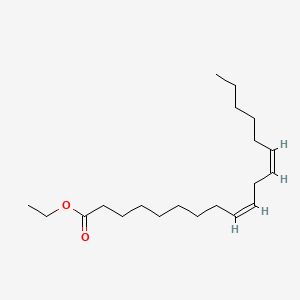 Compound
- Category
- Compound
What Ethyl Linoleate is, and what it does.
- Does it work
- Suits people eating few nuts, seeds and plant oils, and formulators working on skin barrier support. If those fats are already regular in your meals, you're well covered.
- How much to take
- No daily amount is on record for the ethyl ester, so no maintenance band can be quoted. Start with what the label directs, taken with a meal that contains some fat.
- Time to feel it
- Skin barrier lipids turn over across weeks, so change shows up in how skin holds water over a month or two rather than in a same-day sensation.
- The first dose
- Day one is quiet. Carboxylesterases split the ester within hours, releasing linoleic acid into ordinary fat metabolism, which registers on lipid handling rather than on how you feel.
- With regular use
- Weeks of daily intake keep linoleate available for acylceramide in the outer skin layer, the lipid that anchors the barrier lamellae together.
- How well tolerated
- Generally well tolerated as a dietary fat. It oxidises easily, so a product with an antioxidant system holds up better. Check with a clinician first if you take a fat-absorption medicine.
- How it feels
- Neutral. There's no sensation attached to it. The effect reads on skin hydration and barrier measures over weeks.
- The overlooked benefit
- Linoleate isn't only fuel. It gets esterified into ceramide 1 in the stratum corneum, which is why low intake shows on the skin barrier before anywhere else.
The proof, claim by claim.
What these words mean
These words describe the research, not the molecule's worth. Research strength is how much work stands behind one claim, and it is never a product score.
- omega-6 essential fatty acid intakeNarrative review
- skin barrier lipid structureNarrative review
2 more claims
- skin hydrationAnimal study
- topical and transdermal penetration enhancementIn vitro study
Why these belong in the same formula, 10 pairings
Why these belong in the same formula. Each row says what the basis is, from settled biochemistry through to a trial that measured the pair.
Ethyl linoleate carries two double bonds separated by a methylene group, which is the classic site for hydrogen abstraction and peroxide formation. Tocopherol donates a hydrogen to the resulting lipid radical and stops the chain. Any oil or topical carrying ethyl linoleate without an antioxidant system degrades measurably faster. This is formulation chemistry, not a biological effect.
Tocopherol is consumed as it protects a polyunsaturated ester, leaving a tocopheroxyl radical. Ascorbate, or a lipid-soluble ascorbyl ester in an oil phase, hands back a hydrogen and restores the tocopherol. That recycling is why the two are paired in emulsion systems rather than either being used alone. The relevance here is stability of the ester, distinct from any claim about skin or systemic effect.
Ethyl linoleate is linoleic acid with an ethanol group on the carboxyl end. Carboxylesterases in gut mucosa, plasma and skin cleave the ester and release free linoleic acid plus ethanol. That means the ester is a delivery form for the fatty acid rather than a separate active in its own right. Anything the free acid does downstream requires that hydrolysis step first.
Ethyl esters of fatty acids are hydrolysed more slowly by pancreatic lipase than triglycerides are, which is a known difference between ethyl-ester and triglyceride fish oil. The same chemistry applies to ethyl linoleate. Enzymatic cleavage is the gate on releasing the fatty acid, and the ester itself is not the absorbed species. Practically this is why ethyl esters are usually taken with fat-containing food.
Ethyl linoleate is oil-soluble and essentially insoluble in water, so it needs a lipid phase to disperse and a bile-salt micelle to cross the unstirred water layer. A medium-chain triglyceride carrier supplies both, which is why esters like this are formulated in oil rather than sold neat in a water base. The trade-off is that MCT is itself calorie-dense and does not contribute essential fatty acid. This is a vehicle relationship, not an additive effect.
Rosemary extract is the common natural alternative to synthetic antioxidants in polyunsaturated oil blends, and it slows peroxide formation in the container. It is used precisely because esters such as ethyl linoleate go rancid quickly on their own. The pairing is about product stability and off-flavour, not about anything happening in the body. This is formulation convention.
Ethyl linoleate will not disperse in a water-based product without help. Lecithin's phospholipid head and tail bridge the two phases and hold a stable emulsion. In topical and beverage formats this is what makes the ester usable at all. It changes physical dispersion, not the underlying chemistry of the ester.
Ethyl linoleate appears in topical formulation as a source of linoleate for skin lipid, and zinc is a common co-ingredient in that category. The pairing is one of formulation practice rather than a demonstrated interaction between the two. There is no human trial in this candidate set testing the combination. Read it as a formulation observation, not evidence of combined effect.
Astaxanthin sits across the lipid bilayer and quenches singlet oxygen and lipid radicals, a mechanism that complements tocopherol's hydrogen donation. In a polyunsaturated ester system the two attack different steps of the peroxidation chain. The benefit is oxidative stability of the oil phase. Whether that translates into anything measurable in a person is a separate question this does not answer.
Lipoic acid is amphipathic, so it operates in both the aqueous and lipid phases and can feed the regeneration chain that restores tocopherol. In a system built around a peroxidation-prone ester, that network matters more than any single antioxidant. The mechanism is well described in redox biochemistry. Its practical size in a finished product depends entirely on concentration and formulation.
Nothing specific on file for Ethyl Linoleate. Match the label to the daily amount above, and tell your doctor what you take.
Not medical advice. Show the label to your pharmacist.What Ethyl Linoleate actually does.
Ethyl linoleate is just the essential omega-6 fatty acid linoleic acid, packaged as an ethyl ester instead of as a free acid or in a triglyceride.
3 more mechanisms
Enzymes in the gut lining, blood and skin break the ester bond apart, releasing free linoleic acid and ethanol, and it's the free fatty acid, not the ester, that actually enters normal fat metabolism.
Pancreatic lipase works on ethyl esters more slowly than on triglycerides, so this form tends to depend more on having other fat and bile around at the same time for it to be taken up.
Once freed, linoleic acid can be converted step by step into other omega-6 fats using the same enzymes that the omega-3 fats also compete for.
Where Ethyl Linoleate comes from.
It starts as ordinary safflower or sunflower oil. Chemists swap the glycerol backbone for ethanol, which turns the fat into something that can be distilled and purified down to a single fatty acid. That is the whole trick. The catch is that the purified stuff goes rancid fast, so it always ships with an antioxidant.
What this route gives you
The same molecule is reached more than one way. Which route a given product used is a manufacturing choice, and the finished compound is the same either way.
5 steps on record
Safflower, sunflower, soybean, corn or grapeseed oil, chosen for linoleic acid share. Safflower and sunflower high-linoleic varieties carry the highest starting concentration.
The triglyceride is reacted with ethanol under an alkaline or enzymatic catalyst, swapping the glycerol backbone for ethyl groups and producing a mixture of fatty acid ethyl esters.
The ester mixture is separated by boiling point under vacuum. This is the whole reason the ethyl ester route exists: triglycerides cannot be distilled without decomposing, ethyl esters can.
Purity is set by gas chromatography against the fatty acid profile, and tocopherol or rosemary extract is added because the purified ester oxidises quickly.
Supplied as a concentrated liquid for formulation, or pre-diluted in a carrier oil for softgel and topical use.
The forms it comes in.
4 more forms
The studies, linked.
2 sources behind our Ethyl Linoleate verdict, every one linked to PubMed, the journal or ClinicalTrials.gov.
- Clinical trialThe Effectiveness and Safety of Cleanser Containing Triethyl Citrate, Pyruvic Acid, Combination Cream Containing Triethyl Citrate, Ethyl Linoleate, GT Peptide-10, Salicylic Acid 0,5%, Zinc Lactate, Hyaluronic Acid and Spot Cream Containing Triethyl Citrate, Ethyl Linoleate, GT Peptide-10, Honokiol As Adjuvant Therapy for Mild to Moderate Acne VulgarisClinicalTrials.gov ↗Phase 3, 102 participants, Not yet recruiting
1 more linked trial
From clinical trials and PubMed, ranked by study type and citation weight, not cherry-picked.
FDA Disclaimer: These statements have not been evaluated by the Food and Drug Administration. This information is for educational purposes only and is not intended to diagnose, treat, cure, or prevent any disease. Consult your healthcare provider before starting any supplement regimen.