Rosemary Extract.
A potent herb extract that preserves your supplements naturally while offering real antioxidant and cognitive benefits at higher doses. At higher doses: supports memory, focus, and reduces inflammation.
Reviewed March 2026
- Category
- Herb
- Also filed under
- Powerful natural antioxidant/preservativeSupports memory and cognitive functionAnti inflammatory (rosmarinic acid)May improve circulation
What Rosemary Extract is, and what it does.
- Does it work
- As a preservative, it's excellent. As a cognitive supplement, the evidence is promising but still building. Check if the dose in your product is therapeutic or just preservative.
- How much to take
- 150-500mg standardized extract for cognitive effects. 5-50mg for preservation. Big difference.
- Time to feel it
- Some people notice a lift in alertness within an hour or two of a standardised dose. The antioxidant enzyme side is a weeks long change read from lab markers.
- The first dose
- At therapeutic doses, some people notice improved focus. At preservative doses, nothing.
- With regular use
- Consistent use at therapeutic doses may support memory and reduce inflammation over weeks to months.
- How well tolerated
- Generally well tolerated. May interact with blood thinners and blood pressure medications.
- How it feels
- At therapeutic doses: mild mental clarity with an herbal calmness. Subtle, not dramatic.
- The overlooked benefit
- The aroma is doing work of its own. Inhaled 1,8-cineole crosses from the nose into blood, and studies have tracked those blood levels against alertness scores.
150 to 500mg a day is where Rosemary Extract works.
Source: Pengelly A et al. J Med Food. 2012;15(1):10-17
The proof, claim by claim.
These words describe the research, not the molecule's worth. Research strength is how much work stands behind one claim, and it is never a product score.
- Supports memory and cognitive function
- Effective natural preservative
- Anti-inflammatory properties
Questions people ask about Rosemary Extract.
- Is the rosemary in my supplement therapeutic or just a preservative?
- Check the dose. Under 50mg? Preservative. Over 150mg standardized extract? Potentially therapeutic.
- Can I just use rosemary from my kitchen?
- Culinary rosemary provides some benefits, but concentrations are much lower than standardized extracts. For cognitive effects, supplements are more reliable.
- Does rosemary essential oil have the same effect?
- Inhaled rosemary oil (1,8-cineole) has some cognitive studies showing improved alertness. But it's a different delivery than oral extract.
- How do I know if it's working?
- Track your focus and memory over 2-4 weeks. The effects are subtle, not dramatic. You won't have a 'Limitless' moment.
- Can I take it with other brain supplements?
- Yes. Rosemary works through different mechanisms than most nootropics and generally stacks well.
- Is it safe long-term?
- At standard supplement doses, yes. Rosemary has been consumed as food and medicine for thousands of years.
Why these belong in the same formula. Each row says what the basis is, from settled biochemistry through to a trial that measured the pair.
Carnosic acid and carnosol from rosemary sit in the lipid phase and quench the peroxyl radicals that drive chain oxidation of long-chain polyunsaturated fats. Rosemary extract is a standard natural stabiliser added to fish oil so EPA and DHA stay intact through shelf life.
Tocopherol donates a hydrogen to a lipid radical and becomes a tocopheryl radical. Rosemary diterpenes can reduce it back to the active form, so the tocopherol pool lasts longer. The pair is a usual mixed antioxidant system in oil-based formulas.
Carnosic acid and curcumin both act on the Keap1 sensor to release Nrf2, which then raises the cell's own antioxidant enzyme output. Their electrophilic chemistry differs, so they engage the same switch from different angles.
Sulforaphane is the reference Nrf2 activator through cysteine modification of Keap1, the same switch rosemary diterpenes engage. Combining them broadens the chemistry hitting one target.
Catechins work mainly in the water phase while rosemary's carnosic acid is lipid-soluble and sits in membranes. Together they cover both compartments in a formula or a food matrix.
Astaxanthin spans the membrane and quenches singlet oxygen while carnosic acid breaks peroxidation chains within the same lipid layer. Formulators use rosemary to keep carotenoid-bearing oils from oxidising.
Rosemary diterpenes can regenerate the tocopheroxyl and tocotrienoxyl radicals formed when those molecules interrupt lipid peroxidation. This regeneration is why the two are used together as an oil antioxidant system.
Ascorbate reduces phenolic radicals back to their active form at the water side of a membrane, which applies to rosmarinic acid as to other phenolics. The pairing extends the effective life of both.
Sage and rosemary are close relatives that share rosmarinic acid and related diterpenes, including the constituents that modulate cholinesterase activity. Blending them is long-standing practice in cognitive and culinary preparations.
Rosemary phenolic diterpenes slow oxidation of the volatile oil, which keeps carvacrol and thymol content stable through shelf life. The combination is standard in Lamiaceae-based preparations.
Rosmarinic acid and other rosemary phenolics chelate non-heme iron in the gut into complexes the enterocyte cannot take up. Separating the doses avoids the loss.
Carnosic acid and carnosol are lipophilic phenolic diterpenes with very low water solubility. Dispersing a rosemary extract in a medium-chain triglyceride carrier keeps them in solution and gives them a lipid phase to partition into during digestion. This is why oil-based rosemary preparations exist alongside water-dispersible ones.
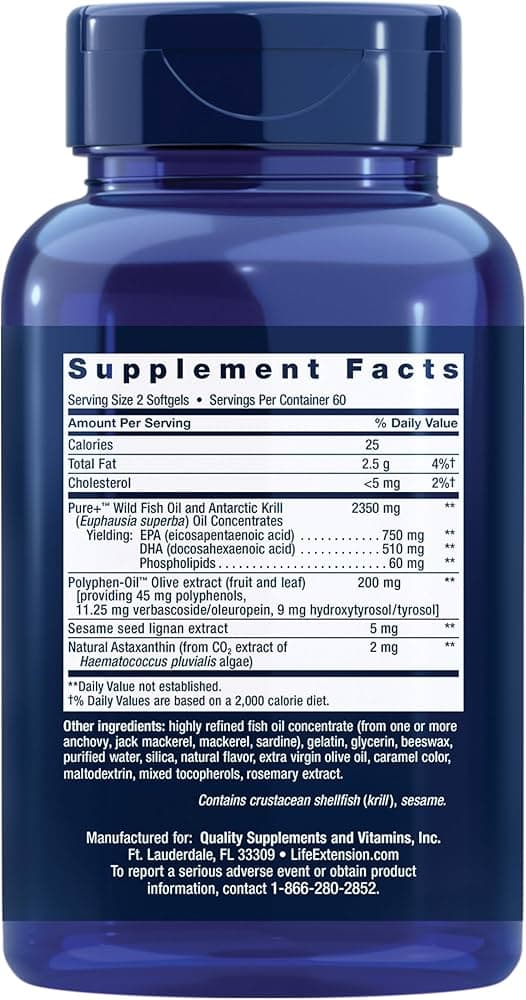
Long-chain omega-3 oils oxidise readily because of their many double bonds, and rosemary extract is one of the standard label-friendly antioxidants used to slow that. The extract donates hydrogen to lipid peroxyl radicals and interrupts the propagation step of autoxidation. The benefit here is to the oil in the bottle, which is a formulation function rather than a physiological one.
Evening primrose oil carries gamma-linolenic acid, another oxidation-prone polyunsaturate. Rosemary extract is a common stabiliser in this class of softgel. Whether the stabiliser contributes anything once the capsule is swallowed is a separate question from its shelf function.
Tocopherols and rosemary phenolic diterpenes act on the same lipid autoxidation chain but through partly different steps, and combinations are widely reported to outperform either alone in oil systems. Rosemary phenolics can also help regenerate the tocopheroxyl radical back to tocopherol. This is food-chemistry synergy, measured in oils rather than in people.
Ubiquinol operates as a lipid-phase reducing agent inside membranes, and rosemary diterpenes partition into the same lipid environment. Both are also lipophilic, so they suit the same oil-based delivery format. Direct co-administration data in humans is lacking.
Lipoic acid works in both aqueous and lipid phases and participates in regenerating other antioxidants. Rosemary contributes water-soluble rosmarinic acid and lipid-soluble carnosic acid, so the pair covers both compartments. The pairing is mechanistically coherent and has not been isolated in a trial.
N-acetylcysteine supplies cysteine, the rate-limiting substrate for glutathione synthesis, while carnosic acid is a described activator of Nrf2-driven transcription of glutathione synthesis enzymes. One supplies the raw material and the other raises the enzyme capacity. The Nrf2 arm rests mainly on cell and animal work.
Glutathione is the main intracellular thiol buffer and sits at the centre of the antioxidant recycling network that regenerates vitamins C and E. Rosemary phenolics feed the lipid-phase end of that same network. Oral glutathione absorption is itself contested, which limits how much can be claimed for the pair.
Quercetin is a water-compatible flavonoid radical scavenger and carnosic acid is a lipid-phase one, so the two occupy different compartments of the same oxidation problem. Polyphenol combinations of this kind are standard in antioxidant blends. What matters clinically from either at supplemental doses is much less settled than the chemistry.
Grape seed proanthocyanidins are potent hydrogen donors in aqueous systems and are frequently paired with rosemary in both food-preservation and supplement blends. Livestock work has combined grape seed extract with rosemary in the same feeding trial design. The pooled effect on animal growth measures does not transfer to human endpoints.
Pine bark proanthocyanidins overlap chemically with grape seed extract and act in the aqueous phase. Combining with a lipid-phase phenolic diterpene is the usual formulation logic. No combination data exists for this specific pair.
Thyme and rosemary are both Lamiaceae and their essential oils are combined routinely in culinary and preservation contexts. Thymol and carvacrol act on microbial membranes while rosemary diterpenes act on lipid oxidation, so the two address different spoilage routes. The evidence base is food science rather than human trials.
Peppermint and rosemary oils are combined in topical and aromatic preparations for their volatile profiles. Both carry menthol-class or cineole-class terpenes that are absorbed through skin and mucosa. Combination evidence is limited to formulation precedent.
Gingerols are phenolic compounds with their own hydrogen-donating capacity, and ginger and rosemary appear together in spice antioxidant blends used in meat systems. The pairing rests on shared chemistry rather than a joint trial. Treated here as formulation precedent.
Piperine inhibits intestinal and hepatic UDP-glucuronosyltransferases and CYP3A4, which are the routes by which many polyphenols including rosmarinic acid are cleared before reaching systemic circulation. Slowing conjugation raises plasma exposure to the parent compound. The same mechanism raises exposure to co-administered medicines, so this is not a neutral addition.
Bacopa and rosemary are both used in memory-support blends and are studied on different mechanisms, bacosides on synaptic signalling and rosemary volatiles on arousal and alertness measures. Their appearance together is a formulation convention. No study has tested the combination.
Ginkgo flavone glycosides and terpene lactones are studied for cerebral perfusion measures, a different axis from rosemary's volatile terpenes. Blends pair them for coverage rather than for a demonstrated interaction. Both carry their own interaction profile with antiplatelet agents.
L-theanine shifts subjective calm and alpha wave activity while rosemary aroma has been studied on alertness ratings. The two target opposite ends of the arousal spectrum, which some formulators regard as balancing. This is a formulation rationale, not a measured interaction.
Lemon balm is another Lamiaceae species and shares rosmarinic acid as a major phenolic, so the two overlap chemically as well as botanically. Combining them raises total rosmarinic acid rather than adding a distinct compound class. That overlap is worth knowing when reading a blend label.
Silymarin flavonolignans and rosemary diterpenes are both described as raising phase II conjugation enzyme expression in preclinical models. Acting on the same transcriptional programme means the effects may not add linearly. Human combination data does not exist.
Phenolic compounds with adjacent hydroxyl groups, including rosmarinic acid, chelate divalent metal ions in the gut lumen. That chelation is part of why polyphenols slow lipid oxidation, and it is also why they can lower absorption of the mineral. Spacing a mineral dose from a high-polyphenol serving is the practical response.
Lycopene has eleven conjugated double bonds and degrades quickly on exposure to oxygen, light and heat. Rosemary extract is used in carotenoid formulations to slow that degradation during storage. The action is on the ingredient in the capsule, not on the carotenoid once absorbed.
Talk to a doctor before taking Rosemary Extract if any of these apply to you: Most supplement uses are sub-therapeutic (preservative only), May interact with blood thinners, Can affect blood pressure medications. These are flags to check first, not effects Rosemary Extract is known to cause.
Not medical advice. Show the label to your pharmacist.What Rosemary Extract actually does.
Rosemary's signature antioxidant compounds are the phenolic diterpenes carnosic acid and carnosol, its oxidation product, plus the caffeic acid ester rosmarinic acid. Carnosic acid shifts into carnosol and then quinones as it's used up, so extract composition changes during storage.
Carnosic acid interrupts lipid autoxidation by donating a hydrogen atom to a lipid peroxyl radical. What's left is a resonance-stabilised phenoxyl radical that doesn't readily carry the chain forward, and that chain-breaking action is why it stabilises oils.
Rosmarinic acid dissolves in water while carnosic acid is strongly fat-loving. That split is why a water or ethanol extract and a supercritical carbon dioxide extract from the same leaf carry different compounds and suit different uses.
Rosemary essential oil is dominated by the volatile monoterpenes 1,8-cineole, camphor and alpha-pinene. Inhaled, they cross your nasal lining and lungs, which is a different route in than swallowing a standardised leaf extract.
Where Rosemary Extract comes from.
The leaves are dried and ground, then the active compounds are pulled out with either pressurised carbon dioxide or alcohol and water. Which solvent is used decides which compounds end up in the bottle, so two rosemary extracts can be quite different materials.
Made from a plant. What ends up in the capsule tracks the harvest, so batch testing and a stated marker matter more here than with a made molecule.
Evergreen shrub of the Lamiaceae family, cultivated widely around the Mediterranean, in North Africa and in South America. Leaves are the extracted part.
Harvested leaf is dried to reduce moisture and enzymatic degradation, then milled to open the cell structure and increase the surface available to a solvent.
Carbon dioxide above its critical point selectively recovers the lipophilic diterpenes. Ethanol and water recover rosmarinic acid and the polar phenolics. Steam distillation is a third, separate route that yields the volatile oil instead.
Carbon dioxide is vented and recovered as a gas leaving no residue. Ethanol is evaporated under reduced pressure and residual solvent is tested against pharmacopoeial limits.
Content is set by HPLC against carnosic acid or rosmarinic acid depending on the extract type, then adjusted with a carrier such as maltodextrin or a vegetable oil to hit the declared percentage.
The concentrate is spray dried onto a carrier, dispersed into an oil phase, or bottled as a distilled essential oil, then packaged with light and oxygen protection.
Getting Rosemary Extract from food.
The whole-food sources on file. A supplement closes the gap, it does not replace dinner.
A gram-for-gram figure (how much of each you would eat to match a dose) will appear here once it is sourced and reviewed. This page will not print a number it cannot cite.
The forms it comes in.
The essence, in one line each.
- In a four week double-blind crossover trial in 40 adults, rosemary extract lowered trait anxiety scores on the State-Trait Anxiety Inventory and reduced the low-frequency to high-frequency ratio of heart rate variability, while salivary cortisol showed no detectable difference from placebo.Randomised trial. Kuwata et al., 2025 (Journal of Clinical Biochemistry and Nutrition). PMID 41312013 ↗
- In 68 university students, 500 mg of rosemary twice daily for one month improved prospective and retrospective memory scores and overall sleep quality versus placebo, though the sleep latency and sleep duration components did not differ.Randomised trial. Nematolahi et al., 2018 (Complementary Therapies in Clinical Practice). PMID 29389474 ↗
- Over 12 weeks in 104 women aged 40 to 65, a rosemary extract supplement improved investigator-rated skin dullness, roughness and texture, redness and pore size versus placebo, with no difference in uneven pigmentation.Randomised trial. Draelos et al., 2025 (The Journal of Clinical and Aesthetic Dermatology). PMID 40135175 ↗
- A single 1.7 g capsule dose of rosemary did not produce a detectable improvement in sustained attention, motivation or feelings of mental energy in 40 young adults with below-average energy, with only small transient reductions in false alarm errors and mental fatigue at isolated time points.Randomised trial. Lindheimer et al., 2013 (Journal of Medicinal Food). PMID 23905652 ↗
- Pooling trials of Mediterranean culinary herbs and spices, including rosemary, found modest improvements in blood sugar markers in adults with raised blood sugar.Meta-analysis. Garza et al., 2024 (Nutrients). PMID 38542668 ↗
- In healthy adults, inhaling an essential oil blend containing rosemary aroma was followed by better scores on some cognitive performance tasks compared with control conditions.Randomised trial. Moss et al., 2025 (Human psychopharmacology). PMID 41257537 ↗
- A rosemary plus grapefruit extract combination increased the amount of ultraviolet light the skin tolerated before reddening and improved measures of skin elasticity and wrinkling.Randomised trial. Navarro et al., 2025 (International journal of molecular sciences). PMID 40362239 ↗
- Alginate films carrying rosemary extract slowed spoilage and oxidative change in stored strawberries relative to plain films, supporting the extract's use as a preservation agent.In vitro study. Mitrea et al., 2026 (International Journal of Food Science). PMID 42181981 ↗
- Dietary rosemary extract reduced lipid oxidation markers in pork during refrigerated storage, an effect on the meat rather than on the living animal.Animal study. Penaranda et al., 2021 (Animals). PMID 34438753 ↗
- Dietary rosemary extract was associated with higher antioxidant capacity measures and altered fatty acid and amino acid composition in meat.Animal study. Liu et al., 2026 (Food Chemistry). PMID 42385614 ↗
- Rosemary extract in feed was associated with changes in growth performance, serum biochemistry and antioxidant enzyme measures in birds. These are markers measured in poultry.Animal study. Yao et al., 2023 (Poultry Science). PMID 36502565 ↗
- Dietary rosemary extract was associated with improved nutrient digestibility and higher antioxidant capacity markers in the supplemented group.Animal study. Yang et al., 2021 (Journal of Animal Science). PMID 34370023 ↗
- Grape seed, onion peel or rosemary extract in the diet each partly offset stress-related growth inhibition in the model used.Animal study. Wang et al., 2023 (Animal Biotechnology). PMID 37878368 ↗
- Dietary rosemary leaf powder was associated with changes in growth, carcass composition and haemato-biochemical measures in common carp.Animal study. S Omar et al., 2023 (Cellular and Molecular Biology). PMID 38015529 ↗
- Rosemary leaf plus lactic acid in feed was associated with higher growth and immune marker responses in Nile tilapia.Animal study. Menshawy et al., 2026 (Scientific Reports). PMID 42286034 ↗
- Multi-omics analysis linked rosemary extract supplementation to higher milk yield in dairy animals and proposed rumen microbial and metabolic mediators.Animal study. Liu et al., 2025 (Animal Nutrition). PMID 41321514 ↗
- A preliminary feeding study reported changes in milk production and rumen fermentation parameters with rosemary extract supplementation.Animal study. Kong et al., 2022 (Antioxidants). PMID 36139788 ↗
- Rosemary is named among the botanicals with published human data for topical use on hair growth measures within a broader review of herbal options. The review names it rather than studying it directly.Systematic review. Allam et al., 2025 (Naunyn-Schmiedeberg's Archives of Pharmacology). PMID 40536553 ↗
These are the studies our verdict leans on, chosen from the 2,979 we read for Rosemary Extract. The full linked list is below.
The studies, linked.
2 sources behind our Rosemary Extract verdict: peer-reviewed studies and registered clinical trials. Every one links straight to PubMed, the journal, or ClinicalTrials.gov. Read them yourself.
- Clinical trialEfficacy of Locally Delivered Rosemary Extract Gel as an Adjunct to Non-Surgical Periodontal Therapy in Management of Periodontitis (A Randomized Controlled Clinical Trial With Microbiological Analysis)ClinicalTrials.gov ↗Phase 2, 48 participants, Completed
- Clinical trialRandomized, Double-blind, Cross-over Placebo-controlled Study to Assess the Functional Meat Products With n-3 and Rosemary Extract Fluid in Biochemical Markers of Cardiovascular Disease Related Risk in Subjects at Low Risk for Cardiovascular DiseaseClinicalTrials.gov ↗Phase 4, 44 participants, Completed
Evidence surfaced via Semantic Scholar (Allen Institute for AI) and ClinicalTrials.gov. Ranked by study type and citation weight, not cherry-picked.
FDA Disclaimer: These statements have not been evaluated by the Food and Drug Administration. This information is for educational purposes only and is not intended to diagnose, treat, cure, or prevent any disease. Consult your healthcare provider before starting any supplement regimen.