Glucose Syrup.
A sugar-based sweetener and binding agent used in gummy supplements.
Reviewed March 2026
- Category
- General
- Also filed under
- Makes gummy supplements palatableProvides gummy texture and binding
What Glucose Syrup is, and what it does.
- Does it work
- It makes gummies taste good. That's the extent of its value.
- How much to take
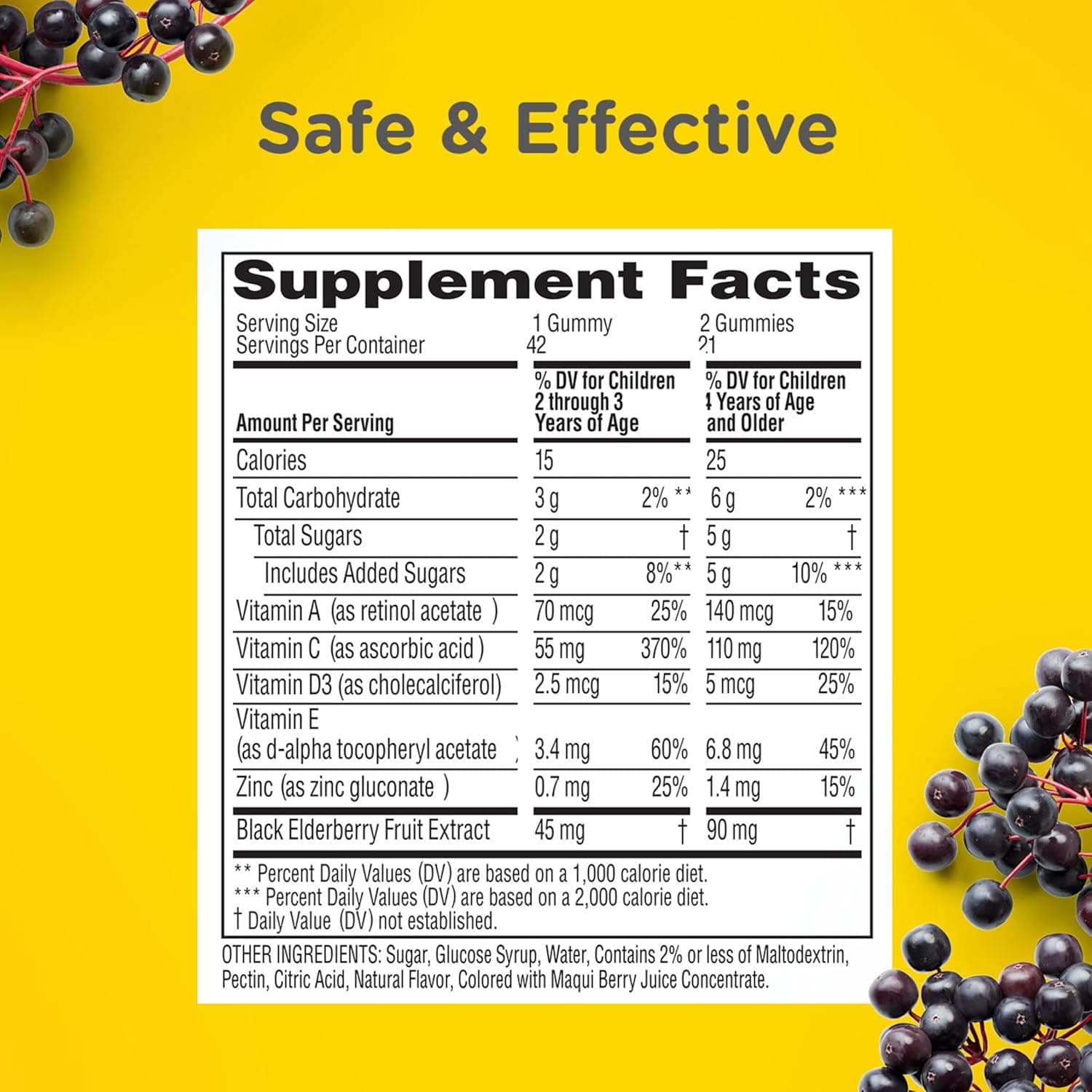
- It isn't something you dose. The amount is set by what the gummy base needs to stay chewy, which works out around 2 to 5 grams of sugar in a serving.
- Time to feel it
- The free glucose in it absorbs within minutes, so sweetness and a small blood sugar rise land fast. As the texture agent in a gummy it has no onset of its own.
- The first dose
- Day one is sweetness and a small, quick rise in blood sugar as the free glucose absorbs. In the gummy itself, it's what keeps the chew soft rather than grainy.
- With regular use
- Empty calories if you're eating lots of gummies.
- How well tolerated
- Well tolerated, but adds 2-5g sugar per serving. Worth noting if you're managing blood sugar.
- How it feels
- Sweet and chewy, the way a gummy is meant to be. Past that there's no sensation, because it's a texture and carrier agent rather than an active.
- The overlooked benefit
- It does more than sweeten. By lowering water activity and stopping sugar crystals forming, it keeps a gummy chewy and stable instead of turning grainy on the shelf.
The proof, claim by claim.
These words describe the research, not the molecule's worth. Research strength is how much work stands behind one claim, and it is never a product score.
- Adds meaningful sugar to supplements
Questions people ask about Glucose Syrup.
- Are gummies worse than capsules because of the sugar?
- 2-5g sugar per serving is small in the context of a whole diet. But if you're taking multiple gummy supplements, it adds up. Capsules have zero sugar.
- Is this the same as high-fructose corn syrup?
- No. Glucose syrup is primarily glucose. HFCS has been enzymatically converted to contain more fructose. Different composition.
- Should diabetics avoid gummy supplements?
- The sugar amount is small, but it's worth factoring in. Capsules or tablets are the zero-sugar alternative.
Why these belong in the same formula. Each row says what the basis is, from settled biochemistry through to a trial that measured the pair.
Glucose crosses the intestinal wall on SGLT1, which moves sodium in at the same time and draws water with it. This coupling is the mechanism behind oral rehydration solutions.
Glucose saturates SGLT1 at a fixed rate, while fructose enters on GLUT5 in parallel. Combining the two raises total carbohydrate delivery beyond what glucose alone can reach.
Both are starch hydrolysates that differ mainly in chain length, and both end at glucose after brush border maltase acts. Blending them gives a lower osmotic load than free glucose at the same carbohydrate dose.
A rapidly absorbed glucose load raises insulin, which increases sodium-dependent creatine transport into muscle. Creatine taken with a carbohydrate source is retained better than creatine alone.
Thiamine pyrophosphate is the cofactor for pyruvate dehydrogenase and transketolase, both of which handle glucose carbon. A higher carbohydrate load raises the demand for the same cofactor.
Glucose syrup supplies the non-crystallising sugar phase that keeps a gelatin gummy chewy and stops sucrose graining. The pair is the standard base of a gelatin confection.
The mixed chain lengths in glucose syrup interrupt sucrose crystal growth, keeping the syrup phase smooth. Formulators use the two together to control texture rather than sweetness alone.
Glucose from hydrolysed syrup crosses the small intestinal brush border on SGLT1, a transporter that moves one glucose molecule together with sodium ions. The sodium gradient is what powers the transport, and the water follows the absorbed solute osmotically. This is why oral rehydration formulas pair a glucose source with an electrolyte blend rather than using either alone.
A carbohydrate load raises insulin, and insulin drives potassium into cells by stimulating the sodium-potassium ATPase. Serum potassium therefore shifts downward for a period after a glucose-rich drink without any change in total body potassium. Rehydration and recovery formulas include potassium alongside a glucose source for that reason.
Glucose syrup is used as the rapidly available carbohydrate in post-exercise blends because glucose is the substrate glycogen synthase needs. Adding whey raises the insulin response beyond carbohydrate alone and supplies amino acids at the same time. The pairing is standard formulation practice rather than a claim about any single outcome.
Thiamine pyrophosphate is the cofactor for pyruvate dehydrogenase and transketolase, the two steps that carry glucose carbon into the citric acid cycle and the pentose phosphate pathway. A higher carbohydrate intake raises the demand for that cofactor. Carbohydrate-heavy formulas commonly carry thiamine for this reason.
Riboflavin becomes FAD and FMN, the flavin cofactors of succinate dehydrogenase and the respiratory chain complexes that finish the oxidation of glucose carbon. Without flavin cofactors the energy yield from a carbohydrate load cannot be completed. The relationship is textbook cofactor dependence, not a tested combination.
Niacin supplies NAD, the electron acceptor for glyceraldehyde-3-phosphate dehydrogenase in glycolysis and for three dehydrogenase steps in the citric acid cycle. Glucose oxidation is quantitatively limited by NAD availability and by how fast it is recycled. This is settled biochemistry rather than a combination finding.
Pantothenic acid is the backbone of coenzyme A, and pyruvate derived from glucose enters the citric acid cycle only as acetyl-CoA. The handoff from glycolysis to oxidative metabolism runs through that thioester. The dependency is structural and needs no trial to state.
Hexokinase and phosphofructokinase act on magnesium-ATP, not on free ATP, so magnesium is a required partner at the first committed steps of glucose handling. Every kinase in the glycolytic sequence shares that requirement. The relationship is a fixed feature of the enzymes rather than a supplement effect.
Chromium is described in nutrition monographs as contributing to normal macronutrient metabolism and normal insulin signalling. Formulators pair it with carbohydrate sources on that basis. Human data on the size of any effect are mixed, so this sits at a mechanistic and monograph level rather than a demonstrated outcome.
Psyllium forms a viscous gel that slows gastric emptying and slows the diffusion of glucose to the absorptive surface. Taken with a glucose syrup load it flattens the rise in blood glucose relative to the same load alone. That is a change in the shape of a marker curve over time, not a change in how much sugar is eventually absorbed.
Glucomannan is a highly viscous konjac fibre that thickens gut contents and slows the delivery of dissolved glucose to the brush border. When it is taken with a sugar syrup the post-meal glucose marker rises more slowly. The relevant caveat is that this is a rate effect on a marker, and it also slows the absorption of anything else in the same dose.
Partially hydrolysed and native guar gum both raise the viscosity of the intestinal contents, which blunts the rate of glucose appearance from a syrup. Guar is also used as a texture agent in the same gummy and chew bases that carry glucose syrup, so the two often appear together for formulation reasons. Both roles are worth stating separately.
Oat beta-glucan raises the viscosity of gut contents and slows the appearance of glucose in blood after a carbohydrate load. Regulatory bodies recognise the viscosity mechanism for oat beta-glucan generally. Read the effect as a slower marker curve rather than as fewer calories absorbed.
High-methoxyl pectin sets a gel only in a high-sugar, low-pH environment, and glucose syrup provides the soluble solids that make the set possible. In pectin gummies the syrup is a structural component as much as a sweetener. This is formulation practice and carries no physiological claim.
Mulberry leaf 1-deoxynojirimycin inhibits intestinal alpha-glucosidase, the enzyme that splits maltose and maltotriose into free glucose. Glucose syrups carry substantial maltose and higher oligosaccharides depending on the dextrose equivalent, so part of the syrup load is subject to that inhibition. Free glucose already present in the syrup is not, which is why the effect depends on the syrup grade.
Gymnemic acids bind the sweet taste receptor on the tongue and temporarily suppress the perception of sweetness. Taken before a glucose syrup preparation they reduce how sweet it tastes without changing its composition. This is a taste receptor effect, not a change in absorption.
Berberine activates AMP-activated protein kinase and increases glucose uptake in cultured cells and in human trials of glycaemic markers. Taken alongside a glucose syrup load the two act in opposite directions on the same marker. Anyone already managing blood sugar with medication should raise the combination with their clinician, since the glycaemic effects can add.
Caffeine and a glucose source appear together in most endurance drinks and gels, where the carbohydrate supplies exogenous fuel and caffeine acts on the central nervous system. Some intestinal transport work suggests caffeine influences glucose uptake rates, though findings are not consistent. The pairing is convention with a mechanistic rationale rather than a settled combined effect.
Inulin and chicory root fibre are used as bulking agents that replace part of the glucose syrup solids in gummies and chews while keeping the texture. The swap lowers the sugar contribution of the base. Higher inulin loads bring their own gastrointestinal tolerance ceiling, which is the trade-off in that substitution.
A carbohydrate load raises insulin and malonyl-CoA, which inhibits carnitine palmitoyltransferase 1 and reduces the entry of long chain fatty acids into mitochondria. Carnitine availability is not the limiting factor under those conditions. The interaction is a matter of substrate selection, and it explains why carnitine is usually taken away from a large sugar load.
Talk to a doctor before taking Glucose Syrup if any of these apply to you: Adds sugar and calories to your supplement, Not ideal for diabetics or those limiting sugar. These are flags to check first, not effects Glucose Syrup is known to cause.
Not medical advice. Show the label to your pharmacist.What Glucose Syrup actually does.
Glucose syrup is a blend of glucose, maltose and larger sugar chains made by breaking down starch, with the mix depending on how far that breakdown goes.
Free glucose gets absorbed across the gut wall through a sodium-linked transporter and then moves into the bloodstream from there.
The larger sugars in the syrup need to be split apart by gut enzymes first before their glucose units can be absorbed.
Once inside a cell, glucose gets tagged right away with a phosphate group, the first committed step that keeps it inside the cell.
Where Glucose Syrup comes from.
Starch from maize, wheat, tapioca or rice is broken down with enzymes into a mixture of glucose and shorter sugar chains, then filtered, cleaned up and boiled down into a syrup or dried into a powder.
Made from a plant. What ends up in the capsule tracks the harvest, so batch testing and a stated marker matter more here than with a made molecule.
Maize is the dominant feedstock worldwide. Wheat, tapioca and rice starches are used where a corn-free or regional supply is specified. Starch is separated by wet milling.
Starch slurry is gelatinised and cut by heat-stable bacterial alpha-amylase, then further hydrolysed by fungal glucoamylase or a beta-amylase and pullulanase blend. An older acid hydrolysis route using dilute mineral acid is still in use for some grades. The chosen enzyme set and the run time set the dextrose equivalent and therefore the sugar profile.
The hydrolysate is filtered to remove residual protein and fat, decolourised over activated carbon, and demineralised on ion exchange resin.
The refined liquor is evaporated to a defined solids content and released against its dextrose equivalent, colour and ash specification. Grades are blended to hit that specification.
Shipped as a viscous liquid for gummy and gel manufacture, or spray-dried into powdered glucose syrup solids for dry blends.
Getting Glucose Syrup from food.
The whole-food sources on file. A supplement closes the gap, it does not replace dinner.
A gram-for-gram figure (how much of each you would eat to match a dose) will appear here once it is sourced and reviewed. This page will not print a number it cannot cite.
The forms it comes in.
The essence, in one line each.
- Substituting refined sugars in the habitual diet with maple syrup was reported to move several cardiometabolic risk markers. These are markers rather than clinical outcomes, and the trial tested maple syrup, not glucose syrup.Randomised trial. Morissette et al., 2024 (The Journal of Nutrition). PMID 39163971 ↗
- Pooling clinical trials of yacon root, a fructooligosaccharide-rich syrup source, the authors reported effects on metabolic markers. The paper does not test conventional glucose syrup and the markers are not clinical outcomes.Meta-analysis. Pan et al., 2025 (Frontiers in Nutrition). PMID 41459090 ↗
These are the studies our verdict leans on, chosen from the 2 we read for Glucose Syrup. The full linked list is below.
FDA Disclaimer: These statements have not been evaluated by the Food and Drug Administration. This information is for educational purposes only and is not intended to diagnose, treat, cure, or prevent any disease. Consult your healthcare provider before starting any supplement regimen.