Hydroxycitric Acid.
Hydroxycitric acid comes from Garcinia fruit rind. It sits in weight-management formulas, where it slows the enzyme step that builds new fat from carbohydrate.
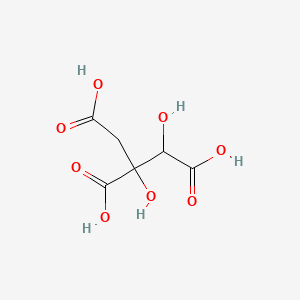 Compound
- Category
- Compound
What Hydroxycitric Acid is, and what it does.
- Does it work
- It suits people already working on diet and training who want a supporting piece in an appetite routine. Human results are modest and vary between studies.
- How much to take
- No daily amount is on record here. It is supplied as a calcium, potassium or mixed salt, and the salt decides how well it dissolves, so start from the maker's serving.
- Time to feel it
- Nothing is measurable on day one. Studies of this compound ran over weeks, and any change shows on the scale and in food records rather than as a sensation.
- The first dose
- Day one is usually uneventful. A few people notice mild digestive rumbling with the first servings, which tends to settle.
- With regular use
- Across weeks of daily use alongside diet and training, trials report small average differences in weight and appetite ratings, with results varying a lot between studies.
- How well tolerated
- Usually well tolerated over a few months, with mild digestive upset the common complaint. Case reports involving Garcinia products exist, so check with a clinician first.
- How it feels
- Most people feel nothing directly from it. Some describe a slightly weaker pull toward evening snacking, which is subtle and far from universal.
- The overlooked benefit
- It binds calcium ions in solution, which is why laboratories use hydroxycitrate in mineral crystal growth experiments, well away from anything to do with supplements.
The proof, claim by claim.
What these words mean
These words describe the research, not the molecule's worth. Research strength is how much work stands behind one claim, and it is never a product score.
- body weight in adults following a reduced calorie dietMeta-analysis
- appetite and satiety ratingsRandomised trial
2 more claims
- inhibition of ATP-citrate lyase and fatty acid synthesisIn vitro study
- calcium binding and crystal growth in solutionIn vitro study
Why these belong in the same formula, 8 pairings
Why these belong in the same formula. Each row says what the basis is, from settled biochemistry through to a trial that measured the pair.
Most hydroxycitric acid on the market is supplied as a calcium salt because the free acid is unstable and lactonises. Calcium hydroxycitrate is poorly water soluble, which is the reason the calcium potassium double salt was developed. The calcium here is a counter-ion decision, not an added active.
Potassium hydroxycitrate dissolves far more readily than the calcium salt, and mixed calcium potassium salts were designed to raise the fraction that goes into solution before absorption. Solubility is one of the few things that clearly differs between products at the same stated milligram dose. Better dissolution is a delivery property and does not by itself imply a different result.
The two are combined so routinely that many trials tested a blend rather than hydroxycitric acid alone. Chromium acts on insulin signalling while hydroxycitrate acts on a lipogenic enzyme, so the rationale is that the targets do not overlap. No study has isolated what the chromium contributes to that combination.
Hydroxycitrate limits the acetyl-CoA supply for making new fat, while carnitine carries long chain fatty acids into the mitochondrion for oxidation. On paper the two act on opposite ends of the same traffic. The pairing is mechanistic reasoning and has not been tested as a combination in people.
Caffeine raises circulating free fatty acids and energy expenditure through adrenergic signalling, a route entirely separate from ATP-citrate lyase. Products combine them for that reason. Since caffeine has its own effects on appetite and activity, any result from the blend cannot be attributed to hydroxycitric acid.
ATP-citrate lyase generates the cytosolic acetyl-CoA pool that supplies both fatty acid synthesis and, in cholinergic neurons, acetylcholine. Inhibiting that enzyme is a theoretical draw on the same pool. This is a mechanistic flag from established biochemistry, not something measured in people taking hydroxycitrate.
Glucomannan works physically by swelling in the stomach and slowing gastric emptying, which has nothing to do with a lipogenic enzyme. Combining them is a way of covering two different routes at once. Each has been studied alone, the pair has not.
Catechins and hydroxycitrate appear together in most commercial blends, so many published results describe the mixture. The mechanisms proposed for each are different, which is the stated rationale. Attributing an outcome from a blend to either ingredient alone is not supportable.
Nothing specific on file for Hydroxycitric Acid. Match the label to the daily amount above, and tell your doctor what you take.
Not medical advice. Show the label to your pharmacist.What Hydroxycitric Acid actually does.
It slows the enzyme that turns citrate into the building block your body uses to make new fat.
3 more mechanisms
Most body fat comes straight from the fat you eat, not from fat your body builds. That limits how much this enzyme step can matter.
The pure acid falls apart in water, so it is sold as a salt.
It comes from the rind of Garcinia fruit, where it sits alongside other acids and plant compounds.
Where Hydroxycitric Acid comes from.
It is made by boiling Garcinia fruit rind in water and then turning the acid into a stable salt. Which salt they pick decides how well it dissolves.
What this route gives you
Made from a plant. What ends up in the capsule tracks the harvest, so batch testing and a stated marker matter more here than with a made molecule.
5 steps on record
Dried rind of Garcinia gummi-gutta or Garcinia indica, sourced mainly from South and Southeast Asia
Milled rind is extracted with hot water, which pulls the organic acid fraction along with sugars and polyphenols
The extract is neutralised with calcium hydroxide, potassium hydroxide or both, converting the unstable free acid into a stable salt
Insolubles, pigments and much of the sugar load are removed, which is what separates a standardised salt from a crude rind extract
Dried to a free flowing powder and assayed by HPLC for hydroxycitrate content and lactone level
The forms it comes in.
4 more forms
The essence, in one line each.
- In a randomised trial, adding hydroxycitric acid to a calorie-restricted diet for eight weeks led to a greater reduction in visceral fat compared to the diet alone in 44 women with a diagnosed liver condition and excess body weight.Randomised trial, in overweight/obese women with NAFLD. Tutunchi et al., 2023 (International Journal of Clinical Practice). PMID 37476001 ↗
3 more findings
- Hydroxycitric acid supplementation reduced fat deposition and altered lipogenic protein expression in the proteomic analysis.Animal study. Peng et al., 2016 (Scientific Reports). PMID 27586962 ↗
- Acute Garcinia mangostana supplementation did not produce a detectable reduction in physical fatigue during exercise, which is a failure to detect a difference rather than proof of no effect.Randomised trial. Chang et al., 2016 (Journal of the International Society of Sports Nutrition). PMID 27152103 ↗
- A fermented juice derived Levilactobacillus strain altered lipid metabolism markers in the culture systems used, with organic acids named among the metabolites.In vitro study. Kumari et al., 2024 (Frontiers in Microbiology). PMID 39943964 ↗
Chosen from the 4 we read for Hydroxycitric Acid.
The studies, linked.
2 sources behind our Hydroxycitric Acid verdict, every one linked to PubMed, the journal or ClinicalTrials.gov.
- Clinical trialExperimental Study of the Administration of a Food Supplement Containing Hydroxycitric Acid Versus Placebo in Patients With Oxalate and Calcium Phosphate Lithiasis in Whom Extracorporeal Shock Wave Lithotripsy is Indicated.ClinicalTrials.gov ↗81 participants, Completed
1 more linked trial
- Clinical trialInvestigations of Botanicals on Food Intake, Satiety, Weight Loss, and Oxidative StressClinicalTrials.gov ↗Phase 1, 17 participants, Terminated
From clinical trials and PubMed, ranked by study type and citation weight, not cherry-picked.
Problems people have reported.
Read this carefully. These are 44 voluntary, unverified reactions reported to the FDA (openFDA). The number mostly reflects how popular Hydroxycitric Acid is, not how risky it is. A report is not proof Hydroxycitric Acid caused anything. It is a signal of what to watch for, nothing more.
3 more reported effects
Source: openFDA adverse-event reports. Voluntary reporting, not an incidence rate.
FDA Disclaimer: These statements have not been evaluated by the Food and Drug Administration. This information is for educational purposes only and is not intended to diagnose, treat, cure, or prevent any disease. Consult your healthcare provider before starting any supplement regimen.