Iridoids.
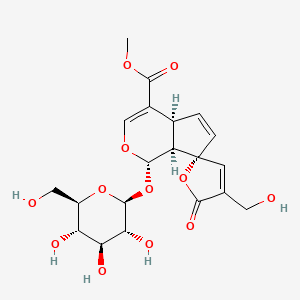
Iridoids are the bitter monoterpene compounds in olive, gentian, noni and valerian. They are usually what a bitter botanical extract is measured and standardised by.
 Compound
- Category
- Compound
What Iridoids is, and what it does.
- Does it work
- Relevant to anyone buying a bitter botanical standardised to iridoid content, because that number is what makes one batch comparable with the next.
- How much to take
- No daily amount is on record for iridoids as a class, and each plant's iridoids behave differently. Start with the band stated on the specific extract you have.
- Time to feel it
- No time course is established for the class. Where single iridoids like oleuropein have been studied, changes showed on blood markers over weeks, not as a sensation.
- The first dose
- A first dose tastes distinctly bitter, which is what these compounds do in the plant. Anything else happens at the level of markers you would measure.
- With regular use
- Over weeks, olive-derived iridoids have been studied for effects on blood lipid and antioxidant markers. Those are markers, not outcomes you would notice.
- How well tolerated
- Well tolerated in food amounts, and olives and olive oil have a long dietary history. Concentrated extracts vary a lot, so check with a prescriber if you take medicines.
- How it feels
- Bitter and drying on the tongue. People report no distinct sensation beyond taste, which fits an effect that sits at the level of blood markers.
- The overlooked benefit
- How much reaches your blood depends on your gut bacteria. The sugar-bearing form is poorly absorbed intact, so microbes release the active part and people differ widely.
The proof, claim by claim.
What these words mean
These words describe the research, not the molecule's worth. Research strength is how much work stands behind one claim, and it is never a product score.
- protection of blood lipids from oxidative damage with olive phenolicsMeta-analysis
- antioxidant activity of iridoid glycosidesIn vitro study
3 more claims
- healthy inflammatory response signallingAnimal study
- gut bacterial release of the absorbable aglyconeNarrative review
- bitter taste driven digestive responseNarrative review
Why these belong in the same formula, 7 pairings
Why these belong in the same formula. Each row says what the basis is, from settled biochemistry through to a trial that measured the pair.
Iridoid glycosides such as aucubin and oleuropein oxidise readily in aqueous solution, browning the preparation and losing the intact glycoside. Ascorbate is used in liquid formulations to slow that oxidation. This is a formulation stability effect, not evidence of a biological synergy in the body. It matters most for liquid extracts and standardised syrups.
Most iridoids occur as glucosides, and the sugar must be cleaved before the aglycone can be absorbed or act. Beta-glucosidase activity from gut bacteria performs most of this in humans, which is why absorption varies with an individual's microbiota. Supplemental digestive enzyme blends do not reliably contain the relevant beta-glucosidase. The dependency on microbial conversion is the more important point than any enzyme product.
Olive oil is itself a delivery matrix for secoiridoids, particularly oleuropein aglycone and oleocanthal, which give extra virgin oil its peppery bite. Refining strips these compounds, which is why the polyphenol content separates extra virgin from refined oil. The oil serves as both source and lipid carrier for the less polar aglycone forms. This is a compositional relationship, not a supplement pairing.
Berry preparations from Lonicera caerulea and related species carry both anthocyanins and iridoid glycosides in the same extract, so the two travel together by origin rather than by design. Trials of these standardised berry blends report on the whole extract, not on the iridoid fraction alone. Attributing an outcome from a mixed berry extract specifically to its iridoids is not supported by the way those studies were run. The pairing is real in the bottle and unresolved in the mechanism.
Both iridoid glycosides and flavonoid glycosides depend on deglycosylation before absorption and both are subject to heavy phase II conjugation in the enterocyte and liver. They compete for the same UGT and SULT conjugation capacity at high doses. Whether this raises the free fraction of either in a way that matters at supplement doses has not been demonstrated in people. The overlap is worth stating, the consequence is not established.
Silymarin flavonolignans and iridoid aglycones are both substrates for glucuronidation. Loading both heavily can slow the clearance of either, since conjugation capacity is finite. This is a plausible pharmacokinetic interaction rather than a documented one at typical intakes. Read it as a caution for high-dose stacking, not a reason to avoid the combination.
Iridoid-rich oil preparations, olive-derived ones in particular, oxidise over shelf life and lose their phenolic content. Tocopherols in the same oil slow lipid peroxidation and preserve the phenolic fraction longer. This is shelf stability chemistry that shows up as a higher assayed polyphenol figure at end of shelf life. It says nothing about what either does after ingestion.
Nothing specific on file for Iridoids. Match the label to the daily amount above, and tell your doctor what you take.
Not medical advice. Show the label to your pharmacist.What Iridoids actually does.
Iridoids are a class of plant compounds built on a specific ring structure, made from geraniol in the plant, found across many plant families, and usually stored bound to a sugar.
3 more mechanisms
Secoiridoids are a related subclass with an opened ring, and one of them is the starting point plants use to build a whole family of indole alkaloids. Olive's oleuropein belongs to this group.
The sugar-bound form is stable inside the plant, but once tissue is damaged an enzyme releases the sugar and exposes a highly reactive form that can bind to proteins. This is thought to be a plant defense mechanism.
One iridoid breakdown product, genipin, readily binds to proteins and is used industrially for that reason, but that lab reactivity doesn't automatically tell us what it does in a person.
Getting Iridoids from food.
The whole-food sources on file. A supplement closes the gap, it does not replace dinner.
A gram-for-gram figure (how much of each you would eat to match a dose) will appear here once it is sourced and reviewed. This page will not print a number it cannot cite.
The forms it comes in.
3 more forms
The essence, in one line each.
- A standardised berry extract improved selected visual function outcomes in a randomised, double-blind, placebo-controlled design in adults with age-related near-vision change.Randomised trial, in adults with presbyopia. Szumny et al., 2026 (Nutrients). PMID 41901190 ↗
4 more findings
- In a randomised crossover trial in 23 adults over 50 with a diagnosed vision condition, an extract combining chokeberry, honeysuckle berry, and bilberry improved near visual acuity in about 92% of participants during the second cycle of the study.Randomised trial, in people over the age of 50, who were subjects with presbyopia and burdened by prolonged work in front of screen monitors. Szumny et al., 2024 (Nutrients). PMID 38612968 ↗
- Chemical profiling of Lonicera caerulea characterised its constituent classes and measured antioxidant capacity in laboratory assays.In vitro study. Kaptsiuh et al., 2026 (Biomolecules). PMID 42194023 ↗
- Salicylic acid elicitation increased biosynthesis of nepetalactone, an iridoid, and rosmarinic acid in Nepeta plant tissue.In vitro study. Petrović et al., 2026 (International Journal of Molecular Sciences). PMID 42074211 ↗
- A review of the bioactive compounds of a traditional medicinal plant, covering constituent classes including iridoids and the pharmacological work reported on them.Narrative review. Xie et al., 2026 (Nutrients). PMID 41599847 ↗
Chosen from the 5 we read for Iridoids.
FDA Disclaimer: These statements have not been evaluated by the Food and Drug Administration. This information is for educational purposes only and is not intended to diagnose, treat, cure, or prevent any disease. Consult your healthcare provider before starting any supplement regimen.