Mangostin.
Alpha-mangostin is the xanthone from mangosteen rind. It is studied for antioxidant and inflammatory signalling, and how a product dissolves it decides what you absorb.
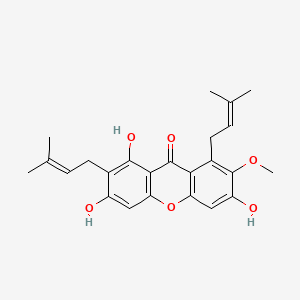 Compound
- Category
- Compound
What Mangostin is, and what it does.
- Does it work
- Suits people who want a less common polyphenol and pay attention to formulation. Look for an oil, lecithin or cyclodextrin delivery, since plain powder barely dissolves.
- How much to take
- No daily amount is on record. With this molecule the delivery system says more than the milligrams, because solubility rather than the label figure sets what reaches you.
- Time to feel it
- Nobody has established a human timeline for this. Polyphenol work of this kind is measured in blood markers over weeks, not in same-day sensation.
- The first dose
- Day one is unremarkable. A softgel or emulsion goes down easily, and whatever is happening is happening at the level of markers rather than feeling.
- With regular use
- Weeks of daily use is where the human research sits, and it is thin. What has been measured is inflammatory and oxidative markers, which are markers and not outcomes.
- How well tolerated
- Human trials of mangosteen extracts report good tolerance, with mild gut upset the usual note. Check with a clinician if you take daily medicines.
- How it feels
- Not a felt ingredient. Mangosteen juice tastes pleasant, while a pericarp extract is bitter and astringent, and that taste is the most noticeable part of taking it.
- The overlooked benefit
- Most of what circulates after a dose is glucuronide and sulfate conjugate, not the free xanthone used in cell studies, so a dramatic lab result does not carry straight over.
The proof, claim by claim.
What these words mean
These words describe the research, not the molecule's worth. Research strength is how much work stands behind one claim, and it is never a product score.
- changes in antioxidant and inflammatory markers, which are markers rather than outcomesRandomised trial
- low oral bioavailability of unformulated materialAnimal study
3 more claims
- extensive phase II conjugation after an oral doseAnimal study
- radical scavenging in cell-free systemsIn vitro study
- xanthone content concentrated in the pericarp rather than the edible arilIn vitro study
Why these belong in the same formula, 8 pairings
Why these belong in the same formula. Each row says what the basis is, from settled biochemistry through to a trial that measured the pair.
Alpha-mangostin is practically insoluble in water, so an unformulated powder taken on an empty stomach presents very little dissolved material to the intestinal wall. A medium chain triglyceride vehicle keeps it in solution through the stomach and feeds it into mixed micelles in the duodenum. This is standard behaviour for lipophilic plant actives rather than something measured for this molecule specifically.
Phosphatidylcholine forms mixed micelles with bile salts and dietary lipid, and lipophilic actives partition into that phase. For a xanthone with negligible aqueous solubility, that partitioning is the route into the enterocyte. The mechanism is established for lipophilic compounds generally. The size of the gain for alpha-mangostin has not been quantified in human work.
Alpha-tocopherol is the main chain-breaking antioxidant inside membranes and lipoproteins. Alpha-mangostin is also lipophilic and partitions into the same compartment, so the two are not simply duplicating each other in different phases. Animal and laboratory work on alpha-mangostin reports changes in oxidative markers such as malondialdehyde, which are markers of lipid peroxidation and not clinical outcomes.
Ascorbate sits at the water side of the membrane interface and reduces the tocopheroxyl radical back to tocopherol, sustaining the lipid-phase defence rather than replacing it. A lipophilic xanthone taken alongside participates in the same interfacial chemistry. The recycling relationship is textbook. What it does to any health endpoint in a person taking mangostin is a separate question with no answer yet.
Reduced glutathione is the cell's main thiol buffer, and studies of alpha-mangostin in animals and cell systems commonly report tissue glutathione as an outcome measure. That makes glutathione a marker in this literature, not a demonstrated partner. Oral glutathione is also poorly absorbed intact, so co-supplementation is a different proposition from what those studies measured.
N-acetylcysteine is deacetylated to cysteine, the rate-limiting substrate for glutamate-cysteine ligase and therefore for glutathione synthesis. That is settled biochemistry and does not depend on mangostin. Where alpha-mangostin studies report tissue glutathione, supplying the precursor addresses the same pool from the substrate side. No study has combined the two.
Quercetin and prenylated xanthones are both substrates for UDP-glucuronosyltransferases and sulfotransferases in the gut wall and liver. Co-ingestion at high amounts can slow the conjugation of whichever compound is present in excess, raising circulating levels of the other. That cuts both ways and is a pharmacokinetic interaction rather than a benefit, so the direction here is competition for shared enzymes.
Curcuminoids and alpha-mangostin share very low aqueous solubility, extensive first-pass conjugation and low oral bioavailability in the unformulated state. They are frequently combined in the same lipid or cyclodextrin systems because one formulation solves the problem for both. The pairing is formulation logic, and it does not by itself imply a combined biological effect.
Nothing specific on file for Mangostin. Match the label to the daily amount above, and tell your doctor what you take.
Not medical advice. Show the label to your pharmacist.What Mangostin actually does.
It barely dissolves in water. Swallowing a large dose of raw powder does not put much of it into your blood, which is why the delivery system on the label matters more than the milligrams.
3 more mechanisms
Your gut and liver tag it chemically before it circulates. The version tested in a dish is not the version that reaches your tissues.
It mops up radicals in a test tube. Whether it does anything of the sort inside you at the amounts you can actually absorb is a separate question.
The compound lives in the purple rind, not the sweet white segments. A mangosteen juice is not the same thing as a rind extract.
Where Mangostin comes from.
It comes from the purple rind of the mangosteen, not the sweet white part you eat. The molecule barely dissolves in water, which is the single fact that explains most of how products are built around it.
What this route gives you
Made from a plant. What ends up in the capsule tracks the harvest, so batch testing and a stated marker matter more here than with a made molecule.
6 steps on record
The thick purple rind of the mangosteen fruit, a by-product of fruit processing across Thailand, Indonesia and Malaysia. The rind carries far more xanthone than the white edible aril does.
Rind is dried to reduce moisture and milled to a coarse powder, which increases the surface area available to solvent.
Milled pericarp is extracted with ethanol or ethyl acetate, which recover the lipophilic xanthones. Water extraction alone gives poor yields of alpha-mangostin.
Crude xanthone extract is separated by column chromatography or repeated crystallisation to raise alpha-mangostin above the level in the crude extract, up to isolate grade.
Commercial extracts declare a percentage of alpha-mangostin, commonly in the range of a partially enriched extract up to near-isolate purity, verified by HPLC.
Delivered as a dry powder in capsules, dispersed in a lipid carrier, or formulated as a nanoemulsion or cyclodextrin complex to address its poor water solubility.
The forms it comes in.
2 more forms
The essence, in one line each.
- Dietary alpha-mangostin supplementation affected oviduct inflammatory markers and eggshell quality measures in aging laying hens.Animal study. Huang L et al., 2026 (Animals). PMID 41976097 ↗
4 more findings
- An alpha-mangostin-rich extract nanoemulsion combined with a free amino acid mixture produced greater effects on growth and immune measures than the components alone in the species studied.Animal study. Srisaen W et al., 2026 (Fish and Shellfish Immunology). PMID 41253207 ↗
- Long-term alpha-mangostin supplementation altered glycaemic and insulin sensitivity measures in the rodent model used.Animal study. Mekseepralard C et al., 2015 (Journal of the Medical Association of Thailand). PMID 27276829 ↗
- A systematic review of two trials in adults with a diagnosed blood-sugar condition found that mangosteen peel extract may improve insulin sensitivity and lower fasting glucose, but concluded the evidence is limited and more research is needed.Systematic review, in patients with T2DM. Purwoko Y et al., 2026 (Acta Medica Indonesiana). PMID 41978307 ↗
- Acute Garcinia mangostana supplementation did not detect an effect on physical fatigue during exercise, which is a failure to detect a difference rather than proof that none exists.Randomised trial. Chang CW et al., 2016 (Journal of the International Society of Sports Nutrition). PMID 27152103 ↗
Chosen from the 5 we read for Mangostin.
The studies, linked.
1 source behind our Mangostin verdict, every one linked to PubMed, the journal or ClinicalTrials.gov.
- Clinical trialClinical Efficacy of α-Mangostin Hydrogel Film With Chitosan Alginate Base for Recurrent Aphthous Stomatitis (RAS) TreatmentClinicalTrials.gov ↗Phase 2, 48 participants, Unknown
From clinical trials and PubMed, ranked by study type and citation weight, not cherry-picked.
FDA Disclaimer: These statements have not been evaluated by the Food and Drug Administration. This information is for educational purposes only and is not intended to diagnose, treat, cure, or prevent any disease. Consult your healthcare provider before starting any supplement regimen.