Monoglyceride.
It's glycerol carrying one fatty acid, half oil-loving and half water-loving. In a formula it holds oil and water together. In your gut it's the form fat is actually absorbed in.
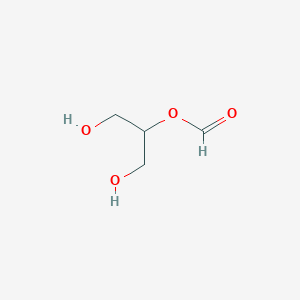 Compound
- Category
- Compound
What Monoglyceride is, and what it does.
- Does it work
- Mostly a formulation aid you'll read on a label rather than something taken for an effect. The medium-chain ones, monolaurin and monocaprylin, are the versions people take on purpose.
- How much to take
- No dose figure is on record. As an emulsifier it does its job at fractions of a gram. The medium-chain forms are taken as a deliberate daily serving with food.
- Time to feel it
- As a formulation aid its work happens in the capsule and in the first hour of digestion. For the medium-chain forms, nobody has measured a timeline in people.
- The first dose
- Nothing registers on day one. It's busy holding the oil and water phases together and feeding into the normal path fat takes across the gut wall.
- With regular use
- Weeks of it as an emulsifier change nothing you could measure. For medium-chain monoglycerides taken deliberately, long-term human data hasn't been collected.
- How well tolerated
- Long-standing food use at emulsifier levels and generally well tolerated. Larger deliberate servings of the medium-chain forms can loosen stools, so build up gradually.
- How it feels
- Nothing subjective at emulsifier levels. Larger servings of the medium-chain forms taste faintly soapy and can sit heavily if you take them without food.
The proof, claim by claim.
What these words mean
These words describe the research, not the molecule's worth. Research strength is how much work stands behind one claim, and it is never a product score.
- emulsification in food and supplement manufactureNarrative review
- fat absorption through the monoacylglycerol pathwayNarrative review
3 more claims
- antimicrobial activity of medium-chain monoglyceridesIn vitro study
- carrier for fat-soluble nutrient uptakeNarrative review
- 2-arachidonoylglycerol as an endocannabinoid monoacylglycerolNarrative review
Why these belong in the same formula, 14 pairings
Why these belong in the same formula. Each row says what the basis is, from settled biochemistry through to a trial that measured the pair.
Long-chain omega-3 fatty acids delivered already esterified in monoglyceride form skip the pancreatic lipase step that ethyl esters and triglycerides require. In the human pharmacokinetic work by Chevalier and colleagues the monoglyceride form produced higher plasma appearance than the ethyl ester comparator. Plasma appearance is an absorption marker, not a clinical outcome, so this says the fatty acid gets in more readily and says nothing yet about what that changes downstream. The practical relevance is greatest for people with low lipase or low bile output.
Curcuminoids are poorly water soluble and their absorption depends heavily on the vehicle they arrive in. Aguilera and colleagues compared curcuminoid formulations carried in an omega-3 monoglyceride matrix against other formulations in a randomised human design and measured plasma curcuminoid appearance. A carrier that raises plasma levels is doing exactly the job a carrier is meant to do. Whether the higher plasma exposure translates into any different effect was not what the study measured.
Bile salts emulsify dietary fat and form the mixed micelles that carry digestion products to the brush border. Monoglycerides are themselves amphipathic and participate in micelle formation rather than merely riding in it. Because a pre-formed monoglyceride has already cleared the lipolysis step, its uptake leans less on bile than an intact triglyceride does. For someone with reduced bile flow, that difference is the whole point of the form.
Pancreatic lipase cleaves the outer two positions of a dietary triglyceride and leaves a 2-monoglyceride plus two free fatty acids. That 2-monoglyceride is the physiological absorption species, taken up at the enterocyte and re-esterified inside the cell. A supplemental monoglyceride is therefore not a novel molecule but the normal endpoint of fat digestion supplied directly. Adding lipase to a monoglyceride does little for the monoglyceride itself, though it still matters for any intact fat eaten alongside.
Vitamin D3 needs a lipid phase and micellar solubilisation to cross the intestinal barrier in useful amounts. Monoglycerides are among the natural components of intestinal mixed micelles, so a monoglyceride-based carrier provides the physical environment the vitamin needs. The same logic applies to the other fat-soluble vitamins. This is formulation physics rather than a metabolic interaction between two actives.
Coenzyme Q10 is one of the least water-soluble compounds in common supplement use, and its absorption is famously vehicle-dependent. A monoglyceride carrier gives it a lipid phase and helps it into mixed micelles. Formulators use this class of emulsifier for exactly that reason. The magnitude of the gain varies by product and is not a fixed number.
Astaxanthin is a xanthophyll carotenoid and, like the whole carotenoid class, is absorbed only when it partitions into a lipid phase and then into micelles. Monoglycerides supply that phase in an emulsified format that does not need much digestive work. Carotenoid uptake without co-ingested fat is markedly poorer, which is the reason such products are almost always oil based.
Lutein absorption tracks the amount and type of fat eaten with it. A monoglyceride-containing emulsion raises the fraction that reaches the micellar phase compared with a dry powder taken on an empty stomach. This is an absorption statement, measured as plasma or macular pigment response depending on the study design, and it does not by itself claim any functional endpoint.
Medium-chain monoglycerides such as monocaprylin and monolaurin are the monoacylglycerol counterparts of the fatty acids that make up MCT oil. Both deliver medium-chain fatty acids, but the monoglyceride form arrives partly pre-digested and retains surfactant activity that plain MCT triglyceride does not have. In animal feeding work the two are often used for different purposes, MCT for energy and the monoglycerides for gut effects. Read the overlap as chemical family rather than interchangeability.
Monolaurin and related medium-chain monoglycerides disrupt bacterial membranes, which is precisely why they are used as feed additives for gut microbial control. That activity is not selective enough to guarantee it spares a supplemental probiotic strain taken at the same time. In the broiler and piglet literature monoglyceride blends measurably shift cecal microbial community composition. Separating the doses by a few hours is a reasonable formulation precaution rather than a demonstrated requirement.
Monoglyceride blends and butyrate sources are commonly co-formulated in animal feed additives aimed at intestinal integrity, and several of the piglet and broiler studies use blends containing both classes. Because the products are tested as blends, the contribution of each component is not separable from the published results. There is no human trial of this pairing. The relationship is documented at the formulation level, not the mechanism level.
Mezzina and colleagues examined zinc oxide alongside a monoglyceride blend in weanling pigs and reported effects on intestinal immune and microbiota measures. Pharmacological zinc oxide in weaning pigs is a veterinary practice with no human parallel at those doses. The pairing is therefore informative about mechanism direction and not transferable to a human supplement stack.
Lecithin and monoglycerides are the two workhorse food-grade emulsifiers, and they are routinely combined because they stabilise different parts of an emulsion. Lecithin is a phospholipid with a bulky polar head, the monoglyceride a smaller single-chain surfactant, and together they pack a more stable interfacial film than either alone. This is process chemistry with no metabolic claim attached.
Tocopherols need a lipid phase for absorption in the same way the other fat-soluble vitamins do, so a monoglyceride carrier serves them well. Separately, vitamin E is added to unsaturated monoglyceride and omega-3 preparations to slow oxidation of the fatty acid chains during shelf life. Both roles are real and they are different roles, one physiological and one about product stability.
Nothing specific on file for Monoglyceride. Match the label to the daily amount above, and tell your doctor what you take.
Not medical advice. Show the label to your pharmacist.What Monoglyceride actually does.
A monoglyceride is a glycerol molecule attached to just one fatty acid, leaving two free ends. That structure gives it both a water-loving and a fat-loving side, which is why it's both a natural digestion byproduct and a common food emulsifier.
3 more mechanisms
During digestion, the enzyme that breaks down dietary fat leaves a specific monoglyceride form intact, and it's that particular form the gut cell absorbs and reassembles into fat for transport into the bloodstream.
Giving a fatty acid already in monoglyceride form skips the digestive breakdown step, which matters most for someone whose fat-digesting enzymes or bile flow are limited.
The body's own most abundant endocannabinoid signaling molecule is technically also a monoacylglycerol, though it's a different specific molecule from the monoglycerides used as food emulsifiers, so the category spans both nutrition and internal signaling.
Getting Monoglyceride from food.
The whole-food sources on file. A supplement closes the gap, it does not replace dinner.
A gram-for-gram figure (how much of each you would eat to match a dose) will appear here once it is sourced and reviewed. This page will not print a number it cannot cite.
The forms it comes in.
3 more forms
The essence, in one line each.
- Omega-3 fatty acids esterified in monoglycerides showed greater plasma appearance than the ethyl ester form in a human pharmacokinetic comparison.Randomised trial. Chevalier et al., 2021 (The Journal of Nutrition). PMID 33564872 ↗
10 more findings
- In young adults, curcuminoids taken with an omega-3 monoglyceride carrier led to 40% higher plasma levels one hour after a single dose compared to other formulations.Randomised trial. Aguilera et al., 2022 (Nutrients). PMID 36558506 ↗
- Two graded levels of a monoglyceride blend affected growth performance and gut health measures in broilers.Animal study. Sacakli et al., 2023 (Poultry Science). PMID 36512871 ↗
- A monoglyceride blend with buffered formic acid altered performance, gut bacterial populations and immunity gene expression.Animal study. Daneshmand et al., 2023 (Poultry Science). PMID 37598553 ↗
- Dietary medium-chain 1-monoglycerides shifted the composition and functional profile of cecal microbiota.Animal study. Liu et al., 2022 (Journal of the Science of Food and Agriculture). PMID 34622457 ↗
- Dietary monoglyceride supplementation was examined for intestinal integrity and host defence measures under a health challenge.Animal study. White et al., 2024 (Journal of Animal Science). PMID 38629856 ↗
- A blend of organic acids and monoglycerides reduced diarrhoea scores and systemic inflammatory markers.Animal study. Park et al., 2025 (Journal of Animal Science and Biotechnology). PMID 39838409 ↗
- A monoglyceride blend was evaluated for performance and intestinal health status in diets formulated without growth promoters.Animal study. Abranches et al., 2025 (Scientific Reports). PMID 40133511 ↗
- Zinc oxide and a monoglyceride blend were compared for intestinal immune, health and microbiota responses.Animal study. Mezzina et al., 2025 (Veterinary Research Communications). PMID 40358814 ↗
- Dietary additives including monoglyceride-containing products were assessed for gut and skin health measures.Animal study. Chaklader et al., 2025 (Aquaculture Nutrition). PMID 40988650 ↗
- Incubation with endocannabinoids, which are monoacylglycerol-family lipids, changed expression of endocannabinoid and inflammatory components.In vitro study. Dos Santos Silva et al., 2026 (JDS Communications). PMID 41788836 ↗
Chosen from the 11 we read for Monoglyceride.
The studies, linked.
2 sources behind our Monoglyceride verdict, every one linked to PubMed, the journal or ClinicalTrials.gov.
- Clinical trialRole of DHA Monoglyceride (MAG-DHA) in the Resolution of Pulmonary Inflammation of Patients With Cystic Fibrosis.ClinicalTrials.gov ↗Phase 2, 11 participants, Terminated
1 more linked trial
From clinical trials and PubMed, ranked by study type and citation weight, not cherry-picked.
FDA Disclaimer: These statements have not been evaluated by the Food and Drug Administration. This information is for educational purposes only and is not intended to diagnose, treat, cure, or prevent any disease. Consult your healthcare provider before starting any supplement regimen.