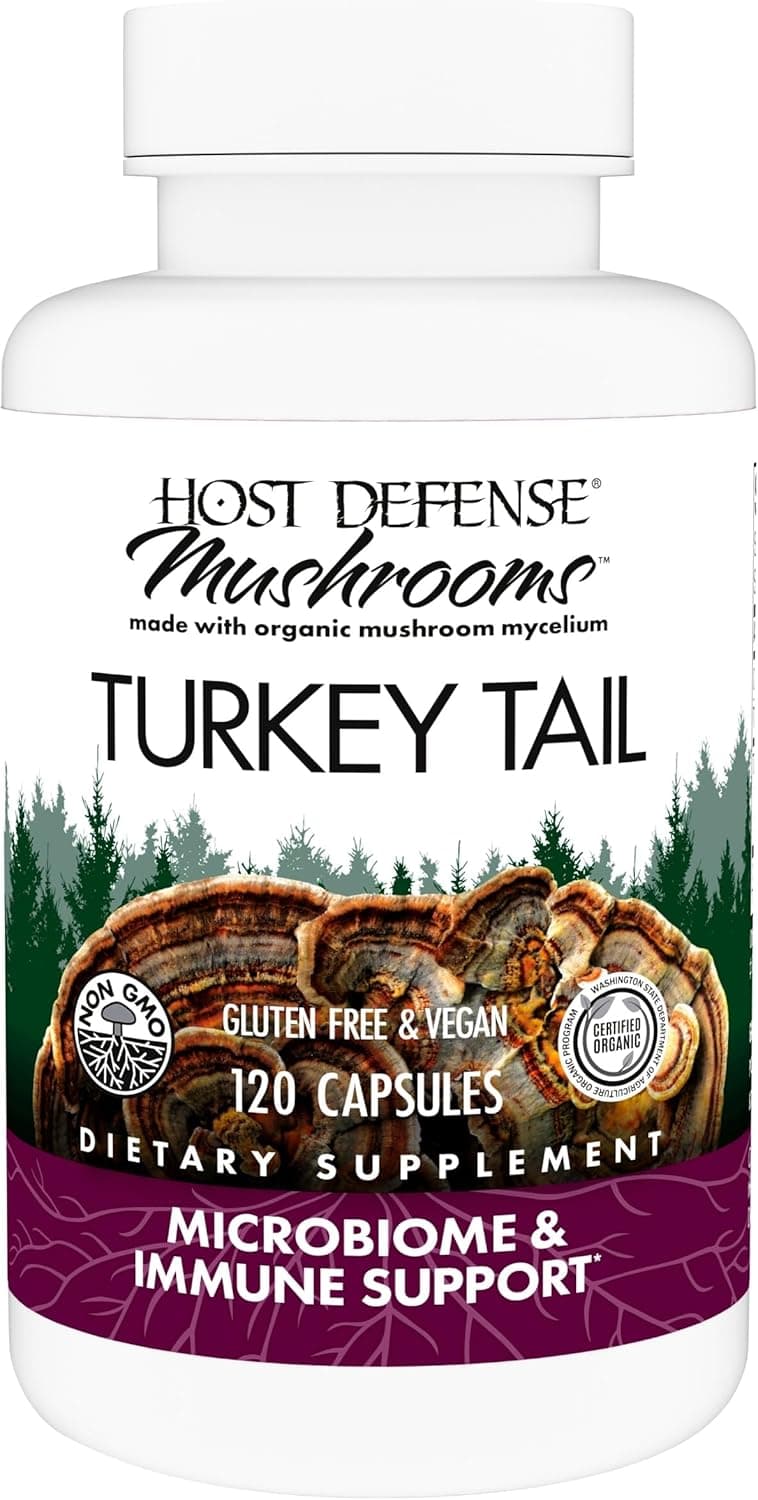
Oyster Mushroom Mycelium.
Oyster mushroom mycelium grown on rice, offering beta-glucans and lovastatin-related compounds for immune and cholesterol support. Provides beta-glucans that prime your innate immune system to respond faster to threats
Reviewed March 2026
- Category
- Herb
- Also filed under
- Beta glucan immune supportContains natural lovastatinAntioxidant properties
What Oyster Mushroom Mycelium is, and what it does.
- Does it work
- The beta-glucan concept is sound, but mycelium-on-rice products dilute the active compounds with starch. Fruiting body extracts generally deliver more beta-glucans per gram.
- How much to take
- 500-1000mg of the biomass daily. But the actual beta-glucan content depends hugely on the ratio of mycelium to rice. Some products are mostly rice starch with a thin layer of mycelium.
- Time to feel it
- There is no onset to feel. Where fungal glucans have been studied, changes in immune markers turn up across about four to eight weeks of daily use.
- The first dose
- Nothing you would notice. The beta-glucans start meeting dectin-1 receptors on innate immune cells in the gut wall, which is receptor traffic rather than sensation.
- With regular use
- Weeks of daily use keep a steady supply of beta-glucan reaching innate immune cells and the colon, where bacteria ferment it to short-chain fatty acids. That shows up in markers.
- How well tolerated
- Well tolerated. It's an edible mushroom. People with mushroom allergies should obviously avoid it. The lovastatin content is too low to cause statin-related side effects.
- How it feels
- Nothing dramatic. If anything, you might notice over months that you're getting sick less often. That's the most realistic expectation.
- The overlooked benefit
- Fungi make ergothioneine and humans do not, yet we carry a dedicated transporter for it. That makes mushroom material a distinctive dietary source of the compound.
500 to 1,500mg a day is where Oyster Mushroom Mycelium works.
Source: Pleuran studies, Pleurotus ostreatus research
The proof, claim by claim.
These words describe the research, not the molecule's worth. Research strength is how much work stands behind one claim, and it is never a product score.
- Supports immune function via beta-glucans
- Lowers cholesterol via natural lovastatin
- Antioxidant and anti-inflammatory effects
Questions people ask about Oyster Mushroom Mycelium.
- Mycelium vs fruiting body: does it matter?
- Yes. Fruiting bodies (the actual mushroom cap and stem) generally have higher beta-glucan content. Mycelium-on-grain products contain significant rice starch that dilutes the active compounds.
- Will this lower my cholesterol?
- Don't count on it. The natural lovastatin in oyster mushroom supplements is a tiny fraction of what prescription statins provide. You'd need unrealistic amounts for cholesterol effects.
- Can I just eat oyster mushrooms instead?
- Absolutely. A cup of cooked oyster mushrooms likely gives you more bioactive compounds than most supplements, plus protein and B vitamins. And they taste great.
- What's the rice biomass part?
- The mycelium is grown on rice grain as its food source. The final product is both the mycelium AND the rice it grew on, ground together. This means a portion of what you're taking is just rice starch.
- How much of this is actually mushroom?
- That's the key question most brands don't answer. In mycelium-on-grain products, the actual mycelium can be as low as 30-40% of the biomass. The rest is grain substrate.
- Is it worth taking in a mushroom blend?
- As part of a multi-mushroom blend with lion's mane, reishi, and turkey tail, it adds diversity. On its own, oyster mushroom isn't the most compelling standalone supplement.
Why these belong in the same formula. Each row says what the basis is, from settled biochemistry through to a trial that measured the pair.
The immune-relevant polysaccharide of Pleurotus ostreatus is a beta-1,3/1,6-glucan of the same structural class as isolated fungal and yeast beta-glucans. Combining the two adds the same receptor-binding structure from two sources. Whole biomass delivers the glucan inside an intact cell wall, an isolate delivers it already freed.
Saccharomyces-derived beta-1,3/1,6-glucan shares the branched backbone recognised by dectin-1 on innate immune cells with the mushroom glucan. Yeast material is typically purified to a defined glucan percentage while mycelial biomass is not. The pairing is structural overlap, not a tested combination.
Oat beta-glucan is a linear beta-1,3/1,4 polysaccharide, a different linkage pattern from the branched fungal glucan, and it behaves as a viscous fermentable fibre rather than a dectin-1 ligand. Naming both on one label is only honest if the difference is stated. They share a word, not a mechanism.
Grain-grown mycelial biomass is mycelium plus the colonised substrate, so a meaningful share of the finished powder is residual rice starch. Amylase digests that starch fraction. It does nothing to the fungal cell wall. This is worth saying plainly because starch content is what separates a biomass powder from a fruiting body extract.
Fungal cell walls are chitin and glucan, and human digestive enzymes do not break chitin, which is why hot-water extraction rather than enzyme support is the usual way to free mushroom polysaccharides. Enzyme blends act mainly on the starch and protein travelling with the biomass. The limit here is the wall, not the gut.
Fungal beta-glucans that escape digestion are fermented by colonic bacteria to short-chain fatty acids including butyrate. Supplying butyrate directly and supplying a fermentable substrate reach the same colonocyte fuel by different routes. Fermentability varies with how much of the glucan is still locked in chitin.
Inulin is a readily fermented fructan and fungal glucan a slower, more structured substrate, so the two are fermented by different bacterial groups at different rates along the colon. Formulators pair fast and slow substrates for that reason. No combination trial covers this specific pairing.
Live cultures need fermentable carbohydrate to establish, and undigested fungal polysaccharide is one such substrate. The pairing is the standard synbiotic logic. Which strains actually use fungal glucan is strain-specific and not settled.
Ergothioneine, a thiol-bearing antioxidant that mushrooms including Pleurotus accumulate, is built from histidine by fungal biosynthesis: the imidazole ring is trimethylated and a sulfur is added from cysteine. Histidine is the ring donor. This explains where the compound comes from and is not a reason to take the two together.
The sulfur atom in fungal ergothioneine is transferred from cysteine during biosynthesis in the mycelium. This is fungal metabolism happening before harvest, not an interaction in the person taking it. It is included because ergothioneine content is one of the things that distinguishes mushroom material.
Mushroom tissue contains ergosterol, which ultraviolet light converts to ergocalciferol, vitamin D2. Biomass grown indoors without UV exposure carries little of it, so the vitamin D on a mushroom label comes from a deliberate UV step or from added vitamin D. The chemistry is settled. Whether a given batch had UV exposure is a manufacturing fact.
Multi-mushroom blends put Pleurotus alongside Ganoderma because their polysaccharide fractions differ in branching and molecular weight. The pairing is formulation convention with a shared polysaccharide rationale. Blend-level evidence is thinner than single-species evidence.
Trametes versicolor supplies protein-bound polysaccharides, a structurally distinct fungal glucan class from the Pleurotus material. Blends combine them to widen the polysaccharide profile. The rationale is compositional rather than clinical.
Hericium is the other species most often grown as grain-based mycelial biomass, and the same manufacturing questions apply to both: how much of the powder is fungus and how much is substrate. Pairing them is a category convention. Read it as formulation practice.
Ascorbate is water soluble and works in the aqueous phase alongside the thiol antioxidants that mushroom tissue carries, including ergothioneine. The two sit in overlapping compartments. This is antioxidant chemistry, not a measured outcome for the combination.
Mushrooms concentrate minerals from their substrate, and selenium content in cultivated material tracks what the substrate contained. Rice-based substrate is generally low in it. The practical point is that mineral content of biomass is a substrate fact, so a formula supplies selenium separately rather than relying on the mushroom.
Talk to a doctor before taking Oyster Mushroom Mycelium if any of these apply to you: Mycelium on grain has low mushroom content, Lovastatin amounts are tiny vs prescription doses, May interact with statin medications. These are flags to check first, not effects Oyster Mushroom Mycelium is known to cause.
Not medical advice. Show the label to your pharmacist.What Oyster Mushroom Mycelium actually does.
The oyster mushroom cell wall is chitin cross-linked with beta-1,3 and beta-1,6 glucans, a structure human digestive enzymes can't break down. That's why hot water or alkaline extraction is used to release the polysaccharide.
Branched beta-1,3/1,6-glucans get picked up by dectin-1 and complement receptor 3 on innate immune cells. That receptor interaction is what underlies the immune-related interest in fungal polysaccharides.
Grain-grown mycelial biomass is mycelium plus the substrate it colonised, so the powder holds residual rice starch. How much of it is mushroom-derived is a manufacturing variable, not something the species name pins down.
Mushroom tissue holds ergosterol, and ultraviolet irradiation turns it into ergocalciferol. Material grown without UV exposure carries little vitamin D2.
Where Oyster Mushroom Mycelium comes from.
The fungus is grown through cooked, sterilised rice until it has spread through the grain. Then the whole thing, fungus and rice together, is dried and ground into powder. That is faster than growing actual mushrooms, and it means some of the powder is rice, which is why a beta-glucan test on the finished batch is the number that tells you what you have.
Built by fermentation, the same way vitamin B12 and many amino acids are made at scale. Controlled conditions, consistent output.
Whole or brown rice is hydrated and autoclaved in bags or jars to eliminate competing organisms.
A Pleurotus ostreatus culture is inoculated and grown through the grain under temperature and humidity control, typically over two to four weeks.
The colonised mass, mycelium and substrate together, is dried at controlled temperature to halt growth and stabilise the material.
The dried mass is milled to a powder and filled into capsules or blended into a formula.
Where a specification exists, the finished powder is assayed for beta-glucan, commonly by an enzymatic method that separates beta-glucan from alpha-glucan starch.
Getting Oyster Mushroom Mycelium from food.
The whole-food sources on file. A supplement closes the gap, it does not replace dinner.
A gram-for-gram figure (how much of each you would eat to match a dose) will appear here once it is sourced and reviewed. This page will not print a number it cannot cite.
The forms it comes in.
The essence, in one line each.
- Beta-glucan output from Pleurotus ostreatus depends on cultivation conditions and on the genetic background of the strain, so glucan content is not fixed for the species.In vitro study. Drezek et al., 2025 (International Journal of Molecular Sciences). PMID 41096968 ↗
- The agri-food substrate used for oyster mushroom cultivation changes yield and composition of the resulting material.In vitro study. Miskiewicz et al., 2025 (Scientific Reports). PMID 41315478 ↗
- Chia residue substrate formulations altered oyster mushroom cultivation performance and the composition of the harvested material.In vitro study. Azzam et al., 2025 (World Journal of Microbiology and Biotechnology). PMID 41240259 ↗
- A review of ergothioneine as a mushroom-derived thiol compound with antioxidative and anti-inflammatory activity described mechanistically, including recovery from mushroom residuals.Narrative review. Harasym et al., 2025 (Molecules). PMID 41375218 ↗
- A systematic review of fungal supplementation and endurance, immune and haematological measures in adult athletes. The ingredient is named within a broader fungal category rather than tested alone.Systematic review. Shu et al., 2025 (Frontiers in Nutrition). PMID 41280379 ↗
- Characterisation review positioning mushrooms as a protein source with functional polysaccharide and micronutrient content.Narrative review. Pawde et al., 2026 (Foods). PMID 42073187 ↗
- Low dietary inclusion of oyster mushroom spent substrate produced only limited offset of the effects of the comparison feed. The authors report the effect as limited.Animal study. Mthana et al., 2024 (Tropical Animal Health and Production). PMID 38194011 ↗
- Pleurotus ostreatus biomass shows structure-forming behaviour usable in edible printing. A materials characterisation, not a nutrition endpoint.In vitro study. Tiupova et al., 2025 (Molecules). PMID 40871503 ↗
These are the studies our verdict leans on, chosen from the 8 we read for Oyster Mushroom Mycelium. The full linked list is below.
The studies, linked.
1 source behind our Oyster Mushroom Mycelium verdict: peer-reviewed studies and registered clinical trials. Every one links straight to PubMed, the journal, or ClinicalTrials.gov. Read them yourself.
- Clinical trialEvaluation of Gut-Related Well-Being and Mood Effects of a Daily Nutritional Food Ingredient From the Co-Fermentation of Fungal Mycelium (Pleurotus Pulmonarius) and Microalgae (Chlorella Vulgaris) in Healthy Adults Experiencing Minor Gastrointestinal Discomfort: A 30-Day, Two-Arm, Open-Label StudyClinicalTrials.gov ↗80 participants, Recruiting
Evidence surfaced via Semantic Scholar (Allen Institute for AI) and ClinicalTrials.gov. Ranked by study type and citation weight, not cherry-picked.
FDA Disclaimer: These statements have not been evaluated by the Food and Drug Administration. This information is for educational purposes only and is not intended to diagnose, treat, cure, or prevent any disease. Consult your healthcare provider before starting any supplement regimen.