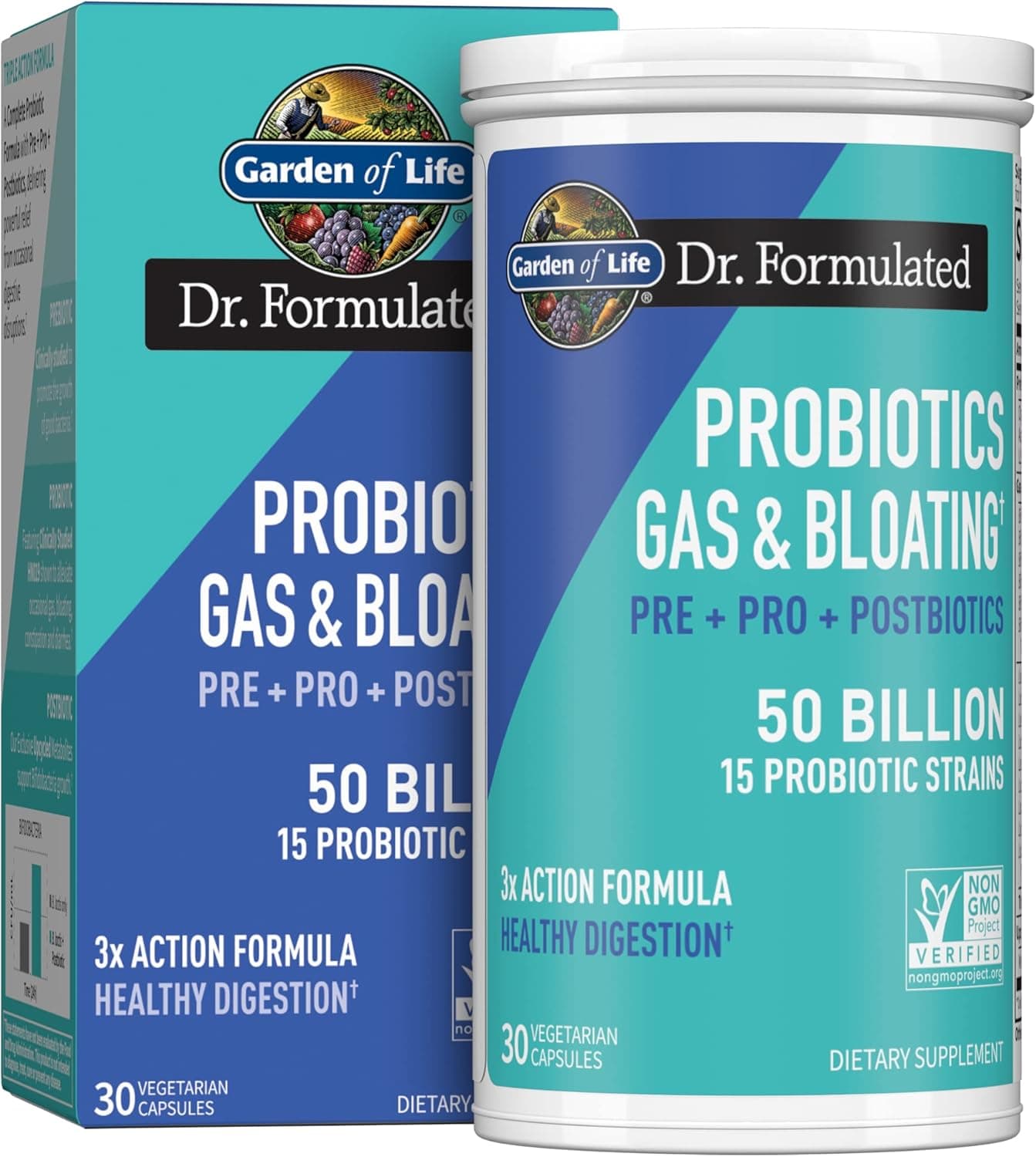
Probiotic Acidophilus.
Research-backed probiotic with potential health benefits. Helps maintain a healthy balance of bacteria in your gut and vagina. Can reduce gas, bloating, and support regularity.
Reviewed March 2026
- Category
- Probiotic
What Probiotic Acidophilus is, and what it does.
- Does it work
- Maybe. If you have mild, general digestive complaints, it's a decent place to start. For specific issues, a multi-strain or targeted probiotic is usually better.
- How much to take
- Look for 1 to 15 billion CFUs (Colony Forming Units) per day. More isn't always better. Consistency is what matters.
- Time to feel it
- One to four weeks of daily use before digestion settles into a steadier pattern. Some gut rumbling in the first few days is the earliest sign anything is shifting.
- The first dose
- Nothing. The bacteria need time to set up shop. This isn't a fast-acting drug.
- With regular use
- After a month, you may notice steadier digestion and less bloating. For some, it can help with occasional diarrhea or yeast balance.
- How well tolerated
- Well tolerated. The main 'risk' is temporary gas as your system adapts. If it lasts more than a week, try a lower dose.
- How it feels
- You don't feel it 'kick in'. You feel the absence of problems: less random bloating, more normalcy. It's quiet work.
- The overlooked benefit
- Some acidophilus strains carry beta-galactosidase, the enzyme that splits lactose, which is part of why cultured dairy often sits easier than plain milk.
1,000,000,000 to 10,000,000,000 CFU a day is where Probiotic Acidophilus works.
Source: ISAPP consensus statement 2019 + Ford 2014 meta-analysis
The proof, claim by claim.
These words describe the research, not the molecule's worth. Research strength is how much work stands behind one claim, and it is never a product score.
Probiotic Acidophilus is documented in the library. The clinical read is in the queue. Nothing about the strength of the research prints until the read is done.
- Everyday digestive comfortRandomised trial
- Bloating and gas after mealsRandomised trial
- Lactose digestion from cultured dairyRandomised trial
- Bowel regularity during and after a course of antibioticsMeta-analysis
- Vaginal and urinary microbial balance in womenRandomised trial
- Lowering gut lumen pH through lactic acid productionNarrative review
Questions people ask about Probiotic Acidophilus.
- Does it need to be refrigerated?
- Depends. Modern freeze-drying makes many shelf-stable. Check the label. If it says refrigerate, do it.
- Will this give me gas?
- Possibly for the first few days. It's a sign that things are changing in your gut. It usually subsides within a week.
- When is the best time to take it?
- Right before a meal or with a meal. Food helps buffer stomach acid, giving the bacteria a better chance of survival.
- Can I take this with antibiotics?
- Yes, but separate the doses by at least 2 hours. The antibiotic can kill the probiotic otherwise. Think of it as sending in reinforcements.
- What's the difference between this and other probiotics?
- Think of probiotic strains like dog breeds. Acidophilus is a well-known Labrador. Others, like B. longum, are like Border Collies. Different strains do different jobs.
Why these belong in the same formula. Each row says what the basis is, from settled biochemistry through to a trial that measured the pair.
Lactobacillus acidophilus ferments fructans, so inulin is the substrate that supports the organism once it arrives in the colon. This is the textbook synbiotic pairing.
PHGG is a slowly and evenly fermented soluble fibre that reaches the distal colon. It supplies fermentable carbohydrate to lactic acid bacteria without the rapid gas load of shorter fructans.
Pectin is fermented by colonic bacteria including lactobacilli into short-chain fatty acids. It also forms a gel that slows transit, giving the organisms longer contact time.
Oat beta-glucan is a viscous fermentable fibre that feeds saccharolytic colonic bacteria. It is a common prebiotic pairing in synbiotic formulas.
Lactobacillus acidophilus carries its own beta-galactosidase and releases it as cells lyse in the gut. That adds to a supplemental lactase dose acting on the same disaccharide.
The yeast occupies a different niche than a lactic acid bacterium and is not inhibited by antibacterial pressure. Combining them keeps a live organism present under conditions that suppress one or the other.
Lactobacilli produce lactate and acetate, which butyrate-producing species convert onward into butyrate. Supplying butyrate directly covers the endpoint of a chain that acidophilus only starts.
Colostrum carries oligosaccharides that lactobacilli ferment plus secretory immunoglobulins and lactoferrin that shape which organisms establish.
Glutamine is the preferred fuel of the enterocyte and supports normal tight junction protein expression, while the bacteria act on the luminal side. The two work on the barrier from opposite faces.
Lactic acid fermentation lowers luminal pH, which keeps divalent minerals in a soluble form for longer in the distal gut. That raises the window in which calcium can be absorbed.
Several lactobacilli synthesise folate and release it into the colonic lumen. This adds a small endogenous contribution alongside dietary or supplemental folate.
Activated charcoal is a non-selective adsorbent that binds organic material passing through the gut, including the carrier matrix and metabolites of a live culture. Dosing the two together lowers what reaches the colon, so they should be spaced by several hours.
Bentonite has a large charged surface that binds cells and organic molecules in the lumen. Taken at the same time as a live culture it reduces the delivered load, so the doses should be separated.
Carvacrol and thymol disrupt bacterial membranes without discriminating between resident and supplemented organisms. Taken in the same dose window they lower the viability of the culture.
Berberine has direct antibacterial action in the gut lumen and measurably shifts microbial composition. Co-dosing with a live lactic acid culture works against the culture, so spacing is standard practice.
Allicin and related organosulfur compounds are broadly antibacterial in the lumen. High doses taken alongside a live culture reduce the delivered viable count.
Lactobacillus acidophilus carries beta-fructofuranosidase activity and ferments short-chain fructans that human enzymes cannot digest. Supplying the substrate alongside the organism is the definition of a synbiotic pairing. Fermentation of these chains yields lactate and acetate and lowers luminal pH.
Galactooligosaccharides are beta-linked galactose chains that lactobacilli and bifidobacteria ferment readily. The pairing gives the delivered organism a substrate that resists digestion in the small intestine. Larger doses of any oligosaccharide bring gas and bloating in some people.
Resistant starch reaches the colon intact and is fermented by cross-feeding networks in which primary starch degraders release sugars that lactobacilli use. The result is short-chain fatty acid production, butyrate in particular from the downstream partners. Acidophilus itself is a modest starch degrader, so the benefit runs through the wider community.
Partially hydrolysed guar is a fermentable galactomannan that supports lactic acid bacteria in the proximal colon. It ferments more slowly than short-chain oligosaccharides, which is why it is often chosen when gas is a limiting problem. Its viscosity also slows transit slightly.
Psyllium is only partially fermented, so its main action is bulking and water holding rather than feeding the delivered strain. Combining it with a lactobacillus changes stool form through one mechanism and the microbial community through another. Adequate fluid matters whenever psyllium is used.
Lactobacilli sit mainly in the small intestine while bifidobacteria dominate the colon, so the two occupy different stretches of gut. Bifidobacteria also run the fructose-6-phosphate shunt, producing acetate that other organisms convert onward to butyrate. Combining them covers more of the tract than either alone.
Acidophilus produces lactate, and lactate-utilising colonic species convert it onward to butyrate and propionate. Pairing a lactate producer with colonic partners keeps that chain moving rather than letting lactate accumulate. This is community metabolism, not a single-strain effect.
L. plantarum tolerates a wider range of substrates and bile than acidophilus and survives gastric passage well. Multi-strain blends are built on the assumption that no single strain covers every niche or every person's baseline community. Strain-specific effects do not transfer between species.
Lactoferrin sequesters free iron, and lactobacilli are unusual in having very low iron requirements while many competing organisms do not. Withholding free iron therefore tilts the local environment toward lactic acid bacteria. The mechanism is well described in vitro. How much of it operates at supplement doses in people is less settled.
Zinc is required for normal expression and assembly of the junctional proteins that hold enterocytes together. A probiotic strain and adequate zinc act on intestinal barrier integrity through different routes. The pairing is mechanistically complementary rather than measured as a combination.
Some gut bacteria synthesise corrinoids and others compete for them, so the microbial community both produces and consumes cobalamin analogues. Colonic synthesis sits distal to the ileal absorption site, so it does not reliably supply the host. Any B12 status change should be regarded as coming from the supplement, not from the organism.
Gut bacteria synthesise long-chain menaquinones as part of their own electron transport, and colonic menaquinones contribute to host vitamin K pools to an uncertain degree. Lactobacilli are not major menaquinone producers themselves. This is a community-level observation rather than a strain claim.
Better upper-gut digestion of protein and carbohydrate leaves less undigested substrate for fermentation further down, which can reduce gas while shifting what the delivered organism has to work with. The interaction runs in two directions and depends on the person's baseline digestion. It is a formulation consideration rather than a measured effect.
Slippery elm supplies a mucilaginous polysaccharide that coats the mucosa and is partly fermentable. It is a long-standing companion to probiotic blends in traditional and commercial practice. Direct evidence for the pairing is thin and it is written here as traditional use.
Nothing specific on file for Probiotic Acidophilus. Match the label to the daily amount above, and tell your doctor what you take.
Not medical advice. Show the label to your pharmacist.What Probiotic Acidophilus actually does.
It turns sugars into lactic acid, which is what makes it a lactic acid bacterium.
The acid it makes makes the local environment less comfortable for some other bacteria.
It makes its own antibacterial peptides that act on nearby competing strains.
It changes the chemical form of bile acids in the gut.
Where Probiotic Acidophilus comes from.
One specific strain is grown in a big sterile tank, spun down, mixed with sugars that protect it during drying, then freeze-dried into powder. The powder is diluted to hit the count on the label, usually with extra added because live counts fall over time, and packed to keep moisture out.
Built by fermentation, the same way vitamin B12 and many amino acids are made at scale. Controlled conditions, consistent output.
A single deposited strain from a culture collection is expanded through a master bank and a working bank, so every production lot traces back to the same genotype. Strain identity is confirmed by genome or fingerprint methods rather than by species-level tests alone.
Cells are grown in stirred, pH-controlled anaerobic or micro-aerophilic fermenters on a carbohydrate and nitrogen medium. Media components are declared where allergens such as milk or soy peptones are used, because residues can carry through.
Biomass is separated from spent medium by centrifugation or membrane filtration and washed, concentrating the cells into a paste.
The paste is blended with cryoprotectants such as sucrose, trehalose or maltodextrin, frozen, then dried by sublimation under vacuum at low temperature to preserve membrane integrity.
The dried cake is milled and diluted with a carrier to a declared count per gram, with an overage set against the expected decline over shelf life.
Powder is filled into capsules, sachets or blister packs with a desiccant and often under low humidity, since water activity governs survival.
Getting Probiotic Acidophilus from food.
The whole-food sources on file. A supplement closes the gap, it does not replace dinner.
A gram-for-gram figure (how much of each you would eat to match a dose) will appear here once it is sourced and reviewed. This page will not print a number it cannot cite.
The forms it comes in.
The essence, in one line each.
- A randomised clinical trial of Lactobacillus acidophilus in infants reported effects on crying-related outcomes alongside changes in stool microbiota composition.Randomised trial. Vaz SR et al., 2026 (BMC Pediatrics). PMID 41998618 ↗
- In a randomised trial in marathon runners, probiotic supplementation altered inflammation parameters and self-reported sleep after the race. Inflammatory markers are markers, not clinical outcomes.Randomised trial. Aquino-Lemos V et al., 2025 (Nutrients). PMID 41374052 ↗
- Continuous energy restriction combined with probiotic supplementation was assessed for effects on appetite-regulation parameters. The ingredient appears as one strain within the tested product.Randomised trial. Lucin GA et al., 2026 (Clinical Nutrition ESPEN). PMID 42392542 ↗
- A placebo-controlled trial measured executive-function test scores in children given a probiotic supplement. The report names L. acidophilus among the strains and the outcomes are cognitive test scores.Randomised trial. Parhiz A et al., 2026 (Neuropsychopharmacology Reports). PMID 41450035 ↗
- In a rodent model, Lactobacillus acidophilus administration was associated with better memory task performance and lower neuroinflammatory markers. Animal data, and markers rather than outcomes.Animal study. Yousefi R et al., 2026 (IBRO Neuroscience Reports). PMID 42396557 ↗
- Dietary Lactobacillus acidophilus D2/CSL influenced faecal parameters in the animals studied, a strain- and species-specific observation.Animal study. Martello E et al., 2026 (Open Veterinary Journal). PMID 42375442 ↗
- In ovo and drinking-water delivery of Lactobacillus acidophilus with Enterococcus faecium was assessed in poultry challenged with intestinal protozoa. Agricultural context, not a human finding.Animal study. Aydin R et al., 2026 (Experimental Parasitology). PMID 42092525 ↗
- Systemic probiotic administration modulated expression of TLR4 and beta-defensin peptides in an experimental animal model. Gene and peptide expression are markers.Animal study. Cosme-Silva L et al., 2026 (Journal of Applied Oral Science). PMID 42207096 ↗
- A double-blind placebo-controlled paediatric trial tested probiotic supplementation as an add-on to existing care. L. acidophilus is named among the strains and the trial is reported here for its design and population only.Randomised trial. Rashdan AR et al., 2026 (Pharmacotherapy). PMID 41693686 ↗
These are the studies our verdict leans on, chosen from the 9 we read for Probiotic Acidophilus. The full linked list is below.
Problems people have reported.
Read this carefully. These are 2,852 voluntary, unverified reactions reported to the FDA (openFDA). The number mostly reflects how popular Probiotic Acidophilus is, not how risky it is. A report is not proof Probiotic Acidophilus caused anything. It is a signal of what to watch for, nothing more.
Source: openFDA adverse-event reports. Voluntary reporting, not an incidence rate.
FDA Disclaimer: These statements have not been evaluated by the Food and Drug Administration. This information is for educational purposes only and is not intended to diagnose, treat, cure, or prevent any disease. Consult your healthcare provider before starting any supplement regimen.