Sucralose.
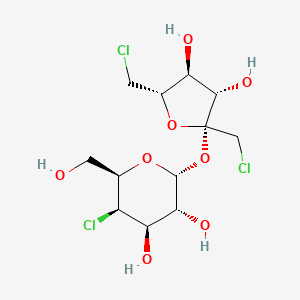
Sucralose makes things taste sweet without contributing usable energy, because your enzymes can't break its carbon to chlorine bonds. It's a flavour tool, not a nutrient.
 Compound
- Category
- Compound
What Sucralose is, and what it does.
- Does it work
- Suits people who want a sweet shake or drink with no sugar in it. If a lingering aftertaste bothers you, sugar alcohols and stevia give a different sweetness profile.
- How much to take
- No supplement dose applies. It's around 600 times as sweet as sugar, so a serving is milligrams, and regulators publish an acceptable daily intake per kilogram of body weight.
- Time to feel it
- Sweetness is instant on the tongue and fades within a minute or two. There's no delayed effect waiting behind it.
- The first dose
- Day one is a sweet taste with a slightly lingering finish. Any gas or loosening usually comes from the bulking carrier rather than the sucralose itself.
- With regular use
- Across weeks it keeps sugar out of the drink. Effects on gut bacteria and glucose handling in people are still being argued, with trials pointing in both directions.
- How well tolerated
- Well tolerated by most people at the amounts used in drinks and powders. It breaks down above roughly 120 degrees Celsius, so it isn't the one for baking or frying.
- How it feels
- Clean, intense sweetness with a slight lingering finish some people read as chemical. No stimulation and no aftereffect beyond taste.
- The overlooked benefit
- Researchers use it as an inert marker in intestinal permeability testing, precisely because the body neither breaks it down nor actively transports it.
The proof, claim by claim.
What these words mean
These words describe the research, not the molecule's worth. Research strength is how much work stands behind one claim, and it is never a product score.
- body weight when it replaces sugar in drinksMeta-analysis
- post-meal glucose and insulin responseRandomised trial
3 more claims
- gut microbiota compositionRandomised trial
- dental plaque acid production, since oral bacteria cannot ferment itNarrative review
- use as an inert probe in intestinal permeability testingNarrative review
Why these belong in the same formula, 7 pairings
Why these belong in the same formula. Each row says what the basis is, from settled biochemistry through to a trial that measured the pair.
Sucralose has a slow onset and lingering finish, while acesulfame K hits fast and carries a bitter tail at higher concentrations. Blended, each covers the other's weak point and the total sweetener load drops for the same perceived sweetness. This is why the two appear together on so many labels. It is a taste engineering decision, nothing to do with metabolism.
A teaspoon of table sugar cannot be replaced by a few milligrams of powder without the recipe collapsing. Erythritol supplies the bulk, mouthfeel and browning behaviour while contributing minimal digestible energy. It also brings a cooling sensation that sucralose does not have. The pairing is structural rather than synergistic in any biological sense.
Reducing sugars would brown and cross-link with lysine residues in a protein powder over shelf life, degrading both colour and amino acid availability. Sucralose is not a reducing sugar and sidesteps that entirely. It also delivers sweetness at a dose too small to alter the macronutrient panel. This is why nearly every flavoured protein tub lists it.
Several studies report changes in microbial community composition after sucralose exposure, though the doses, durations and directions vary and the human trials are small. Taking a probiotic alongside a high daily sucralose intake means introducing organisms into an environment that may be shifting for other reasons. Composition change is a marker, not an outcome, and no one has shown the pairing cancels out. Worth flagging rather than worth panicking about.
Around 85 percent of an oral sucralose dose passes through unabsorbed and arrives in the colon. Inulin arrives there too and is actively fermented. Whether the presence of an unfermentable chlorinated compound alters how the microbiota handle a prebiotic substrate has not been settled in people. The mechanism is plausible and the human data is not there yet.
Steviol glycosides carry a licorice-like bitter aftertaste that grows with concentration. Blending with sucralose lets each be used below the level where its own off-note becomes obvious. Sweetness perception is more than additive across the blend, so total sweetener use drops. Again a sensory decision, not a physiological one.
Caffeine anhydrous is aggressively bitter at ergogenic doses, and so are most of the amino acids formulated alongside it. High-intensity sweeteners are the practical way to make those products drinkable without adding sugar. Sucralose is chosen for its stability in acidic beverages. The pairing tells you nothing about how either behaves in the body.
Nothing specific on file for Sucralose. Match the label to the daily amount above, and tell your doctor what you take.
Not medical advice. Show the label to your pharmacist.What Sucralose actually does.
It starts as table sugar, but three swapped atoms make it unrecognisable to the enzymes that would break sugar down.
3 more mechanisms
It hits the same sweetness switch sugar does, and that switch exists in the gut as well as the mouth.
Most of it goes straight through you, and what does get absorbed comes out in urine essentially unchanged.
It holds up fine in a cold drink but is not a stable choice for high-heat baking or frying.
Where Sucralose comes from.
It begins as ordinary sugar, then a chemical process swaps three parts of the molecule for chlorine. That change is what makes it sweet without being usable as fuel.
What this route gives you
Chemically synthesised. The molecule is identical to the one a plant or an animal makes, and building it deliberately means a known purity, a fixed dose and no crop contaminants. For several nutrients this is the only route that reaches a usable amount.
5 steps on record
Ordinary refined sugar is the starting material. The carbon skeleton of the finished molecule comes from a plant.
Hydroxyl groups that must be preserved are blocked with acetyl or trityl protecting groups. Three specific positions are then chlorinated, usually with a chlorinating agent such as thionyl chloride or sulfuryl chloride in a controlled solvent system.
The blocking groups are removed under basic conditions, leaving the trichlorinated sucrose skeleton with its remaining hydroxyls intact.
The crude product is extracted, passed over activated carbon to strip colour, and recrystallised to remove residual solvents, reaction by-products and unreacted intermediates.
Crystals are dried and milled, then either sold neat for industrial use or spray-coated onto maltodextrin or dextrose for tabletop products, or dissolved for liquid formats.
The forms it comes in.
4 more forms
The essence, in one line each.
- A published study protocol setting out how sucralose effects on blood sugar response, appetite and gut microbiota will be measured. No outcome data are reported in this paper.Randomised trial. Reyes-Lopez Z et al., 2024 (Methods and Protocols). PMID 39452794 ↗
3 more findings
- The SWEET trial protocol describes a planned test of whether sucralose intake shifts regulatory T cell measures. No results are presented.Randomised trial. Bourguignon L et al., 2026 (Canadian Journal of Kidney Health and Disease). PMID 41694241 ↗
- High sucralose exposure during early pregnancy was linked to increased cardiac developmental abnormalities in offspring.Animal study. Zhang Z et al., 2026 (iScience). PMID 42028010 ↗
- The authors summarise reported links between sucralose, microbial composition shifts and intestinal barrier measures, and describe the human evidence as emerging rather than settled.Narrative review. Mejia-Munoz A et al., 2026 (Biomedicines). PMID 42072464 ↗
Chosen from the 6 we read for Sucralose.
The studies, linked.
3 sources behind our Sucralose verdict, every one linked to PubMed, the journal or ClinicalTrials.gov.
2 more linked trials
- Clinical trialChanges in Insulin Sensitivity in Liver and Esqueletal Muscle Due to Sucralose ConsumptionClinicalTrials.gov ↗24 participants, Completed
- Clinical trialComparative Analysis of Appetite-satiety, Glycemia, Insulin, Incretin Plasmatic Concentrations GLP-1 After the Intake of Non-nutritive Sweeteners in Diabetic Subjects Type 2ClinicalTrials.gov ↗17 participants, Completed
From clinical trials and PubMed, ranked by study type and citation weight, not cherry-picked.
Problems people have reported.
Read this carefully. These are 179 voluntary, unverified reactions reported to the FDA (openFDA). The number mostly reflects how popular Sucralose is, not how risky it is. A report is not proof Sucralose caused anything. It is a signal of what to watch for, nothing more.
3 more reported effects
Source: openFDA adverse-event reports. Voluntary reporting, not an incidence rate.
FDA Disclaimer: These statements have not been evaluated by the Food and Drug Administration. This information is for educational purposes only and is not intended to diagnose, treat, cure, or prevent any disease. Consult your healthcare provider before starting any supplement regimen.