Tartaric Acid.
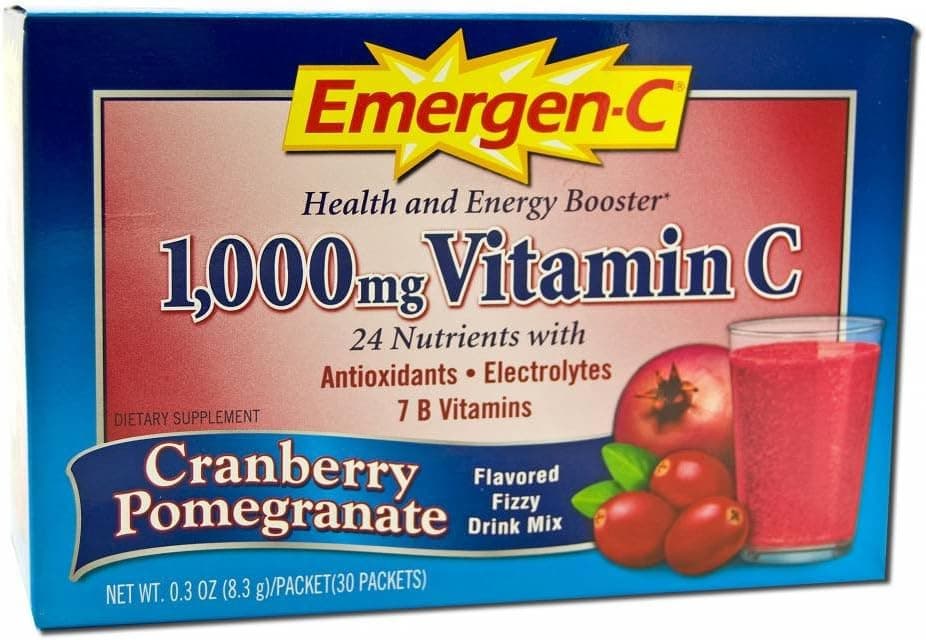
A natural acid from grapes used to give supplements a tart taste and help effervescent tablets fizz. Creates effervescent fizz, adjusts pH, and adds tartness to supplement formulations.
Reviewed March 2026
- Category
- General
- Also filed under
- Natural taste modifierEnables effervescent tablet reactionsMild antioxidant properties
What Tartaric Acid is, and what it does.
- Does it work
- It's an excipient. Does its formulation job well. Not something you'd take on purpose.
- How much to take
- Not applicable. It's added by the manufacturer at whatever amount the formulation needs.
- Time to feel it
- The fizz happens in the glass and the tartness on your tongue, within seconds. It is not an active and has no onset of its own.
- The first dose
- You won't notice it exists unless your tablet fizzes. That's tartaric acid at work.
- With regular use
- No long-term effects. It's processed and excreted like any other organic acid in food.
- How well tolerated
- Well tolerated at supplement levels. Found naturally in many foods.
- How it feels
- Tartness on your tongue if it's in a chewable. Otherwise invisible.
- The overlooked benefit
- Its quiet job is metal binding. Holding trace metals in solution keeps a formula from browning and slows metal-catalysed oxidation of whatever sits next to it.
The proof, claim by claim.
These words describe the research, not the molecule's worth. Research strength is how much work stands behind one claim, and it is never a product score.
- Makes effervescent tablets fizz
- Has antioxidant properties
Questions people ask about Tartaric Acid.
- Why is tartaric acid in my supplement?
- If it's an effervescent tablet, it creates the fizz. In chewables, it adds tartness. Either way, it's a formulation ingredient, not a health ingredient.
- Is this the same as cream of tartar?
- Close. Cream of tartar is potassium bitartrate (a salt of tartaric acid). Same acid, slightly different form.
- Should I worry about this ingredient?
- No. You eat more tartaric acid from a handful of grapes than from your supplement.
- Does it have any health benefits?
- Not at the amounts used in supplements. It's there for the formulation, not for your health.
Why these belong in the same formula. Each row says what the basis is, from settled biochemistry through to a trial that measured the pair.
On contact with water tartaric acid donates protons to bicarbonate, releasing carbon dioxide. That is the gas generating couple behind effervescent tablets and powders.
Potassium bicarbonate is the low sodium alternative in the same effervescent reaction, releasing carbon dioxide when tartaric acid protonates it in water.
Effervescent and drink formulas blend the two acids because tartaric acid gives a sharp fast sourness and dissolves quickly while citric acid buffers and rounds the profile. Both also chelate trace metal ions.
Malic acid gives a slower, longer lasting sourness than tartaric acid, so the two are combined to shape the acid curve and to hold pH in a narrower band.
Choline base is extremely hygroscopic and unstable as a free compound, so it is paired with tartaric acid as the bitartrate salt, a dry handleable powder.
L-carnitine free base is deliquescent, and forming the tartrate salt with tartaric acid gives a stable non-hygroscopic solid suited to tablets and powders.
The two to one carnitine to tartrate salt is made by pairing L-carnitine with L-tartaric acid, which is what keeps the ingredient free flowing and stable in dry formats.
Trace iron and copper catalyse the oxidation of ascorbate, and tartaric acid sequesters those metal ions. Acidifying also holds ascorbate in its more stable protonated form.
Tartaric acid does not scavenge radicals itself, but by binding metal ions that initiate lipid peroxidation it lets tocopherol act as the chain breaker for longer.
Tartrate forms stable complexes with cupric ions, which is the basis of classic copper tartrate chemistry. In a formula this lowers the free copper available to catalyse oxidation of other ingredients.
Tartaric acid holds iron in a soluble chelate as the contents leave the acidic stomach, which keeps non-heme iron from precipitating as insoluble hydroxide at intestinal pH.
Calcium tartrate is only sparingly soluble, so tartaric acid and a calcium salt in the same wet system can precipitate together and leave less of either dissolved.
Tartrate is a dicarboxylate that coordinates magnesium, and magnesium tartrate is one of the organic acid salts used to deliver the mineral. Organic acid counterions generally dissolve more readily at intestinal pH than carbonate does. The tartrate contributes the solubility and no independent action of its own.
Potassium bitartrate, the monopotassium salt, is the cream of tartar that crystallises out of wine and the raw material most tartaric acid is recovered from. In a formula it acts as both an acidulant and a potassium source. Its low water solubility relative to the free acid is the property that drives how it is used.
Tartrate binds divalent zinc through its two carboxylate groups and adjacent hydroxyls, keeping the cation in solution at pH values where it would otherwise precipitate. In an effervescent or drink format that helps a mineral stay dissolved. Whether the complex changes the absorbed fraction in people has not been established.
Manganese, like other divalent transition metals, is coordinated by tartrate in solution, and manganese appears alongside tartaric acid in the co-occurrence literature on metal binding. The complex keeps the metal soluble at neutral pH. This is solution chemistry, not evidence about mineral status.
Both are acidulants used to lower the pH of a powder or a dissolving tablet, betaine hydrochloride through its chloride and tartaric acid through its carboxyl groups. Combining them gives a formulator two acid sources with different taste profiles and hygroscopicity. The interaction is with the formulation, not with the body.
Calcium carbonate is poorly soluble until acid converts it, and tartaric acid supplies that acid in an effervescent or drink matrix, releasing carbon dioxide as it goes. The resulting calcium tartrate is itself sparingly soluble at higher concentrations, which limits how much can be pushed into one serving. The chemistry cuts both ways and formulators work around it.
High-methoxyl pectin only sets into a gel below about pH 3.5, and tartaric acid is one of the acidulants used to bring a gummy base into that window. Acid choice also affects how fast the gel sets during depositing. This is confectionery manufacturing practice for gummy supplements.
Talk to a doctor before taking Tartaric Acid if any of these apply to you: Can irritate the stomach in sensitive individuals at high doses, Very rarely associated with kidney issues at extreme doses. These are flags to check first, not effects Tartaric Acid is known to cause.
Not medical advice. Show the label to your pharmacist.What Tartaric Acid actually does.
Tartaric acid is a small acid with two acidic groups, so it can release two protons as the surroundings get less acidic.
Mixed with a bicarbonate or carbonate it releases carbon dioxide gas, which is what makes effervescent tablets fizz apart.
Its paired chemical groups grab onto metal ions, which is why it's used to keep metals dissolved in situations where they'd otherwise fall out of solution.
It comes in different mirror-image forms, the naturally occurring one from grapes and a lab-made mixed version, and while they act the same as acids, the body processes them differently.
Where Tartaric Acid comes from.
Tartaric acid mostly comes from the crystals that build up inside wine tanks, which are washed out, converted through a calcium salt and turned back into pure acid. It can also be made by microbes or by straight chemistry, and the routes differ in which mirror-image version of the molecule they produce.
The same molecule is reached more than one way. Which route a given product used is a manufacturing choice, and the finished compound is the same either way.
Argols, the crystalline crust of potassium bitartrate deposited on tank and barrel walls, plus lees and grape pomace recovered after pressing
Residues are washed and the tartrate leached into hot water, then precipitated as calcium tartrate by adding a calcium source
Calcium tartrate is treated with sulfuric acid, which precipitates calcium sulfate and liberates free tartaric acid into solution
An alternative industrial route hydrolyses cis-epoxysuccinate to L-tartrate using a microbial epoxide hydrolase, run as a fed-batch biotransformation and independent of the grape harvest
The acid liquor is filtered clear of gypsum, decolourised over carbon, concentrated and crystallised
Purity is set by titration, the stereoisomer confirmed by optical rotation, and residual metals limited, which matters because tartrate binds metals
Dried and milled to a defined granulation, since particle size governs dissolution rate in an effervescent base
Getting Tartaric Acid from food.
The whole-food sources on file. A supplement closes the gap, it does not replace dinner.
A gram-for-gram figure (how much of each you would eat to match a dose) will appear here once it is sourced and reviewed. This page will not print a number it cannot cite.
The forms it comes in.
The essence, in one line each.
- L-tartaric acid was assessed in an animal model against oxidative stress and inflammatory markers in lens tissue of rodents with elevated blood sugar. Markers in animals, not a human outcome.Animal study. Wang et al., 2025 (BMC Ophthalmology). PMID 41184803 ↗
- Fed-batch conditions were optimised for the enzymatic conversion of cis-epoxysuccinate to L-tartrate, describing the biocatalytic production route rather than any physiological effect.In vitro study. Ouyang et al., 2026 (Bioresources and Bioprocessing). PMID 41588286 ↗
- Organic acids including tartaric acid tracked with microbial community shifts and fermentation performance in a traditional rice wine process. An association between measured acids and microbial dynamics, not a causal or health finding.Cohort study. Cheng et al., 2026 (npj Science of Food). PMID 41876559 ↗
These are the studies our verdict leans on, chosen from the 3 we read for Tartaric Acid. The full linked list is below.
The studies, linked.
5 sources behind our Tartaric Acid verdict: peer-reviewed studies and registered clinical trials. Every one links straight to PubMed, the journal, or ClinicalTrials.gov. Read them yourself.
- ClinicalTrials.gov ↗
- Clinical trialSafety, Tolerability, Pharmacokinetics and Pharmacodynamics of Single Rising Oral Doses of BI 1291583 (Single-blind, Partially Randomised, Placebo-controlled Parallel Group Design) in Healthy Male SubjectsClinicalTrials.gov ↗Phase 1, 54 participants, Terminated
- Clinical trialSafety, Tolerability, Pharmacokinetics and Pharmacodynamics of Single Rising Oral Doses (0.5 mg to 200 mg) of BI 14332 CL as Powder in the Bottle Reconstituted With 0.1% Tartaric Acid Administered to Healthy Male Subjects. A Randomised and Placebo-controlled Trial, Double Blinded Within Dose GroupsClinicalTrials.gov ↗Phase 1, 53 participants, Completed
- ClinicalTrials.gov ↗
- Clinical trialPharmacokinetic Characterization of Tartaric Acid in Humans: Effect of the Food Matrix (Wine, Grapes, and Juice) on Its BioavailabilityClinicalTrials.gov ↗30 participants, Not yet recruiting
Evidence surfaced via Semantic Scholar (Allen Institute for AI) and ClinicalTrials.gov. Ranked by study type and citation weight, not cherry-picked.
Problems people have reported.
Read this carefully. These are 3,693 voluntary, unverified reactions reported to the FDA (openFDA). The number mostly reflects how popular Tartaric Acid is, not how risky it is. A report is not proof Tartaric Acid caused anything. It is a signal of what to watch for, nothing more.
Source: openFDA adverse-event reports. Voluntary reporting, not an incidence rate.
FDA Disclaimer: These statements have not been evaluated by the Food and Drug Administration. This information is for educational purposes only and is not intended to diagnose, treat, cure, or prevent any disease. Consult your healthcare provider before starting any supplement regimen.