Tetrahydrocannabinol.
THC is the compound in cannabis that produces the high. It partially activates the body's own cannabinoid receptors, and it's legally controlled in most places.
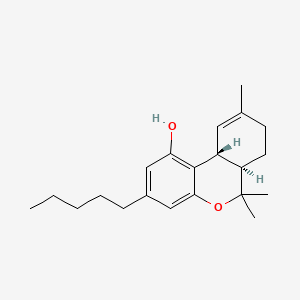 Compound
- Category
- Compound
What Tetrahydrocannabinol is, and what it does.
- Does it work
- This is a controlled compound rather than a general supplement ingredient. Anyone considering it is answering a legal question first and a medical one second.
- How much to take
- No dose figure is on record. Swallowed THC behaves very differently from inhaled, and clearance varies several fold between people, so any amount is a clinician's call.
- Time to feel it
- Swallowed, the onset is slow and drawn out, often well over an hour, because the liver converts it first. Inhaled effects arrive within minutes.
- The first dose
- Day one with an oral amount is unpredictable: a slow build, a longer tail than expected, and often a faster heart rate when you stand up.
- With regular use
- It's highly fat soluble, so it collects in fat tissue and releases slowly. Metabolites stay detectable on a test for weeks after regular use.
- How well tolerated
- Dose dependent faster heart rate and blood pressure changes on standing, plus added sedation with other depressants. It's controlled in most places, so check the law where you live.
- How it feels
- Altered perception, distorted sense of time and sedation, with a wide spread between people. Oral amounts tend to feel stronger and last longer than expected.
- The overlooked benefit
- Variation in the CYP2C9 enzyme changes clearance several fold, which is why two people taking the same oral amount can have completely different experiences.
The proof, claim by claim.
What these words mean
These words describe the research, not the molecule's worth. Research strength is how much work stands behind one claim, and it is never a product score.
- Appetite stimulationRandomised trial
- Sleep onset and sleep architectureRandomised trial
2 more claims
- Short term memory and processing speedMeta-analysis
- Partial activation of CB1 and CB2 receptorsNarrative review
Why these belong in the same formula, 8 pairings
Why these belong in the same formula. Each row says what the basis is, from settled biochemistry through to a trial that measured the pair.
CBD changes both how THC signals at CB1 and how quickly it is metabolised, which is why the two are almost always discussed as a ratio rather than separately. A systematic review pooled inflammatory biomarker data across studies of both compounds. The direction and size of the modulation depends heavily on dose ratio and route, so the interaction is real but not fixed.
Oral THC absorption is erratic and depends on lipid presence for micellar solubilisation and partial lymphatic transport. A high-fat meal substantially raises systemic exposure from the same oral dose. That variability is why oral onset is slow and unpredictable compared with inhalation.
Lecithin lets an oil-soluble cannabinoid form a stable dispersion in a water-based product, which is the basis of most nanoemulsion beverages. Better dispersion generally means faster and less variable absorption. This is formulation chemistry, and it does not change what the compound does once absorbed.
THC produces dose-dependent sedation through CB1 signalling while melatonin acts on circadian timing through MT1 and MT2 receptors. Combined, the sedative effect adds, which is worth flagging rather than celebrating. Next-morning impairment is a real consideration, and neither should be combined with driving or operating machinery.
Induction of CYP3A4 speeds clearance of substrates handled by that enzyme, lowering their plasma levels. THC is metabolised by CYP2C9 and CYP3A4, so co-use would be expected to reduce exposure. St John's wort also interacts with a long list of prescription medicines, which is the larger issue in any case.
Slowing first-pass metabolism raises plasma levels from the same oral dose. With a compound whose effects are steeply dose-dependent and already variable orally, raising exposure unpredictably is a risk rather than a feature. The inhibition is non-selective and affects co-administered medicines too.
Endocannabinoids are built from arachidonic acid, and dietary long-chain polyunsaturated fat shifts the membrane precursor pool that feeds that system. The reported offsetting effect was measured in rodents with sex-specific differences. It says nothing about what omega-3 does alongside THC in an adult, and prenatal cannabis exposure is a setting where the only sound advice is avoidance.
Caffeine raises alertness while THC at typical doses lowers it, so the two partly mask each other subjectively. Masking sedation does not restore reaction time or judgement. Both also raise heart rate, and that effect adds rather than cancels.
Nothing specific on file for Tetrahydrocannabinol. Match the label to the daily amount above, and tell your doctor what you take.
Not medical advice. Show the label to your pharmacist.What Tetrahydrocannabinol actually does.
It docks onto the same receptors your own endocannabinoids use, mainly in the brain.
3 more mechanisms
It stores in body fat and leaves slowly, so tests stay positive long after the effect has gone.
Swallowed, it turns into a second active compound in the liver. That is why edibles hit later and harder than people expect.
THC can raise heart rate and cause blood pressure drops on standing in a dose-dependent way through its effects on the nervous system, and it can add to sedation when combined with other depressant substances.
Where Tetrahydrocannabinol comes from.
The compound in cannabis responsible for the high. Legally controlled in most places, not a general supplement ingredient, and swallowing it is far less predictable than most people assume.
What this route gives you
The same molecule is reached more than one way. Which route a given product used is a manufacturing choice, and the finished compound is the same either way.
6 steps on record
Cannabinoid-rich flower from cultivated plants, or purified CBD used as the substrate for isomerisation routes
Cannabinoids are pulled from milled plant material along with waxes, chlorophyll and terpenes
Heat converts THCA to delta-9-THC. Separately, acid catalysis converts CBD to delta-8 or delta-9-THC, which is how most delta-8 material on the market is made
Waxes are dropped at low temperature and the cannabinoid fraction is short-path distilled, with chromatography where an isolate is required
Batches are assayed by chromatography for cannabinoid content and screened for residual solvent, pesticide and heavy metal, with requirements set by jurisdiction
Formulated into carrier oil, softgels, water-dispersible emulsions, or supplied as crystalline isolate
Whether material is plant-extracted or made by acid conversion from CBD is frequently not stated on retail delta-8 products.
Getting Tetrahydrocannabinol from food.
The whole-food sources on file. A supplement closes the gap, it does not replace dinner.
A gram-for-gram figure (how much of each you would eat to match a dose) will appear here once it is sourced and reviewed. This page will not print a number it cannot cite.
The forms it comes in.
5 more forms
The essence, in one line each.
- Pooled data on cannabidiol and tetrahydrocannabinol described varied effects across inflammatory biomarkers, with heterogeneous study designs limiting the conclusions.Systematic review. Candeloro et al., 2025 (International Journal of Molecular Sciences). PMID 41373770 ↗
2 more findings
- Reported ingestions were analysed to characterise the dose of delta-8 tetrahydrocannabinol associated with toxic effects in small children.Case series. Garay et al., 2025 (Injury Epidemiology). PMID 41029884 ↗
- Perinatal long-chain omega-3 supplementation offset cognitive deficits associated with prenatal THC exposure, with sex-specific differences.Animal study. Lavanco et al., 2026 (European Journal of Pharmacology). PMID 42229740 ↗
Chosen from the 5 we read for Tetrahydrocannabinol.
The studies, linked.
7 sources behind our Tetrahydrocannabinol verdict, every one linked to PubMed, the journal or ClinicalTrials.gov.
- Clinical trialMulti-centre, Randomized, Double-blind, Placebo-controlled Study to Investigate the Efficacy and Safety of the Pain Relieving Effect of Dronabinol in Patients With Multiple Sclerosis Associated With Central Neuropathic PainClinicalTrials.gov ↗Phase 3, 240 participants, Completed
6 more linked trials
- Clinical trialA Double-blind, Randomized, Placebo Controlled Clinical Trial to Evaluate the Efficacy of Orexigenic Therapy With Delta-9-tetrahydrocannabinol in Advanced Cancer Patients With Chemosensory Abnormalities - a Pilot StudyClinicalTrials.gov ↗Phase 2, 80 participants, Completed
- Clinical trialEfficacy and Safety of Delta-9-tetrahydrocannabinol (∆9-THC) in Behavioural Disturbances and Pain in DementiaClinicalTrials.gov ↗Phase 2, 50 participants, Completed
- Clinical trialDose Ranging Clinical Study to Evaluate the Effects of Oral Delta-9-tetrahydrocannabinol (Δ9-THC) With and Without Alcohol on Perception and Driving Performance in Healthy AdultsClinicalTrials.gov ↗Phase 1, 48 participants, Completed
- Clinical trialSafety and Tolerability of Oral Namisol®, a Tablet Containing Delta-9-Tetrahydrocannabinol, in Elderly Subjects: A Randomized Controlled TrialClinicalTrials.gov ↗Phase 1, 12 participants, Completed
- Clinical trialCannabis Use, Cognition, and the Endocannabinoid System in HIVClinicalTrials.gov ↗Early phase 1, 138 participants, Recruiting
- Clinical trialThe Influence of Female Sex Hormones on the Subjective and Cognitive Response to CannabisClinicalTrials.gov ↗21 participants, Recruiting
From clinical trials and PubMed, ranked by study type and citation weight, not cherry-picked.
Problems people have reported.
Read this carefully. These are 6,121 voluntary, unverified reactions reported to the FDA (openFDA). The number mostly reflects how popular Tetrahydrocannabinol is, not how risky it is. A report is not proof Tetrahydrocannabinol caused anything. It is a signal of what to watch for, nothing more.
3 more reported effects
Source: openFDA adverse-event reports. Voluntary reporting, not an incidence rate.
FDA Disclaimer: These statements have not been evaluated by the Food and Drug Administration. This information is for educational purposes only and is not intended to diagnose, treat, cure, or prevent any disease. Consult your healthcare provider before starting any supplement regimen.