
The people it speaks toFieldwork August 2023
74% of US adults
take dietary supplements, and 55% are regular users, in the Council for Responsible Nutrition's 2023 consumer survey of 3,192 adults.
Council for Responsible Nutrition and Ipsos, 2023Organic Astaxanthin is the lead active here, studied most for a healthy inflammatory response. 20 human studies on Organic Astaxanthin back this formula, each one cited. Each serving carries 6 mg of Organic Astaxanthin, inside the range the published research used. Who it fits: for everyone, adults.
 Verified by IngredientMD
The panel on the left is the one we evaluated, line by line.
All 7 actives checked against the clinical evidence: dose, form, and what the research actually shows.
Doses, ratios, and how the ingredients work together. That assessment is the verdict above: "Strong evidence, strong dose".
The verdict is public and identical whether or not a brand pays. A formula that does not clear the bar gets nothing.
Read by the engine against 2.1 million data points from clinical trials, PubMed and more than a hundred vetted sources. No individual reviewer is named or implied.
Cross-checked against 237 documented interactions for these actives.
Public health figures the engine matched to this formula's ingredients. Reported by their source, cited and dated, never written by the brand.
74% of US adults
take dietary supplements, and 55% are regular users, in the Council for Responsible Nutrition's 2023 consumer survey of 3,192 adults.
Council for Responsible Nutrition and Ipsos, 202392% of US supplement users
agree that dietary supplements are essential to maintaining their health, in the Council for Responsible Nutrition's 2023 consumer survey.
Council for Responsible Nutrition and Ipsos, 202312.3% of US adults
met the fruit intake recommendation and 10.0% the vegetable recommendation in 2019, in the Behavioral Risk Factor Surveillance System across 49 states.
CDC, MMWR, 202215% of US adults
aged 20 and over ate no breakfast on the day of their dietary recall, in the 2017 to March 2020 What We Eat in America survey.
USDA Agricultural Research Service, 202457.6%
During 2017 to 2018, 57.6% of US adults aged 20 and over reported using a dietary supplement in the past 30 days.
CDC National Center for Health Statistics60.2% of US adults aged 20 and over
took a dietary supplement in the past 30 days, and 38.7% took two or more, in the 2021 to 2023 National Health and Nutrition Examination Survey.
CDC National Center for Health Statistics, 202659 to 66 days
was the median time it took adults to make a new daily health habit automatic across the studies a 2024 review pooled, with individuals ranging from 4 to 335 days.
Systematic review and meta-analysis, 202461% to 74%
About 61 to 74 percent of adults refilling a long-term medicine on their own stopped within a year, versus 33 to 44 percent on one set pickup day.
Cohort study, 2015Meta-analysis, 2023
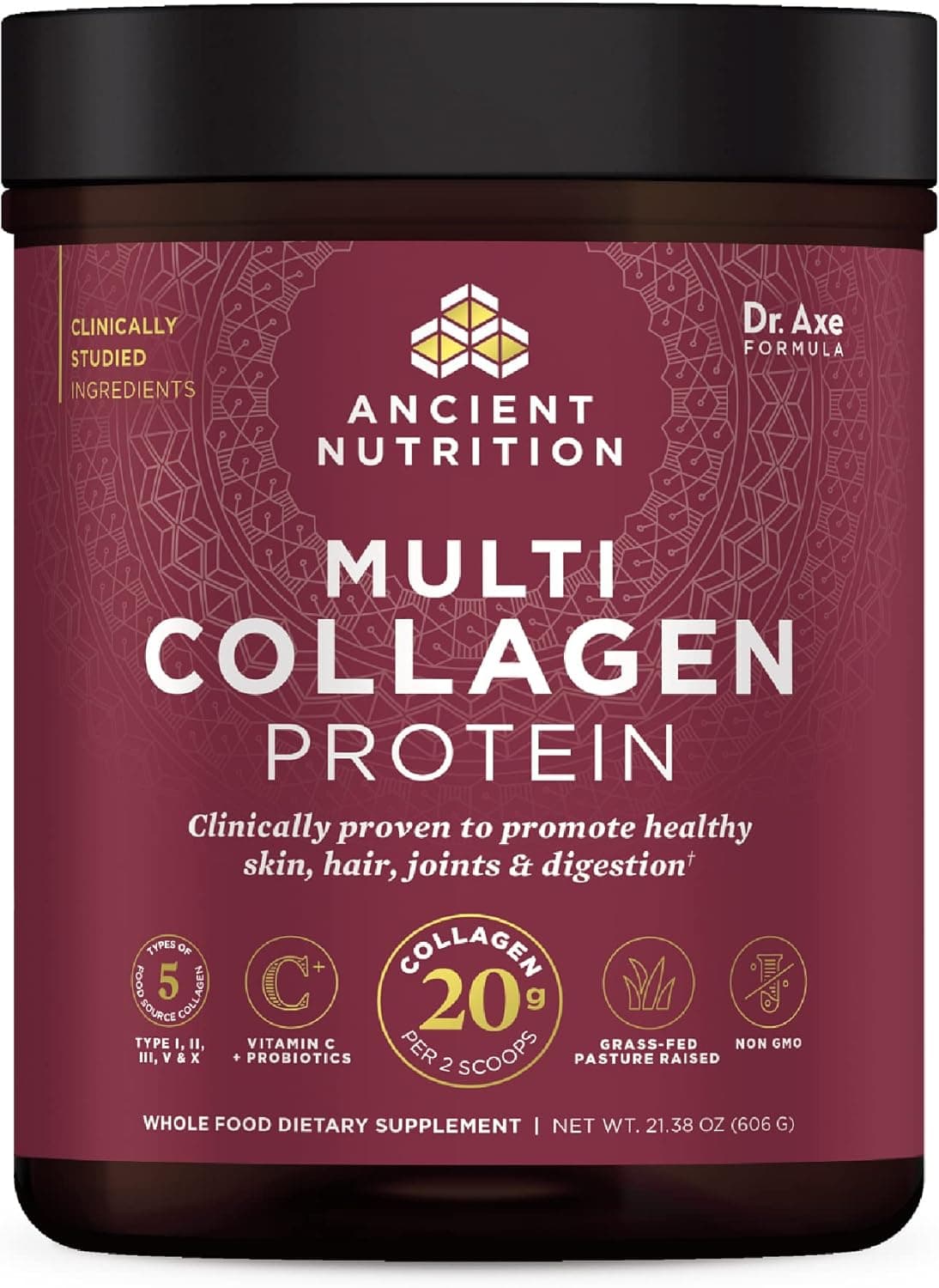
Pooling 26 randomized trials in 1,721 people, hydrolyzed collagen improved skin hydration and elasticity compared with placebo.
NutrientsMeta-analysis, 2021
Pooling nine trials, oral astaxanthin improved skin elasticity and moisture versus placebo, with no detectable change in wrinkle depth.
NutrientsRandomised trial, 2023
In active adults, collagen peptides improved joint function scores and lowered reported joint discomfort compared with placebo.
Journal of the International Society of Sports NutritionMeta-analysis, 2019
In adults with ongoing joint discomfort, pooled trials found collagen lowered self-reported discomfort by about 17 points on a 100-point scale and reduced stiffness more than placebo.
International OrthopaedicsRandomised trial, 2026
Low molecular weight collagen peptides improved skin elasticity along with measures of skin dimpling and hair condition.
Journal of medicinal foodRandomised trial, 2018
In postmenopausal women, 5 g of specific collagen peptides daily for 12 months increased bone mineral density at the spine and femoral neck compared with placebo.
NutrientsRandomised trial, 2025
A trial reported that skin measures stayed improved with bioactive collagen peptides over the course of the study.
Journal of Cosmetic DermatologyMeta-analysis, 2025
A pooled analysis of diet studies for aging skin linked oil supplements including evening primrose oil to better skin hydration and elasticity.
Journal of physiological anthropologyOpen-label trial, 2026
Liposomal delivery of a collagen tripeptide formulation was reported to change dermal structure and optical skin measures relative to the standard formulation.
Journal of Cosmetic DermatologyRandomised trial, 2009
In 67 adults with knee pain, eggshell membrane lowered pain scores by about 16 percent within 10 days, but function scores did not differ.
Clinical RheumatologyRandomised trial, 2021
In 42 adults aged 65 to 82 doing three months of endurance training, ankle muscle endurance rose only in the astaxanthin group, from 353 to 472 contractions.
Physiological ReportsMeta-analysis, 2024
Pooling five trials in adults with knee pain and stiffness, eggshell membrane produced a small improvement in overall joint scores and in the pain measure.
NutrientsMeta-analysis, 2025
In a network comparison of nutritional supplements taken by adults with knee joint pain and stiffness, eggshell membrane was among the options associated with improved pain and function scores.
NutrientsRandomised trial, 2022
Comparing two eggshell membrane doses against placebo in adults with knee pain, pain fell in every group including placebo, most in the higher-dose group, which also gained knee strength.
NutrientsRandomised trial, 2026
Collagen type I content in skeletal muscle rose after 12 weeks of training with specific collagen peptides, which is a tissue composition marker rather than a strength or function outcome.
Frontiers in PhysiologyRandomised trial, 2015
In older men doing resistance training, 15 g of collagen peptides daily added about 1.3 kg more fat-free mass over 12 weeks than training with placebo, alongside larger gains in leg strength.
British Journal of NutritionMeta-analysis, 2026
Pooling twenty-four randomised trials, astaxanthin lowered the post-exercise muscle-damage marker creatine kinase (SMD -0.45), with no significant change in VO2max or time-trial performance.
NutrientsRandomised trial, 2018
In 60 women past midlife, eggshell membrane cut a cartilage breakdown marker about 17 percent after one week, with no change in exercise pain.
Clinical Interventions in AgingOpen-label trial, 2025
A comparative nutricosmetic study of an eggshell membrane preparation against hydrolysed collagen reported changes in skin biophysical measures such as hydration and elasticity. These are instrument-measured markers of skin properties rather than clinical endpoints.
Frontiers in NutritionMeta-analysis, 2021
Pooling 12 trials in 380 people, astaxanthin lowered a marker of fat breakdown from oxidative damage compared with placebo.
Nutrition ResearchMeta-analysis, 2024
Across trials, astaxanthin lowered blood triglycerides by about 0.46 mmol/L and raised HDL cholesterol by about 0.13 mmol/L compared with placebo.
NutrientsSystematic review, 2025
Pooling human trials of apple cider vinegar, the review found small reductions in body weight and waist measures in adults with raised blood sugar or excess body weight, and described the evidence base as limited.
NutrientsRandomised trial, 2026
In adults recovering from hip replacement surgery, no change in blood markers of bone turnover was detected with collagen protein.
Clinical nutrition ESPENMeta-analysis, 2024
Pooling 11 randomised trials in 346 healthy participants, astaxanthin taken alongside regular training raised fat oxidation (standardised mean difference 2.56) and physical performance (0.62), with the clearest effect at doses of 20 mg or more, while cognitive accuracy was only marginal (0.12) and reaction time showed no detectable change.
Biological Research for NursingPopulation figures from public health data. Context for the category, not a statement about any individual and not a claim about this product.
Each line below was derived from this formula's own record at the time of verification. Nothing here was written by the brand, and nothing can be added that the evidence does not carry.
Time-to-effect windows the engine read from the trial record. Each is a window a named study measured, cited and dated, never written by the brand.
In a randomised double blind placebo controlled trial, 77 healthy women took 5,000 mg a day of bioactive collagen peptides or placebo for 12 weeks with measurements at weeks 8, 12 and 16. Dermal density and hydration rose and transepidermal water loss fell against placebo at week 12, and those changes were still present after a 4 week washout rather than returning toward baseline. A second trial in 72 women separated from placebo at 8 weeks on hydration, elasticity and density, and retained the change 2 weeks after stopping. Both trials were run by or with the peptide manufacturers. A 2025 meta analysis of 23 randomised trials and 1,474 participants found these skin effects present in industry funded trials and absent in trials without industry funding, which is why the grade here is D.
A 10-week randomised double-blind placebo-controlled trial enrolled 23 healthy Japanese adults on 4 mg algal astaxanthin daily or placebo, with measurements at baseline and after nine weeks of supplementation. The astaxanthin group showed a higher minimal erythema dose, the ultraviolet dose needed to redden skin, and less loss of skin moisture in the irradiated area than placebo. This is one small trial, and all three authors were employed by FUJIFILM Corporation.
In a randomised placebo-controlled trial, 34 adults with impaired fasting glucose and dyslipidaemia (22 randomised to astaxanthin, 12 to placebo) took 12 mg astaxanthin daily for 24 weeks, with the baseline test battery repeated at 12 and 24 weeks. After 24 weeks, LDL cholesterol fell by 0.33 mmol/L and total cholesterol by 0.30 mmol/L, and fibrinogen, L-selectin and fetuin-A also fell. The changes are modest, the primary endpoint of insulin-stimulated glucose disposal did not reach significance, and blood markers were measured rather than a feeling.
Windows measured in the cited trials. Context for how the active behaves over time, not a statement about any individual and not a claim about this product.
Five ingredients, from each one's own page.
Give it eight to twelve weeks. Skin hydration and joint comfort measures shift across that stretch, and nails usually change sooner, around four to eight weeks.
The fibre side acts on the meal it's taken with, so fullness can shift the same day. Regularity settles over two to three weeks, and lipid markers over about a month.
Same day for the protein it adds to a meal. Joint and skin readouts in collagen peptide trials are measured after eight to twelve weeks of daily use.
Joint comfort trials followed people for four to eight weeks, and that is the window where most of the change lands. Some report easier movement inside the first two weeks.
It loads into tissue slowly. Skin and eye comfort measures in trials tend to move around weeks four to eight, with oxidation markers shifting on a blood panel sooner.
How each ingredient usually behaves over time, from its own page on IngredientMD. General timing for the ingredient, not a measurement of this product.
It is a powder, so the serving scales to the amount you want and mixes into something you already drink.
Where two of this brand's products carry actives the literature has read together, the pairing and its basis are below. The evidence word is the corpus row's own confidence, never a score.
Both ingredients are collagen-derived, so they overlap heavily on glycine, proline and hydroxyproline rather than complementing each other. The real difference is molecular weight: collagen peptides are enzymatically hydrolysed to a defined low range, while bone broth protein is a cooked extract with a broader and less defined peptide distribution. Stacking them raises collagen amino acid intake without adding a new amino acid profile.
Established protein composition. No combination trial has tested this exact pairing.
Put an earned verification on your own product page.
These statements have not been evaluated by the Food and Drug Administration. This product is not intended to diagnose, treat, cure, or prevent any disease. This record is not medical advice. Always consult your healthcare provider before starting any supplement regimen.