
The people it speaks toFieldwork 2020
24.2% of US adults
aged 18 and over met both the aerobic and muscle strengthening activity guidelines in 2020, in the National Health Interview Survey.
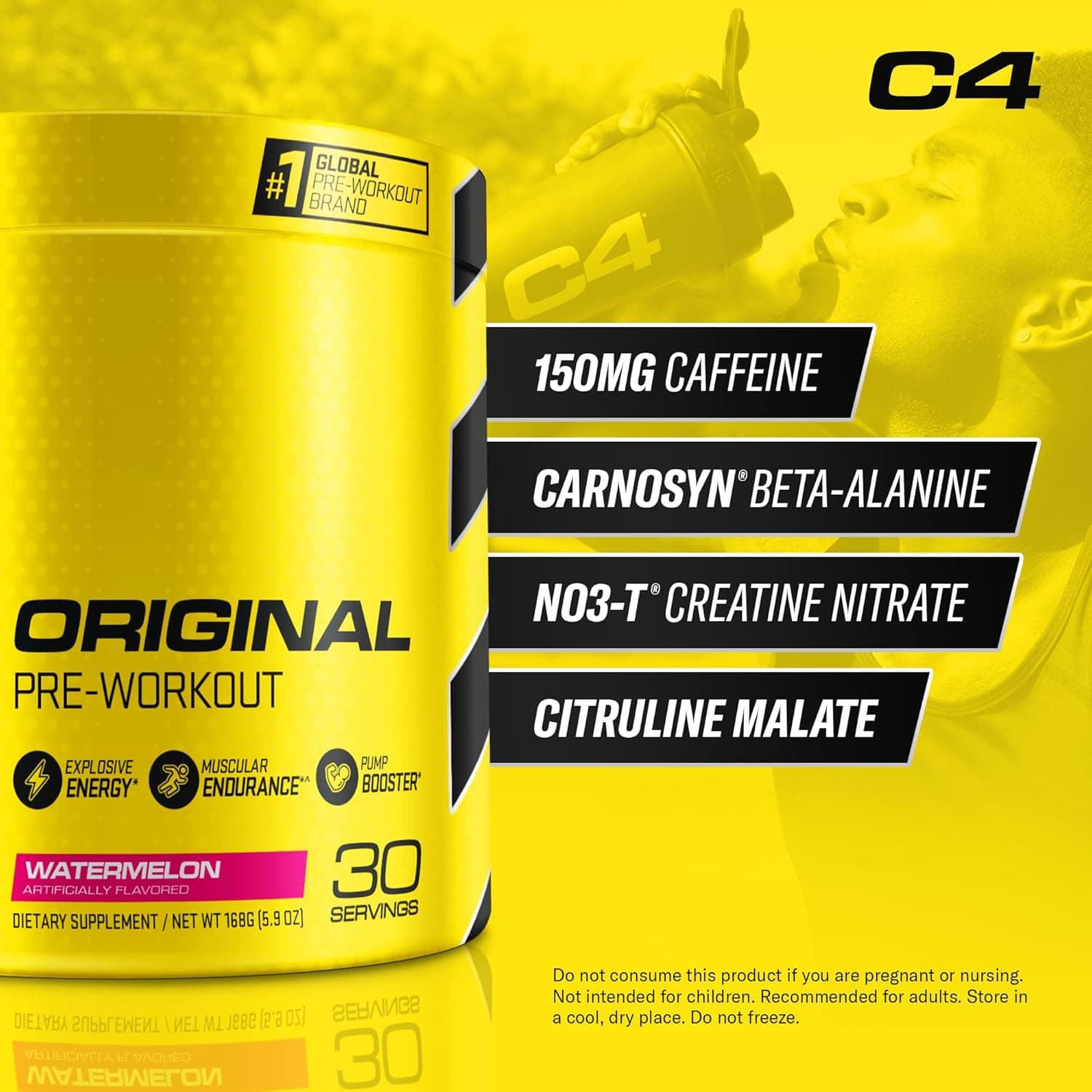
CDC National Center for Health Statistics, 2022L-Citrulline is the lead active here, studied most for oxygen delivery to working muscle. In the 4.5g Muscular Endurance & Performance Blend with four others, listed second. 16 human studies on L-Citrulline back this formula, each one cited. Who it fits: for everyone, adults.
 Verified by IngredientMD
The panel on the left is the one we evaluated, line by line.
All 13 actives checked against the clinical evidence: dose, form, and what the research actually shows.
Doses, ratios, and how the ingredients work together. That assessment is the verdict above: "Stronger in a pair".
The verdict is public and identical whether or not a brand pays. A formula that does not clear the bar gets nothing.
Read by the engine against 2.1 million data points from clinical trials, PubMed and more than a hundred vetted sources. No individual reviewer is named or implied.
Cross-checked against 1,454 documented interactions for these actives.
Public health figures the engine matched to this formula's ingredients. Reported by their source, cited and dated, never written by the brand.
24.2% of US adults
aged 18 and over met both the aerobic and muscle strengthening activity guidelines in 2020, in the National Health Interview Survey.
CDC National Center for Health Statistics, 202231% of US adults
said they were taking protein supplements such as powders, drinks, or bars, in a Pew Research Center survey fielded in July 2026.
Pew Research Center, 202621.1% of the US population
aged 15 and over took part in sports, exercise, or recreation on an average day in 2023, in the American Time Use Survey.
US Bureau of Labor Statistics, 202457.6%
During 2017 to 2018, 57.6% of US adults aged 20 and over reported using a dietary supplement in the past 30 days.
CDC National Center for Health Statistics41.3% of US men aged 18 to 34
met both the aerobic and muscle strengthening activity guidelines in 2020, the highest rate of any age and sex group, in the National Health Interview Survey.
CDC National Center for Health Statistics, 202237% of US adults aged 18 to 29
said they were taking protein supplements such as powders, drinks, or bars, roughly double the rate among adults aged 65 and over, in a Pew Research Center survey fielded in July 2026.
Pew Research Center, 202659 to 66 days
was the median time it took adults to make a new daily health habit automatic across the studies a 2024 review pooled, with individuals ranging from 4 to 335 days.
Systematic review and meta-analysis, 202461% to 74%
About 61 to 74 percent of adults refilling a long-term medicine on their own stopped within a year, versus 33 to 44 percent on one set pickup day.
Cohort study, 2015USDA advises fortified foods or supplements after 50
In its national intake tables USDA notes that "it is advised that individuals over 50 meet their B12 requirement with fortified foods or supplements".
NHANESSystematic review and meta-analysis, 2021
Across 8 studies, taking 6 to 8 grams of citrulline malate 40 to 60 minutes before strength training raised repetitions completed before muscular failure by about 6.4 percent.
International Journal of Sport Nutrition and Exercise MetabolismMeta-analysis, 2018
Pooling ten trials each, caffeine produced a small increase in maximal muscle strength (SMD 0.20) and in muscle power measured by vertical jump (SMD 0.17) compared with placebo.
Journal of the International Society of Sports NutritionRandomised trial, 2026
In 38 active men, caffeine before a 10 km run or 40 km cycling improved completion time by 1.8 percent, though a gene difference in caffeine levels didn't affect performance.
European Journal of Sport ScienceMeta-analysis, 2025
Pooling 8 trials in 176 middle-aged and older adults, l-citrulline improved how well blood vessels widen by about 1.8 percentage points, with no clear change in artery stiffness.
Frontiers in NutritionMeta-analysis, 2017
Across 40 placebo-controlled studies in 1,461 people, beta-alanine produced a small overall gain in exercise performance, with the clearest benefit in high-intensity efforts lasting 0.5 to 10 minutes.
British Journal of Sports MedicineSystematic review and meta-analysis, 2017
Across 53 trials, creatine gave a small boost to upper-body strength versus placebo, about 0.32 standardized, including a real gain in bench press.
Sports MedicineSystematic review, 2019
Across 10 studies at matched doses, caffeine gave similar aerobic and fatigue benefits to men and women, while 4 of 7 studies found bigger strength and sprint gains in men.
NutrientsA small improvement in memory (standardized effect 0.29)
Also gives healthy adults a small memory benefit. Measured in healthy people, pooled across 8 randomised trials (0.04 to 0.53).
Meta-analysisMeta-analysis, 2022
Across 21 trials at 3 to 9 mg per kg, caffeine lengthened time to exhaustion in running and shortened race completion time compared with placebo.
NutrientsMeta-analysis, 2025
Across 69 trials in 1,937 adults, creatine with resistance training added about 1.43 kg to bench press and 5.64 kg to squat, with no change in grip strength.
NutrientsSystematic review, 2021
Across 37 blinded crossover studies, caffeinated drinks improved several aspects of sports performance once the drink supplied at least 3 mg of caffeine per kg of body mass.
NutrientsRandomised trial, 2025
Among 104 preschool children with prenatal alcohol exposure, those given choline for nine months scored 25% higher on a sequential memory measure than those given placebo.
The American journal of clinical nutritionRandomised trial, 2022
Wheat biscuits enriched with legume protein produced a more moderate rise in blood sugar after eating and altered gut hormone responses in healthy adults compared with plain biscuits.
NutrientsRandomised trial, 2026
In a pilot trial of 20 postmenopausal women, 1,650 mg of oral choline lowered brain activation during a memory task, a brain-activity measure rather than a test score.
NutrientsSystematic review and meta-analysis of randomized controlled trials, 2019
Across 10 trials in 540 men with mild to moderate difficulty, arginine supplements improved erectile function, roughly tripling the odds of reported improvement and raising function scores.
Journal of Sexual MedicineSystematic review and meta-analysis, 2019
Across 8 trials, L-citrulline lowered the top blood pressure number by about 4 points, with a drop in the bottom number only at doses of 6 grams a day or more.
Avicenna Journal of PhytomedicineMeta-analysis, 2025
Across 15 trials in middle-aged and older adults, l-citrulline or watermelon intake lowered blood pressure by about 4 points on the top number and about 2.5 points on the bottom number.
Clinical Nutrition ESPENMeta-analysis, 2012
Across 15 studies and 360 participants, the median improvement with beta-alanine was about 2.85 percent on the exercise measure, seen in efforts of 60 to 240 seconds but not in efforts under 60 seconds.
Amino AcidsSystematic review, 2010
In a Cochrane review of 13 randomized trials in shift workers, caffeine improved orientation and attention (SMD -0.55) and reduced the number of errors made during simulated night or shifted work versus placebo.
Cochrane Database of Systematic ReviewsSystematic review and dose-response meta-analysis of randomized trials, 2022
Pooling 22 randomized trials, oral L-arginine lowered systolic blood pressure by about 6.4 mmHg and diastolic by about 2.6 mmHg versus placebo, with roughly 4 g per day the effective systolic dose.
Advances in NutritionMeta-analysis, 2024
Pooling 18 randomised double-blind trials in 331 trained young men, beta-alanine improved maximal-intensity efforts of 0.5 to 10 minutes over placebo (effect size 0.39), with a separate effect at 5.6 to 6.4 g per day (effect size 0.35).
International Journal of Sport Nutrition and Exercise MetabolismMeta-analysis, 2021
Pooling 11 randomised trials in healthy people, L-arginine raised maximal oxygen uptake by about 0.11 L per minute compared with control.
Physiological ReportsMeta-analysis of randomized controlled trials, 2008
Across short-term trials, oral L-arginine raised a marker of blood vessel function by about 2 percentage points, with the biggest gain when starting levels were low, under 7 percent.
American Journal of Clinical NutritionRandomised trial, 2016
Dose-dependent creatine nitrate supplementation was evaluated over acute and chronic intake for tolerability markers and exercise performance in trained participants.
Journal of the International Society of Sports NutritionRandomised trial, 2020
In trained adults, a pre-workout blend containing beta-alanine shifted energy system contribution and performance during high-intensity exercise, so the result belongs to the blend and not to beta-alanine alone.
Journal of the International Society of SportRandomised trial, 2026
Beetroot juice and creatine were compared over a short intervention for resistance-training capacity and performance measures.
International Journal of Food Sciences and NutritionSystematic review, 2026
The review of citrulline supplementation in postmenopausal women reports vascular measures as the most consistently affected domain, with muscular and metabolic findings less consistent across the included studies.
BMC Women's HealthRandomised trial, 2024
Adults taking methylfolate, pyridoxal-5'-phosphate and methylcobalamin together lowered circulating homocysteine compared with placebo.
NutrientsRandomised trial, 2026
Two oral B12 doses were compared for nerve-related outcomes, but the report only describes the difference between them, not which dose is better.
The Journal of nutritionOpen-label trial, 2026
Investigators report that L-methylfolate with methylcobalamin lowered serum homocysteine and blood pressure readings in adults with hard to control elevated blood pressure and raised homocysteine. Homocysteine is a marker.
BMC nephrologySystematic review, 2025
Across 16 studies in 6,098 people, vitamin B12 raised blood B12 levels by about 403 pg/mL, with oral or under-the-tongue doses working about as well as injections.
Frontiers in pharmacologyMeta-analysis, 2020
Across controlled trials, l-arginine was linked to changes in blood sugar markers, not clinical outcomes.
Journal of Integrative MedicineRandomised trial, 2025
The amino acid make-up of plant protein-enriched biscuits shaped the pattern and size of the amino acid rise in blood after the meal.
European journal of nutritionRandomised trial, 2017
Acute and short-term creatine nitrate intake was assessed for haematological and haemodynamic responses. These are markers of physiological status, not performance outcomes.
NutrientsSystematic review, 2026
A Cochrane review found vitamin B12 supplementation improves vitamin B12 status, while effects on blood counts were less certain.
The Cochrane database of systematic reviewsSystematic review, 2025
A review summarizes reported immune-related changes when B12 levels are restored in adults with impaired absorption, noting the evidence base is small and doesn't test this specific form on its own.
Oxidative medicine and cellular longevityMeta-analysis, 2026
A multilevel meta-analysis of beta-alanine trials did not detect an improvement in repeated sprint ability, which is a failure to detect a difference rather than evidence that none exists.
Frontiers in nutritionMeta-analysis, 2023
Across 12 randomised trials in adults, no effect of L-arginine was detected on fasting blood sugar (about 3.4 mg/dL lower, confidence interval crossing zero), insulin, glycated haemoglobin or insulin resistance.
Archives of Physiology and BiochemistryMeta-analysis, 2025
Across 21 randomised trials, l-citrulline showed no overall effect on body weight, fat mass or fat-free mass, with reductions in fat mass only in exploratory subgroups over age 40 or above 6 g a day.
NutrientsMeta-analysis, 2022
Pooling 20 randomised trials in 492 people, beta-alanine did not show a detectable change in body mass, fat mass, body fat percentage or fat-free mass (fat-free mass difference 0.05 kg, confidence interval crossing zero).
Journal of the International Society of Sports NutritionRandomised trial, 2025
One-carbon metabolite responses differed between choline forms and by common genetic variants, so the same intake did not produce the same metabolite pattern in every participant.
Frontiers in NutritionSystematic review, 2023
Across 18 studies, pyridoxine on its own and in combinations improved nausea scores in pregnancy on both the Rhode and PUQE scales, a use with a long clinical track record.
Archives of Gynecology and ObstetricsSystematic review, 2024
During pregnancy and lactation, choline needs increase, and typical diets in the reviewed populations often fell short of reference intake levels.
SemergenRandomised trial, 2026
Four different choline-containing supplements produced different plasma choline concentrations in preterm infants. Plasma choline is a status marker, not a clinical outcome.
European Journal of NutritionSystematic review, 2025
Randomised trials and observational studies of choline intake during pregnancy were pooled to look at child neurodevelopment, with the reported associations differing by study design.
NutrientsPopulation figures from public health data. Context for the category, not a statement about any individual and not a claim about this product.
Each line below was derived from this formula's own record at the time of verification. Nothing here was written by the brand, and nothing can be added that the evidence does not carry.
One pairing in this formula has been studied as a combination in human trials. Each finding below is what a named study measured, cited and dated, never written by the brand.
In a 2025 network meta-analysis of 16 randomized trials in healthy adults, folic acid taken together with vitamins B6 and B12 lowered blood homocysteine more than any single supplement, with the 1 mg folic acid plus 7.2 mg B6 plus 20 micrograms B12 arm ranked most effective versus placebo (mean difference -1.03 micromol/L, 95% CI -1.71 to -0.36).
Research strength. Research strength says how much work stands behind the combination. It is never a product score.
Fail closed. Where actives were studied on their own rather than together, each shows on its own evidence, never a combined effect no trial measured.
Independent record. Every finding is cited to a named trial, dated, and never written by the brand.
Findings from trials that studied these actives as a combination. Context for how the actives were tested together, not a statement about any individual and not a claim about this product.
Time-to-effect windows the engine read from the trial record. Each is a window a named study measured, cited and dated, never written by the brand.
An expert consensus on vitamin B6 use, developed by a six-member Delphi panel with a structured evidence-quality assessment, calculated from pharmacokinetic parameters that complete clearance of vitamin B6 from the body takes a washout period of about 20 to 40 days after intake stops.
A systematic review and Bayesian meta-analysis drew on 108 articles from 14,002 screened records and modelled blood folate against folic acid intake using one-compartment pharmacokinetic models. Red blood cell folate rose 1.78 fold from baseline to steady state at 375 to 570 ug folic acid per day, and reaching that steady state took a median of 36 weeks, 95% credible interval 27 to 52 weeks. Serum or plasma folate rose 11.6% for every 100 ug per day of folic acid intake, 95% credible interval 8.4 to 14.9.
A kinetic study in six healthy men aged 22 to 31 gave 3.6 umol per day, 1.6 mg, of deuterium-labelled folic acid for four weeks, with folate tracked in serum, erythrocytes and urine by microbiological assay and gas chromatography mass spectrometry. Serum folate reached its maximum concentration in about 18 days, while isotopic labelling of erythrocyte folate kept rising across the whole four weeks. After supplementation stopped, red blood cell folate and urinary folate excretion declined linearly, and serum folate fell with a slow-phase half-life of 18.7 days. One study, six men, no control group.
In a randomised double-blind crossover trial in 19 recreationally active women, a single 8 g dose of citrulline malate taken 60 minutes before testing raised total work in a 5-repetition isokinetic leg extension protocol compared with placebo, with no difference in peak torque and no difference in the 50-repetition protocol. A separate crossover trial in 10 well-trained men using 12 g 60 minutes before high-intensity cycling found no change in time to exhaustion or power.
In a double-blind placebo-controlled crossover trial, 15 resistance-trained women took 4 mg per kg body mass of caffeine 60 minutes before a strength and power battery. Squat one-repetition maximum rose 4.5 percent and countermovement jump height 7.6 percent against placebo. A separate crossover trial in 11 active adults began its cycling tests 45 minutes after a 3 mg per kg capsule and recorded a peak-power increase of about 4 percent on the first day of ingestion.
One crossover trial mapped the day-to-day time course in 11 healthy active adults taking 3 mg per kg per day for 20 consecutive days. Peak cycling power in the incremental test stayed about 4.0 percent above placebo for the first 15 days and the difference then lessened. Wingate peak power was still raised on days 1, 4, 15 and 18 by about 4.9 percent. The authors describe the shrinking margin as progressive tolerance. This is one trial with 11 participants.
Windows measured in the cited trials. Context for how the active behaves over time, not a statement about any individual and not a claim about this product.
11 ingredients, from each one's own page.
Nothing quick. Conversion to the active coenzyme happens within hours, but plasma pyridoxal 5-phosphate takes a couple of weeks to settle at a new level.
Red cell folate climbs over roughly four to eight weeks. It's a blood panel change rather than a sensation.
Serum B12 rises within days of daily use. Methylmalonic acid, the marker of supply inside cells, settles across four to twelve weeks, and anything noticeable follows that.
Not an acute one. The choline pool refills over weeks of daily use, and status shows on a plasma choline reading before it shows up anywhere else.
Tingling can arrive 15 to 30 minutes after a large serving. The muscle carnosine rise you are actually after builds across two to four weeks of daily dosing.
Plasma arginine peaks around an hour after a dose, which is when the fuller feeling in working muscle turns up. Performance changes build across one to two weeks.
Plasma arginine peaks about an hour after a dose. Any fullness in training lands in that window, while vessel measures shift over weeks of daily use.
Nobody has measured this in people. There is no human onset to quote, because the work so far sits in laboratory assays and animal models rather than timed human trials.
For creatine stores to fill. The nitrate side moves faster, with blood flow effects from dietary nitrate usually measured two to three hours after a dose.
Fifteen to forty five minutes for most people, peaking around the hour. How long it lasts depends on liver enzyme activity and varies several fold between people.
Often the same day. Huperzine A has a long half-life, so one dose covers much of a working day, while trial outcomes read out across weeks.
How each ingredient usually behaves over time, from its own page on IngredientMD. General timing for the ingredient, not a measurement of this product.
What each form is, and where it fits in a formula. Measured findings carry the study that reported them.
The aldehyde form, one kinase step from the active coenzyme and not requiring the oxidase step.
The reduced, methylated folate anion paired with a glucosamine counter-ion, which gives a freely water-soluble crystalline solid.
Cobalamin carrying a methyl group on the cobalt centre, the same species used directly by methionine synthase.
Choline paired with L-(+)-tartaric acid as a crystalline, freely water-soluble salt.
The non-protein amino acid citrulline in its uncombined free form, not bonded to another acid, mineral, or carrier. Every labelled gram is citrulline itself.
In a randomized double-blind placebo-controlled crossover trial, 10 healthy men took 6 g/day of free-form L-citrulline for 7 days. Tolerance to severe-intensity cycling and total work completed were higher than placebo, while L-arginine at the same dose was not.
The pure free-form amino acid, carrying no counter-ion and no added acid.
A 1:1 salt of creatine with nitric acid. In water it dissociates into creatine and nitrate ions, which then behave independently.
During concentration, EPA and DHA are cleaved from glycerol and each bound individually to ethanol, so every fatty acid rides on its own ethyl group rather than a shared glycerol backbone. This arrangement allows a high EPA and DHA percentage.
In a six-month double-blind RCT in 150 adults, the rise in the omega-3 index (EPA and DHA in red blood cell membranes) with the ethyl ester form was smaller than with an equal dose of re-esterified triglyceride. A two-week trial found lower serum appearance versus natural fish oil.
Dry crystalline free base with no water of crystallisation, close to a hundred percent caffeine by weight
Descriptions of the form itself, read from the cited studies. Not a comparison between products and not a statement about any individual.
It is a powder, so the serving scales to the amount you want and mixes into something you already drink.
Because the effect builds and holds only with continued daily use, a steady recurring supply is the practical way to keep it going.
Put an earned verification on your own product page.
These statements have not been evaluated by the Food and Drug Administration. This product is not intended to diagnose, treat, cure, or prevent any disease. This record is not medical advice. Always consult your healthcare provider before starting any supplement regimen.