
Vitamin ANHANES 2005 to 2016
About 45% of US adults
take in less vitamin A than the estimated average requirement.
Peer-reviewed analysisFolate is the lead active here. 12 human studies on Folate back this formula, each one cited. Each serving carries 1,100 mcg of Vitamin A, inside the range the published research used. Who it fits: made for men, adults.
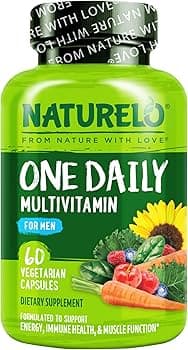 Verified by IngredientMD
The panel on the left is the one we evaluated, line by line.
All 30 actives checked against the clinical evidence: dose, form, and what the research actually shows.
Doses, ratios, and how the ingredients work together. That assessment is the verdict above: "Strong evidence, strong dose".
The verdict is public and identical whether or not a brand pays. A formula that does not clear the bar gets nothing.
Read by the engine against 2.1 million data points from clinical trials, PubMed and more than a hundred vetted sources. No individual reviewer is named or implied.
Cross-checked against 6,985 documented interactions for these actives.
Public health figures the engine matched to this formula's ingredients. Reported by their source, cited and dated, never written by the brand.
About 45% of US adults
take in less vitamin A than the estimated average requirement.
Peer-reviewed analysisAbout 46% of US adults
take in less vitamin C than the estimated average requirement.
Peer-reviewed analysisAbout 41% of US adults
have blood vitamin D below the level considered sufficient.
Peer-reviewed analysisAbout 84% of US adults
take in less vitamin E than the estimated average requirement.
Peer-reviewed analysisAbout 8% of US men aged 19 and over
take in less folate from food and drink than the estimated average requirement.
NHANESAbout 42% of Americans
take in less calcium than the estimated average requirement.
NHANESAbout 48% of Americans
take in less magnesium than recommended from food and drink.
NIH Office of Dietary SupplementsAbout 15% of US adults
take in less zinc than the estimated average requirement.
Peer-reviewed analysisAbout 50% of US men aged 19 and over
take in less vitamin A from food and drink than the estimated average requirement.
NHANESAbout 57% of US men aged 19 to 30
take in less vitamin C from food and drink than the estimated average requirement.
NHANESAbout 92% of US men aged 19 and over
take in less vitamin D from food and drink than the estimated average requirement.
NHANESAbout 72% of US men aged 19 and over
take in less vitamin E from food and drink than the estimated average requirement.
NHANESAbout 28% of US men aged 19 and over
take in less calcium from food and drink than the estimated average requirement.
NHANESMore than 1 in 3 US adults
regularly sleep less than the recommended seven hours a night.
Peer-reviewed analysisAbout 53% of US men aged 19 to 30
take in less vitamin A from food and drink than the estimated average requirement.
NHANESAbout 52% of US men aged 19 and over
take in less vitamin C from food and drink than the estimated average requirement.
NHANESAbout 51% of US men aged 19 to 30
take in less magnesium from food and drink than the estimated average requirement.
NHANESAbout 55% of US men aged 19 and over
take in less magnesium from food and drink than the estimated average requirement.
NHANESMeta-analysis, 2022
Across nine trials in postmenopausal women, vitamin K2 raised lumbar spine bone density by about 2.2 percent and forearm bone density by about 1.6 percent compared with control.
Journal of Bone and Mineral MetabolismSystematic review and meta-analysis, 2021
Across 22 trials in 41,633 people, folic acid supplements lowered the top blood pressure number by about 1.1 points and the bottom by about 0.2 points.
Critical Reviews in Food Science and NutritionMeta-analysis, 2025
Across six mostly observational studies in 2,327 Japanese adults, habitual natto intake linked to much higher blood MK-7 and modestly greater bone density, a food-intake association, not a measured effect.
Front NutrClinical trial, 1990
In people with weak, splitting nails, oral biotin increased nail thickness by about 25 percent under scanning electron microscopy and the nail surface became more regular.
Journal of the American Academy of DermatologyRandomised trial, 2014
In 32 statin-eligible adults, pantethine lowered LDL cholesterol by about 11 percent from baseline over 16 weeks, while the placebo group rose about 3 percent.
Vascular Health and Risk ManagementMeta-analysis, 2025
In a network meta-analysis of 19 trials with 1,658 participants, biotin-containing preparations were among the supplements linked to greater hair density, though most individual trials were small.
Frontiers in nutritionMeta-analysis, 2025
Pooling five trials, spinach-derived thylakoid supplements lowered reported hunger by 2.415 mm on a rating scale and raised fullness after eating, with the effect scaling with dose.
Nutrition reviewsRandomised trial, 2015
In a trial of 20 trained men, fourteen days of spinach supplementation before a half marathon reduced blood measures of oxidative stress and muscle damage compared with placebo.
The Journal of sports medicine and physical fRandomised trial, 2025
In healthy adults, polyphenols from raspberry leaf tea lowered the post-meal glucose and insulin rise compared with control.
NutrientsMeta-analysis, 2024
Across 10 trials in 318 athletes, vitamin D3 raised blood vitamin D by about 14.8 nmol/L and hinted at better muscle strength, though few trials leave that uncertain.
Frontiers in NutritionMeta-analysis, 2016
Zinc acetate lozenges cut cold symptom length by about 2.7 days, versus a roughly seven day average, across three pooled trials.
British Journal of Clinical PharmacologyMeta-analysis, 2014
Pooling 30 trials of 5,615 adults, vitamin D gave a small rise in overall muscle strength, with no measurable effect on muscle mass or power.
Journal of Clinical Endocrinology and MetabolismRandomised trial, 2023
In 160 postmenopausal women with long-standing sleep difficulty, one month of vitamin E brought the median sleep questionnaire score to 6, versus 9 on placebo, where lower means better sleep.
NutrientsMeta-analysis, 2024
In a dose-response analysis of trials, riboflavin was linked to about 1.3 fewer severe recurring headache attacks per month compared with control.
Neurological SciencesAbout 23 percent lower plasma homocysteine at 0.8 mg daily, with 0.2 mg and 0.4 mg reaching roughly 60 and 90 percent of that
Lowers homocysteine, a blood marker tied to heart risk. Measured in adults, standardised to a pretreatment homocysteine of 12 micromol per litre (95% CI 21 to 26 percent).
Meta-analysisRandomised trial, 2013
In adults with the MTHFR 677TT genotype, riboflavin at 1.6 mg a day lowered systolic blood pressure by about 5.6 mmHg over 16 weeks.
The paperMeta-analysis, 2025
A dose-response pooling of randomised trials found pomegranate supplementation improved several cardiometabolic measures, including blood pressure and blood lipids.
Nutrition, Metabolism, and Cardiovascular DiseasesSystematic review, 2024
Across the reviewed human studies, higher dietary carotenoid intake tracked with more favourable cardiovascular risk markers, an association rather than a demonstrated cause.
NutrientsMeta-analysis, 2020
Pooled trials found pomegranate supplementation lowered blood inflammation markers and improved measures of blood vessel lining function.
Complementary Therapies in MedicineMeta-analysis, 2014
Across 25 trials in adults with high blood sugar, chromium lowered HbA1c, a marker of average blood sugar, by about 0.55 percentage points and fasting glucose by about 1.15.
Journal of Clinical Pharmacy and TherapeuticsMeta-analysis, 2023
Pooling 20 studies, adults with impaired glucose handling carried lower circulating thiamine than adults with normal glucose handling (standardised mean difference -0.97), an association rather than a demonstrated cause.
MetabolismMeta-analysis, 2018
Pooling 21 trials, vitamin A on its own raised haemoglobin and cut the share of people with low haemoglobin by about 26 percent in those with low vitamin A status.
Critical Reviews in Food Science and NutritionMeta-analysis, 2012
In trials directly comparing the two forms, vitamin D3 raised blood 25-hydroxyvitamin D more than vitamin D2 did (P = 0.001).
American Journal of Clinical NutritionRandomised trial, 2024
A daily freeze-dried kale bar improved several blood sugar and metabolic markers in adults with high blood sugar compared with placebo.
NutrientsOpen-label trial, 2025
A small pilot study of black raspberry supplementation in older adults with excess body weight reported changes in the measured markers. The authors present it as preliminary and hypothesis-generating.
npj Science of FoodMeta-analysis, 2015
Across 12 trials, vitamin E lowered a blood marker of inflammation by about 0.62 mg/l compared with not taking it.
European Journal of Clinical NutritionMeta-analysis, 2025
Across trials, blueberries produced small improvements in memory and executive function measures.
BiogerontologyRandomised trial, 2024
Daily supplementation with carrot-derived rhamnogalacturonan-I altered gut microbiota composition in healthy adults. Composition is a measured community change, not a clinical outcome.
Biomedicine and PharmacotherapyRandomised trial, 2024
High-nitrate and low-nitrate vegetable supplements produced no detectable difference in blood pressure between groups.
NutrientsMeta-analysis, 2017
Across randomised trials, blueberry supplementation did not produce a detectable change in systolic or diastolic blood pressure.
The paperRandomised trial, 2002
In 18 people, 5 percent topical niacinamide reduced facial dark spots and lightened skin over 4 weeks, by lowering pigment transfer in lab tests.
British Journal of DermatologyMeta-analysis, 2022
Across 19 trials of about 1.2 million children in vitamin A deficient settings, supplementation lowered all-cause mortality by 12 percent (risk ratio 0.88), rated high-certainty evidence.
Cochrane Database of Systematic ReviewsMeta-analysis, 2022
Across 8 trials in 1,002 women, vitamin E taken by mouth reduced reported menstrual cramp pain compared with placebo, with the clearest effect in the first month.
Clinical Nutrition ESPENSystematic review, 2023
Across 18 studies, pyridoxine on its own and in combinations improved nausea scores in pregnancy on both the Rhode and PUQE scales, a use with a long clinical track record.
Archives of Gynecology and ObstetricsRandomised trial, 2005
In a 12-week study of 50 women, twice-daily 5 percent topical niacinamide reduced the appearance of fine lines, dark spots and redness, and improved skin elasticity compared with a plain vehicle.
Dermatologic SurgeryRandomised trial, 1998
Weekly vitamin A lowered the incidence of night blindness in pregnant women from 10.7 percent to 6.7 percent, and by about 67 percent among those who took nearly all of their doses.
Journal of NutritionSystematic review and meta-analysis, 2016
In children older than six months, zinc may shorten a bout of diarrhea by about half a day across nine trials, on low certainty evidence.
Cochrane Database of Systematic ReviewsMeta-analysis, 2019
Multiple-micronutrient supplements containing thiamine during pregnancy were linked to higher infant birthweight and fewer small-for-gestational-age births than iron and folic acid alone, with thiamine one component among many.
The Cochrane database of systematic reviewsRandomised trial, 2011
Over 16 weeks, pantethine (a vitamin B5 derivative) at 600 then 900 mg a day lowered total cholesterol by about 3 percent and LDL cholesterol by about 4 percent beyond diet alone in 120 low-to-moderate cardiovascular-risk adults.
Nutrition ResearchMeta-analysis, 2021
Pooling 24 randomized trials in adults with high blood sugar, chromium supplementation was linked to small reductions in triglycerides (about 6.5 mg/dL) and total cholesterol (about 7.8 mg/dL) and a small rise in HDL cholesterol (about 2.2 mg/dL), effects the authors described as small and possibly below clinical importance.
Journal of Trace Elements in Medicine and BiologyMeta-analysis, 2022
Across six trials in 364 adults with raised blood sugar, thiamine or benfotiamine did not shift long-term blood sugar control or fasting glucose, while HDL cholesterol rose by about 0.10 mmol/L at three months.
BMJ OpenPopulation figures from public health data. Context for the category, not a statement about any individual and not a claim about this product.
Each line below was derived from this formula's own record at the time of verification. Nothing here was written by the brand, and nothing can be added that the evidence does not carry.
Five pairings in this formula have been studied as combinations in human trials. Each finding below is what a named study measured, cited and dated, never written by the brand.
In a meta-analysis of eight randomized trials, vitamin K2 taken together with vitamin D raised total bone mineral density and lowered undercarboxylated osteocalcin, a marker of vitamin K status.
In a two-year trial in older adults, zinc taken together with selenium improved the antibody response to influenza vaccination.
In a 12-month randomised, double-blind trial, 98 adults aged 50 and over drank a litre a day of either a naturally calcium- and magnesium-rich mineral water or a low-mineral water. The mineral-rich group had fewer falls at the 6-month assessment and higher appendicular muscle mass, with the minerals delivered as drinking water rather than a capsule.
In a 2025 network meta-analysis of 16 randomized trials in healthy adults, folic acid taken together with vitamins B6 and B12 lowered blood homocysteine more than any single supplement, with the 1 mg folic acid plus 7.2 mg B6 plus 20 micrograms B12 arm ranked most effective versus placebo (mean difference -1.03 micromol/L, 95% CI -1.71 to -0.36).
In an 8-week randomized trial of 264 stressed healthy adults with low magnesium, magnesium plus vitamin B6 and magnesium alone reduced perceived stress about equally overall. In the prespecified subgroup that started with severe stress, the combination improved stress scores 24% more than magnesium alone.
Research strength. Research strength says how much work stands behind the combination. It is never a product score.
Fail closed. Where actives were studied on their own rather than together, each shows on its own evidence, never a combined effect no trial measured.
Independent record. Every finding is cited to a named trial, dated, and never written by the brand.
Findings from trials that studied these actives as a combination. Context for how the actives were tested together, not a statement about any individual and not a claim about this product.
Time-to-effect windows the engine read from the trial record. Each is a window a named study measured, cited and dated, never written by the brand.
In a randomised crossover trial, 12 healthy adults consumed 101.7 mg of vitamin C as a powder, as raw fruits and vegetables, or as juice, and plasma vitamin C rose after every intake form, with plasma and urinary levels tracked over the 24 hours following the single dose.
In the trial record, blood vitamin D rises for about 3 months of daily vitamin D3 and then holds at a plateau, near 69 nmol/L at 1,000 IU a day, from a starting level near 41 nmol/L.
In a 3-phase crossover using two deuterium-labelled forms of alpha-tocopherol, healthy women absorbed about 55 percent of an oral dose taken with a 40 percent fat meal and about 64 percent with a fat-free meal, with samples tracked over 72 hours. The authors conclude absorption is not limited by absent fat or fasting, and that vitamin E leaves the intestine by a prolonged process.
An expert consensus on vitamin B6 use, developed by a six-member Delphi panel with a structured evidence-quality assessment, calculated from pharmacokinetic parameters that complete clearance of vitamin B6 from the body takes a washout period of about 20 to 40 days after intake stops.
A systematic review and Bayesian meta-analysis drew on 108 articles from 14,002 screened records and modelled blood folate against folic acid intake using one-compartment pharmacokinetic models. Red blood cell folate rose 1.78 fold from baseline to steady state at 375 to 570 ug folic acid per day, and reaching that steady state took a median of 36 weeks, 95% credible interval 27 to 52 weeks. Serum or plasma folate rose 11.6% for every 100 ug per day of folic acid intake, 95% credible interval 8.4 to 14.9.
A kinetic study in six healthy men aged 22 to 31 gave 3.6 umol per day, 1.6 mg, of deuterium-labelled folic acid for four weeks, with folate tracked in serum, erythrocytes and urine by microbiological assay and gas chromatography mass spectrometry. Serum folate reached its maximum concentration in about 18 days, while isotopic labelling of erythrocyte folate kept rising across the whole four weeks. After supplementation stopped, red blood cell folate and urinary folate excretion declined linearly, and serum folate fell with a slow-phase half-life of 18.7 days. One study, six men, no control group.
A randomised, double-blind, parallel-group dose-finding trial in 120 older people with mild vitamin B12 deficiency, defined as serum B12 of 100 to 300 pmol/L with methylmalonic acid at or above 0.26 umol/L, gave daily oral cyanocobalamin at 2.5, 100, 250, 500 or 1000 ug for 16 weeks. Mean plasma methylmalonic acid fell 16%, 16%, 23%, 33% and 33% across those doses. Daily doses of 647 to 1032 ug accounted for 80% to 90% of the estimated maximum reduction. The window was measured on a blood marker of B12 status, not on a symptom.
An open-label randomised single-dose pharmacokinetic study in 20 healthy men aged 20 to 45, conducted and authored by staff of Emisphere Technologies, the developer of the SNAC carrier under test, measured serum vitamin B12 after one 5 mg cyanocobalamin tablet, with six men on the marketed tablet. Time to peak serum B12 was 6.83 hours for the marketed tablet and 0.5 hours for the carrier coformulation. Absolute bioavailability was 2.16% and 5.09% respectively. One trial, six men per arm. Serum concentration was measured, not any symptom.
In an open trial with no placebo arm, 71 patients with brittle or splitting fingernails took 2.5 mg of biotin a day. Of the 45 cases that could be evaluated, 41 were rated as having firmer and harder nails after an average of 5.5 months of treatment, standard deviation 2.3 months. The rating was clinical judgement rather than an instrument reading, and there was no control group, so the window describes when the raters recorded change, not a placebo adjusted effect.
A randomised cross-over trial in ten women of mean age 69 gave a single 500 mg dose of calcium as citrate fasting, citrate with a meal, fortified juice or a dairy product meal, with blood drawn before and at 1, 2, 4 and 6 hours. Serum ionised and total calcium increased significantly from baseline over six hours, with the rise similar after fortified juice, delayed when citrate was taken with a meal and smaller after the dairy meal. A separate double-blind cross-over trial in 25 postmenopausal women measured parathyroid hormone and a bone resorption marker 12 hours after a single calcium dose. Ten participants is a small sample, and what moved was blood chemistry, not a sensation.
A systematic review of ten randomised crossover trials in 225 healthy adults aged 18 to 64 examined inorganic phosphorus supplementation taken with meals against postprandial metabolic outcomes. Three of the four studies measuring diet-induced thermogenesis reported a significant positive association with phosphorus in the hours after eating. The reviewers temper the finding: few studies, modest samples, methodological heterogeneity, and association rather than established cause.
In a 24 week randomised double-blind placebo-controlled trial in 112 mildly iodine-deficient New Zealand adults aged 18 to 40, 150 micrograms of iodine a day as potassium iodate lowered thyroglobulin, a blood marker of iodine status, by 12 percent at 8 weeks, 20 percent at 16 weeks and 27 percent at 24 weeks compared with placebo. Median urinary iodine reached 168 micrograms per litre against 79 on placebo. TSH and free T4 stayed within normal range and did not change significantly.
Across three randomised placebo-controlled trials pooled as individual patient data (199 adults with naturally acquired colds, 80 to 92 mg of elemental zinc a day as acetate lozenges), 70 percent of the zinc group had recovered by day 5 against 27 percent on placebo, and colds ran 2.73 days shorter against a 7 day average duration. A separate meta-analysis of seven lozenge trials (575 participants, doses above 75 mg a day, zinc acetate or zinc gluconate) measured cold duration 33 percent shorter, with no significant difference between the two salts.
In a controlled feeding study in nine healthy men, six weeks of restricted zinc intake raised DNA strand breaks in peripheral blood cells, and four weeks of repletion at 11 mg a day, with 20 mg of supplemental zinc for the first seven days, reversed the rise. In a separate randomised placebo-controlled trial in 40 Ethiopian women eating a high-phytate diet, 20 mg a day of zinc sulfate for 17 days lowered mean comet tail moment from 39.7 to 30.0 while plasma zinc did not change significantly. Both windows were measured on a DNA damage marker in blood cells, not on a symptom.
In a 12 week randomised double-blind placebo-controlled trial in 119 healthy UK adults aged 50 to 64, mean plasma selenium rose from 95.7 ng/mL at baseline to steady state by week 10, reaching 118.3, 152.0 and 177.4 ng/mL on 50, 100 and 200 micrograms a day of selenium-enriched yeast. Plasma selenoprotein P rose in every selenium arm. Platelet glutathione peroxidase activity did not change significantly at any dose or form.
In an 8 week pilot with a parallel placebo group, 8 young women taking 2 mg of copper a day as copper glycinate showed a 9 percent mean rise in serum ceruloplasmin and a 75 percent rise in diamine oxidase, alongside a 39 percent fall in plasma F2-alpha isoprostanes. Erythrocyte copper-zinc superoxide dismutase did not change. In a separate 4 week double-blind crossover in 20 men with moderately high cholesterol at the same 2 mg a day, copper moved no measure across the whole group and raised superoxide dismutase and diamine oxidase only in the 10 men who started below the median. Both are small and both measured enzymes in blood, not a symptom.
In a small preliminary study, nine older adults with early age-related memory changes drank wild blueberry juice daily for 12 weeks and improved on paired-associate learning and word-list recall, with scores compared against a demographically matched group given a berry placebo drink. One study of nine people, juice rather than a capsule.
A double-blind randomised dose-finding trial gave 60 postmenopausal women aged 50 to 69 either 0, 50, 100 or 200 micrograms of menaquinone-7 daily for four weeks on a controlled diet. The ratio of carboxylated to undercarboxylated osteocalcin rose dose dependently, with significant differences from the 0 microgram group at 100 and 200 micrograms. A companion 12-week trial in 120 people aged 20 to 69 confirmed the change at 100 micrograms daily. Both studies were run by authors affiliated with the R and D division of J-Oil Mills. An independent 8-week double-blind trial in 55 healthy prepubertal children found the same direction at 45 micrograms daily. What was measured is a blood marker of vitamin K status, not bone density and not a sensation.
A double-blind randomised trial gave 244 healthy postmenopausal women either placebo or 180 micrograms of menaquinone-7 daily for three years, with bone mineral density measured by DXA at baseline and after each year. Menaquinone-7 decreased the age-related decline in bone mineral content and bone mineral density at the lumbar spine and femoral neck, but not at the total hip. The effect is a slowed decline rather than a gain, and the trial ran three years rather than weeks.
Windows measured in the cited trials. Context for how the active behaves over time, not a statement about any individual and not a claim about this product.
12 ingredients, from each one's own page.
Weeks to months. Liver stores buffer intake, so vitamin A status moves slowly and shows up on a blood panel rather than as a sensation.
Blood levels rise within hours and tissue pools fill over days. Collagen-linked changes in skin and gums build over weeks and show as tissue quality, not as a sensation.
25-hydroxyvitamin D climbs over roughly six to twelve weeks of daily dosing before it plateaus. It's a blood level you watch rather than a feeling.
Plasma alpha-tocopherol climbs within days of daily intake, and anything you'd notice in skin condition is a slow change across a couple of months.
Absorbed within an hour, but the timeline that counts is two to four weeks. Whole blood thiamin diphosphate is where the change gets read.
Bright yellow urine turns up within hours, which is simply surplus clearing. Status markers such as glutathione reductase activity respond across a few weeks of daily use.
On the skin, most of the change in redness and barrier feel lands between weeks four and eight. Taken by mouth it works in the NAD pool, which is measured rather than felt.
Nothing quick. Conversion to the active coenzyme happens within hours, but plasma pyridoxal 5-phosphate takes a couple of weeks to settle at a new level.
Red cell folate climbs over roughly four to eight weeks. It's a blood panel change rather than a sensation.
Markers move first. Methylmalonic acid and homocysteine start shifting within a week or two, while anything you would notice takes several weeks of daily use.
Fingernails grow around 3mm a month, so it takes roughly 8 to 12 weeks before enough new plate has grown out to judge the difference by eye.
Nothing acute to time. Pantothenate feeds coenzyme A production, which is a background supply job read in blood and urine rather than in how a day feels.
How each ingredient usually behaves over time, from its own page on IngredientMD. General timing for the ingredient, not a measurement of this product.
What each form is, and where it fits in a formula. Measured findings carry the study that reported them.
The animal-sourced form of vitamin D, made in skin under UVB light and produced commercially from lanolin. Fat-soluble, so it travels with dietary fat and is stored in body fat.
In a 12-week double-blind randomised controlled trial in 108 young women in urban Bangalore, most of whom began vitamin D-deficient, daily vitamin D3 at 400, 600 or 800 IU in a fortified wafer raised serum 25-hydroxyvitamin D, parathyroid hormone fell over time, and effects on bone-turnover markers were modest and not dose specific. The 800 IU dose brought 65 percent of participants to sufficiency.
Descriptions of the form itself, read from the cited studies. Not a comparison between products and not a statement about any individual.
It is a capsule, so the amount per serving is fixed and travels without measuring.
Put an earned verification on your own product page.
These statements have not been evaluated by the Food and Drug Administration. This product is not intended to diagnose, treat, cure, or prevent any disease. This record is not medical advice. Always consult your healthcare provider before starting any supplement regimen.