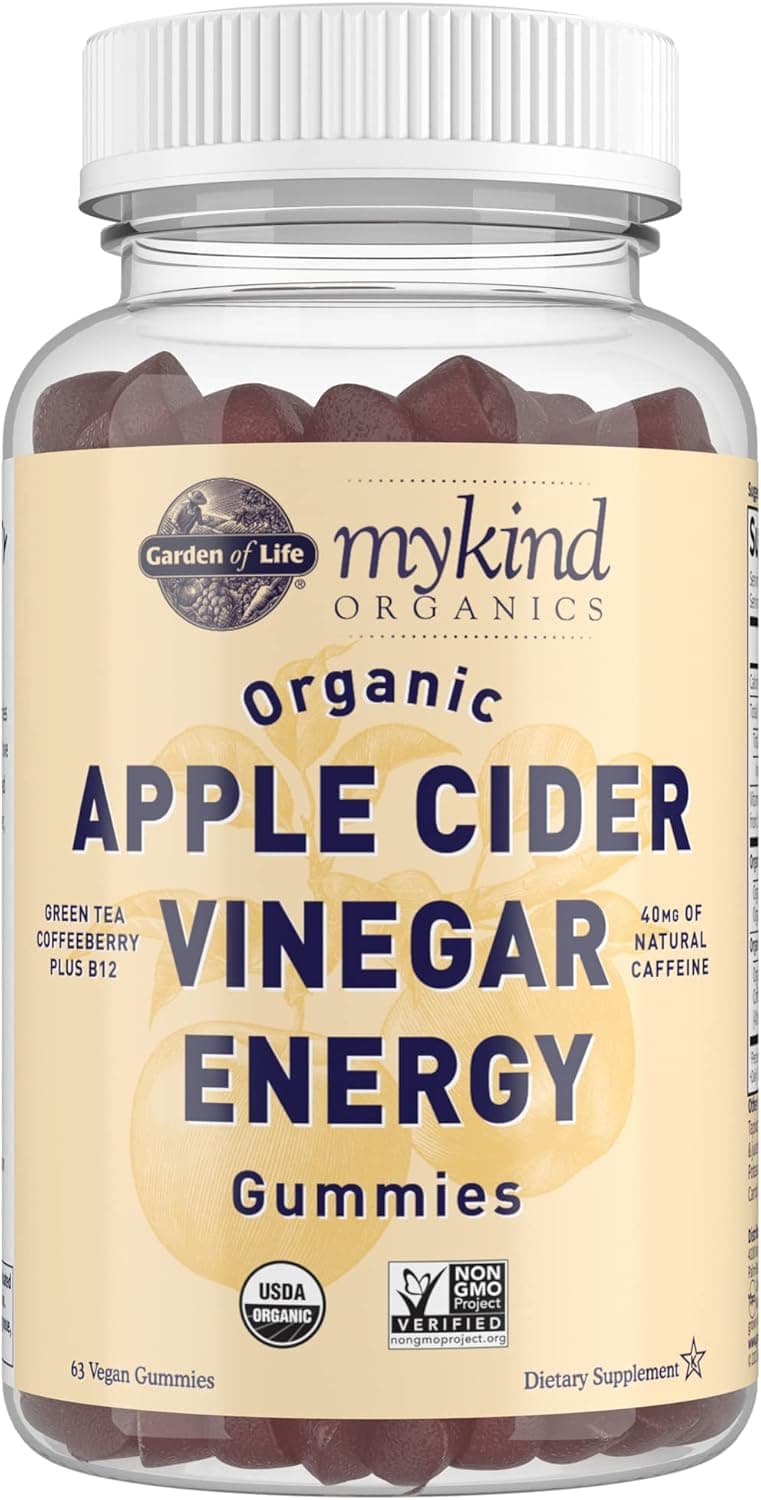
Apple Cider Vinegar.
Acetic acid slows stomach emptying, which reduces the speed at which glucose hits your bloodstream after meals. May also modestly reduce appetite.
Reviewed March 2026
- Category
- General
- Also filed under
- Post meal blood sugar reductionAppetite modulationDigestive support
What Apple Cider Vinegar is, and what it does.
- Does it work
- The blood sugar evidence is real but modest. Most other claimed benefits (weight loss, detox, skin health) are either exaggerated or unproven. Don't believe the hype, but don't dismiss it entirely.
- How much to take
- 500-1000mg in capsule/gummy form (equivalent to about 1-2 tablespoons of liquid vinegar). The clinical trials used 15-30ml of liquid ACV before meals.
- Time to feel it
- Taken with a carbohydrate meal, the slowing of stomach emptying happens during that meal. Anything showing on a glucose trace or the scales takes several weeks of daily use.
- The first dose
- You might notice slightly less hunger after a meal taken with ACV. The blood sugar effect is immediate but subtle, you'd need a glucose monitor to see it.
- With regular use
- Kondo et al. 2009 showed modest weight reduction (2-3 pounds over 12 weeks) with daily vinegar intake. Blood sugar improvements are consistent but small.
- How well tolerated
- Liquid ACV erodes tooth enamel and can irritate the esophagus. Capsule and gummy forms avoid these issues. Can lower potassium with excessive use.
- How it feels
- Slightly less post-meal sluggishness. Reduced appetite, maybe. Nothing you'd write home about. The biggest 'feeling' is the acid burn if you drink it straight, which you shouldn't.
- The overlooked benefit
- An acid load lowers stomach pH, and poorly soluble mineral salts have to dissolve before they can be absorbed, so acidity around a meal does more than flavour it.
750 to 1,500mg a day is where Apple Cider Vinegar works.
Source: Johnston et al. 2004; Kondo et al. 2009 vinegar trials
The proof, claim by claim.
These words describe the research, not the molecule's worth. Research strength is how much work stands behind one claim, and it is never a product score.
Apple Cider Vinegar has emerging evidence, with 10 cited human studies on this page.
- Reduces post-meal blood sugar
- Aids weight loss
- Detoxifies the body
Questions people ask about Apple Cider Vinegar.
- Does ACV really help with weight loss?
- Barely. The best study showed 2-3 pounds more than placebo over 12 weeks. That's real but tiny. If someone tells you ACV melts fat, they're selling something.
- Do I need the one 'with the mother'?
- For liquid ACV, the mother contains beneficial bacteria, so it's a plus. For capsules and gummies, the mother is irrelevant because it doesn't survive the drying process.
- Will ACV damage my teeth?
- Liquid ACV absolutely can. It's acidic enough to erode enamel with regular use. Always dilute in water, use a straw, and rinse your mouth after. Or just take capsules.
- Can I take ACV with my metformin?
- Be careful. Both lower blood sugar. The combination could cause blood sugar to drop too low. Talk to your doctor and monitor your levels closely.
- Is ACV a detox?
- No. 'Detox' in the supplement world is mostly marketing. Your liver and kidneys are your detox organs. ACV doesn't enhance their function. It's an acid that slows stomach emptying.
Why these belong in the same formula. Each row says what the basis is, from settled biochemistry through to a trial that measured the pair.
Acetic acid slows gastric emptying and the rate at which starch is broken down and absorbed, while cinnamon compounds inhibit brush-border carbohydrate enzymes. Both act on the meal itself, so their effects on the post-meal glucose rise are additive rather than redundant.
Psyllium raises the viscosity of the meal so glucose diffuses more slowly to the intestinal wall, and acetic acid delays how fast that meal leaves the stomach. Together they lengthen the same absorption window from two directions.
Acetic acid slows gastric emptying and starch digestion before glucose arrives, while berberine acts on AMPK-linked glucose uptake after it does, so a formula with both touches the post-meal curve at two points.
Both lower gastric pH, betaine HCl by releasing hydrochloric acid and vinegar by contributing acetic acid, so the effect on stomach acidity adds rather than substitutes.
Pepsin only cleaves protein in a strongly acidic environment, and the acetic acid in vinegar contributes to holding gastric pH in the range where the enzyme stays active.
Non-heme iron has to stay in its soluble ferrous form to be absorbed, and the acidic gastric environment vinegar contributes to keeps more of it soluble.
Calcium carbonate raises gastric pH, which cancels the acidification vinegar contributes, so dosing them together works against the mechanism of each.
Vinegar delivers acetate directly while inulin fermentation produces acetate in the colon, so both feed the same short-chain fatty acid pool by different routes.
Pectin raises the viscosity of a meal and acetic acid slows gastric emptying, so together they hold carbohydrate in the stomach longer and flatten its arrival in the small intestine.
Chromium contributes to normal macronutrient metabolism and insulin signalling, while the acetic acid in apple cider vinegar slows gastric emptying and blunts the rise in glucose after a starchy meal. The two act at different points, so a formula pairing them is stacking a nutrient cofactor with a meal-timing effect. Neither has been measured against the other in a head-to-head trial that we cite here. Anyone already using glucose-lowering medicine should have the combination reviewed by their clinician.
Gymnema acids interact with sweet-taste receptors and with intestinal sugar handling. Vinegar acts on gastric emptying and disaccharidase activity in the brush border. Both are used around meals for the same reason, which is why they co-formulate. The combination itself is not measured in the studies cited on this page.
Deoxynojirimycin from white mulberry inhibits intestinal alpha-glucosidase, so less disaccharide is cleaved into absorbable glucose. Acetic acid works upstream of that, mainly by slowing how fast the stomach empties into the small intestine. Two different levers on the same post-meal curve, which is a coherent reason to combine them rather than a measured additive number.
Glucomannan forms a viscous gel in the stomach and slows the transfer of a meal into the small intestine. Acetic acid slows gastric emptying by a separate route. Taken together they push the same direction on post-meal glucose kinetics, and both need adequate water to be tolerated.
Partially hydrolyzed guar gum is fermented by colonic bacteria into short-chain fatty acids, acetate prominent among them. Apple cider vinegar delivers acetate directly to the upper gut instead. The pool being fed is the same, by two different routes, which is a mechanism-level rationale and not a combination trial.
Butyrate and acetate are both short-chain fatty acids with overlapping receptor and metabolic handling, though butyrate is preferentially used by colonocytes and acetate reaches the circulation. A formula giving both covers more of that pathway than either alone. This is pathway logic and the human short-chain fatty acid literature reports markers, not clinical endpoints.
Sodium bicarbonate neutralises acetic acid on contact, producing sodium acetate, carbon dioxide and water. Anything that depends on the free acid reaching the stomach as an acid is diminished when the two are taken at the same time. Separating them by an hour or more is the ordinary formulation answer.
Divalent minerals dissolve better in an acidic gastric environment, and dissolution is the step that has to happen before absorption can. An acid load taken with a zinc salt of low intrinsic solubility can help that first step. This is chemistry rather than a measured absorption trial for this pairing.
Poorly soluble magnesium salts such as the oxide depend on gastric acid to release free magnesium ions. Acetic acid lowers gastric pH and forms soluble magnesium acetate. Already-chelated forms have less to gain from this, since their solubility does not hinge on stomach acid.
Gastric proteases work in an acidic range while pancreatic enzymes need a near-neutral small-intestinal pH. Adding an acid load shifts the upper-gut environment toward the gastric optimum. Whether that changes anything measurable for a person taking a mixed enzyme blend has not been tested in the studies cited here.
Acetic acid is antimicrobial at the concentrations found in undiluted vinegar, so co-administering it with live cultures at the same moment is a formulation question rather than a synergy. Once diluted and past the stomach, acetate is an ordinary substrate of the colonic community. Separate dosing avoids the interaction entirely.
Alpha-lipoic acid participates in mitochondrial glucose oxidation as a cofactor of the pyruvate dehydrogenase complex, and vinegar acts before absorption. The two touch glucose handling at completely different stages. Combined effects are inferred from mechanism, not measured.
Bitter melon contains cucurbitane compounds studied for glucose uptake signalling, mostly in cell and animal work. Vinegar acts in the gut lumen. Anyone using both alongside glucose-lowering medicine should have the stack reviewed, because additive effects on blood sugar are the plausible outcome.
Talk to a doctor before taking Apple Cider Vinegar if any of these apply to you: Erodes tooth enamel (liquid form), Can irritate throat and stomach, Interacts with diabetes medications. These are flags to check first, not effects Apple Cider Vinegar is known to cause.
Not medical advice. Show the label to your pharmacist.What Apple Cider Vinegar actually does.
Acetic acid is what makes any vinegar a vinegar, and you're getting roughly the strength that the acidity declaration on the label states.
Once you absorb it, acetate is switched on into a standard fuel molecule and runs through ordinary metabolism. It's the same compound your colon makes when bacteria ferment fibre.
An acid load makes your stomach more acidic, and that helps poorly soluble mineral salts dissolve, which is the step that has to happen before any absorption can.
Neat vinegar sitting on your teeth for a while pulls minerals out of the enamel, which is why liquid forms are normally diluted rather than sipped.
Where Apple Cider Vinegar comes from.
Apples become cider, cider becomes vinegar, and the capsule version is that vinegar dried onto a powder base. The dried form always carries something else with it to hold the acid.
Built by fermentation, the same way vitamin B12 and many amino acids are made at scale. Controlled conditions, consistent output.
Pressed apples, sometimes including pomace and cores from juice production, providing the fermentable sugars
Yeasts convert the fruit sugars to ethanol under anaerobic conditions
Acetobacter species oxidise ethanol to acetic acid in the presence of oxygen. Slow surface fermentation runs for weeks to months in barrels or tanks. Submerged aerated fermentation in industrial acetators runs far faster. The two routes reach the same acid, and differ in throughput, minor volatile compounds and how much biofilm remains
Unfiltered product retains the cellulose biofilm and haze. Filtered and pasteurised product is clarified and heat-stabilised
The liquid is standardised to a declared acidity, typically stated as a percentage of acetic acid
Liquid is bottled, or spray-dried onto a carrier such as maltodextrin to make an encapsulable powder
Getting Apple Cider Vinegar from food.
The whole-food sources on file. A supplement closes the gap, it does not replace dinner.
A gram-for-gram figure (how much of each you would eat to match a dose) will appear here once it is sourced and reviewed. This page will not print a number it cannot cite.
The forms it comes in.
The essence, in one line each.
- Pooling nine trials, apple cider vinegar was associated with lower fasting blood glucose by about 8 mg/dL and lower HbA1c by about 0.5 percentage points.Meta-analysis. Hadi et al., 2021 (BMC Complementary Medicine and Therapies). PMID 34187442 ↗
- Across ten randomized trials in 789 adults with excess weight or high blood sugar, daily apple cider vinegar was associated with modestly lower body weight and BMI (standardized mean differences of about -0.39 and -0.65).Meta-analysis. Castagna et al., 2025 (Nutrients). PMID 41010525 ↗
- In this crossover trial, taking vinegar before a high-carbohydrate meal improved the body's insulin response to that meal in people with insulin resistance or high blood sugar.Randomised trial. Johnston et al., 2004 (Diabetes Care). PMID 14694010 ↗
- In 25 healthy college students, 1.5 g of acetic acid a day as liquid vinegar for 4 weeks improved mood questionnaire scores compared with a low-dose control, alongside shifts in urinary glycine, serine and threonine metabolism.Randomised trial. Johnston et al., 2021 (Nutrients). PMID 34836275 ↗
- In 22 recreationally trained adults, 29 mL of vinegar taken alone or with sucrose 90 minutes before repeat high-intensity cycling produced no detectable change in time to exhaustion or heart rate (p greater than 0.05).Randomised trial. Farney et al., 2020 (Medicina). PMID 32867047 ↗
- A GRADE-assessed pooled review of trials examining apple cider vinegar against glycaemic control and insulin-sensitivity markers. These are laboratory markers rather than clinical outcomes.Systematic review. Arjmandfard D et al., 2025 (Frontiers in Nutrition). PMID 39949546 ↗
- A randomised crossover trial testing apple cider vinegar against urinary mineral-crystallisation chemistry, reporting urine composition markers rather than clinical events.Randomised trial. Baker B et al., 2026 (International Urology and Nephrology). PMID 41351751 ↗
- Adjunctive apple cider vinegar was tested against metabolic and insulin-resistance markers. The report concerns marker changes, not a clinical endpoint.Randomised trial. Najafi A et al., 2026 (Scientific Reports). PMID 42215584 ↗
- Apple cider vinegar powder was associated with gut microbiota and metabolome shifts and lower liver fat markers in mice fed a high-fat diet. Animal data do not transfer directly to people.Animal study. Ding Q et al., 2025 (Nutrients). PMID 40647261 ↗
- A systematic review and meta-analysis of short-chain fatty acids and glycaemic control in humans. Acetic acid, the main acid in vinegar, is one of the short-chain fatty acids covered, so this is background pathway evidence rather than a vinegar trial.Meta-analysis. Cherta-Murillo A et al., 2022 (The American Journal of Clinical Nutrition). PMID 35388874 ↗
- A randomised dietary intervention raised colonic and peripheral short-chain fatty acids and tracked B- and T-cell markers. The ingredient is named as part of the short-chain fatty acid pathway, not as the intervention.Randomised trial. Gill PA et al., 2022 (The American Journal of Clinical Nutrition). PMID 36084000 ↗
These are the studies our verdict leans on, chosen from the 198 we read for Apple Cider Vinegar. The full linked list is below.
The studies, linked.
12 sources behind our Apple Cider Vinegar verdict: peer-reviewed studies and registered clinical trials. Every one links straight to PubMed, the journal, or ClinicalTrials.gov. Read them yourself.
- Clinical trialEffect of Apple Cider Vinegar and Metformin Combination vs Metformin Alone in Type 2 Diabetics:A Randomized Controlled TrialClinicalTrials.gov ↗126 participants, Completed
- Clinical trialEffect of Apple Cider Vinegar in Type 2 Diabetic Patients With Poor Glycemic Control: a Randomized Controlled DesignClinicalTrials.gov ↗126 participants, Completed
- Clinical trialThe Effect of Oral Care Using Apple Cider Vinegar, Chlorhexidine Gluconate and Sodium Bicarbonate on Oral Microbial Colonization in Neurosurgery Intensive Care PatientsClinicalTrials.gov ↗90 participants, Completed
- Clinical trialAcute Effect of Apple Cider Vinegar Consumption on Postprandial Plasma Malondialdehyde Level in Adult With ObesityClinicalTrials.gov ↗46 participants, Completed
- Clinical trialClinical Efficacy and Safety of Metformin Versus Apple Cider Vinegar (ACV) in PrediabeticsClinicalTrials.gov ↗46 participants, Completed
- Clinical trialStudy to Evaluate the Efficacy of Poppi Apple Cider Vinegar Prebiotic Soda to Improve Gut Health In ParticipantsClinicalTrials.gov ↗38 participants, Completed
- Clinical trialEffect of Daily Vinegar Ingestion for Four Weeks on Mood State in Healthy College StudentsClinicalTrials.gov ↗25 participants, Completed
- Clinical trialA Randomized, Single-blind, Controlled, Cross-over Clinical Trial to Investigate the Efficacy of Bragg Apple Cider Vinegar on Blood Glucose Control in a Healthy Adult PopulationClinicalTrials.gov ↗24 participants, Completed
- Clinical trialAntibacterial Effect Of 940nm Diode Laser, Apple Cider Vinegar And Gymnema Sylvestre In Diabetic Patients With Apical Periodontitis Against Peptostreptococcus Species- A Randomized Clinical TrialClinicalTrials.gov ↗90 participants, Recruiting
- Clinical trialApple Cider Vinegar for the Prevention of Urinary Lithiasis (APUL)ClinicalTrials.gov ↗50 participants, Unknown
- Clinical trialEffect of an Intervention With Apple Cider Vinegar on Glycemic Variability and Lipid Profile in Patients With Type 2 Diabetes MellitusClinicalTrials.gov ↗38 participants, Active not recruiting
- Clinical trialThe Role of Akkermansia Muciniphilia in Combating the Metabolic Effects of Androgen Deprivation Therapy in Men With Metastatic Prostate CancerClinicalTrials.gov ↗Early phase 1, 30 participants, Recruiting
Evidence surfaced via Semantic Scholar (Allen Institute for AI) and ClinicalTrials.gov. Ranked by study type and citation weight, not cherry-picked.
Problems people have reported.
Read this carefully. These are 3,684 voluntary, unverified reactions reported to the FDA (openFDA). The number mostly reflects how popular Apple Cider Vinegar is, not how risky it is. A report is not proof Apple Cider Vinegar caused anything. It is a signal of what to watch for, nothing more.
Source: openFDA adverse-event reports. Voluntary reporting, not an incidence rate.
FDA Disclaimer: These statements have not been evaluated by the Food and Drug Administration. This information is for educational purposes only and is not intended to diagnose, treat, cure, or prevent any disease. Consult your healthcare provider before starting any supplement regimen.