AstraGin.
A patented blend that helps your body actually absorb the other supplements you're taking. Boosts the absorption of amino acids, vitamins, and other supplements by upregulating gut nutrient transporters.
Reviewed March 2026
- Category
- Compound
- Also filed under
- Enhances amino acid absorptionImproves nutrient uptake from supplementsSupports gut lining health
What AstraGin is, and what it does.
- Does it work
- The mechanism is solid and the parent herbs are well-studied. Most evidence is preclinical, but the risk is low and the cost is minimal.
- How much to take
- 50 mg per day. That's the standard dose in most products. Some go as low as 25 mg.
- Time to feel it
- There is no timeline of its own to give. It acts on the absorption of whatever it sits beside, so any change follows that other ingredient's own timeline.
- The first dose
- Nothing noticeable on its own. The absorption enhancement is happening, but it's not something you'd feel.
- With regular use
- Over weeks, you may get more mileage from your existing supplement stack. Think of it as an efficiency multiplier.
- How well tolerated
- Well tolerated. Both Astragalus and Panax notoginseng have long safety records. No significant adverse effects reported at standard doses.
- How it feels
- You don't feel AstraGin itself. You feel the improved absorption of everything else you're taking.
- The overlooked benefit
- A few milligrams beside grams of active is the normal inclusion rate for an absorption aid. The weight on the label says nothing about effect in either direction.
25 to 50mg a day is where AstraGin works.
Source: NuLiv Science proprietary research
The proof, claim by claim.
These words describe the research, not the molecule's worth. Research strength is how much work stands behind one claim, and it is never a product score.
- Enhances amino acid absorption
- Improves creatine and HMB uptake
- Supports gut barrier integrity
Questions people ask about AstraGin.
- Do I need this if I already eat well?
- Probably not essential, but it can still improve supplement absorption. Think of it as insurance for your stack.
- Can I take it without other supplements?
- You could, but there's no point. Its value comes from boosting absorption of other things.
- Is it just marketing from the manufacturer?
- Fair question. Most studies are manufacturer-funded, which is a yellow flag. But the mechanism (transporter upregulation) is real biology.
- How much more absorption will I get?
- Cell studies show 40-60% increases for some compounds. Real-world absorption improvement is probably more modest.
- Is this the same as BioPerine?
- Different mechanism. BioPerine (piperine) inhibits liver metabolism. AstraGin upregulates gut transporters. Both improve absorption, different pathways.
- Will this make medications stronger?
- Theoretically possible. If you're on medications, talk to your doctor before adding absorption enhancers.
Why these belong in the same formula. Each row says what the basis is, from settled biochemistry through to a trial that measured the pair.
Creatine crosses membranes on the sodium- and chloride-dependent carrier CreaT (SLC6A8), a saturable route rather than free diffusion. AstraGin is added to creatine powders on the position that it raises intestinal uptake of the carrier-dependent nutrients around it. The uptake work behind that sits in cell and animal models, so the human case stays open. Pairing them is common formulation practice, not a demonstrated human effect.
HMB is a leucine metabolite absorbed as a small organic acid and is frequently blended with AstraGin in muscle-support powders. The stated rationale is improved intestinal uptake. No human absorption comparison is cited on this page, so regard the pairing as a formulation convention with a mechanistic story attached.
Arginine enters the enterocyte on cationic amino acid carriers (the y+ system), which are saturable and compete with lysine and ornithine. Any absorption aid has to act at that carrier layer to matter. AstraGin is positioned there, and the supporting data are preclinical.
Citrulline is absorbed well on neutral amino acid carriers and converted to arginine in the kidney, which is why it is used in place of arginine in powders. AstraGin appears in the same products on an absorption rationale. The human evidence for an added uptake effect is not established.
Whey digests to di- and tripeptides taken up on PEPT1 (SLC15A1) and to free amino acids on carriers such as B0AT1. AstraGin is marketed for that step. Whey protein is already well absorbed in healthy adults, so any headroom for an absorption aid is small and unquantified here.
Oral carnitine absorption is low and saturable because it depends on OCTN2 (SLC22A5), with the unabsorbed remainder fermented in the colon. That makes carnitine one of the few common actives where a real absorption ceiling exists. AstraGin is used in carnitine products on that logic, and the supporting uptake work is cell-based.
Curcuminoids are poorly water soluble and heavily conjugated in the gut wall and liver, so plasma levels after plain powder are very low. Products stack absorption aids against that. AstraGin appears in some of them, and its contribution has not been isolated from the rest of the matrix.
Coenzyme Q10 is a large lipophilic quinone whose absorption depends on bile, dietary fat and micelle formation. Formulators combine it with solubilisers and absorption aids for that reason. AstraGin is one of the ingredients used there. The effect on Q10 plasma levels in people is not documented on this page.
Piperine acts largely by slowing intestinal and hepatic conjugation of co-dosed compounds, a different route from a carrier-directed aid. Products sometimes carry both. Stacking two absorption modifiers makes the source of any change impossible to attribute, and piperine itself alters the handling of other actives and medicines in the same formula.
Glutamine is the preferred fuel of the enterocyte and supports normal turnover of the intestinal lining. AstraGin is positioned for barrier support on tight-junction protein readouts in cultured cells. Both are used together in gut-support formulas, and the combination itself has not been measured in people.
Zinc is required for epithelial repair and zinc-carnosine is used to support normal gastric and intestinal lining integrity. AstraGin carries a similar barrier-support positioning from cell models. Together they are a common gut-formula pairing with no combination trial behind it.
Saponin-containing extracts reach the colon largely unabsorbed and can be modified by resident bacteria, and bacterial metabolites in turn act on the epithelium. That two-way traffic is established for saponins in general. Whether it changes anything for this specific blend is untested.
Talk to a doctor before taking AstraGin if any of these apply to you: Most evidence is preclinical, Primarily tested by the manufacturer. These are flags to check first, not effects AstraGin is known to cause.
Not medical advice. Show the label to your pharmacist.What AstraGin actually does.
Amino acids and small peptides from food don't just diffuse across your intestinal wall. Neutral amino acids move on B0AT1, cationic ones on the y+ system, and di- and tripeptides on PEPT1. Anything claiming to raise amino acid absorption has to act at that carrier layer.
Creatine gets into your skeletal muscle through the sodium- and chloride-dependent transporter CreaT, and that transporter saturates. It's why loading protocols plateau instead of scaling up with bigger doses.
Absorption-aid ingredients are used at very low inclusion rates next to the actives around them, so a label can carry a few milligrams of the aid beside grams of the active. Inclusion weight tells you nothing about effect either way.
Astragalus membranaceus root and Panax notoginseng root both carry triterpene saponins called astragalosides and notoginsenosides. Saponins interact with cholesterol in membranes, and that interaction is the general basis for saponin effects on epithelial permeability and on transporter expression in cell studies.
Where AstraGin comes from.
Two roots are simmered down to an extract, dried into a powder, and adjusted by the maker to a consistent strength. Which compounds they measure to hit that consistency is not published.
Made from a plant. What ends up in the capsule tracks the harvest, so batch testing and a stated marker matter more here than with a made molecule.
Both are cultivated perennial roots harvested after several growing seasons. Saponin content depends on age, part and region, which is why extract makers specify raw material by origin.
Saponins are pulled with hot water or a water and ethanol mixture. The specific solvent sequence for this branded material is not published.
Extract is clarified, concentrated under reduced pressure and dried. Resin adsorption steps are common for saponin enrichment in this class of extract generally.
The manufacturer states that the material is standardised. The markers and their target ranges are not disclosed publicly, so the standardisation cannot be independently reproduced.
Supplied as a free-flowing powder for direct blending at low inclusion, sometimes on a carrier.
The marker compounds, their target ranges, the extraction ratio and the solvent sequence are all held as trade secrets by the manufacturer, so a buyer cannot verify standardisation against a public specification.
Getting AstraGin from food.
The whole-food sources on file. A supplement closes the gap, it does not replace dinner.
A gram-for-gram figure (how much of each you would eat to match a dose) will appear here once it is sourced and reviewed. This page will not print a number it cannot cite.
The forms it comes in.
The essence, in one line each.
- In a crossover trial of 30 healthy adults aged 18 to 80, four weeks of an astragalus and panax saponin extract taken with whey protein raised valine absorption by about 14% and leucine by about 8%, with grip strength up 5.2% versus 2.4% on placebo and blood zonulin down 13.0% versus 0.9%.Randomised trial. Zhuang et al., 2026 (Nutrients). PMID 41683325 ↗
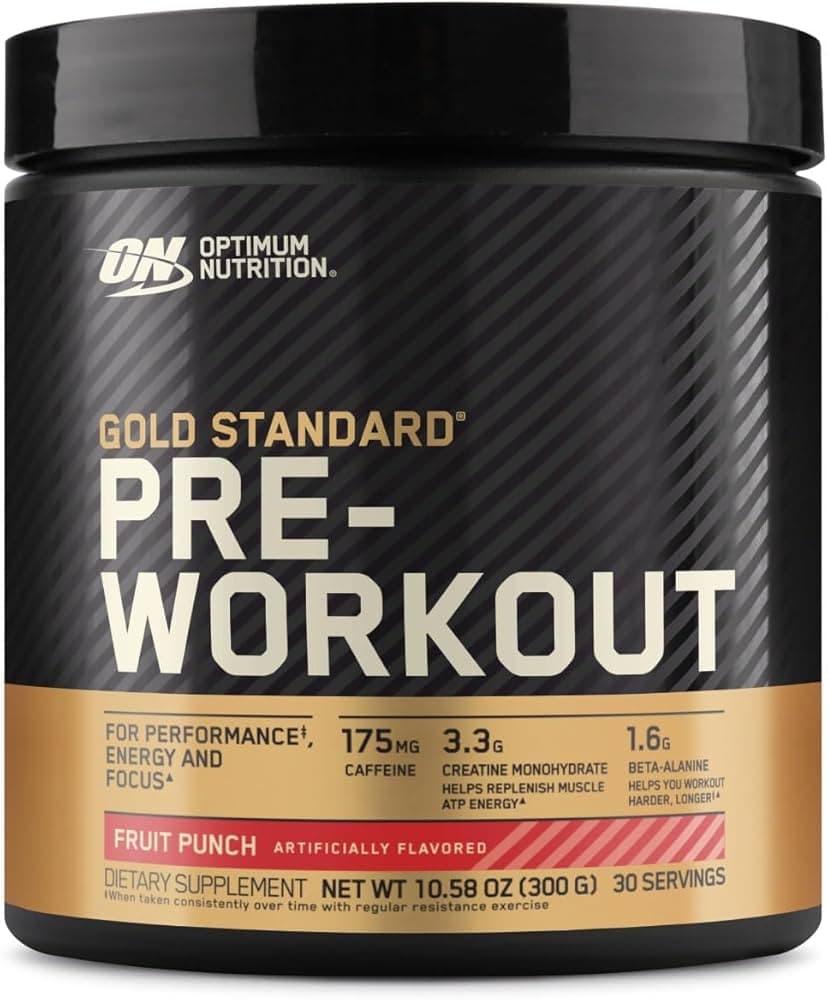
- In 22 trained adults, a single dose of a multi-ingredient pre-workout drink containing AstraGin raised total volume load by about 4.4% and repetition rate by about 2.2% across 5 and 15 minute high-intensity sessions, with no change in total repetitions completed. The design cannot attribute the effect to any one ingredient.Randomised trial. Mangine et al., 2025 (Journal of the International Society of Sports Nutrition). PMID 40627430 ↗
These are the studies our verdict leans on, chosen from the 4 we read for AstraGin. The full linked list is below.
The studies, linked.
2 sources behind our AstraGin verdict: peer-reviewed studies and registered clinical trials. Every one links straight to PubMed, the journal, or ClinicalTrials.gov. Read them yourself.
- Clinical trialPharmacokinetic Effect of AstraGin on Whey Protein Absorption and Muscle Function in Healthy Subjects: A Randomized, Double-blind, Crossover Trial.ClinicalTrials.gov ↗30 participants, Completed
- Clinical trialPharmacokinetic Effect of AstraGin on Arginine Absorption and Nitric Oxide Production in Healthy Subjects: A Randomized, Double-blind, Crossover TrialClinicalTrials.gov ↗30 participants, Unknown
Evidence surfaced via Semantic Scholar (Allen Institute for AI) and ClinicalTrials.gov. Ranked by study type and citation weight, not cherry-picked.
FDA Disclaimer: These statements have not been evaluated by the Food and Drug Administration. This information is for educational purposes only and is not intended to diagnose, treat, cure, or prevent any disease. Consult your healthcare provider before starting any supplement regimen.