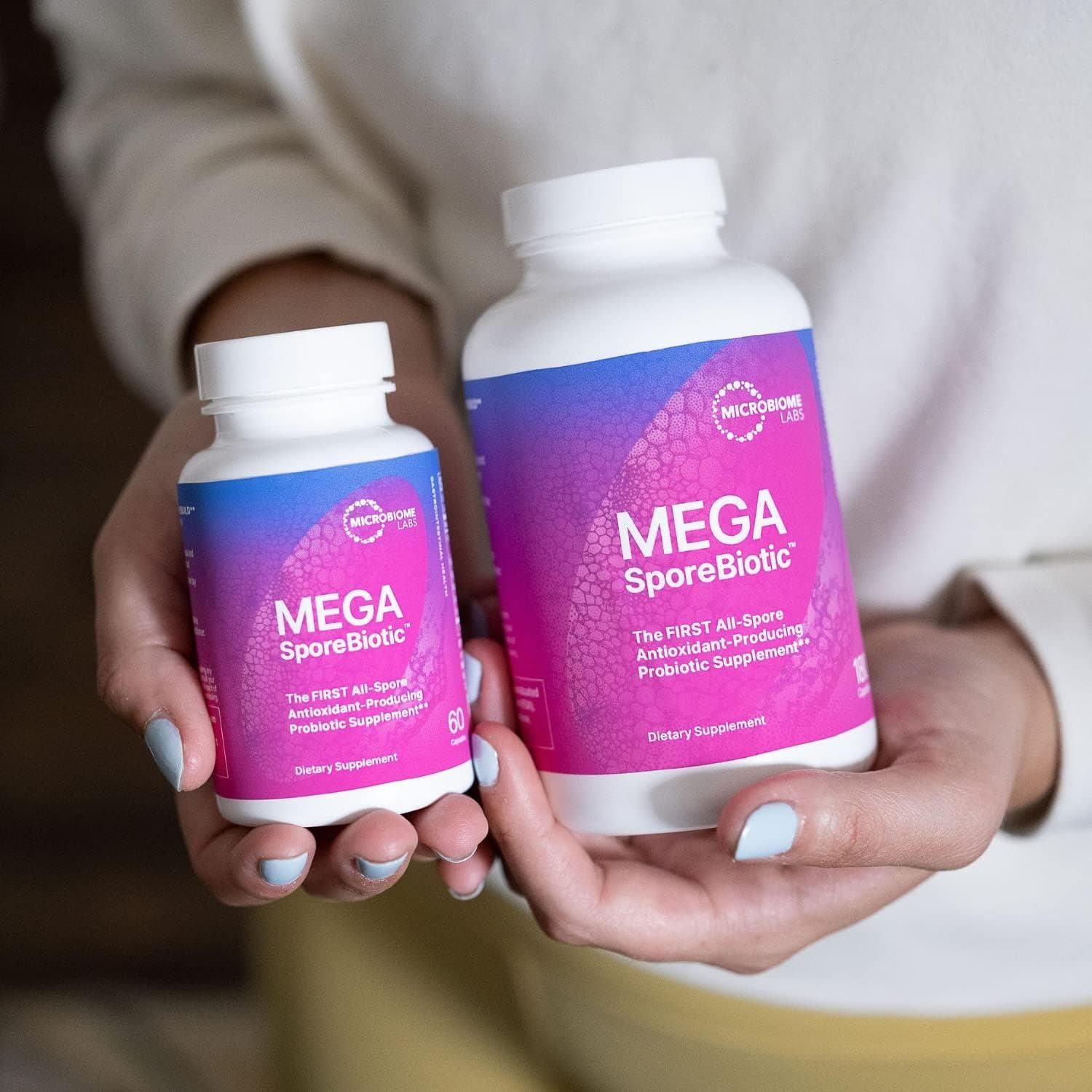
Bacillus Licheniformis.
A spore-forming probiotic that survives stomach acid and supports digestive and immune health. Survives stomach acid as a spore, then activates in your gut to support digestion and crowd out harmful bacteria
Reviewed March 2026
- Category
- Probiotic
- Also filed under
- Survives stomach acid (spore forming)Produces beneficial enzymes in the gutAntimicrobial activity against pathogensShelf stable, no refrigeration needed
What Bacillus Licheniformis is, and what it does.
- Does it work
- Suits people who want a probiotic that keeps through shelf life and stomach acid. Human trial data is thinner than for lactobacillus strains, so look for gradual digestive support.
- How much to take
- 1-2 billion CFU daily. Because spores are so durable, you don't need the massive counts (50-100 billion) that fragile Lactobacillus strains require.
- Time to feel it
- Digestive changes usually show up across one to three weeks of daily use. Spores germinate fresh with each dose, so it builds steadily rather than landing all at once.
- The first dose
- Minimal change. Spores take time to germinate and colonize. Some people notice mild gas initially as gut bacteria populations shift.
- With regular use
- By week 2-3, digestive regularity should improve. Bloating often decreases. Full microbiome adaptation takes 4-8 weeks of consistent use.
- How well tolerated
- Usually well tolerated, with mild gas early on. Strain identity matters here, so pick a named, characterised strain. Check with your doctor if your immune system is suppressed.
- How it feels
- Quieter gut. Less bloating, more predictable digestion. Nothing flashy, just things working the way they should.
- The overlooked benefit
- The spore coat means it holds up at room temperature and through stomach acid, so it keeps its count in powders and bars where fragile probiotic cells struggle.
1 to 5 CFU a day is where Bacillus Licheniformis works.
Source: Asian clinical use data, limited Western trials
The proof, claim by claim.
These words describe the research, not the molecule's worth. Research strength is how much work stands behind one claim, and it is never a product score.
- Survives stomach acid and reaches the gut alive
- Supports digestive health
- Boosts immune function
Questions people ask about Bacillus Licheniformis.
- Is it safe?
- Depends on the strain. Well-characterized strains from reputable manufacturers are well tolerated. The species as a whole has a long history of safe use in Asia, but not all strains are created equal.
- How is it different from Lactobacillus probiotics?
- The big difference is survivability. Lactobacillus dies easily in stomach acid, heat, and on the shelf. B. licheniformis spores survive all of that. You're getting more live organisms to your gut.
- Does it need refrigeration?
- Nope. That's the beauty of spore-forming probiotics. The spores are shelf-stable for years at room temperature. No cold chain required.
- Can I take it with antibiotics?
- Yes, and that's one of its strengths. The spores survive antibiotic exposure, so it can help maintain some gut balance during antibiotic treatment. Take them at different times of day for best results.
- Will it colonize my gut permanently?
- Probably not permanently. Like most probiotics, it provides transient benefits while you're taking it. Some spore-forming bacteria may persist longer than Lactobacillus, but ongoing supplementation is still recommended.
- Why is strain selection so important?
- Because different strains of the same species can behave very differently. Some B. licheniformis strains produce beneficial enzymes. Others produce toxins. A reputable manufacturer tests for this.
Why these belong in the same formula. Each row says what the basis is, from settled biochemistry through to a trial that measured the pair.
Bacillus licheniformis has been paired with lactic acid strains in combination products for decades because its spores clear gastric acid intact and germinate to consume oxygen, which suits the strictly fermentative strains alongside it.
Spore formers survive manufacture, shelf storage and gastric transit far better than vegetative strains, so they are added to multi-strain blends to hold total delivered count.
Bacillus licheniformis secretes alpha-amylase, the enzyme industry sources from it, so the strain adds starch-hydrolysing activity of the same class as a supplemental amylase.
The species secretes alkaline proteases and amylases into the lumen, adding to a formulated enzyme blend rather than repeating one activity.
Germinated cells need fermentable carbohydrate to establish, and inulin carries fructans into the colon where they are broken down to short-chain fatty acids.
Carvacrol-rich oils act on bacterial membranes indiscriminately, lowering viable counts of a co-formulated strain once its spores germinate.
Charcoal adsorbs luminal organic matter broadly, including substrate and metabolites the strain relies on, so the two are separated by several hours.
Clay platelets bind bacterial cells and organic material as they transit, which can carry a co-dosed strain through with them.
Both are transient organisms that pass through the gut rather than settling permanently, and they occupy different niches: one is a spore-forming bacterium, the other a yeast unaffected by antibacterial agents. Formulators combine them so that a single product keeps some transient activity across a wider set of gut conditions. The pairing is a formulation rationale drawn from what each organism is known to tolerate, not a measured combination effect in people.
Bacillus licheniformis arrives as a dormant spore and germinates in the small intestine, while Bifidobacterium longum is a resident-type anaerobe of the colon. Organic acids released by Bacillus fermentation lower luminal pH, conditions that bifidobacteria tolerate well. The combination is standard multi-strain practice. The division of niches is established, the joint effect on any human outcome is not established here.
Spore-formers and bifidobacteria are frequently blended because their vulnerabilities differ: the spore coat carries Bacillus through gastric acid, whereas Bifidobacterium lactis is comparatively oxygen and acid tolerant for its genus. Nothing in the pairing requires one organism to metabolise the other's products. Read this as a compatible blend rather than a demonstrated combination benefit.
Lactobacillus plantarum is a lactic acid producer and Bacillus licheniformis secretes extracellular amylases and proteases that release simpler sugars and peptides from the food matrix. That substrate release is the mechanistic link most often given for pairing the two. The enzymology is established. The downstream benefit of combining them in humans is not.
The two species are the usual pair in spore-based blends and both germinate in the upper small intestine, so they draw on overlapping niches and substrates. A poultry study reported that fermented products from the two species did not act identically on growth and intestinal measures, which argues against regarding them as interchangeable. That work was in birds, so it grounds the distinction in mechanism, not a human effect.
A fish study tested dietary Spirulina platensis and Bacillus licheniformis individually and together and reported effects on growth and immune measures. This is the only genuine combination record available for the pairing and it was run in a non-human species. It supports a plausible additive rationale and nothing more.
FOS is not digested by human enzymes and reaches the colon intact, where it is fermented to short-chain fatty acids by resident bacteria. Bacillus licheniformis contributes its own carbohydrate-degrading enzymes to the same lumen. The substrate chemistry is settled. Which organisms gain most from it in a given gut is not fixed.
Bacillus licheniformis is an industrial source of heat-stable alpha-amylase, and resistant starch is by definition starch that escapes host amylase. Bacterial amylases can act on starch fractions the host leaves behind, releasing fermentable sugars in the lumen. The enzyme chemistry is well established. Whether that changes a measurable human outcome has not been shown here.
Partially hydrolysed guar gum is a low-viscosity soluble fibre fermented in the colon, so it is easy to co-formulate with a spore preparation without thickening the product. The fibre supports normal stool form and supplies fermentation substrate. The combination is a formulation choice grounded in fibre chemistry.
Psyllium forms a gel that holds water and slows transit, only partly fermented by gut bacteria. Slower transit lengthens the window in which a germinated Bacillus population sits in the small intestine. That is a plausible mechanical interaction rather than a measured one, and the gel can also entrap co-ingested material.
Oat beta-glucan is a viscous soluble fibre fermented to short-chain fatty acids in the colon. Bacillus species carry glucanase activity, so part of the polymer can be broken down before resident fermenters reach it. Established enzymology, unmeasured joint effect.
Butyrate is the main energy source for colonocytes and the usual end product of fibre fermentation. Supplying it directly and supplying a fermenting organism converge on the same luminal chemistry from two directions. The metabolism is textbook. The additive framing is mechanistic rather than an outcome measured for this combination.
Bovine colostrum carries immunoglobulins and oligosaccharides that bind bacterial surfaces, which is why it is sometimes paired with live organisms. Those same binding properties are non-selective, so an interaction with a supplied organism can run either way. No combination data grounds a direction, so keep this as a mechanistic note.
Lactoferrin binds free iron tightly, and iron restriction slows the growth of many bacteria that need it. Some genera are relatively iron-independent and others are not, so co-dosing a strong iron binder with a live organism is worth flagging rather than assuming it helps. The chelation chemistry is established. The effect on a given Bacillus preparation has not been measured.
Berberine has broad antibacterial activity in vitro and reaches the gut lumen at high local concentrations because systemic absorption is poor. A germinated, vegetative Bacillus population is exposed to that activity. The dormant spore is far less so. Spacing the two is the practical inference from the pharmacology, not from a combination trial.
Crushed garlic generates thiosulfinates with broad antibacterial activity in the gut lumen. That activity does not distinguish a supplied organism from a resident one. Established chemistry, direction of net effect on a spore product unmeasured.
Thymol and carvacrol disrupt bacterial membranes, which is why thyme oil is used as a feed antimicrobial. Dormant endospores are far more resistant to these compounds than vegetative cells, so timing matters more than exclusion. The membrane chemistry is established. No combination study grounds an amount.
Betaine HCl lowers gastric pH, the condition most vegetative probiotic organisms do not survive. Bacillus endospores are structurally resistant to acid, which is the basis of the page's stored claim that the organism survives stomach acid. Co-dosing is therefore compatible in mechanism. It has not been measured as a benefit.
Zinc is required for normal epithelial turnover and tight-junction protein expression, so it supports the same barrier that gut organisms sit against. The two act through unrelated routes rather than one enabling the other. This is a mechanistic pairing at low confidence and no combination evidence.
Talk to a doctor before taking Bacillus Licheniformis if any of these apply to you: Less studied than other Bacillus species, Some strains produce toxins (strain matters), Immunocompromised people should be cautious. These are flags to check first, not effects Bacillus Licheniformis is known to cause.
Not medical advice. Show the label to your pharmacist.What Bacillus Licheniformis actually does.
It is supplied as a spore, a hardened dormant form that resists stomach acid far better than a non-spore organism does.
Once past the stomach the spore wakes up in the small intestine and starts growing while conditions allow.
It makes a natural antibacterial compound that is part of how it competes with neighbouring bacteria.
As it ferments carbohydrate it makes acids that lower the pH of its immediate surroundings.
Where Bacillus Licheniformis comes from.
It is grown in a fermentation tank, then starved so it turns into hardy spores, dried into a powder, and counted so the label can state how many live organisms are in a dose.
Produced by a cultured organism rather than harvested. The strain is selected and the conditions are controlled, so batches sit closer together than a field crop.
A defined or semi-defined broth, typically a starch or glucose carbon source with a protein hydrolysate or ammonium nitrogen source and mineral salts.
A seed culture is scaled into stirred, aerated vessels with pH, temperature and dissolved-oxygen control while the cells grow vegetatively.
Nutrient limitation at the end of the run triggers the sporulation programme, converting vegetative cells into endospores. This step is what makes the finished material shelf-stable.
Spores are separated from spent broth by centrifugation or filtration and washed.
The concentrate is spray- or freeze-dried, often with a protectant, to a low-moisture powder.
Viable count is measured by plate assay and the concentrate is cut with a carrier to a declared CFU per gram, with identity confirmed to strain level.
Blended with excipients and filled, with an overage set so the declared count still holds at the end of shelf life.
Getting Bacillus Licheniformis from food.
The whole-food sources on file. A supplement closes the gap, it does not replace dinner.
A gram-for-gram figure (how much of each you would eat to match a dose) will appear here once it is sourced and reviewed. This page will not print a number it cannot cite.
The forms it comes in.
The essence, in one line each.
- The authors reported that dietary Bacillus licheniformis affected growth performance, immune and antioxidant measures, and intestinal microbiota in the birds studied.Animal study. Qin S et al., 2024 (Poultry Science). PMID 37980737 ↗
- Fermented products from Bacillus subtilis and Bacillus licheniformis did not act identically on growth performance and intestinal measures, so the authors concluded the two are not interchangeable.Animal study. Chen YW et al., 2023 (Poultry Science). PMID 37068351 ↗
- Dietary Bacillus licheniformis was associated with changes in growth performance and gut microbiota diversity in the animals studied.Animal study. Li L et al., 2022 (Frontiers in Veterinary Science). PMID 35265695 ↗
- Spirulina platensis and Bacillus licheniformis were tested alone and together on growth and immune measures, with the combination arm reported separately.Animal study. Yousefi M et al., 2022 (Fish and Shellfish Immunology). PMID 35830944 ↗
- Dietary Bacillus licheniformis was linked to altered milk biomolecular profiles in sows and to piglet performance measures.Animal study. Ruampatana J et al., 2025 (Journal of Animal Physiology and Animal Nutrition). PMID 39940111 ↗
- The authors reported that the probiotic Bacillus licheniformis established competitively in the gut and was accompanied by changes in production efficiency and immune responsiveness measures.Animal study. Brahmchari RK et al., 2026 (Scientific Reports). PMID 42067537 ↗
- Supplementation with Bacillus licheniformis 809 and Bacillus subtilis 810 was evaluated on performance measures in cattle.Animal study. Limede AC et al., 2026 (Translational Animal Science). PMID 42180804 ↗
- Targeted bioaugmentation with Bacillus velezensis and Bacillus licheniformis reshaped the microbial community and raised tetramethylpyrazine in the fermentation studied.In vitro study. Cheng M et al., 2026 (Food Microbiology). PMID 42215208 ↗
- A review of Bacillus species in fish farming, naming Bacillus licheniformis among the organisms used to influence performance and health measures.Narrative review. Lu Y et al., 2026 (Aquaculture Nutrition). PMID 42147362 ↗
- A Bacillus-based direct-fed microbial given before and after calving was associated with cow and calf performance measures. Bacillus licheniformis is named as a component rather than tested alone.Animal study. Izquierdo VS et al., 2024 (Journal of Animal Science). PMID 38647379 ↗
- Combinations of bacterial direct-fed microbials were evaluated on growth performance, feeding behaviour and nutrient measures, with Bacillus licheniformis named among the organisms.Animal study. Lopez AM et al., 2024 (Journal of Animal Science). PMID 38190444 ↗
- A Bacillus-based direct-fed microbial fed through a 60-day receiving programme was assessed on performance measures. The species is named inside the wider product description.Animal study. Limede AC et al., 2026 (Translational Animal Science). PMID 42205587 ↗
- A fasting regimen with probiotic supplementation was examined against post-weaning stress markers and caecal microbiota. Bacillus licheniformis is mentioned inside the probiotic description.Animal study. Khalifa WH et al., 2024 (Journal of Animal Physiology and Animal Nutrition). PMID 38879790 ↗
These are the studies our verdict leans on, chosen from the 13 we read for Bacillus Licheniformis. The full linked list is below.
The studies, linked.
3 sources behind our Bacillus Licheniformis verdict: peer-reviewed studies and registered clinical trials. Every one links straight to PubMed, the journal, or ClinicalTrials.gov. Read them yourself.
- Clinical trialBacillus Particles Prevent More Children's Antibiotic-associated Diarrhea (AAD), Randomized, Double-blind, Controlled Clinical TrialClinicalTrials.gov ↗Phase 4, 480 participants, Unknown
- Clinical trialPrevention of Radiotherapy Induced Enteropathy by Probiotics (PREP Trial): a Prospective, Randomized Controlled, Double Blinded, Single Center, Superiority StudyClinicalTrials.gov ↗Phase 3, 248 participants, Unknown
- Clinical trialA New System for Diagnosis and Treatment of Gastroesophageal Refulx Diseases : Based on Endoscopy, pH Parameter, Impedence Parameter, High Resolution Manometry and PsychologyClinicalTrials.gov ↗200 participants, Unknown
Evidence surfaced via Semantic Scholar (Allen Institute for AI) and ClinicalTrials.gov. Ranked by study type and citation weight, not cherry-picked.
Problems people have reported.
Read this carefully. These are 185 voluntary, unverified reactions reported to the FDA (openFDA). The number mostly reflects how popular Bacillus Licheniformis is, not how risky it is. A report is not proof Bacillus Licheniformis caused anything. It is a signal of what to watch for, nothing more.
Source: openFDA adverse-event reports. Voluntary reporting, not an incidence rate.
FDA Disclaimer: These statements have not been evaluated by the Food and Drug Administration. This information is for educational purposes only and is not intended to diagnose, treat, cure, or prevent any disease. Consult your healthcare provider before starting any supplement regimen.