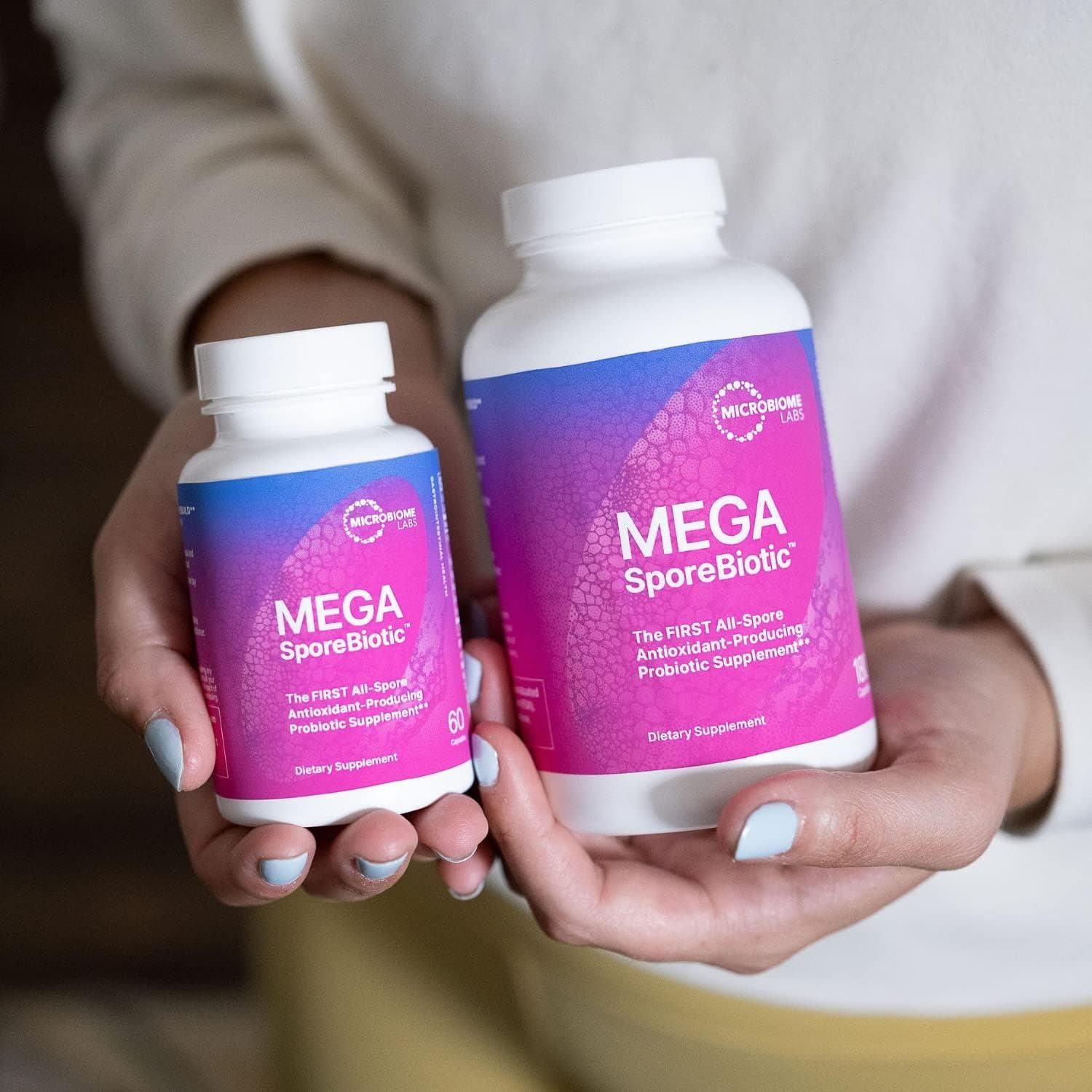
Bacillus Clausii SC109.
A well-studied spore-forming probiotic that's particularly useful during and after antibiotic treatment.
Reviewed March 2026
- Category
- Probiotic
- Also filed under
- Prevents antibiotic associated diarrheaSurvives antibiotics (naturally resistant)Supports gut recoveryWell characterized safety profile
What Bacillus Clausii SC109 is, and what it does.
- Does it work
- Aimed at the weeks around a course of antibiotics: the spore tolerates acid and the strain carries its own resistance, so it gets through. Otherwise it is general digestive support.
- How much to take
- 2-4 billion CFU daily. During antibiotic treatment, higher end of the range. For general maintenance, 2 billion is sufficient.
- Time to feel it
- Digestive changes usually land within a week or two of daily doses. Around a course of antibiotics the point is what does not happen, which is harder to date.
- The first dose
- If you're starting during antibiotic treatment, you might notice less digestive disruption than expected. On its own, day one won't be eventful.
- With regular use
- During antibiotic courses: significantly reduced diarrhea and digestive upset. For ongoing use: improved digestive regularity over 2-4 weeks.
- How well tolerated
- Excellent safety profile. Decades of pharmaceutical use across 30+ countries. Rare side effects. Well tolerated in children and elderly in most studies.
- How it feels
- Like your gut has a safety net. During antibiotics, you notice the absence of the usual misery. During normal use, digestion just runs smoother.
- The overlooked benefit
- It does not move in. It germinates, works and clears within days, so the count that matters is the one at the end of shelf life rather than at manufacture.
2 to 6 CFU a day is where Bacillus Clausii SC109 works.
Source: Nista et al. 2004, Enterogermina clinical trials
The proof, claim by claim.
These words describe the research, not the molecule's worth. Research strength is how much work stands behind one claim, and it is never a product score.
- Prevents antibiotic-associated diarrhea
- Survives alongside antibiotics
- Supports general gut health
Questions people ask about Bacillus Clausii SC109.
- Should I only take this with antibiotics?
- That's where the strongest evidence is. But it's also used as a general probiotic. If you're looking for a probiotic specifically for antibiotic recovery, this is one of the best choices available.
- Is the antibiotic resistance a safety concern?
- No. The resistance is intrinsic (built into the chromosome), not on a transferable plasmid. It can't pass its resistance genes to pathogenic bacteria. This has been specifically studied and confirmed.
- How does it compare to Saccharomyces boulardii?
- Both are good for antibiotic-associated diarrhea. S. boulardii has more published trials overall. B. clausii has the advantage of being bacterial (produces enzymes that S. boulardii doesn't) and having spore stability.
- Can children take it?
- Yes. Multiple pediatric trials have been conducted. Enterogermina is commonly prescribed for children in many countries. Follow age-appropriate dosing on the product label.
- What's the SC109 strain specifically?
- SC109 is one of several characterized B. clausii strains used in probiotic products. It has documented antibiotic resistance profiles and safety data. The original Enterogermina uses a mix of four strains.
- Do I need to refrigerate it?
- No. Spore-forming probiotics are shelf-stable. That's one of their main practical advantages over Lactobacillus-based products that need cold storage.
Why these belong in the same formula. Each row says what the basis is, from settled biochemistry through to a trial that measured the pair.
Both are spore formers that survive stomach acid and germinate in the small intestine, so they can be blended in one shelf-stable format without refrigeration. Multi-strain spore blends are long-standing formulation practice for that reason.
Germinated Bacillus cells and the resident flora both ferment short-chain fructans. Including a prebiotic gives the germinating spore a substrate on arrival.
Inulin is fermented in the colon and supports the resident organisms the spore strain co-exists with. Pairing an organism with a fermentable fibre is the standard synbiotic construction.
S. boulardii is a yeast and B. clausii a bacterial spore, so they do not compete for the same niche or substrate. Both also survive gastric transit well, which is why they are combined in shelf-stable formats.
The spore survives transit and germinates downstream while lactobacilli act largely in the upper gut. Combining formats covers more of the tract than either alone.
Bacillus fermentation contributes lactate and acetate that butyrate producers use as substrate. Supplying butyrate directly delivers the end of that chain without waiting on cross-feeding.
Bacillus arrives as a heat-stable and acid-resistant spore, while Lactobacillus plantarum arrives as a vegetative cell that needs enteric protection or cold chain. Combining them covers two delivery profiles and two parts of the gut. The pairing is standard in multi-strain products. The strain-specific joint effect has not been isolated in a trial.
The two organisms are active in different segments, so they are not competing for the same territory. Bifidobacterium lactis is also one of the more shelf-stable bifidobacteria, which suits it to a room-temperature spore product. What each contributes on its own is better documented than what the pair does together.
Bifidobacterium longum is a resident colonic genus, whereas Bacillus spores pass through without establishing. A formula holding both offers a resident and a transient component. No combination study names this specific pairing.
GOS escapes human digestion and reaches the colon as fermentable substrate. It feeds resident bifidobacteria rather than the Bacillus itself, so the pairing works by supporting the existing community alongside a transient spore. Introducing fermentable oligosaccharides can also raise gas and bloating at higher amounts, which is worth saying out loud.
Resistant starch passes the small intestine intact and is fermented in the colon, shifting the short-chain fatty acid mix toward butyrate. That supports the same butyrate pathway a spore-based product is often positioned around, but through the resident microbiota rather than through the supplemented organism. The substrate chemistry is settled. The combined effect on any endpoint is not.
PHGG is hydrolysed to lower its viscosity, which is why it can be added at meaningful amounts without the texture problems of native guar. It ferments slowly and distally, which tends to be better tolerated than rapidly fermented oligosaccharides. It supports the resident community rather than the spore.
Psyllium is mostly poorly fermented and works largely by holding water and forming a gel, which changes transit and stool form rather than feeding bacteria heavily. That gel also slows the movement of anything taken with it, including a probiotic dose. Space the two if timing matters and take psyllium with plenty of water.
Enterocytes oxidise glutamine preferentially, which is why it appears in gut-support formulas alongside probiotics. The host cell fuel and the microbial organism act on different sides of the same barrier. Pairing them is mechanistically sensible and has not been tested as a combination with this strain.
Zinc carnosine acts on the epithelial side of the gut lining while a spore probiotic acts in the lumen. The two therefore address different layers of the same tissue. The rationale is mechanistic. No combination trial exists.
Lactoferrin binds iron tightly and that iron restriction is selective, favouring some organisms over others. That is a real interaction to note in a combined formula rather than a straightforward addition. Which direction it runs for a given Bacillus strain has not been measured.
Charcoal's large surface area adsorbs indiscriminately, and taking it at the same time as a probiotic reduces what reaches the intestine in usable form. Separate the two by several hours. This is a delivery interference to flag, not a benefit.
Bentonite has a high cation-exchange surface that binds material passing through the gut, including microbial cells. Co-administration with a probiotic works against the probiotic's delivery. Space the doses apart.
Oregano oil's phenolic monoterpenes are broadly antibacterial and do not spare a supplemented Bacillus. A dormant spore is more resistant than a vegetative cell, but germinated cells are not. Taking a botanical antimicrobial and a live probiotic in the same window works against the probiotic.
Colostrum immunoglobulins bind bacterial surfaces in the lumen without discriminating between resident, pathogenic and supplemented organisms. That makes the pairing plausible for gut support and also a genuine interaction to note. Neither direction has been measured with this strain.
Talk to a doctor before taking Bacillus Clausii SC109 if any of these apply to you: Most evidence is for the Enterogermina multi-strain product, Single strain (SC109) has less data than the full product, Not all benefits transfer between strains. These are flags to check first, not effects Bacillus Clausii SC109 is known to cause.
Not medical advice. Show the label to your pharmacist.What Bacillus Clausii SC109 actually does.
This organism ships as a tough dormant spore, so it survives stomach acid and does not need refrigeration the way most probiotics do.
Once past the stomach, the spores wake up in the small intestine and become active bacteria.
These bacteria pass through rather than settling in, so they clear out after you stop taking them.
Once active, these bacteria release digestive enzymes and antibacterial compounds and make the local environment more acidic, which crowds out other organisms.
Where Bacillus Clausii SC109 comes from.
The strain is grown in a fermenter, then deliberately starved so it forms tough dormant spores. Those spores are washed, counted and packed into vials, capsules or sachets. The spore is the point: it is what survives stomach acid and a warm shelf.
Produced by a cultured organism rather than harvested. The strain is selected and the conditions are controlled, so batches sit closer together than a field crop.
A characterised master and working cell bank, identity-confirmed by genomic methods, is the starting material. Strain identity is the whole product, so bank integrity is the first control point.
Vegetative cells are grown in a controlled fermenter on a defined medium, with temperature, pH and dissolved oxygen held to setpoints.
Nutrient limitation is applied deliberately to drive the culture into sporulation, which is what produces the acid-resistant, heat-tolerant dormant form the product depends on.
Spores are separated from spent medium and cell debris by centrifugation and washing, which removes fermentation residues.
The concentrate is assayed for colony-forming units, identity, absence of specified contaminants, and antibiotic-resistance characterisation, then blended with carrier to a target count per dose.
Filled into vials as a suspension, or dried and filled into capsules and sticks. Fill is usually overaged so the stated count still holds at the expiry date.
Getting Bacillus Clausii SC109 from food.
The whole-food sources on file. A supplement closes the gap, it does not replace dinner.
A gram-for-gram figure (how much of each you would eat to match a dose) will appear here once it is sourced and reviewed. This page will not print a number it cannot cite.
The forms it comes in.
The essence, in one line each.
- In adults with a mild acute illness, ongoing use of a five-strain spore-forming Bacillus product was reported to improve the measured clinical course compared with the comparison condition. Because the product held five strains, the contribution of any single strain including Bacillus clausii cannot be separated out.Open-label trial. Catinean et al., 2023 (Nutrients). PMID 36771194 ↗
- Oral spore-based Bacillus supplementation altered post-prandial expression of gastrointestinal-associated mRNA in blood. These are gene-expression markers rather than clinical outcomes, and Bacillus clausii was one strain inside a multi-strain product.Randomised trial. McFarlin et al., 2024 (Biomedicines). PMID 39457699 ↗
- A review of probiotic and prebiotic approaches in skin health names spore-forming Bacillus strains, including Bacillus clausii, among the organisms discussed. It reports no new human measurements of its own.Narrative review. Buhaș et al., 2023 (International Journal of Molecular Sciences). PMID 37446403 ↗
These are the studies our verdict leans on, chosen from the 3 we read for Bacillus Clausii SC109. The full linked list is below.
FDA Disclaimer: These statements have not been evaluated by the Food and Drug Administration. This information is for educational purposes only and is not intended to diagnose, treat, cure, or prevent any disease. Consult your healthcare provider before starting any supplement regimen.