Butylphthalide.
A celery seed compound that relaxes blood vessel walls in laboratory preparations. In several countries it is a prescription medicine rather than a supplement ingredient.
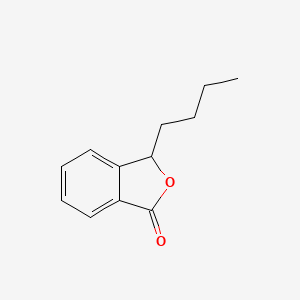 Compound
- Category
- Compound
What Butylphthalide is, and what it does.
- Does it work
- This one belongs with clinicians and the people they look after. If the celery angle interests you, celery seed oil is the food-form relative you'll find on a shelf.
- How much to take
- No dose figure is on record. Where it is a prescription medicine, the amount is set by a prescriber rather than by a label.
- Time to feel it
- Nobody has measured a time to effect for it outside supervised clinical use.
- The first dose
- Day one has nothing you'd sense. The capsule is oil filled, so it's absorbed along with the fat in a meal.
- With regular use
- Use over weeks outside a prescribing setting has not been characterised, so there is no honest week-by-week picture to give.
- How well tolerated
- It is handled by liver CYP enzymes, so other medicines can shift exposure either way. Because it is prescription-only in some countries, speak to a doctor or pharmacist first.
- How it feels
- No subjective reports have been published from supplement-style use. Celery-derived oils taste and smell strongly of celery.
- The overlooked benefit
- The same phthalide family gives celery its smell, and celery seed oil on a supplement shelf is the food-form cousin of the laboratory-made version.
The proof, claim by claim.
What these words mean
These words describe the research, not the molecule's worth. Research strength is how much work stands behind one claim, and it is never a product score.
- relaxation of vascular smooth muscleIn vitro study
- microcirculatory blood flowAnimal study
2 more claims
- mitochondrial function in nerve tissueAnimal study
- hepatic CYP-mediated metabolism and exposureNarrative review
Why these belong in the same formula, 6 pairings
Why these belong in the same formula. Each row says what the basis is, from settled biochemistry through to a trial that measured the pair.
Li and colleagues found that disrupting the intestinal microbiota with antibiotics changed measured butylphthalide exposure in vivo. That implicates microbial metabolism or microbially influenced absorption in how much of a dose is available. Anything that reshapes the gut community, including antibiotics and probiotic use, is therefore a plausible source of variability.
The compound is formulated in soft capsules dissolved in vegetable oil because it will not dissolve in water. A defined medium chain triglyceride vehicle gives more consistent dispersion than relying on stomach contents. This affects exposure, not intrinsic activity.
Butylphthalide has been described as reducing platelet aggregation in laboratory work, and high dose EPA and DHA do the same through eicosanoid substrate competition. Stacking them adds bleeding risk, particularly alongside prescribed antiplatelet medicines. This pairing belongs on a caution list.
Ginkgo terpene lactones antagonise platelet activating factor and butylphthalide has its own reported antiplatelet activity. The combination is popular in the same product category, which is exactly why the overlap deserves flagging. There is no controlled human work on the pair.
The metabolic work by Lu and colleagues points toward mitochondrial and energy metabolism effects in a rodent model. Coenzyme Q10 sits directly in the electron transport chain. The overlap is mechanistic and animal derived, so read it as a hypothesis rather than as a clinical pairing.
Ligustilide and butylphthalide belong to the same phthalide family and share structural features. Traditional Angelica preparations therefore supply chemically related molecules from a different plant source. Structural relatedness is not the same as equivalent activity, and the two should not be dose compared.
Nothing specific on file for Butylphthalide. Match the label to the daily amount above, and tell your doctor what you take.
Not medical advice. Show the label to your pharmacist.What Butylphthalide actually does.
This compound was first found in celery seed oil, but the version used as a medicine is a lab made synthetic form.
3 more mechanisms
It barely dissolves in water, which is why it comes in oil filled soft capsules instead of a dry powder.
In some countries this is a prescription medicine, not a regular supplement ingredient, so it sits outside normal self directed use.
Your liver breaks this down using enzymes that many other drugs also use, so taking it alongside strong inhibitors or inducers of those enzymes can change how much of it stays in your system.
Where Butylphthalide comes from.
This compound was first found in celery seed oil, but the version used in studies is made in a lab. It does not dissolve in water, so it comes in oil filled capsules. In several countries it is a prescription drug, not something to pick up off a supplement shelf.
What this route gives you
The same molecule is reached more than one way. Which route a given product used is a manufacturing choice, and the finished compound is the same either way.
5 steps on record
The natural L isomer occurs in Apium graveolens seed oil, while commercial material is built synthetically from phthalide precursors
A butyl group is introduced at the 3 position to give racemic 3 n butylphthalide
The oily product is purified and residual solvents removed to pharmaceutical specification
Lots are specified for purity and, where relevant, for the DL ratio
Dissolved in vegetable oil and encapsulated, or emulsified for infusion
Getting Butylphthalide from food.
The whole-food sources on file. A supplement closes the gap, it does not replace dinner.
A gram-for-gram figure (how much of each you would eat to match a dose) will appear here once it is sourced and reviewed. This page will not print a number it cannot cite.
The forms it comes in.
4 more forms
The essence, in one line each.
- The authors report region specific metabolic changes with DL 3 n butylphthalide in their spatial metabolomics analysis of a cerebral ischemia reperfusion model.Animal study. Lu et al., 2025 (Neurotherapeutics). PMID 39880748 ↗
1 more finding
- The authors report that antibiotic disruption of the intestinal microbiota altered the pharmacokinetic profile of n butylphthalide in vivo.Animal study. Li et al., 2024 (PLoS One). PMID 38917098 ↗
Chosen from the 3 we read for Butylphthalide.
The studies, linked.
12 sources behind our Butylphthalide verdict, every one linked to PubMed, the journal or ClinicalTrials.gov.
- Clinical trialA Real-world Retrospective Study on the Effectiveness and Safety of Butylphthalide in the Treatment of Ischemic StrokeClinicalTrials.gov ↗81,292 participants, Completed
11 more linked trials
- Clinical trialA Phase 2, Multicenter, Randomized, Double-Blind, Placebo-Controlled, Add-On to Standard Of-Care Study of n Butylphthalide (NBP) Softgel Capsules for Treatment of Mild to Moderate Acute Ischemic Stroke (AIS) in Adult SubjectsClinicalTrials.gov ↗Phase 2, 177 participants, Completed
- Clinical trialA Comparison of Safety and Efficacy of Dl-3-n-butylphthalide and Cerebrolysin on Neurological and Behavioral Outcomes in Acute Ischemic Stroke: a Randomized, Double-blind Study.ClinicalTrials.gov ↗Phase 1, 84 participants, Completed
- Clinical trialEffect of Butyphthalide on Cognitive Level Change After Cerebral Vascular Event-a Randomized Control Trial (Be-CLEVER)ClinicalTrials.gov ↗Phase 3, 3,200 participants, Recruiting
- Clinical trialIsosorbide Mononitrate and Butylphthalide to Reduce the Risk of Disability in Patients With Acute Lacunar Stroke: a 2×2 Factorial Randomized Controlled Trial (IMPACT)ClinicalTrials.gov ↗Phase 3, 3,156 participants, Not yet recruiting
- Clinical trialA Randomized, Double-Blind, Placebo-Controlled Study to Evaluate the Long-Term Efficacy of Butylphthalide in Patients With Minor Acute Ischemic Stroke (BLESS)ClinicalTrials.gov ↗Phase 3, 1,200 participants, Not yet recruiting
- Clinical trialEffects of Butylphthalide Enhanced With Tenecteplase on Neurological Function in Mild Disabling Acute Ischemic Stroke -A Prospective, Multicenter, Randomized, Double-blind, Active-controlled TrialClinicalTrials.gov ↗Phase 3, 1,062 participants, Recruiting
- Clinical trialA Multi-center, Randomized, Single-blind, Placebo-controlled Study of Dl-3-n-butylphthalide in Patients With Moyamoya Disease of High Risk for Ischemic Cerebrovascular Events After Extracranial-to-intracranial Revascularization SurgeryClinicalTrials.gov ↗Phase 3, 450 participants, Unknown
- Clinical trialNeuroprotective Effect of Butylphthalide Injection on Patients With Return of Spontaneous Circulation After Cardiac Arrest:a Multicenter, Randomized Clinical TrialClinicalTrials.gov ↗Phase 4, 350 participants, Recruiting
- Clinical trialSafety and Efficacy of Butylphthalide Soft Capsules for Cognitive Impairment Comorbid With Focal Epilepsy in Elderly Patients: A Multicenter, Randomized, Double-Blind, Placebo-Controlled TrialClinicalTrials.gov ↗Phase 4, 220 participants, Recruiting
- Clinical trialThe Efficacy of Butylphthalide Soft Capsules in Patents With VCIND:A Randomized, Double-blind,and Neuroimaging StudyClinicalTrials.gov ↗Phase 2, 200 participants, Unknown
- Clinical trialButylphthalide's Safety and Efficacy for Improving Neurological Function Prognosis in Patients With Cardiac Arrest (BNCA Trial): A Single-Center, Randomized, Double-Blind, Placebo-Controlled StudyClinicalTrials.gov ↗Phase 4, 100 participants, Recruiting
From clinical trials and PubMed, ranked by study type and citation weight, not cherry-picked.
Problems people have reported.
Read this carefully. These are 266 voluntary, unverified reactions reported to the FDA (openFDA). The number mostly reflects how popular Butylphthalide is, not how risky it is. A report is not proof Butylphthalide caused anything. It is a signal of what to watch for, nothing more.
3 more reported effects
Source: openFDA adverse-event reports. Voluntary reporting, not an incidence rate.
FDA Disclaimer: These statements have not been evaluated by the Food and Drug Administration. This information is for educational purposes only and is not intended to diagnose, treat, cure, or prevent any disease. Consult your healthcare provider before starting any supplement regimen.