Citral.
Citral is the lemon note in lemongrass. In a product it carries aroma and flavour, and in laboratory testing it is reactive against common food and mouth organisms.
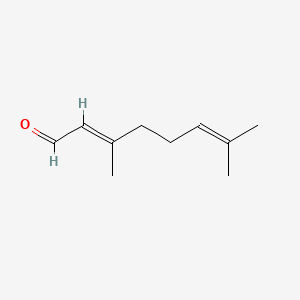 Compound
- Category
- Compound
What Citral is, and what it does.
- Does it work
- Suits formulas that want a clean citrus character or a plant-derived antimicrobial angle. As a stand-alone capsule for a health outcome, human data isn't there yet.
- How much to take
- No daily amount is on record for citral as a supplement. Start with the label amount, remembering flavour-level use sits far below anything tested in a laboratory.
- Time to feel it
- The lemon aroma lands instantly. Nothing else about citral has been given a timeline in people.
- The first dose
- Day one is a bright lemon smell and taste. The biology described for citral comes from cell and animal work, which is measured in a lab rather than registered by you.
- With regular use
- Weeks of daily use in people haven't been studied. What exists is 7,356 Europe PMC records, weighted heavily toward food science and laboratory work.
- How well tolerated
- Undiluted it irritates skin and mucous membranes, and it's a recognised fragrance allergen for some people. Check with your clinician if you're pregnant or on medication.
- How it feels
- Bright, sharp lemon, closer to lemongrass than to lemon peel. The aroma and taste are the part you register. The rest sits below sensation.
- The overlooked benefit
- It blocks the enzyme step that turns retinaldehyde into retinoic acid, which is why labs use it as a tool compound. Worth knowing if you also take vitamin A.
The proof, claim by claim.
What these words mean
These words describe the research, not the molecule's worth. Research strength is how much work stands behind one claim, and it is never a product score.
- antimicrobial activity in food systemsIn vitro study
- lemon aroma and flavour contributionNarrative review
2 more claims
- suppression of retinoic acid signalling as a laboratory toolIn vitro study
- relaxation response to inhaled lemongrass aromaRandomised trial
Why these belong in the same formula, 9 pairings
Why these belong in the same formula. Each row says what the basis is, from settled biochemistry through to a trial that measured the pair.
Citral is a recognised inhibitor of the aldehyde dehydrogenase step that converts retinaldehyde to retinoic acid, and it is used experimentally for exactly that purpose. This is a direct competition at the enzyme, not a nutrient absorption effect. In practical intake terms the concentrations used in those models are far above what a flavour-level exposure delivers. Anyone using citral-rich essential oil concentrates alongside high-dose vitamin A should regard the two as interacting rather than independent.
Retinol has to be oxidised twice, first to retinaldehyde and then to retinoic acid, before it acts at nuclear receptors. Citral blocks the second oxidation. That makes it an antagonist of retinol's downstream signalling rather than of retinol itself. The interaction is well characterised in cell and animal work and is the reason citral appears in retinoid research as a tool compound.
Beta-carotene 15,15-dioxygenase splits the carotenoid into two retinaldehyde molecules, which then need aldehyde dehydrogenase to become retinoic acid. Citral sits on that second step. So a citral exposure high enough to matter would blunt the conversion of provitamin A into its active signalling form. This is mechanistic and derived from enzyme-level work, not from human intake studies.
Most of what lemongrass oil does in food and antimicrobial applications is attributed to its citral content, present as the geranial and neral isomer pair. The whole oil also carries myrcene, limonene and geraniol that isolated citral does not. Dosing both means counting the same aldehyde twice. The whole oil is more variable in composition, the isolate more defined.
The conjugated aldehyde group makes citral electrophilic and reactive toward cysteine thiols, so glutathione conjugation is a primary clearance route. That consumes glutathione at the point of exposure. The same electrophilicity drives Nrf2-linked antioxidant gene upregulation, so short-term consumption and longer-term upregulation point in opposite directions. Which dominates depends on dose.
N-acetylcysteine supplies the rate-limiting cysteine for glutathione synthesis, which is the pathway handling electrophilic aldehyde load. It also reacts directly with citral in solution, quenching the free aldehyde. That means it supports clearance and blunts activity at the same time. The pairing is mechanistic and has not been characterised in people.
As a water-insoluble monoterpene aldehyde, citral disperses into fat rather than aqueous phases. A medium chain triglyceride carrier stabilises it and reduces direct mucosal contact with the neat aldehyde. This is standard practice for essential oil constituents in softgels. The carrier changes tolerability and stability, not the molecule's behaviour once absorbed.
Carvacrol is a phenolic monoterpene acting on membrane integrity, citral is an electrophilic aldehyde reacting with microbial proteins and also disrupting membranes. Blends of the two appear throughout food preservation work. Most evidence sits in food matrices and in vitro systems rather than in people. Both are locally irritant, so the combined mucosal load goes up.
Citral degrades oxidatively, and the degradation products are responsible for the off-flavour that develops in citrus-flavoured products. Tocopherol is a conventional antioxidant added to slow that. The role is shelf stability, not a biological interaction in the body. Read it as formulation practice.
Nothing specific on file for Citral. Match the label to the daily amount above, and tell your doctor what you take.
Not medical advice. Show the label to your pharmacist.What Citral actually does.
Citral isn't one compound but a mix of two closely related molecular forms that naturally occur together and are hard to separate.
3 more mechanisms
Citral is the main aromatic compound behind the lemon scent in lemongrass, lemon myrtle and litsea oils.
Citral's chemical structure makes it reactive with proteins and certain body compounds, and that same reactivity underlies both its antimicrobial action and how the body clears it.
Citral blocks an enzyme step involved in converting a vitamin A intermediate into its active signaling form, which is why researchers use it in lab systems to shut down that signaling pathway.
Where Citral comes from.
It is the lemon-smelling compound in lemongrass. You either distil it out of the plant oil or build it in a chemical plant, and you get the same molecule either way, though lab testing can still tell the two sources apart by their carbon isotopes. It falls apart quickly in air, light and acid, so it is nearly always wrapped in a coating or an oil before it goes into anything.
What this route gives you
The same molecule is reached more than one way. Which route a given product used is a manufacturing choice, and the finished compound is the same either way.
5 steps on record
Natural citral is concentrated in lemongrass leaf and Litsea cubeba fruit. Synthetic citral is built from isoprene-derived intermediates such as isobutylene and formaldehyde routes to isoprenol and prenol.
The plant route steam-distils the volatile oil from harvested material. The industrial route couples and rearranges the C5 intermediates to build the acyclic monoterpene aldehyde skeleton.
Both routes are refined under reduced pressure, because citral degrades at atmospheric distillation temperatures. This separates it from geraniol, myrcene and limonene.
Gas chromatography reports total citral and the geranial to neral ratio. Natural and synthetic material are chemically the same and are distinguished by isotope ratio analysis.
Because free citral oxidises and cyclises readily, most commercial forms encapsulate it or stabilise it with an antioxidant before use.
Getting Citral from food.
The whole-food sources on file. A supplement closes the gap, it does not replace dinner.
A gram-for-gram figure (how much of each you would eat to match a dose) will appear here once it is sourced and reviewed. This page will not print a number it cannot cite.
The forms it comes in.
4 more forms
The essence, in one line each.
- Encapsulated citral was assessed for its effect on necrotic enteritis outcomes in broiler chickens, with the encapsulation used to protect the volatile aldehyde through the gut.Animal study. Yang Y et al., 2016 (Poultry Science). PMID 26740132 ↗
2 more findings
- Dietary citral was evaluated for effects on intestinal measures and growth performance in farmed American bullfrogs.Animal study. Zheng X et al., 2025 (BMC Veterinary Research). PMID 39901183 ↗
- A botany and phytochemistry review of Cinnamomum camphora that names citral among the constituents present in certain chemotypes of the species.Narrative review. Shah K et al., 2026 (Plants). PMID 42197601 ↗
Chosen from the 3 we read for Citral.
Problems people have reported.
Read this carefully. These are 185 voluntary, unverified reactions reported to the FDA (openFDA). The number mostly reflects how popular Citral is, not how risky it is. A report is not proof Citral caused anything. It is a signal of what to watch for, nothing more.
3 more reported effects
Source: openFDA adverse-event reports. Voluntary reporting, not an incidence rate.
FDA Disclaimer: These statements have not been evaluated by the Food and Drug Administration. This information is for educational purposes only and is not intended to diagnose, treat, cure, or prevent any disease. Consult your healthcare provider before starting any supplement regimen.