Gamma-Glutamylcysteine.
The half-built glutathione molecule. Handing cells this dipeptide steps past the feedback-controlled first reaction of glutathione synthesis.
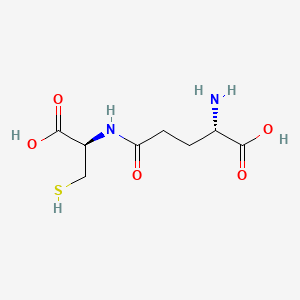 Compound
- Category
- Compound
What Gamma-Glutamylcysteine is, and what it does.
- Does it work
- Suits people focused on glutathione status who found swallowing glutathione itself underwhelming. It is a mechanism-led choice with few human trials behind it.
- How much to take
- No human dose figure is on record. Start with what your product states, keep it daily, and reseal the container with its desiccant since it oxidises in air.
- Time to feel it
- Glutathione status moves over weeks and is read on a blood measure. No reliable felt timeline has been published.
- The first dose
- Day one is quiet. Absorption and cellular uptake happen with no sensation attached to them.
- With regular use
- Over weeks of daily use the studied change is glutathione measured in blood cells, a marker rather than an outcome you would feel.
- How well tolerated
- Small human studies report it as well tolerated. Data in pregnancy and in children is absent, so check with a clinician before starting.
- How it feels
- Most people report nothing subjective. The change registers in glutathione measured in blood cells rather than in mood or energy.
- The overlooked benefit
- Making glutathione is one third of the job. Using it needs selenium and regenerating it needs riboflavin, so the pathway leans on both.
The proof, claim by claim.
What these words mean
These words describe the research, not the molecule's worth. Research strength is how much work stands behind one claim, and it is never a product score.
- Raising glutathione in blood cells, a measured markerRandomised trial
- Entering glutathione synthesis past the feedback-inhibited first stepIn vitro study
2 more claims
- Antioxidant defence supportAnimal study
- Degradation of intact oral glutathione by gut gamma-glutamyl transpeptidaseNarrative review
Why these belong in the same formula, 14 pairings
Why these belong in the same formula. Each row says what the basis is, from settled biochemistry through to a trial that measured the pair.
Gamma-glutamylcysteine is the direct substrate for glutathione synthetase, and glycine is the co-substrate. Supplying the dipeptide without adequate glycine leaves the final step short of a partner. Glycine availability declines with age in some measures, which is one reason the pairing gets attention. The stoichiometry is one to one at that step.
Gamma-glutamylcysteine is the immediate precursor of glutathione and bypasses the rate-limiting first step of its synthesis. That first step, catalysed by glutamate-cysteine ligase, is feedback-inhibited by glutathione itself, which caps how far cysteine supplementation can push output. Delivering the dipeptide sidesteps that brake, which is the mechanistic argument for the ingredient. Supplying both the precursor and the product together is redundant at the same step rather than complementary.
Cysteine plus glutamate become gamma-glutamylcysteine under glutamate-cysteine ligase. Providing the dipeptide directly means that step has already happened, so the two ingredients are alternative entry points to the same pathway rather than additive ones. Cysteine entry is subject to the glutathione feedback brake. The dipeptide is not. Combining them mainly raises cost.
Both ingredients aim at the same endpoint by different entry points. NAC supplies cysteine into a step that glutathione itself throttles, while gamma-glutamylcysteine enters downstream of that throttle. Stacking them does not produce two independent effects, and anyone choosing between the two is choosing where on the pathway to enter, not whether to. Cost and tolerability, not potency, are the practical separators.
Glutamate supplies the gamma-glutamyl half of the dipeptide, and glutamine is the main circulating reservoir that feeds the glutamate pool. This matters for endogenous production of gamma-glutamylcysteine, not for a supplemented dose that already contains the glutamyl residue. Glutamate is rarely limiting in a normal diet.
Making more glutathione does not help much if the enzymes that use it are short of selenium. Glutathione peroxidases carry selenocysteine at the catalytic centre and cannot function without adequate selenium status. This is a floor requirement rather than a dose-response lever, and selenium above sufficiency is not a way to get more out of the pathway. Selenium also has a narrow window between adequate and excessive.
Glutathione does its work by being oxidised and then recycled back. That recycling runs through glutathione reductase, which needs FAD derived from riboflavin. Riboflavin status is measured clinically using exactly this enzyme's activation coefficient, which is how tightly the two are linked. Without adequate riboflavin the pool sits oxidised regardless of how much was synthesised.
Recycling oxidised glutathione consumes NADPH, largely supplied by the pentose phosphate pathway. Niacin status underpins the NADP pool that carries those electrons. This is background metabolic infrastructure rather than a targeted pairing, and it is not a reason to add niacin on top of a normal intake.
Lipoic acid in its reduced form can hand electrons to oxidised glutathione, which spares the enzymatic recycling route. The network also includes ascorbate and tocopherol, each capable of regenerating the next. This is established redox chemistry measured mostly in cells and in animals, and whether co-supplementation changes anything a person would notice has not been shown.
Glutathione can reduce the ascorbyl radical back to ascorbate, and ascorbate can spare glutathione consumption in the other direction. The two pools rise and fall together in depletion studies. This is network chemistry, not a claim that either one delivers a specific benefit when added to the other.
Cysteine can be made from homocysteine through the transsulfuration pathway, and both enzymes in that route need pyridoxal 5-phosphate. Inadequate B6 constrains endogenous cysteine supply and therefore the first synthesis step. This matters for how much gamma-glutamylcysteine the body makes on its own, not for a supplemented dose. The relevant study measured amino acid concentrations, which are markers rather than outcomes.
Homocysteine sits at a branch point, either remethylated back to methionine or committed down transsulfuration to cysteine. Folate status shifts the balance between those two exits. That makes folate a modulator of endogenous cysteine supply rather than a partner that adds to a supplemented dipeptide.
The liver holds the largest glutathione pool in the body and is where most glutathione-support formulations aim. Silymarin appears with glutathione precursors as a matter of product convention. No trial has tested the combination against either component. This is formulation practice, not a demonstrated pairing.
All sulfur entering the cysteine pool from the diet arrives as methionine or cysteine. Methionine passes through homocysteine and cystathionine to reach cysteine. This is the upstream supply line for endogenous synthesis, several steps before gamma-glutamylcysteine appears, and it is not usually limiting on an adequate protein intake.
Nothing specific on file for Gamma-Glutamylcysteine. Match the label to the daily amount above, and tell your doctor what you take.
Not medical advice. Show the label to your pharmacist.What Gamma-Glutamylcysteine actually does.
Glutathione is built in two energy-using steps in the body. The first joins two amino acids to make gamma-glutamylcysteine, and the second adds a third amino acid to complete it.
3 more mechanisms
The first step is the slow, rate-limiting one and gets shut down by glutathione itself when levels are high, which is why just adding more of one amino acid can't push cellular glutathione much past its normal set point, and it's the reasoning behind supplying this intermediate directly instead.
Gamma-glutamylcysteine enters the pathway after that rate-limiting, self-blocking step, so it isn't held back the same way. It's the committed building block of glutathione production.
Glutathione itself, taken whole by mouth, gets broken down by a gut enzyme and is a poor way to raise glutathione levels in cells, which is the whole reason precursor approaches like this one exist.
Where Gamma-Glutamylcysteine comes from.
Your cells build glutathione in two steps, and this is the half-built molecule after step one. That first step is the bottleneck, because glutathione switches it off once there is enough. Handing your cells the half-built version skips the bottleneck. It is made mostly by fermenting yeast, and it goes off if it meets air, which is why it comes sealed with a desiccant.
What this route gives you
The same molecule is reached more than one way. Which route a given product used is a manufacturing choice, and the finished compound is the same either way.
6 steps on record
The fermentation route feeds sugar and amino acid substrates to a Saccharomyces strain selected for dipeptide accumulation. The synthetic route couples protected glutamate and cysteine.
The bond is formed between the glutamate side-chain carboxyl and the cysteine amine, not the usual alpha-carboxyl. That gamma-linkage is what makes the dipeptide resistant to standard peptidases.
For the fermentation route, biomass is lysed and the soluble thiol fraction is recovered under conditions that limit oxidation.
The dipeptide is separated from free amino acids, glutathione and oxidised dimers, then dried under inert atmosphere.
Material is assayed for dipeptide content and for the oxidised disulfide fraction, since the reduced free thiol is the intended form.
Packaged with desiccant and oxygen barrier, sometimes with a protective coating to hold the thiol in its reduced state.
Getting Gamma-Glutamylcysteine from food.
The whole-food sources on file. A supplement closes the gap, it does not replace dinner.
A gram-for-gram figure (how much of each you would eat to match a dose) will appear here once it is sourced and reviewed. This page will not print a number it cannot cite.
The forms it comes in.
3 more forms
The essence, in one line each.
- Oral gamma-glutamylcysteine raised intracellular glutathione above the usual homeostatic level in a randomised human study. The measured endpoint was a cellular glutathione concentration, not a clinical outcome.Randomised trial. Zarka MH et al., 2017 (Redox Biology). PMID 28131081 ↗
3 more findings
- Hepatic ACSL4 loss raised endogenous gamma-glutamylcysteine in a model of alcohol-related liver injury, implicating the dipeptide as a responsive hepatic metabolite.Animal study. Duan R et al., 2026 (Antioxidants). PMID 42072080 ↗
- Combined metabolome and transcriptome analysis identified gamma-glutamylcysteine as a mediator in reducing deoxynivalenol-induced cellular damage.In vitro study. Bao X et al., 2025 (Toxins). PMID 41003521 ↗
- A review of dietary glutathione and its physiological roles, covering the synthesis pathway in which gamma-glutamylcysteine is the committed intermediate.Narrative review. Bradauskienė V et al., 2026 (Nutrients). PMID 42197099 ↗
Chosen from the 9 we read for Gamma-Glutamylcysteine.
The studies, linked.
2 sources behind our Gamma-Glutamylcysteine verdict, every one linked to PubMed, the journal or ClinicalTrials.gov.
- Clinical trialPatients With Repetitive Head Impact Orally Supplemented With Gamma-glutamylcysteine: An Open Label Trial With MR Spectroscopy and Neuropsychological TestingClinicalTrials.gov ↗Phase 1, 30 participants, Recruiting
1 more linked trial
From clinical trials and PubMed, ranked by study type and citation weight, not cherry-picked.
FDA Disclaimer: These statements have not been evaluated by the Food and Drug Administration. This information is for educational purposes only and is not intended to diagnose, treat, cure, or prevent any disease. Consult your healthcare provider before starting any supplement regimen.