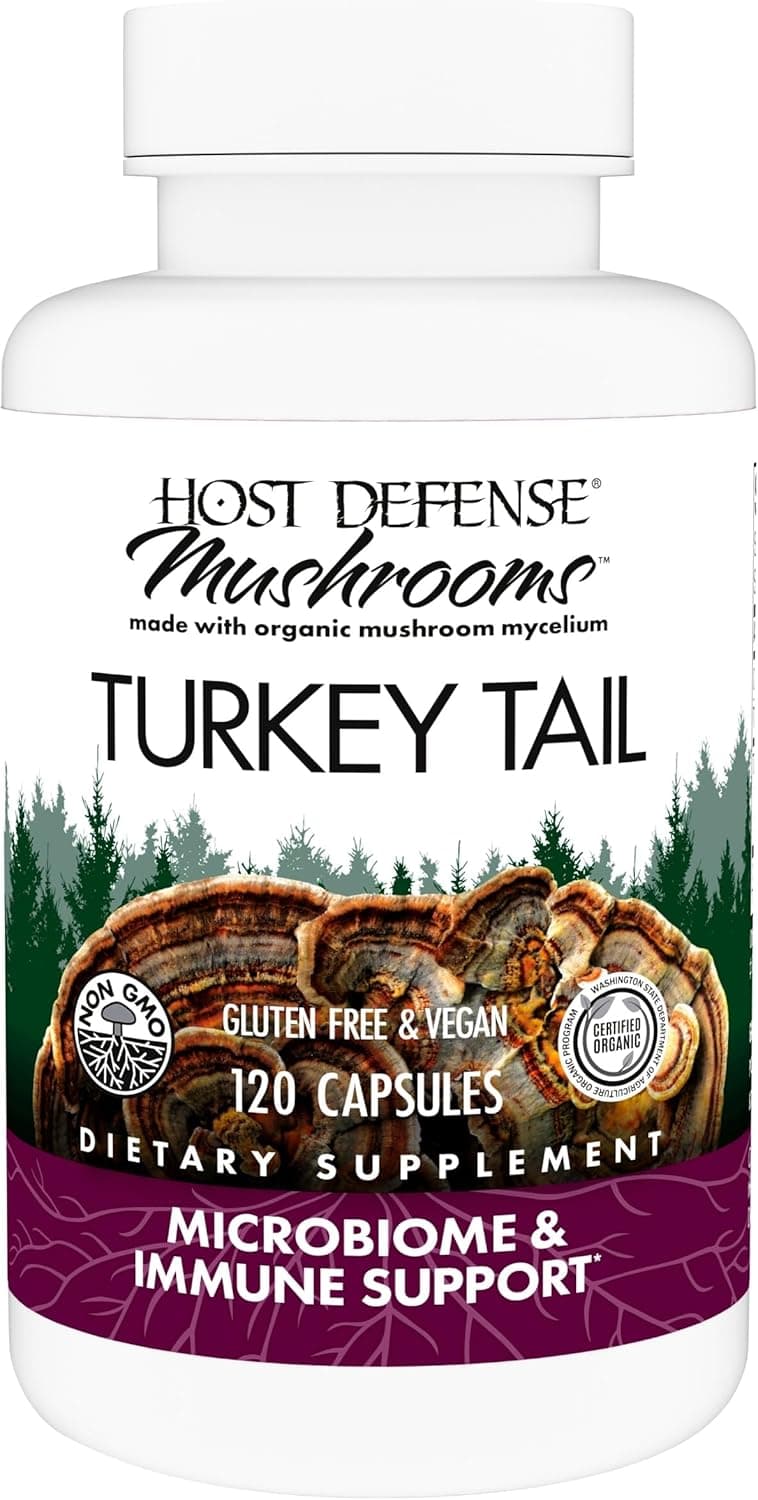
Oregon Ganoderma Mycelium.
A Pacific Northwest Ganoderma species mycelium, related to reishi but with minimal standalone research. Presumably provides beta-glucans and triterpenoids like other Ganoderma species. But 'presumably' is the key word. No species-specific research validates this.
Reviewed March 2026
- Category
- Herb
- Also filed under
- Beta glucan contentPart of the Ganoderma familyPossible immune modulation
What Oregon Ganoderma Mycelium is, and what it does.
- Does it work
- If you want Ganoderma benefits, reishi has the data. This species is an evidence-free addition to mushroom blends.
- How much to take
- No established dose. Found in blends at 50-200mg alongside other species. Standalone recommendations don't exist because nobody has studied it alone.
- Time to feel it
- Nobody has measured an onset for this species. Fungal beta-glucan work is counted in weeks of daily use, and it shows up in immune measures rather than in a same-day feeling.
- The first dose
- Nothing to report. Mushroom supplements build up over weeks, and this particular species has no documented acute effects.
- With regular use
- Unknown. The honest answer is we don't know what this specific species does in humans over time.
- How well tolerated
- Likely safe by analogy to reishi. But no safety studies exist for this species specifically.
- How it feels
- You won't isolate the effect of this ingredient from a multi-mushroom blend. And even if you could, we don't know what it should feel like.
- The overlooked benefit
- The rice it grows through is harvested with it, so a total glucan figure on a label counts starch as well. Only a beta-glucan-specific assay separates the two.
500 to 1,500mg a day is where Oregon Ganoderma Mycelium works.
Source: No species-specific clinical data available
The proof, claim by claim.
These words describe the research, not the molecule's worth. Research strength is how much work stands behind one claim, and it is never a product score.
- Immune support
- Contains beneficial beta-glucans
- Traditional use validates it
Questions people ask about Oregon Ganoderma Mycelium.
- Why is this in my mushroom supplement?
- Paul Stamets' philosophy includes regional species diversity. Oregon Ganoderma is there for biodiversity, not because it's been proven to do anything specific.
- Is this just reishi with a different name?
- No. It's a different species in the same genus. Different species can have very different chemical profiles, even when closely related.
- Has anyone actually studied this mushroom?
- Not in humans, no. There might be a handful of chemistry papers analyzing its compounds, but zero clinical trials.
- Should I switch to plain reishi?
- If you specifically want Ganoderma benefits, yes. Reishi (G. lucidum) has hundreds of studies. This species has zero. Pretty straightforward choice.
- What's wrong with mycelium on rice?
- The mushroom mycelium grows through rice grain. When ground up, the product contains significant rice starch. Critics say you're paying for rice, not mushroom. Proponents say the mycelium itself has unique compounds.
- Does species diversity in a blend actually matter?
- It's debatable. Stamets argues yes, citing ecosystem parallels. Skeptics say proven species at proper doses beat unproven species at tiny doses. Both sides have a point.
Why these belong in the same formula. Each row says what the basis is, from settled biochemistry through to a trial that measured the pair.
Yeast-derived beta-1,3/1,6-glucan and fungal beta-glucan are recognised by the same innate receptors, dectin-1 and complement receptor 3 on monocytes, macrophages and neutrophils. Combining sources raises total beta-glucan intake rather than adding a second mechanism. Branching pattern and molecular weight differ between yeast and mushroom glucans, and those differences affect receptor binding.
Turkey tail supplies protein-bound polysaccharides of the PSK and PSP type alongside beta-glucan. Multi-species mushroom blends pair it with Ganoderma because the polysaccharide profiles differ in protein content and molecular weight. What is added is polysaccharide diversity. The receptor pathway is shared.
Maitake beta-glucan carries a distinctive 1,6-branched 1,3 backbone that binds the same innate receptors as Ganoderma glucan. Blends stack them for a broader polysaccharide spectrum. Total measured beta-glucan across the blend is the number that matters, not the count of species on the label.
Cordyceps and Ganoderma appear together in long-standing Asian tonic formulas and in most modern multi-mushroom capsules. Cordyceps contributes nucleoside analogues such as cordycepin and adenosine in addition to polysaccharide. The pairing rests on formulation convention and shared polysaccharide chemistry, not on a combination trial.
Lion's mane brings hericenones and erinacines, terpenoid classes absent from Ganoderma, along with its own beta-glucan. The two are routinely blended in the same mycelium-on-grain capsules. The rationale is complementary secondary metabolites. The combination itself has not been studied as a unit.
Reishi is Ganoderma lucidum, so a reishi extract and a Ganoderma mycelial biomass are the same organism in two preparations. Stacking them raises exposure to the same triterpene and polysaccharide families, and the fruiting body extract typically carries higher ganoderic acid content than grain-grown mycelium. Read the two labels together rather than as separate ingredients.
The vitamin D receptor is expressed in monocytes, macrophages and lymphocytes, where calcitriol regulates antimicrobial peptide transcription and dampens some cytokine responses. Beta-glucan acts through a separate pattern-recognition route. Two independent inputs to normal immune cell function is the honest description, and no trial has tested the pair together.
Zinc is required for the structure and function of hundreds of enzymes and transcription factors, including several that govern lymphocyte development. Beta-glucan signalling through dectin-1 depends on downstream transcription that needs adequate zinc status. The link is nutritional adequacy supporting a signalling pathway, not a demonstrated combination effect.
Neutrophils concentrate ascorbate to millimolar levels and use it during oxidative burst and chemotaxis. Beta-glucan primes those same cells through dectin-1. Adequate ascorbate supports the cell type that fungal glucan engages, which is a nutritional relationship rather than a tested pairing.
Astragalus polysaccharide and Ganoderma polysaccharide are combined in traditional tonic formulas and in modern immune blends. Both are high-molecular-weight polysaccharides recognised by innate immune receptors. The pairing is long-standing practice with mechanistic overlap, and long-standing use is a reason to describe it, not evidence that it works.
Elderberry contributes anthocyanins and is a common companion in seasonal immune formulas. Its chemistry is polyphenolic and shares no pathway with fungal beta-glucan. The combination is a formulation convention, and the two should be judged on their own separate evidence.
Fungal beta-glucans and the residual starch from a grain substrate reach the colon largely undigested by human enzymes and become fermentable substrate. Colonic bacteria hydrolyse them to short-chain fatty acids. Pairing with live cultures is a substrate-and-organism relationship. Which strains benefit depends on their glycoside hydrolase repertoire.
Inulin is a fructan fermented in the proximal colon, while fungal glucan ferments more slowly and further along. Blending fermentable fibres of different rates spreads short-chain fatty acid production across the colon. The pairing is a fermentation-kinetics argument, not a claim about immune outcomes.
Oat beta-glucan is a linear mixed-linkage 1,3/1,4 polymer, chemically different from the 1,3/1,6 branched glucan of fungi, and it is not a dectin-1 ligand in the same way. Its known behaviour is viscosity in the gut. Two ingredients sharing the words beta-glucan on a label are not interchangeable, which is worth stating plainly on any blend that carries both.
A mycelium-on-rice biomass carries chitinous fungal cell wall and residual grain starch. Amylase acts on the starch fraction and can reduce the bulk load, while human enzymes do not cleave beta-1,3 or beta-1,6 linkages at all. Any enzyme benefit here concerns the substrate matrix, not release of an active compound.
Talk to a doctor before taking Oregon Ganoderma Mycelium if any of these apply to you: No human clinical data, Unknown potency compared to reishi, Mycelium on grain reduces active compound density. These are flags to check first, not effects Oregon Ganoderma Mycelium is known to cause.
Not medical advice. Show the label to your pharmacist.What Oregon Ganoderma Mycelium actually does.
Fungal cell walls are beta-1,3-glucan with beta-1,6 branches, cross-linked to chitin. Human digestive enzymes can't hydrolyse those linkages, so intact glucan travels on to the small intestine and colon.
Beta-1,3/1,6-glucan is a ligand for dectin-1 on macrophages, monocytes, dendritic cells and neutrophils, and for complement receptor 3. That's the recognised route by which fungal glucans engage innate immune cells.
Ganoderma makes lanostane-type triterpenoids, the ganoderic and lucidenic acids. They give the fruiting body its bitterness, and alcohol extraction concentrates them where hot water doesn't.
Mycelium grown on a sterilised grain substrate comes off with that substrate, so the finished biomass holds grain starch, an alpha-1,4-glucan, alongside fungal beta-glucan. A total glucan figure on a label lumps the two together, and only a beta-glucan-specific assay separates them.
Where Oregon Ganoderma Mycelium comes from.
The fungus is grown through cooked, sterilised brown rice in a clean room rather than picked from a log. When it has grown through, the whole block of rice and fungus is dried, ground and put into capsules, so some of the powder is rice. That is a different ingredient from an extract made only from mushroom caps, and neither is a substitute for the other.
Produced by a cultured organism rather than harvested. The strain is selected and the conditions are controlled, so batches sit closer together than a field crop.
A maintained Ganoderma strain culture plus sterilised whole brown rice as the solid growth substrate. Oregon indicates the production site, not a wild-harvested species.
The sterilised rice is inoculated and held under controlled temperature and humidity while the mycelium colonises the grain over a defined number of days.
The mycelium and the substrate it grew through are harvested together. Separating fungal tissue from the grain at this stage is not commercially practical, which is why the finished ingredient is named as a biomass.
The colonised mass is dried to a low moisture specification to stop growth and support shelf life, then milled to a uniform powder. Beta-glucan and alpha-glucan may be assayed separately.
The powder is blended with other mushroom materials to a target formula and filled into capsules, with identity, moisture and microbiological testing at release.
Getting Oregon Ganoderma Mycelium from food.
The whole-food sources on file. A supplement closes the gap, it does not replace dinner.
A gram-for-gram figure (how much of each you would eat to match a dose) will appear here once it is sourced and reviewed. This page will not print a number it cannot cite.
The forms it comes in.
FDA Disclaimer: These statements have not been evaluated by the Food and Drug Administration. This information is for educational purposes only and is not intended to diagnose, treat, cure, or prevent any disease. Consult your healthcare provider before starting any supplement regimen.