
MagnesiumNHANES 2013 to 2016
About 48% of Americans
take in less magnesium than recommended from food and drink.
NIH Office of Dietary SupplementsMagnesium is the lead active here, studied most for magnesium status. 21 human studies on Magnesium back this formula, each one cited. Each serving carries 150 mcg of Iodine, inside the range the published research used. Who it fits: for everyone, adults.
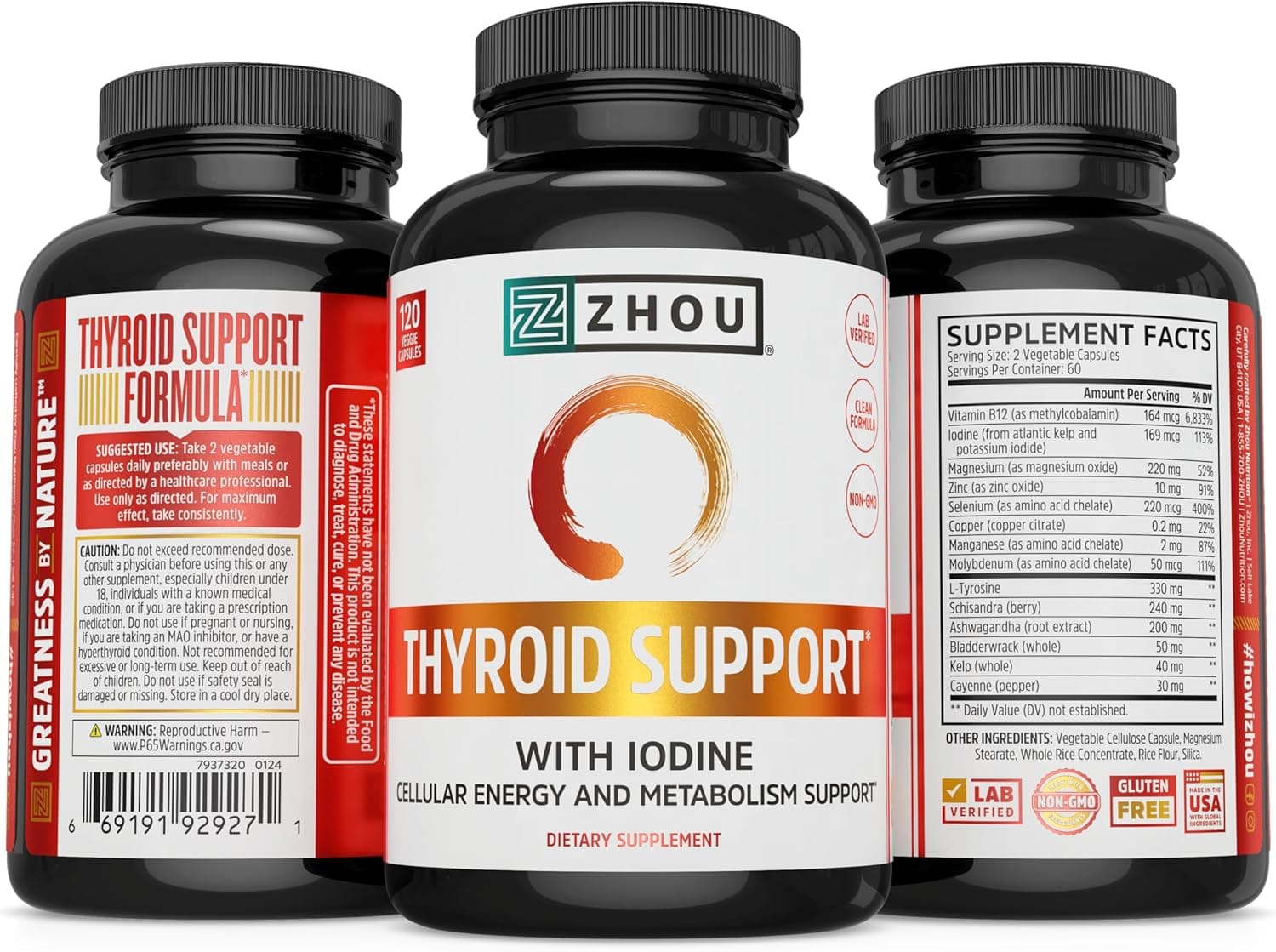 Verified by IngredientMD
The panel on the left is the one we evaluated, line by line.
All 14 actives checked against the clinical evidence: dose, form, and what the research actually shows.
Doses, ratios, and how the ingredients work together. That assessment is the verdict above: "Stronger in a pair".
The verdict is public and identical whether or not a brand pays. A formula that does not clear the bar gets nothing.
Read by the engine against 2.1 million data points from clinical trials, PubMed and more than a hundred vetted sources. No individual reviewer is named or implied.
Cross-checked against 3,296 documented interactions for these actives.
Public health figures the engine matched to this formula's ingredients. Reported by their source, cited and dated, never written by the brand.
About 48% of Americans
take in less magnesium than recommended from food and drink.
NIH Office of Dietary SupplementsAbout 15% of US adults
take in less zinc than the estimated average requirement.
Peer-reviewed analysisMore than 1 in 3 US adults
regularly sleep less than the recommended seven hours a night.
Peer-reviewed analysis74% of US adults
take dietary supplements, and 55% are regular users, in the Council for Responsible Nutrition's 2023 consumer survey of 3,192 adults.
Council for Responsible Nutrition and Ipsos, 2023About 24% of US girls aged 14 to 18
take in less copper from food and drink than the estimated average requirement.
NHANES60.2% of US adults aged 20 and over
took a dietary supplement in the past 30 days, and 38.7% took two or more, in the 2021 to 2023 National Health and Nutrition Examination Survey.
CDC National Center for Health Statistics, 2026USDA advises fortified foods or supplements after 50
In its national intake tables USDA notes that "it is advised that individuals over 50 meet their B12 requirement with fortified foods or supplements".
NHANESUS pregnant women, median 129 micrograms per litre
Between 2005 and 2010, US pregnant women had a median urine iodine level of 129 micrograms per liter, below the range considered adequate in pregnancy.
Peer-reviewed analysisRandomised trial, 1994
Over two years, older postmenopausal women taking calcium plus trace minerals including manganese gained about 1.5% spinal bone density, while the placebo group lost about 3.5%.
Journal of NutritionMeta-analysis, 2024
Across six trials in 739 women, zinc lowered menstrual discomfort scores, with bigger drops after eight weeks or more, even at doses as low as 7 mg daily.
NutrientsSystematic review, 2021
Across 3 trials in older adults, it shortened the time to fall asleep by about 17 minutes.
BMC Complement Med TherSystematic review, 2024
Across exercise studies, magnesium was linked to less muscle soreness and better recovery, with people training hard possibly needing 10 to 20 percent more than sedentary people.
Journal of Translational MedicineRandomised trial, 2026
In one trial, 20 adults on an antidepressant added magnesium, and low mood scores changed over six weeks, with the antidepressant doing part of the work by design.
East Asian Archives of PsychiatryRandomised trial, 2012
In 46 older adults with poor sleep, eight weeks of magnesium improved their scores on a sleep questionnaire against placebo.
older adults with poor sleepMeta-analysis, 2025
Across four trials in women of reproductive age, zinc lowered premenstrual symptom scores, with the biggest gain in mood and a smaller, less certain gain in physical symptoms.
Women and HealthMeta-analysis, 2012
Pooling human studies, capsaicin and capsiate produced small increases in energy expenditure and reductions in appetite, on the order of about 50 kcal per day.
Chemical sensesRandomised trial, 2009
A lunch containing capsaicin shifted short term energy and fuel use and satiety hormones compared with the same lunch without it.
European journal of nutritionRandomised trial, 2020
In adults taking Schisandra chinensis extract, quadriceps muscle strength measures improved and self-reported fatigue after exertion was lower than with placebo.
International journal of environmental researRandomised trial, 1997
In iodine-deficient adults, 0.2 mg of iodide daily reduced thyroid gland volume by about 38% over 12 months compared with placebo.
Journal of Clinical Endocrinology and MetabolismCohort study, 2026
In a large UK Biobank cohort, higher dietary manganese intake was linked to a modestly lower chance of developing high blood sugar over follow-up, an association, not a demonstrated cause.
The journal of nutrition, health & agingMeta-analysis, 2022
Across 24 trials in 1,325 adults with high blood sugar, magnesium at about 300 mg daily for four months lowered fasting glucose 0.20 mM and HbA1c 0.22 percent.
Frontiers in NutritionRandomised trial, 2019
In a pilot trial in healthy adults, mixed spices at everyday culinary amounts shifted gut bacterial composition in a prebiotic direction.
NutrientsControlled clinical trial (metabolic balance), 1995
In young men given 22 then 467 micrograms of molybdenum a day, absorption was efficient at both levels, and the estimated minimum daily need was about 25 micrograms.
The American Journal of Clinical NutritionRandomised trial, 2022
An omija (Schisandra chinensis) extract mixture lowered post-meal blood sugar readings in adults with above-normal glucose levels compared with placebo.
NutrientsMeta-analysis, 2016
Zinc acetate lozenges cut cold symptom length by about 2.7 days, versus a roughly seven day average, across three pooled trials.
British Journal of Clinical PharmacologyMeta-analysis, 2025
Pooling randomised trials, edible algae intake produced a small reduction in systolic blood pressure compared with control.
Journal of human nutrition and dieteticsRandomised trial, 2026
A randomised, double-blind, placebo-controlled trial of multi-herb and ashwagandha root formulas for stress modulation reports on whole formulas, so no effect can be attributed to schisandra alone.
TrialsRandomised trial, 2012
In adults with borderline-high liver enzymes, a mixture of schisandra fruit extract and sesamin over 5 months lowered ALT and AST and raised plasma antioxidant capacity compared with placebo.
Phytotherapy ResearchRandomised trial, 2016
In women aged 40 to 70, a 6-week Schisandra chinensis extract lowered total Kupperman Index midlife hormonal symptom scores versus placebo, with the clearest effect on hot flushes, sweating, and palpitations.
ClimactericRandomised trial, 2021
Daily intake of Laminaria japonica in Japanese adults was followed by changes in body composition, serum lipid measures and thyroid hormone markers reported by the authors as modest.
Marine DrugsCohort study, 2026
In a non-randomised before and after study, seaweed intake was followed by higher iodine status and shifts in thyroid hormone markers, consistent with brown seaweeds such as bladderwrack being a substantial source of iodine.
European journal of nutritionMeta-analysis, 2025
Pooling the randomised evidence, the review reports reductions in circulating thyroid autoantibody concentrations with selenium supplementation.
MedicineRandomised trial, 2003
In adults with normal thyroid function, kelp supplementation raised blood thyroid-stimulating hormone, with a larger rise at the higher kelp dose, a marker rather than an outcome.
Endocrine practiceRandomised trial, 2007
Four weeks of chilli in the diet was measured against a bland diet for changes in metabolic markers and arterial function in adults.
European journal of clinical nutritionMeta-analysis, 2019
Across 13 trials, selenium increased activity of an antioxidant enzyme and overall antioxidant capacity, and lowered a marker of fat oxidation in the blood.
HormonesSystematic review, 2026
Systematically compares selenium supplementation strategies and reports tissue selenium retention across the forms used.
Poultry ScienceRandomised trial, 2025
Vegetables biofortified with iodine and molybdenum raised intake of both trace elements in the people who ate them, with no adverse change seen in the markers the trial measured.
NutrientsMeta-analysis, 2025
Pooled analysis of selenium supplementation reports changes in selenium status and in inflammatory and oxidative markers in the population studied.
International Urology and NephrologyCohort study, 2026
An analysis using computer modeling found seaweed intake strongly linked to adult iodine levels, an association rather than a proven effect.
BMC Public HealthMeta-analysis, 2018
Pooling trials, selenium raised the share of motile sperm by about 3.3 percentage points, with a smaller rise in normally shaped sperm and a higher sperm concentration.
Advances in NutritionMeta-analysis, 2023
Pooled trials found brown seaweed supplementation linked to small reductions in total and LDL cholesterol in the adults studied.
Marine drugsMeta-analysis, 2026
In adults with metabolic risk factors, selenium supplementation was linked to small changes in blood lipid and inflammatory markers, with results varying between trials.
Meta-analysisMeta-analysis, 2026
Pooling randomised trials in adults, zinc had a small effect on body weight and waist circumference and no detectable effect on body mass index, fat mass, fat-free mass or adipokine levels, and the authors call the size of the changes minor.
Biological Trace Element ResearchMeta-analysis, 2023
Pooling macro-algae supplementation trials, blood sugar and body measurement indices shifted only slightly, and several pooled comparisons showed no detectable difference from control.
The paperSystematic review and meta-analysis, 2016
In children older than six months, zinc may shorten a bout of diarrhea by about half a day across nine trials, on low certainty evidence.
Cochrane Database of Systematic ReviewsMeta-analysis, 2011
Across 36 studies in children under five, zinc modestly increased height growth, adding roughly 0.37 cm at about 10 mg a day for 24 weeks.
BMC Public HealthSystematic review and meta-analysis, 2020
In pregnant women with mild to moderate iodine deficiency, iodine lowered a thyroid marker and curbed the usual pregnancy rise in thyroid size. Infant cognitive, language and motor scores showed no change across trials.
American Journal of Clinical NutritionMeta-analysis, 2023
200 micrograms of iodine a day raised iodine levels and shifted thyroid hormones in pregnancy across 11 studies.
Journal of Trace Elements in Medicine and BiologyMeta-analysis, 2026
In pregnant women with low iodine status, iodine was linked to lower TSH and thyroglobulin in the blood, both markers rather than health outcomes.
Frontiers in Public HealthSystematic review, 2021
Across pooled studies, iodine supplementation in pregnancy shifted maternal iodine status and thyroid function measures, while effects on offspring endpoints were inconsistent between studies.
European Journal of EndocrinologySystematic review, 2021
In areas with low population iodine intake, supplementation during pregnancy was associated with better neurocognitive development scores in offspring in some but not all included studies.
Archives of Endocrinology and MetabolismControlled clinical trial, 1993
In healthy women on a controlled diet, a lower manganese intake (1.0 versus 5.6 mg a day) raised premenstrual mood and pain symptom scores.
American Journal of Obstetrics and GynecologyRandomised trial, 2011
In 23 adults, a seaweed blend taken before a carbohydrate meal cut the insulin response by 12.1 percent, with no change in blood sugar.
Applied Physiology, Nutrition, and MetabolismRandomised trial, 2021
Thirty-four adults carrying excess weight with raised LDL cholesterol took 2000 mg of a polyphenol-rich Fucus vesiculosus extract daily for 12 weeks. HDL cholesterol rose about 9.5%, a change that differed from placebo, while LDL, total cholesterol, triglycerides, glucose, insulin and inflammatory markers did not move.
The Journal of Nutritional BiochemistryMetabolic balance study (crossover), 2006
In 43 healthy young women eating normal diets, over 90 percent of dietary molybdenum was absorbed and mostly excreted in urine, staying balanced across intakes of about 150 to 318 micrograms a day.
Journal of Trace Elements in Medicine and BiologyRandomised trial, 2021
In adults over 50 doing light walking, 1 g/day of Schisandra chinensis extract for 12 weeks raised right knee extensor strength by about 10.2 Nm more than placebo, with no change in muscle mass.
The American Journal of Clinical NutritionControlled clinical trial, 1992
Taking 15 mg of manganese a day for 124 days raised the activity of the antioxidant enzyme manganese-dependent superoxide dismutase in women's lymphocytes above their starting levels.
American Journal of Clinical NutritionRandomised trial, 2024
In a small feasibility trial, adults carrying excess weight with high blood sugar who ate 5 g of dried Fucus vesiculosus daily for five weeks showed no difference from control in weekly average continuous glucose readings.
NutrientsPopulation figures from public health data. Context for the category, not a statement about any individual and not a claim about this product.
Each line below was derived from this formula's own record at the time of verification. Nothing here was written by the brand, and nothing can be added that the evidence does not carry.
One pairing in this formula has been studied as a combination in human trials. Each finding below is what a named study measured, cited and dated, never written by the brand.
In a two-year trial in older adults, zinc taken together with selenium improved the antibody response to influenza vaccination.
Research strength. Research strength says how much work stands behind the combination. It is never a product score.
Fail closed. Where actives were studied on their own rather than together, each shows on its own evidence, never a combined effect no trial measured.
Independent record. Every finding is cited to a named trial, dated, and never written by the brand.
Findings from trials that studied these actives as a combination. Context for how the actives were tested together, not a statement about any individual and not a claim about this product.
Where a trial measured an actual number, we show it next to the claim. It is the average across the trials, never a promise about one person.
About 2 mmHg lower systolic and 1.8 mmHg lower diastolic, on average across the trials.
Read at the source. The magnitude sits beside the same trial the claim already cites. It describes what the trials measured, never what any one person will feel.
Time-to-effect windows the engine read from the trial record. Each is a window a named study measured, cited and dated, never written by the brand.
A randomised, double-blind, parallel-group dose-finding trial in 120 older people with mild vitamin B12 deficiency, defined as serum B12 of 100 to 300 pmol/L with methylmalonic acid at or above 0.26 umol/L, gave daily oral cyanocobalamin at 2.5, 100, 250, 500 or 1000 ug for 16 weeks. Mean plasma methylmalonic acid fell 16%, 16%, 23%, 33% and 33% across those doses. Daily doses of 647 to 1032 ug accounted for 80% to 90% of the estimated maximum reduction. The window was measured on a blood marker of B12 status, not on a symptom.
An open-label randomised single-dose pharmacokinetic study in 20 healthy men aged 20 to 45, conducted and authored by staff of Emisphere Technologies, the developer of the SNAC carrier under test, measured serum vitamin B12 after one 5 mg cyanocobalamin tablet, with six men on the marketed tablet. Time to peak serum B12 was 6.83 hours for the marketed tablet and 0.5 hours for the carrier coformulation. Absolute bioavailability was 2.16% and 5.09% respectively. One trial, six men per arm. Serum concentration was measured, not any symptom.
In a 24 week randomised double-blind placebo-controlled trial in 112 mildly iodine-deficient New Zealand adults aged 18 to 40, 150 micrograms of iodine a day as potassium iodate lowered thyroglobulin, a blood marker of iodine status, by 12 percent at 8 weeks, 20 percent at 16 weeks and 27 percent at 24 weeks compared with placebo. Median urinary iodine reached 168 micrograms per litre against 79 on placebo. TSH and free T4 stayed within normal range and did not change significantly.
Across three randomised placebo-controlled trials pooled as individual patient data (199 adults with naturally acquired colds, 80 to 92 mg of elemental zinc a day as acetate lozenges), 70 percent of the zinc group had recovered by day 5 against 27 percent on placebo, and colds ran 2.73 days shorter against a 7 day average duration. A separate meta-analysis of seven lozenge trials (575 participants, doses above 75 mg a day, zinc acetate or zinc gluconate) measured cold duration 33 percent shorter, with no significant difference between the two salts.
In a controlled feeding study in nine healthy men, six weeks of restricted zinc intake raised DNA strand breaks in peripheral blood cells, and four weeks of repletion at 11 mg a day, with 20 mg of supplemental zinc for the first seven days, reversed the rise. In a separate randomised placebo-controlled trial in 40 Ethiopian women eating a high-phytate diet, 20 mg a day of zinc sulfate for 17 days lowered mean comet tail moment from 39.7 to 30.0 while plasma zinc did not change significantly. Both windows were measured on a DNA damage marker in blood cells, not on a symptom.
In a 12 week randomised double-blind placebo-controlled trial in 119 healthy UK adults aged 50 to 64, mean plasma selenium rose from 95.7 ng/mL at baseline to steady state by week 10, reaching 118.3, 152.0 and 177.4 ng/mL on 50, 100 and 200 micrograms a day of selenium-enriched yeast. Plasma selenoprotein P rose in every selenium arm. Platelet glutathione peroxidase activity did not change significantly at any dose or form.
In an 8 week pilot with a parallel placebo group, 8 young women taking 2 mg of copper a day as copper glycinate showed a 9 percent mean rise in serum ceruloplasmin and a 75 percent rise in diamine oxidase, alongside a 39 percent fall in plasma F2-alpha isoprostanes. Erythrocyte copper-zinc superoxide dismutase did not change. In a separate 4 week double-blind crossover in 20 men with moderately high cholesterol at the same 2 mg a day, copper moved no measure across the whole group and raised superoxide dismutase and diamine oxidase only in the 10 men who started below the median. Both are small and both measured enzymes in blood, not a symptom.
Two controlled crossover trials in cold-exposure stress measured working memory at a set interval after dosing. Eight men took 150 mg per kg of L-tyrosine two hours before a 30 minute delayed matching-to-sample task at 4 degrees Celsius. Matching accuracy at the longest delay returned to the level seen at 22 degrees Celsius. In 19 volunteers immersed twice for 90 minutes in roughly 10 degree water, a 150 mg per kg bar taken before each immersion raised correct responses on the same memory measure. Both were small trials in an induced-stress setting, and a later crossover trial under exercise heat stress in eight men found no cognitive change despite raised serum tyrosine.
In a 60 day randomised, double-blind, placebo-controlled trial, 60 stressed healthy adults took 240 mg of a standardised ashwagandha extract (Shoden) once daily or placebo. The ashwagandha arm showed a larger fall in Hamilton Anxiety Rating Scale scores (p = .040) and in morning cortisol (p < .001) than placebo, with the DASS-21 change near-significant (p = .096). A separate 8 week randomised, double-blind, placebo-controlled dose-ranging trial enrolled 131 adults with self-reported high stress and analysed 98, measuring reduced Perceived Stress Scale scores at 125, 250 and 500 mg per day of an aqueous root and leaf extract. Two trials on two different extracts, both landing in the same eight to nine week band.
Windows measured in the cited trials. Context for how the active behaves over time, not a statement about any individual and not a claim about this product.
12 ingredients, from each one's own page.
Markers move first. Methylmalonic acid and homocysteine start shifting within a week or two, while anything you would notice takes several weeks of daily use.
Thyroid hormone turns over slowly, so the change lands on a urinary iodine measure and a thyroid panel before it lands anywhere in your day.
A looser stool can turn up the same day at the higher end. Sleep and cramp changes usually settle in across two to four weeks, because it is refilling a body-wide store.
Blood zinc moves within days. The parts you would notice, skin behaviour and immune resilience, take four to twelve weeks of steady daily intake.
No felt onset. Plasma selenium and glutathione peroxidase activity rise over three to six weeks of daily intake and then plateau once the enzyme pool is filled.
The enzymes that need copper get their supply within days. The change shows on a blood panel rather than in how you feel, and any felt difference takes weeks.
There's no acute effect to time. Where intake has been low, enzyme activity responds over weeks, and it reads on a laboratory measure rather than in how you feel.
Nothing registers in the short term. Enzyme activity follows cofactor supply, so what changes shows up in sulfur handling and urinary markers over weeks.
Within about an hour of a dose. It shows up most when you're stretched by short sleep, cold, noise or back-to-back pressure. On an easy day there's less for it to do.
Give it one to three weeks of daily use. The trial protocols read their endpoints at two to four weeks rather than on day one.
Give it two to four weeks. Morning cortisol shifts on a blood draw before a calmer week is something you'd describe out loud.
Nothing lands on day one. Iodine intake shifts over a few weeks, and the change shows up on a thyroid panel rather than in how you feel.
How each ingredient usually behaves over time, from its own page on IngredientMD. General timing for the ingredient, not a measurement of this product.
What each form is, and where it fits in a formula. Measured findings carry the study that reported them.
The unmodified crystalline amino acid, carrying no salt, ester, or acetyl group. The form produced by fermentation and used in most tyrosine research.
Dried, milled root with no extraction step, so the withanolide content is whatever the raw material carried, typically well under one percent.
The washed, dried and milled whole alga, carrying its full complement of alginate, fucoidan, phlorotannins, minerals and iodine in native proportions.
The whole dried and milled fruit, carrying capsaicinoids at natural concentration together with carotenoids, ascorbic acid and fibre.
Descriptions of the form itself, read from the cited studies. Not a comparison between products and not a statement about any individual.
It is a capsule, so the amount per serving is fixed and travels without measuring.
Put an earned verification on your own product page.
These statements have not been evaluated by the Food and Drug Administration. This product is not intended to diagnose, treat, cure, or prevent any disease. This record is not medical advice. Always consult your healthcare provider before starting any supplement regimen.