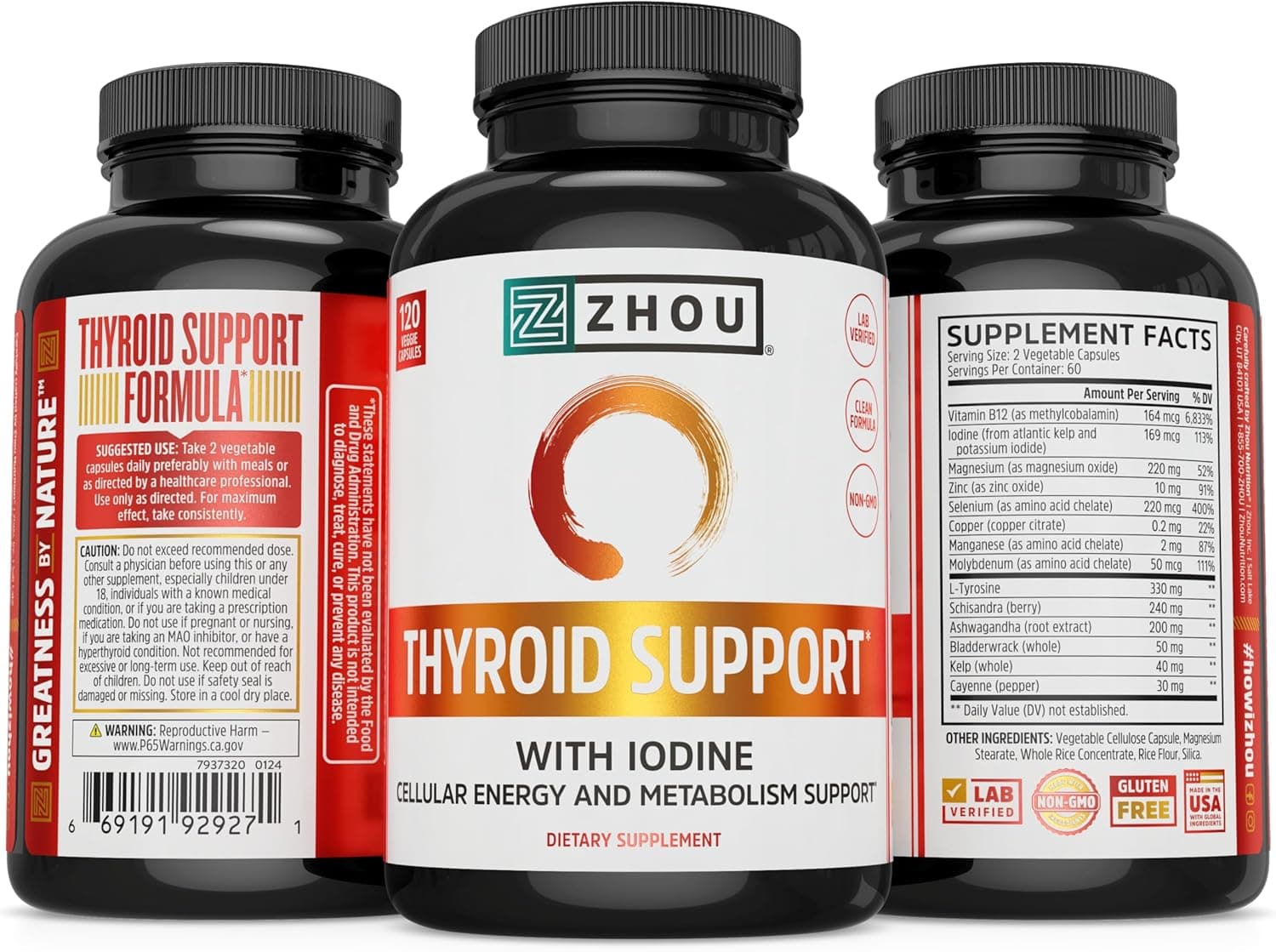
Bladderwrack.
Iodine-rich seaweed. Thyroid support. Provides iodine for thyroid function, contains fucoidans with potential health benefits, traditional use for metabolism support.
Reviewed March 2026
- Category
- Herb
- Also filed under
- ThyroidIodineMetabolism
What Bladderwrack is, and what it does.
- Does it work
- Only useful if youre actually iodine deficient. Risky if youre not, as too much iodine can harm thyroid. Variable iodine content is a problem.
- How much to take
- 500-1000mg of bladderwrack, but iodine content varies. Better to supplement iodine directly if needed.
- Time to feel it
- Nothing lands on day one. Iodine intake shifts over a few weeks, and the change shows up on a thyroid panel rather than in how you feel.
- The first dose
- Day one is a capsule with food and no sensation. Iodine intake changes from the first dose, and that change shows up on a thyroid panel weeks later.
- With regular use
- May support thyroid if deficient. Can cause problems if iodine intake becomes excessive.
- How well tolerated
- Risk of too much or inconsistent iodine. Can contain heavy metals. Not for thyroid conditions without supervision.
- How it feels
- If deficient: more energy, better metabolism. If not deficient: possibly nothing or thyroid disruption.
- The overlooked benefit
- Most of the seaweed never gets absorbed. Alginate and fucoidan reach your colon intact, where the bacteria carrying the right enzymes can work on them.
250 to 500mg a day is where Bladderwrack works.
Source: Catarino et al. (2015) Food Chem; iodine content as primary consideration
The proof, claim by claim.
These words describe the research, not the molecule's worth. Research strength is how much work stands behind one claim, and it is never a product score.
Based on 8 human trials.
- iodine intake for normal thyroid hormone productionNarrative review
- alginate binding of mineral cations in the gutIn vitro study
- fullness and appetite after alginate-containing preparationsRandomised trial
- radical scavenging by phlorotannin polyphenolsIn vitro study
- fucoidan activity in laboratory clotting assaysIn vitro study
Questions people ask about Bladderwrack.
- When should I take it?
- Timing matters less than consistency. Pick a time that works for you and take it daily.
- Can I take it with other supplements?
- Usually fine. The main thing to watch is not doubling up on the same ingredient from different products. If you're on prescription meds, check with your pharmacist first.
- Any side effects to watch for?
- Most people tolerate it well at recommended doses. GI upset is the most common complaint with any supplement. Start with a lower dose and work up. If something feels off, stop and reassess.
- Who benefits most from this?
- People who've already covered the basics (diet, sleep, exercise) and want to fine-tune. It's not essential, but could be worthwhile for the right person.
Why these belong in the same formula. Each row says what the basis is, from settled biochemistry through to a trial that measured the pair.
Bladderwrack supplies iodine, the substrate used to build thyroid hormone. The deiodinase enzymes that convert that hormone to its active form are selenoproteins, so iodine intake without adequate selenium leaves the conversion step short of its cofactor.
Thyroid hormone is built by iodinating tyrosine residues on thyroglobulin. Bladderwrack provides the iodine side of that reaction and tyrosine provides the amino acid backbone.
Bladderwrack is a brown seaweed and its iodine content is high and highly variable by harvest, so adding an iodine salt stacks on an already substantial and imprecise dose. Total iodine intake across both is the figure that matters.
Thyroid peroxidase is a heme enzyme, so iron status sets how well iodide from bladderwrack can be organified into thyroid hormone. Iron is a supporting nutrient here, not a second iodine source.
Thyroid hormone receptors are zinc finger proteins, so zinc status affects how the hormone signal is read once it is made. That places zinc downstream of the iodine bladderwrack supplies.
Thyroid hormone receptors pair with retinoid receptors on shared response elements, so retinoid status influences the transcriptional response to thyroid hormone. Vitamin A therefore supports the far end of the same pathway.
Glucosinolate breakdown yields thiocyanate, which competes with iodide at the sodium iodide symporter and lowers iodide entry into the thyroid. Pairing a large glucosinolate dose with an iodine-bearing seaweed works against the iodine.
The alginate in bladderwrack gels by cross-linking with divalent cations, and calcium is the ion it binds most avidly, so a co-dosed calcium salt is partly locked into the gel. Separating the doses keeps the calcium free.
Fucoidan from brown seaweed is a sulfated polysaccharide with heparin-like activity on the clotting cascade, and long-chain omega-3 fatty acids independently reduce platelet aggregation. The two effects run in the same direction, so the combination deserves a note.
Ginkgolides act on platelet activating factor signalling while seaweed fucoidan acts on the coagulation cascade, so the two touch normal clotting by separate routes that combine. Worth flagging in any formula carrying both.
Alginate, the main structural polysaccharide of brown seaweeds, is a block copolymer whose guluronic acid regions bind divalent cations and form a gel. Magnesium and other divalent minerals in the same meal can be caught in that network. How much this changes absorption in practice depends on dose and timing, and separating the two by a couple of hours removes the question.
Sulfated and carboxylated seaweed polysaccharides coordinate transition metals as well as alkaline earth metals. Copper is among the cations bound by alginate in vitro. The binding chemistry is established. The size of the effect on human copper status is not.
Manganese is a divalent cation and is bound by alginate on the same carboxylate sites that hold calcium. A high-fibre seaweed dose taken with a mineral supplement is a plausible point of interference. Spacing the doses is the practical answer.
Fucoidan is a sulfated polysaccharide with a structure reminiscent of heparin and shows anticoagulant activity in laboratory clotting assays. Nattokinase acts on fibrin by a different route. Combining two agents that both touch clotting deserves a flag, and anyone on anticoagulant medicine should raise it with their clinician.
Garlic organosulfur compounds reduce platelet aggregation in laboratory and human platelet studies, and sulfated fucoidan interferes with clotting steps in vitro. Two mild effects on the same system can add up. This is a caution rather than a benefit claim.
High-dose alpha-tocopherol has a recognised mild effect on platelet function and vitamin K-dependent clotting factors. Sulfated seaweed polysaccharides act on the coagulation cascade in laboratory assays. The overlap is worth flagging in a combined formula.
Salicin from willow bark is metabolised to salicylate, which inhibits platelet cyclooxygenase. Fucoidan touches the coagulation side. Different mechanisms, one shared system, and a combination worth naming rather than assuming.
Vitamin K is the cofactor for gamma-carboxylation of clotting factors, so it supports normal coagulation, while sulfated fucoidan works against clot formation in laboratory assays. The two push in opposite directions on the same system. Neither cancels the other in any quantified way.
Alginate and fucoidan pass the small intestine largely undigested because human enzymes do not cleave those linkages, and colonic bacteria carrying the right polysaccharide utilisation loci ferment them. That makes seaweed fibre a substrate for parts of the gut community. Which strains benefit varies with the individual microbiome.
Bifidobacteria carry extensive carbohydrate-active enzyme repertoires and cross-feed on the breakdown products of complex plant and algal polysaccharides. Seaweed fibre enters the colon intact and becomes fermentation substrate. Direct utilisation of fucoidan by this genus is strain-dependent and is not established here.
Inulin is a rapidly fermented fructan while algal polysaccharides ferment slowly and further along the colon. Mixing fibre types spreads fermentation across the length of the large intestine rather than concentrating it. The trade-off is that stacking fermentable fibres raises the chance of gas and bloating.
Both form viscous gels in water: psyllium through arabinoxylan and seaweed through alginate. Viscosity is what slows gastric emptying and nutrient diffusion, so the effects add. Adequate fluid intake matters more when two gel-forming fibres are combined.
Activated charcoal adsorbs organic molecules non-selectively across its large surface area, including polyphenols and other constituents of a botanical extract. Taking it near a seaweed preparation reduces what stays available. Separating the two by several hours is the standard handling.
Bentonite is an aluminosilicate with cation exchange capacity and binds mineral cations and some organic molecules in the gut. Both it and alginate compete for the same divalent cations. Combining two binders concentrates that competition.
Brown seaweed phlorotannins and green tea catechins both inhibit alpha-amylase and alpha-glucosidase in laboratory assays. The overlap is in vitro enzyme inhibition, not a measured human response. Read it as mechanistic and nothing further.
Nothing specific on file for Bladderwrack. Match the label to the daily amount above, and tell your doctor what you take.
Not medical advice. Show the label to your pharmacist.What Bladderwrack actually does.
Bladderwrack is a brown seaweed. Its characteristic ingredients are two gel-forming fibres, tannin-like polyphenols, mannitol, and iodine in more than one chemical form.
The thyroid builds its hormone by attaching iodine to a storage protein, and iodine intake is what supports that normal process. Seaweed is a concentrated dietary source of it.
Iodine in wild seaweed varies widely with species, season and harvest site, so two bladderwrack products can differ several-fold in iodine per gram unless the material is assayed.
One of its fibres, alginate, grips minerals like calcium and gels on contact with them, which is why it can bind mineral ions as it moves through the gut.
Where Bladderwrack comes from.
It is a seaweed cut from rocks along the North Atlantic coast at low tide. After a rinse and a dry it is either ground into powder or soaked to pull out the active parts. Because seaweed soaks up whatever is in the seawater, every batch is tested for iodine and for heavy metals before it goes into a capsule.
Made from a plant. What ends up in the capsule tracks the harvest, so batch testing and a stated marker matter more here than with a made molecule.
The alga grows on intertidal rocky shores of the North Atlantic and Baltic and is cut by hand or mechanically at low tide, usually above the holdfast so the plant can regrow. There is no commercial cultivation at scale for this species, so harvest site and season are the main determinants of composition.
Fresh material is rinsed to remove sand, epiphytes and surface salt, then dried by sun, air or low-temperature forced air. Drying temperature matters because heat degrades phlorotannins and can drive off volatile iodine species.
For the powder, dried thallus is milled and sieved to a defined particle size. For an extract, the milled material is macerated in water or aqueous ethanol, or subjected to acid or enzyme-assisted extraction when the polysaccharide fraction is the target.
Extracts are filtered to remove particulates, and polysaccharide-focused processes add alcohol precipitation and membrane filtration to concentrate fucoidan and remove salts and low molecular weight material.
Batches are assayed for iodine, and for arsenic, cadmium, lead and mercury, because brown seaweed concentrates elements from seawater. Extracts intended to carry a stated iodine level are adjusted with a carrier to hit the declared figure.
Standardised material is blended with flow aids and encapsulated or compressed, or packed as a cut-and-sifted herb for infusion.
Getting Bladderwrack from food.
The whole-food sources on file. A supplement closes the gap, it does not replace dinner.
A gram-for-gram figure (how much of each you would eat to match a dose) will appear here once it is sourced and reviewed. This page will not print a number it cannot cite.
The forms it comes in.
The essence, in one line each.
- In a crossover trial of 23 adults, 500 mg of a brown seaweed blend of Ascophyllum nodosum and Fucus vesiculosus taken 30 minutes before a 50 g carbohydrate meal cut the insulin released over the next three hours by 12.1% and raised an index of insulin sensitivity by 7.9%, with no measurable change in the glucose response.Randomised trial. Paradis et al., 2011 (Applied Physiology, Nutrition, and Metabolism). PMID 22087795 ↗
- Thirty-four adults carrying excess weight with raised LDL cholesterol took 2000 mg of a polyphenol-rich Fucus vesiculosus extract daily for 12 weeks. HDL cholesterol rose about 9.5%, a change that differed from placebo, while LDL, total cholesterol, triglycerides, glucose, insulin and inflammatory markers did not move.Randomised trial. Murray et al., 2021 (The Journal of Nutritional Biochemistry). PMID 34015499 ↗
- In a small feasibility trial, adults carrying excess weight with high blood sugar who ate 5 g of dried Fucus vesiculosus daily for five weeks showed no difference from control in weekly average continuous glucose readings.Randomised trial. Geurts et al., 2024 (Nutrients). PMID 38931192 ↗
- In a non-randomised before and after study, seaweed intake was followed by higher iodine status and shifts in thyroid hormone markers, consistent with brown seaweeds such as bladderwrack being a substantial source of iodine.Cohort study. Aakre et al., 2026 (European journal of nutrition). PMID 41543576 ↗
- After oral dosing in rats, fucoidan from Fucus vesiculosus was detectable in plasma and distributed to tissues, which establishes that at least part of this high molecular weight polysaccharide is absorbed intact rather than remaining entirely in the gut lumen. The work is pharmacokinetic and in animals.Animal study. Pozharitskaya et al., 2018 (Marine Drugs). PMID 29669995 ↗
- An electrophysiology study of traditional botanical preparations reported effects on voltage-gated potassium channel activity, with the ingredient named among the plant materials surveyed. A channel measurement in a cell system is mechanistic and does not describe what happens in a person.In vitro study. Manville et al., 2023 (Nature Communications). PMID 37280215 ↗
These are the studies our verdict leans on, chosen from the 701 we read for Bladderwrack. The full linked list is below.
Problems people have reported.
Read this carefully. These are 28 voluntary, unverified reactions reported to the FDA (openFDA). The number mostly reflects how popular Bladderwrack is, not how risky it is. A report is not proof Bladderwrack caused anything. It is a signal of what to watch for, nothing more.
Source: openFDA adverse-event reports. Voluntary reporting, not an incidence rate.
FDA Disclaimer: These statements have not been evaluated by the Food and Drug Administration. This information is for educational purposes only and is not intended to diagnose, treat, cure, or prevent any disease. Consult your healthcare provider before starting any supplement regimen.