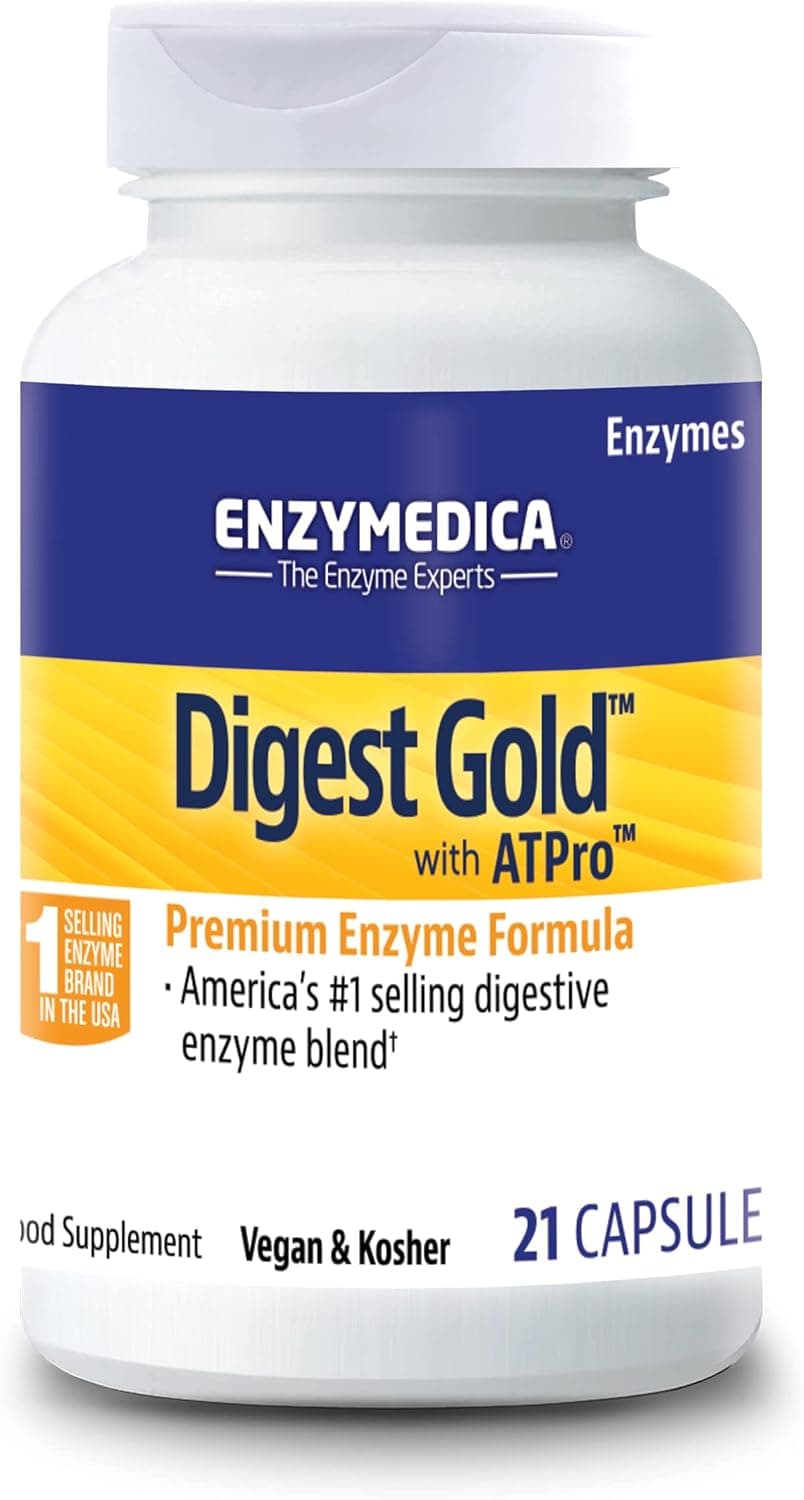
ATP Disodium.
Direct ATP supplementation for energy and blood flow May enhance blood flow and exercise performance through extracellular signaling
Reviewed March 2026
- Category
- Compound
- Also filed under
- EnergyBlood FlowPerformance
What ATP Disodium is, and what it does.
- Does it work
- It suits lifters and cyclists who want a stimulant-free option aimed at blood flow around a session. The clinical record is small, and it works alongside training rather than instead of it.
- How much to take
- Start with 200 to 400mg a day, taken before training on the days you train. The 600mg used in studies is a research condition rather than a daily target.
- Time to feel it
- Blood flow measures moved within about half an hour of a dose in trial settings. Differences in strength studies took weeks of training alongside it.
- The first dose
- Possible improved blood flow or muscle pumps during training.
- With regular use
- May contribute to better performance over time if training consistently.
- How well tolerated
- Appears safe but long-term data is limited.
- How it feels
- Subtle vasodilation, possibly better pumps. Not dramatic.
- The overlooked benefit
- It does not top up the ATP inside your muscles. What it feeds is the signal red blood cells send to the vessel wall, so this is a circulation story rather than a fuel one.
200 to 400mg a day is where ATP Disodium works.
Source: Wilson et al. Med Sci Sports Exerc 2013; PEAK ATP research
The proof, claim by claim.
These words describe the research, not the molecule's worth. Research strength is how much work stands behind one claim, and it is never a product score.
- Blood flow and vessel widening during exerciseRandomised trial
- Strength and power output alongside resistance trainingRandomised trial
- Muscle thickness and lean body mass with trainingRandomised trial
- Fatigue across repeated setsRandomised trial
- Purinergic signalling at P2X and P2Y receptorsNarrative review
Questions people ask about ATP Disodium.
- When should I take it?
- Timing matters less than consistency. Pick a time that works for you and take it daily.
- Can I take it with other supplements?
- Usually fine. The main thing to watch is not doubling up on the same ingredient from different products. If you're on prescription meds, check with your pharmacist first.
- Any side effects to watch for?
- Most people tolerate it well at recommended doses. GI upset is the most common complaint with any supplement. Start with a lower dose and work up. If something feels off, stop and reassess.
- Who benefits most from this?
- People who've already covered the basics (diet, sleep, exercise) and want to fine-tune. It's not essential, but could be worthwhile for the right person.
Why these belong in the same formula. Each row says what the basis is, from settled biochemistry through to a trial that measured the pair.
Essentially every enzyme that binds ATP binds it as Mg-ATP, since magnesium neutralises the charge on the phosphate chain and positions it for transfer. Free ATP without magnesium is not the substrate these enzymes use.
Ribose enters through the pentose phosphate route as phosphoribosyl pyrophosphate, the rate-limiting substrate for building and salvaging adenine nucleotides. It supplies the skeleton the adenine pool is rebuilt on.
Phosphocreatine donates its phosphate to ADP through creatine kinase, holding the ATP concentration steady during rapid demand. It is the cell's fastest buffer on exactly the nucleotide pool oral ATP is aimed at.
Extracellular ATP is broken down by ectonucleotidases to ADP, AMP and then adenosine, and much of the vascular signalling attributed to oral ATP runs through adenosine receptors. The two sit on one degradation chain.
Caffeine is a competitive antagonist at A1 and A2A adenosine receptors, the same receptors that carry the signal from ATP breakdown. Taken together, caffeine blunts the adenosine-mediated part of the response.
Coenzyme Q10 shuttles electrons from complexes I and II to complex III, the chain that drives the proton gradient ATP synthase runs on. It supports production where oral ATP supplies the extracellular pool.
NAD+ is the electron carrier feeding complex I, so the size of the NAD pool sets how fast reducing equivalents reach the chain. Nicotinamide riboside is a direct precursor of that pool.
ATP synthase joins ADP to inorganic phosphate, so phosphate availability is one of the substrates of the reaction. Phosphate salts supply that side of the equation.
Inosine feeds the purine salvage route back toward adenine nucleotides rather than being excreted as urate. It works on the same nucleotide pool from the recycling side.
Nitrate is reduced to nitric oxide and acts through soluble guanylate cyclase, while ATP breakdown products act through purinergic and adenosine receptors on the endothelium. The two widen vessels through different signalling chains.
NMN is converted to NAD by NMNAT, a reaction that consumes ATP and joins an adenylyl group onto the nicotinamide mononucleotide. Adenine nucleotide availability is therefore part of what allows NAD synthesis to run. The relationship is settled biochemistry, not a tested supplement combination.
NAD carries an adenosine monophosphate half, so the adenine nucleotide pool and the NAD pool draw on the same building blocks. Cells running short of adenine nucleotides constrain both energy transfer and redox cofactor turnover. Read this as shared chemistry rather than a measured pairing.
Niacin enters NAD synthesis through the Preiss-Handler route, and both the phosphoribosyl transfer and the adenylylation steps require ATP. The NAD produced then feeds the respiratory chain that regenerates ATP. The two nucleotide pools depend on each other in a loop.
FAD is made by adenylylating FMN, so one molecule of ATP is consumed for every FAD assembled, and FAD then drives complex II of the respiratory chain. Adenine nucleotide supply sits directly upstream of flavin cofactor availability. Settled biochemistry with no combination trial behind it.
Thiamine becomes thiamine pyrophosphate only after a magnesium-dependent kinase transfers a pyrophosphate group from ATP. That cofactor then runs pyruvate dehydrogenase, the entry point to the citric acid cycle. Adenine nucleotide supply is what makes the activation step possible.
ATP is an adenosine molecule carrying three phosphate groups, and inorganic phosphate is the substrate that ATP synthase joins to ADP to remake it. Cellular phosphate availability limits how fast the ATP pool can be regenerated. This is textbook bioenergetics.
Lipoic acid is the covalently bound cofactor of pyruvate dehydrogenase and alpha-ketoglutarate dehydrogenase, two of the gatekeeping steps that feed reducing equivalents into ATP production. Its own attachment to those enzymes is ATP dependent. The two sit on the same production line at different stations.
Carnitine carries long chain fatty acids across the inner mitochondrial membrane for beta-oxidation, and the acyl-CoA that gets loaded onto it was itself made using ATP. Fat cannot be used as fuel without the carnitine shuttle. The relationship runs both ways: ATP is spent to activate the fatty acid and generated from oxidising it.
Taurine is conjugated to specific mitochondrial tRNA uridines, and that modification is required for accurate translation of several respiratory chain subunits. Poorly translated subunits mean less efficient ATP production. The mechanism is established in cell biology. No supplement combination trial defines what pairing them does.
Extracellular ATP acts at endothelial P2Y receptors to release nitric oxide, and citrulline raises arginine availability for nitric oxide synthase. Both routes converge on vasodilation. The convergence is mechanistic. The combination has not been measured together.
Bicarbonate raises extracellular buffering capacity, which helps maintain the pH gradient that ATP-consuming contractile machinery works against during intense effort. It does not change ATP supply itself. Read this as complementary positioning inside sports formulas rather than a shared mechanism.
Beta-alanine builds muscle carnosine, an intracellular buffer, over weeks of daily dosing. It appears in the same performance formulas as ATP disodium because they target the same use case, not because they share chemistry. The pairing is blend convention.
Coenzyme A is assembled from pantothenic acid through a sequence that consumes three ATP molecules, including an adenylyl transfer that puts an adenosine group into the final cofactor. Coenzyme A then carries every acetyl unit entering the citric acid cycle. Adenine nucleotide supply and coenzyme A supply are chemically linked.
Nothing specific on file for ATP Disodium. Match the label to the daily amount above, and tell your doctor what you take.
Not medical advice. Show the label to your pharmacist.What ATP Disodium actually does.
ATP disodium is adenosine 5-triphosphate paired with sodium. It's supplied as a salt because the free acid is unstable and strongly acidic once it hits solution.
Swallow ATP and enzymes in your gut lumen and on the brush border, alkaline phosphatase and nucleotidases, pull the phosphates off. What actually crosses the intestinal wall is mostly adenosine and inorganic phosphate, not intact ATP.
The adenosine you absorb gets its phosphates put back on inside cells by adenosine kinase and adenylate kinase, the purine salvage route, feeding your own adenine nucleotide pool.
ATP outside the cell is a signalling molecule in its own right, acting at P2X ion channels and P2Y receptors on vessel lining, platelets, nerve endings and immune cells.
Where ATP Disodium comes from.
It is grown, not built from scratch. Microbes fed on sugar add phosphate groups onto adenosine until you get ATP, then the mixture is run through a column that separates the three-phosphate version from the partly broken-down ones. Because it degrades with warmth and damp, storage conditions and the purity number on the certificate matter more here than in most ingredients.
Built by fermentation, the same way vitamin B12 and many amino acids are made at scale. Controlled conditions, consistent output.
Commercial ATP is produced biologically rather than by total synthesis. A sugar feedstock is fed to yeast or a bacterial production strain, or to a permeabilised cell preparation, alongside an adenosine or adenine source.
Cellular or isolated kinases phosphorylate adenosine stepwise to AMP, ADP and ATP, driven by the energy the culture derives from the sugar. Some processes use isolated polyphosphate kinases in a cell-free system instead.
Biomass is separated and the nucleotide-containing broth is clarified, with rapid chilling to limit hydrolysis of the triphosphate back to ADP and AMP.
The triphosphate is separated from ADP, AMP and adenosine by anion exchange, since the three phosphate charges bind more strongly than the mono and diphosphate species. This step sets the ATP-to-ADP ratio on the certificate.
The purified acid is neutralised with sodium hydroxide or sodium carbonate to the disodium salt, then crystallised or precipitated with alcohol.
The salt is dried under low temperature, often freeze dried, then packed under low humidity and cool storage because the triphosphate hydrolyses as the material takes up water.
Getting ATP Disodium from food.
The whole-food sources on file. A supplement closes the gap, it does not replace dinner.
A gram-for-gram figure (how much of each you would eat to match a dose) will appear here once it is sourced and reviewed. This page will not print a number it cannot cite.
The forms it comes in.
The essence, in one line each.
- Oral adenosine 5' triphosphate raised post exercise blood ATP levels and increased measured muscle excitability compared with placebo.Randomised trial. Purpura et al., 2017 (Journal of the American College of Nutrition). PMID 28080323 ↗
- Focally administered succinate changed cerebral metabolic measures in which ATP was tracked as a marker of mitochondrial function. ATP appears here as something measured, not as something supplemented.Randomised trial, in cells. Khellaf A et al., 2022 (Journal of Cerebral Blood Flow and Metabolism). PMID 34494481 ↗
- High-dose oral pyrophosphate, a product of extracellular ATP breakdown, reduced connective tissue calcification in Abcc6 null mice while showing possible effects on bone structure. A mouse study of an ATP metabolite rather than of ATP disodium.Animal study. Rajpar I et al., 2026 (JBMR Plus). PMID 41631202 ↗
These are the studies our verdict leans on, chosen from the 943 we read for ATP Disodium. The full linked list is below.
FDA Disclaimer: These statements have not been evaluated by the Food and Drug Administration. This information is for educational purposes only and is not intended to diagnose, treat, cure, or prevent any disease. Consult your healthcare provider before starting any supplement regimen.