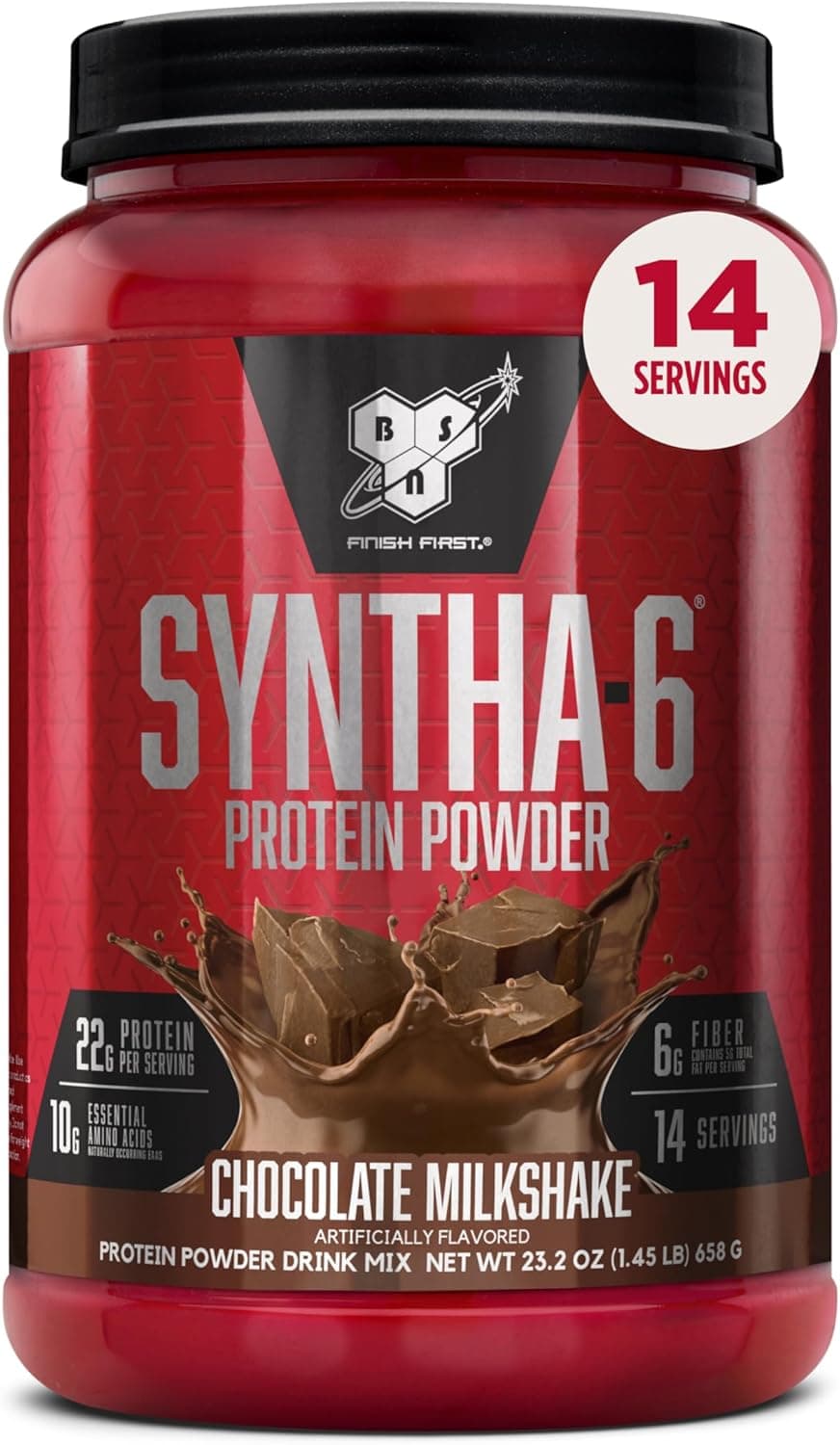
Casein Micellar.
Casein Micellar supplementation for targeted health support. Preserves muscle protein better than fast proteins overnight.
Reviewed March 2026
- Category
- Protein
What Casein Micellar is, and what it does.
- Does it work
- Best evidence-backed slow protein. Proven for overnight muscle preservation.
- How much to take
- 30-40g before bed. 20-30g at other times for sustained release.
- Time to feel it
- Fullness lands within the hour, and the amino acid rise it produces runs for six to eight hours. Muscle changes track weeks of steady intake.
- The first dose
- Very filling. May feel heavier in stomach than whey.
- With regular use
- Better overnight muscle preservation. Sustained amino acid availability.
- How well tolerated
- Well tolerated. It's a milk protein, so it doesn't suit a cow's milk protein allergy, and it carries some lactose, which is worth knowing if dairy sits badly with you.
- How it feels
- Full and satisfied. Thick and creamy texture.
- The overlooked benefit
- It brings its own calcium. The mineral is structural to the micelle, so microfiltered micellar casein carries well over a gram per hundred grams of protein.
10 to 25g a day is where Casein Micellar works.
Source: Res et al. (2012) Med Sci Sports Exerc; slow-release protein studies
The proof, claim by claim.
These words describe the research, not the molecule's worth. Research strength is how much work stands behind one claim, and it is never a product score.
Casein Micellar has emerging evidence, with 10 cited human studies on this page.
- Slow amino acid releaseMultiple kinetics studies confirm 6-8 hour release
- Better overnight muscle preservationStudies show reduced muscle breakdown during sleep
- Improves body compositionMeta-analyses show benefits when used as part of protein-adequate diet
Questions people ask about Casein Micellar.
- Why is it slow?
- Casein micelles gel in stomach acid, creating a slow-digesting clump that releases amino acids gradually.
- Better than whey?
- Different, not better. Whey is fast (around workouts), casein is slow (overnight, between meals).
- Can I use it as my only protein?
- Yes, but you'll miss the fast post-workout benefit. Many people use both.
- Does it taste worse than whey?
- Usually thicker and less sweet. Quality varies by brand. Some are quite good.
- How long does it really last?
- Studies show elevated amino acids for 6-8 hours. Perfect for overnight.
- What's 'micellar' mean?
- The natural structure of casein in milk. Micelles are tiny protein balls. Keeps the slow-release property intact.
Why these belong in the same formula. Each row says what the basis is, from settled biochemistry through to a trial that measured the pair.
Micellar casein clots in the stomach and releases amino acids slowly, so the leucine peak is blunted by design. Free leucine restores the sharp signal that starts muscle protein synthesis while the casein keeps feeding the pool.
Whey gives the immediate amino acid spike and micellar casein extends the supply for several hours. The blend is standard formulation practice for exactly that reason.
The casein micelle is held together by colloidal calcium phosphate nanoclusters, so the protein arrives with calcium already bound in a soluble form. Its phosphopeptides keep that calcium dissolved further down the small intestine.
Casein phosphopeptides chelate zinc and hold it soluble against phytate and phosphate precipitation. Only soluble zinc reaches the intestinal transporters.
Micellar casein is filtered rather than hydrolysed, so a small amount of lactose rides along with it. Lactase splits that lactose into glucose and galactose for people whose own intestinal lactase activity has fallen with age.
Co-ingesting protein raises insulin, which increases creatine uptake through the muscle creatine transporter. The combination is standard in recovery formulas.
Casein micelles bind tea catechins and lower the free polyphenol fraction in the gut lumen. In the same serving, less catechin remains unbound for uptake.
Digestion of casein releases phosphorylated peptides that hold divalent minerals in soluble complexes at the alkaline pH of the small intestine, where they would otherwise precipitate. This is the characterised casein phosphopeptide mechanism and it applies to magnesium as well as calcium. It affects mineral solubility, a chemical step, and should not be read as a demonstrated change in magnesium status.
Casein and the calcium phosphate carried inside its micelles both reduce non-heme iron absorption when taken in the same meal, a long-characterised dairy effect. The practical consequence is spacing an iron supplement away from a casein shake rather than avoiding either. Nothing here suggests a problem with iron status when the two are separated.
Milk proteins, casein in particular, bind tannins and other polyphenols through hydrogen bonding and hydrophobic contacts. That is why tea clouds less and tastes softer with milk. In a supplement context it means a polyphenol taken alongside a casein shake is partly bound, so the two are better separated if the polyphenol is the point.
Casein clots in the stomach because acid drives it past its isoelectric point near pH 4.6, and that clot is the reason amino acid release is slow. Anything that changes gastric acidity changes clot formation and therefore the release curve. Someone taking an acidifier with casein may see faster amino acid appearance, which is a change in kinetics rather than in total absorption.
The casein clot has to be broken down by pepsin and pancreatic proteases before amino acids appear in plasma. Supplemental proteases act on the same substrate and are used in formulas to soften that step. Faster release trades away the slow-drip profile that is the reason micellar casein is chosen in the first place.
Glycine is used before sleep for its own reasons, acting as an inhibitory neurotransmitter and lowering core temperature. Micellar casein is used before sleep for its slow amino acid release. They are combined in night formulas because the timing coincides, not because they interact biochemically.
Pre-sleep casein products commonly add melatonin because both are taken at the same moment in the day. There is no shared pathway between a slowly digested protein and a pineal hormone. A trial of casein timing in soccer players compared pre-sleep with post-exercise intake and did not test a melatonin combination.
Micellar casein carries substantial calcium phosphate inside the micelle, and vitamin D governs the active transcellular calcium uptake pathway in the duodenum. Supplying calcium-rich protein without adequate vitamin D status limits how much of that calcium is taken up by the regulated route. This is established handling, not a claim about bone endpoints.
HMB is a downstream metabolite of leucine, and casein supplies leucine slowly rather than in a sharp bolus. Pairing them puts a preformed metabolite alongside a slow precursor supply. No trial in this candidate set measured the combination.
Beta-alanine works by loading muscle carnosine over weeks to buffer intracellular acidity. Casein contributes amino acid supply for protein turnover. Different targets, commonly stacked, and untested together in the papers available here.
Casein is naturally rich in glutamine and glutamate residues, so added free glutamine overlaps with what the protein already supplies. The difference is that free glutamine is absorbed quickly while the bound form arrives slowly. Whether that timing difference matters for any endpoint is not settled.
Lactoferrin is a minor whey protein that survives some gastric digestion and binds iron tightly. Casein is the bulk protein and the mineral carrier. They co-occur in milk and are combined in dairy-based formulas, though their iron handling pulls in opposite directions, which is worth noting rather than glossing.
Bovine colostrum brings immunoglobulins and growth factors that survive digestion only partly. Micellar casein brings a slow amino acid supply. Formulators combine them for breadth in dairy-protein products. Both carry lactose traces, which matters for anyone limiting it.
Collagen peptides are high in glycine, proline and hydroxyproline but low in tryptophan and contain no complete essential pattern. Casein supplies the full essential set including a solid leucine share. Used together, the casein covers what collagen lacks, which is the honest reason to pair them.
Protein that escapes small-intestinal digestion is fermented in the colon to different products than fibre is, including branched-chain fatty acids and sulphur compounds. Casein's slow digestion means a fraction can reach the colon at high intakes. How probiotic organisms change that picture has not been established.
Nothing specific on file for Casein Micellar. Match the label to the daily amount above, and tell your doctor what you take.
Not medical advice. Show the label to your pharmacist.What Casein Micellar actually does.
Casein micelles are colloidal particles roughly 100 to 200 nanometres across. Alpha and beta caseins are clamped together by nanoclusters of calcium phosphate, with kappa-casein forming a hairy water-loving outer layer that keeps the particles apart in solution.
Casein has almost no folded three-dimensional structure. It's an intrinsically disordered protein, so it doesn't denature the way whey does and heat treatment changes it far less.
Around its isoelectric point near pH 4.6 the micelles lose surface charge and clump. Stomach acid drags casein straight through that point, so it forms a physical clot that empties slowly, and that slow exit is the whole reason blood amino acids climb gently and stay up for hours.
Whey stays dissolved at stomach pH and empties fast, spiking blood amino acids. Casein clots and gives a lower, longer curve. Same milk, two delivery speeds out of one chemical difference.
Where Casein Micellar comes from.
Skim milk is pushed through a filter with holes fine enough to hold back the casein particles while letting whey, lactose and salts through. The casein is washed with water, dried into powder, and never hits acid or high heat, so the natural particle stays whole. That intact particle is what clots in the stomach and releases amino acids slowly.
Made from an animal material. Species and tissue are the things worth knowing, and both belong on a label.
Whole milk is separated to remove fat, then chilled. Cold handling matters because warming shifts calcium phosphate in and out of the micelle
Skim milk is passed across membranes with pores around 0.1 micrometre. Casein micelles are too large to pass and stay in the retentate. Whey proteins, lactose and soluble minerals go through into the permeate
Water is added to the retentate and filtered off repeatedly to wash out remaining lactose and soluble minerals, raising protein purity without acid or heat
Protein is measured by Kjeldahl or Dumas nitrogen and the powder standardised to a declared percentage, with lactose, fat and ash specified
The concentrate is spray-dried at controlled inlet temperature, then optionally instantised with lecithin so it wets more easily. Finished powder is tested for microbial limits
Whether a given powder was microfiltered or made from precipitated curd is not always stated on a label, and the 2020 human work shows that difference changes the plasma amino acid response. Herd, feed and season also shift the whey-to-casein ratio and are never disclosed.
Getting Casein Micellar from food.
The whole-food sources on file. A supplement closes the gap, it does not replace dinner.
A gram-for-gram figure (how much of each you would eat to match a dose) will appear here once it is sourced and reviewed. This page will not print a number it cannot cite.
The forms it comes in.
The essence, in one line each.
- Across trials in younger and older adults, dairy proteins including casein raised muscle protein synthesis, a short-term laboratory marker, above a no-protein control, with faster-digesting proteins showing a larger immediate rise.Meta-analysis. Morgan et al., 2021 (The Journal of nutrition). PMID 33851213 ↗
- Reviewing pre-sleep casein studies, the authors reported that overnight muscle protein synthesis, a laboratory marker, rose, while next-morning appetite and resting energy expenditure were largely unchanged.Systematic review. Dela Cruz et al., 2021 (Nutrients). PMID 34070862 ↗
- Protein eaten before sleep raised mitochondrial protein synthesis rates, a laboratory marker, during overnight recovery from endurance exercise compared with placebo.Randomised trial. Trommelen et al., 2023 (Sports medicine (Auckland, N.Z.)). PMID 36857005 ↗
- Over a resistance training programme, the trial did not detect a difference in strength or muscle size gains between pre-sleep and post-exercise protein timing.Randomised trial. Klemp et al., 2025 (Journal of the International Society of Sports Nutrition). PMID 40539259 ↗
- Higher protein intakes raised diet-induced thermogenesis compared with lower intakes, while differences between protein types such as casein and whey were small.Meta-analysis. Guarneiri et al., 2024 (Advances in nutrition (Bethesda, Md.)). PMID 39486625 ↗
- A randomised controlled comparison of casein glycomacropeptide, free amino acids and micellar casein as protein substitutes, measuring how each affects plasma amino acid appearance.Randomised trial. Daly A et al., 2025 (Nutrients). PMID 40871699 ↗
- How casein is processed strongly changes the post-prandial plasma amino acid response, so two casein ingredients of equal protein content can behave differently in vivo.Randomised trial. Trommelen J et al., 2020 (Nutrients). PMID 32751788 ↗
- A randomised comparison of pre-sleep versus post-exercise casein intake for exercise performance measures in trained players.Randomised trial. Bayrakdaroglu S et al., 2025 (Nutrients). PMID 41470882 ↗
- Different protein sources taken at the pre-dawn meal during Ramadan were compared for anaerobic power and strength, with casein among the sources.Randomised trial. Demirli A et al., 2026 (PLOS One). PMID 41824520 ↗
- A five-ingredient supplement containing whey and casein protein alongside home-based resistance exercise increased lean mass and strength measures in older free-living adults. The trial tested the blend, not casein alone.Randomised trial. Nilsson MI et al., 2020 (Nutrients). PMID 32785021 ↗
These are the studies our verdict leans on, chosen from the 2,339 we read for Casein Micellar. The full linked list is below.
FDA Disclaimer: These statements have not been evaluated by the Food and Drug Administration. This information is for educational purposes only and is not intended to diagnose, treat, cure, or prevent any disease. Consult your healthcare provider before starting any supplement regimen.