Evodiamine.
The isolated warming alkaloid from evodia fruit. It opens the same heat channel chilli does, and most of what's known about it comes from laboratory and animal work.
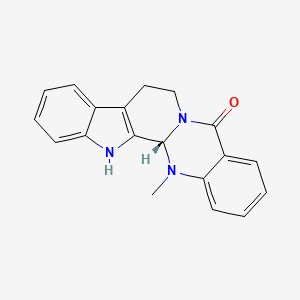 Compound
- Category
- Compound
What Evodiamine is, and what it does.
- Does it work
- Suits formulators and people who specifically want the isolated alkaloid rather than the whole fruit. Human evidence is thin, so expectations sit with the laboratory findings.
- How much to take
- No dose figure is on record and no human maintenance amount has been established. Start at the low end of whatever the label states, taken with food.
- Time to feel it
- The warm, pungent quality shows up quickly. Nothing else about it has a measured time course in people.
- The first dose
- A warm, peppery feeling is the usual first impression. Beyond that, nothing has been documented in people on day one.
- With regular use
- Weeks of use in people haven't been studied. Animal work reports dose-related liver strain, which puts a ceiling on both amount and duration.
- How well tolerated
- This one needs care: animal work shows dose-related liver injury, and companion rutaecarpine speeds clearance of caffeine and melatonin. Check with a clinician first.
- How it feels
- Hot and pungent, close in character to capsaicin without the food around it. Absorption is low, so the experience varies a lot between products.
- The overlooked benefit
- Most current published findings use synthetic modified versions of the molecule, so a headline result often belongs to a derivative rather than to what's in the capsule.
The proof, claim by claim.
What these words mean
These words describe the research, not the molecule's worth. Research strength is how much work stands behind one claim, and it is never a product score.
- TRPV1 receptor agonismIn vitro study
- thermogenesis and body compositionAnimal study
3 more claims
- low oral bioavailability from first-pass metabolism and effluxAnimal study
- dose-related hepatic injury signalAnimal study
- CYP1A2 induction from co-occurring rutaecarpineNarrative review
Why these belong in the same formula, 9 pairings
Why these belong in the same formula. Each row says what the basis is, from settled biochemistry through to a trial that measured the pair.
Evodiamine from Evodia rutaecarpa and berberine from Coptis are combined in classical formulations, and that pairing is why they co-occur so often in the research index. Both are alkaloids with poor oral availability and both are substrates for efflux and hepatic metabolism, so taken together they compete for the same clearance routes. The interaction has been characterised mechanistically rather than in controlled human trials. Anyone stacking two alkaloids should count that overlap rather than assume the effects simply add.
Caffeine is cleared almost entirely by CYP1A2. Rutaecarpine, which travels with evodiamine in any Evodia rutaecarpa extract, induces that enzyme, which means caffeine is cleared faster and its effect at a given dose is blunted. Products that combine an Evodia extract with caffeine for thermogenic purposes are working against themselves on that axis. The direction is well characterised. The size in a person taking a supplement dose is not.
Melatonin undergoes 6-hydroxylation by CYP1A2 before conjugation and excretion. An Evodia extract carrying rutaecarpine speeds that clearance, so the same melatonin dose sits in circulation for less time. Separating the two, or being aware that a thermogenic stack may be quietly shortening a melatonin dose, is the practical read. Mechanistically grounded, not measured in a controlled human study of this pairing.
Evodiamine is a recognised TRPV1 agonist, which is the same receptor capsaicin acts on. Channel opening lets calcium and sodium enter the cell, and that calcium influx is the proximal signal behind the downstream effects reported in cell work. Capsazepine, a TRPV1 antagonist, blocks it, which is why that compound shows up repeatedly alongside evodiamine in the literature index. This describes the receptor mechanism, not an effect measured in people.
Evodiamine has documented hepatotoxic potential at higher exposures, and glutathione conjugation is a standard route for handling reactive metabolites of alkaloids in the liver. Glutathione depletion is the point at which such handling stops keeping up. This is a caution about the compound rather than a reason to combine the two. Anyone using an Evodia extract should count liver load, not assume an antioxidant cancels it.
Work in Chinese medicine journals describes evodiamine-induced hepatotoxicity in animals, framed as a dose-dependent liver effect. Silymarin is the conventional hepatoprotective co-ingredient in botanical formulation. There is no trial showing it offsets evodiamine specifically, so this is formulation logic rather than demonstrated protection. The more useful conclusion is that the liver signal is real enough that the compound is not one to push on dose.
Evodiamine is poorly available orally because of first-pass metabolism and efflux transport. Piperine inhibits CYP3A4 and P-glycoprotein, which raises systemic exposure to compounds handled by those routes. That cuts both ways here: raising exposure to a compound with a documented liver signal is not obviously desirable. The mechanism is well described. Whether the pairing is wanted is a separate judgement.
Evodiamine dissolves poorly in water, which is a large part of why its oral availability is low. A lipid vehicle disperses it and supports micellar uptake in the small intestine. This is why encapsulated and lipid-based delivery systems dominate the formulation literature for this compound. It changes how much gets in, not what it does once there.
Quercetin inhibits several UGT and sulfotransferase reactions and modulates efflux transport, which are the same routes that limit alkaloid exposure. Combined, the two compete for finite conjugation capacity, which can raise circulating levels of either beyond what the doses suggest. This is a general polyphenol-alkaloid interaction rather than something measured for this specific pair. Flagged because it changes exposure, and exposure is where this compound's liver signal lives.
Nothing specific on file for Evodiamine. Match the label to the daily amount above, and tell your doctor what you take.
Not medical advice. Show the label to your pharmacist.What Evodiamine actually does.
Evodiamine is an alkaloid found in the dried unripe fruit of a plant used in traditional medicine, and it always occurs alongside a closely related compound called rutaecarpine.
3 more mechanisms
It activates the same heat and spice sensing channel that capsaicin does, letting calcium and sodium into cells, and blocking that channel with a specific antagonist stops the effect, which is how researchers identified the target.
Very little of an oral dose actually gets into circulation, since it dissolves poorly, gets broken down quickly by the liver, and gets pumped back out of intestinal cells, which is why most formulation research focuses on delivery systems rather than plain powder.
The companion compound rutaecarpine, present in any whole-fruit extract, speeds up a liver enzyme that clears caffeine and melatonin, which is probably the most practically important interaction of this botanical.
Where Evodiamine comes from.
It comes from the small dried unripe fruit of a Chinese tree. The alkaloid is pulled out with solvent and cleaned up by column, but its near-twin rutaecarpine always tags along, and that companion speeds up the liver enzyme that clears caffeine and melatonin. Worth knowing before it goes in a stack with either.
What this route gives you
Made from a plant. What ends up in the capsule tracks the harvest, so batch testing and a stated marker matter more here than with a made molecule.
5 steps on record
The small dried fruit of Tetradium ruticarpum, a rutaceous tree cultivated in China. The unripe fruit is the traditional material and carries the highest alkaloid content.
Alkaloids are pulled from milled fruit with ethanol or an acidified aqueous solvent. Evodiamine and rutaecarpine come out together because they are structurally close.
Column chromatography or recrystallisation separates evodiamine from rutaecarpine and the other fruit constituents. Complete separation is difficult, which is why extracts almost always carry both.
Extracts are standardised to a stated evodiamine percentage by high performance liquid chromatography, usually with rutaecarpine reported alongside it.
Supplied as purified powder for research, as a standardised botanical extract, or formulated into a lipid or encapsulated system to address poor solubility.
The forms it comes in.
4 more forms
The essence, in one line each.
- The paper characterises evodiamine-induced liver injury and examines whether that same hepatic effect can be redirected via the liver-gut axis, framing the compound's toxicity as dose and context dependent.Animal study. Zhao et al., 2025 (Chinese Medicine). PMID 41267121 ↗
2 more findings
- N14-phenyl-substituted derivatives of evodiamine were synthesised and screened against fungal targets, indicating that the scaffold is being modified for activity rather than used as the parent compound.In vitro study. Peng et al., 2025 (Bioorganic Chemistry). PMID 40925225 ↗
- An N14-substituted evodiamine derivative was developed with heat shock protein 70 inhibition as its mechanism, again working from a modified scaffold rather than native evodiamine.In vitro study. Min et al., 2024 (Scientific Reports). PMID 39455626 ↗
Chosen from the 3 we read for Evodiamine.
FDA Disclaimer: These statements have not been evaluated by the Food and Drug Administration. This information is for educational purposes only and is not intended to diagnose, treat, cure, or prevent any disease. Consult your healthcare provider before starting any supplement regimen.