Kutkin.
Kutkin is the bitter fraction of Picrorhiza rhizome. Bitters prompt saliva, gastric secretion and bile flow, and in liver cell models the fraction supports glutathione handling.
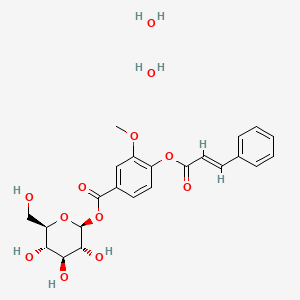 Compound
- Category
- Compound
What Kutkin is, and what it does.
- Does it work
- Suits people building a liver-support or digestive-bitters routine who want the standardised fraction. The human record is small, at 135 published papers across the field.
- How much to take
- No daily amount is on record. Start with what a standardised fraction states, and note that gut bacteria cut the sugar off before the active part is available.
- Time to feel it
- The bitter taste acts within minutes at the mouth and stomach. Anything at marker level is a weeks-long change read on a blood panel.
- The first dose
- Day one you taste it. Bitters can bring a quick sense of appetite and a meal that sits more easily. The rest is not a day one matter.
- With regular use
- Weeks of use are studied mostly for liver enzyme markers and antioxidant handling. A marker is not an outcome, and the human record here is small.
- How well tolerated
- Bitter herbs can loosen stools and unsettle a sensitive stomach. Because it shifts bile flow, anyone with gallbladder trouble or on medication should check with a clinician.
- How it feels
- Intensely bitter, the kind that makes your face move. After that, a mild sense that a meal sits more easily. Not much else to register.
- The overlooked benefit
- Gut bacteria release the active part, so the same capsule can land differently after a course of antibiotics or in someone with a different microbiome.
The proof, claim by claim.
What these words mean
These words describe the research, not the molecule's worth. Research strength is how much work stands behind one claim, and it is never a product score.
- Liver enzyme markers already in the normal rangeRandomised trial
- Reduced glutathione levels in hepatocyte modelsIn vitro study
3 more claims
- Bile flow and digestive secretion through bitter taste receptor signallingNarrative review
- Antioxidant activity under oxidative challengeAnimal study
- Immune signalling changesAnimal study
Why these belong in the same formula, 14 pairings
Why these belong in the same formula. Each row says what the basis is, from settled biochemistry through to a trial that measured the pair.
Silymarin and kutkin are the two most frequently paired botanicals in hepatic-support formulations, and they appear together across the laboratory literature on hepatocyte oxidative challenge. Both are described as supporting glutathione status rather than acting through a receptor. The pairing is grounded in overlapping laboratory mechanisms and long formulation convention, not in a human combination trial.
Kutkin-containing extracts act on the glutathione system indirectly by reducing the oxidative load that depletes it, while supplemental glutathione addresses the pool directly. The two approach the same buffer from different sides. Oral glutathione absorption is itself limited, which caps how much the direct route contributes.
N-acetylcysteine supplies cysteine, the rate-limiting substrate for glutathione synthesis. Kutkin's described activity depends on the glutathione pool holding up under oxidative load. Supplying the precursor and reducing the drain are complementary rather than redundant, though this reasoning is mechanistic and has not been tested as a combination in people.
Alpha-lipoic acid participates in regenerating oxidised glutathione and other antioxidants back to their reduced state. That sits alongside kutkin's laboratory-described role in limiting glutathione depletion. Both act on the same redox network at different nodes.
Cynarin-bearing artichoke leaf and bitter Picrorhiza are both used to stimulate bile flow, and they are routinely combined in digestive bitters. Two choleretic bitters together increase the effect on bile secretion and on the loosening of stools. Anyone with a bile duct obstruction or gallstones should not be combining choleretics at all.
Dandelion root is another bitter used to stimulate digestive secretion, and it appears with kutki in traditional and modern bitter blends. The overlap is on bile flow and gastric secretion. Additive effects on stool frequency are the practical consequence of stacking bitters.
Curcumin and kutkin are frequently formulated together in Ayurvedic hepatic and inflammatory preparations, and both are described as acting on NF-kB signalling in laboratory models. Curcumin is poorly absorbed on its own, which limits how much of that overlap is realised orally. The pairing rests on formulation tradition plus converging in vitro targets.
Piperine inhibits intestinal and hepatic glucuronidation and CYP3A4, raising systemic exposure of many co-administered compounds. It appears in most Ayurvedic-derived formulations for exactly that reason. The same property means it raises exposure to prescription medicines taken at the same time, which is the part that is usually left off the label.
Ginger is a classical anupana, or carrier herb, added to bitter Ayurvedic preparations to reduce their gastric harshness. It stimulates gastric emptying and reduces the nausea that concentrated bitters can provoke. This is a tolerability pairing rather than an activity one.
Licorice is used across Ayurvedic and Chinese formulations to soften the harshness of bitter and purgative herbs. It has its own consideration attached: glycyrrhizin inhibits 11-beta-hydroxysteroid dehydrogenase and can raise blood pressure and lower potassium with sustained use. Deglycyrrhizinated licorice avoids that particular issue.
Schisandra lignans are the other main botanical grouped with kutkin in hepatic-support blends, and they show antioxidant activity in the same class of laboratory models. Schisandra also affects CYP3A4 activity, which is relevant when other medicines are in play. The pairing is conventional, and the combined effect on drug clearance is the part worth checking.
Iridoid glycosides need microbial beta-glucosidase activity to release the aglycone, so the composition of the gut flora directly determines how much active compound is generated from a given dose. That makes the microbiome an upstream determinant of exposure rather than a bystander. It also explains part of why responses to the same standardised extract differ so widely between people.
Bitter herbs that alter bile flow change the micellar environment for fat-soluble vitamin uptake, and at higher doses the laxative effect shortens transit time. Both directions matter for vitamin E, vitamin D, vitamin K and carotenoids taken in the same window. Separating a concentrated bitter from a fat-soluble vitamin dose avoids the question.
Polyphenol-rich botanical extracts bind non-heme iron in the gut lumen and reduce its absorption, a well-characterised effect for tannin- and polyphenol-bearing plants. Taking a bitter rhizome extract with an iron supplement in the same dose window works against the iron. Spacing them by two hours or more removes the overlap.
Nothing specific on file for Kutkin. Match the label to the daily amount above, and tell your doctor what you take.
Not medical advice. Show the label to your pharmacist.What Kutkin actually does.
These compounds arrive with a sugar attached and gut bacteria have to snip it off first, so the same dose does not land the same way in everyone.
3 more mechanisms
Bile is what lets you absorb fats and fat-soluble vitamins, so changes to bile flow ripple outward.
In cell and animal work it helps keep glutathione, the liver's main internal antioxidant, from being depleted.
It is extremely bitter, and bitterness itself gets digestive juices and bile moving.
The forms it comes in.
3 more forms
FDA Disclaimer: These statements have not been evaluated by the Food and Drug Administration. This information is for educational purposes only and is not intended to diagnose, treat, cure, or prevent any disease. Consult your healthcare provider before starting any supplement regimen.