Saccharomyces cerevisiae.
Depending on the form, yeast gives you B vitamins and protein in a food matrix, cell wall beta-glucan the immune system recognises, or a savoury extract for flavour.
- Category
- Herb
What Saccharomyces cerevisiae is, and what it does.
- Does it work
- It suits plant based eaters wanting B vitamins in food form and anyone after yeast beta-glucan. Check first if you are on a monoamine oxidase inhibitor.
- How much to take
- No single amount is on record, and it depends on the form. Nutritional yeast is used by the tablespoon, while isolated beta-glucan is used in far smaller servings.
- Time to feel it
- Nothing dramatic on day one. B vitamin status moves over weeks on a blood panel, and beta-glucan shows up as measured immune markers rather than a sensation.
- The first dose
- A savoury, cheesy taste if you are using the flakes. Live yeast can bring a little gas as it passes through. Otherwise the day is ordinary.
- With regular use
- Weeks of daily nutritional yeast fill B vitamin gaps that read on a blood panel. Cell wall beta-glucan is studied over similar stretches for immune marker changes.
- How well tolerated
- Well tolerated as a food. It is high in purines, so anyone watching uric acid should go easy, and autolysed extracts carry tyramine, which matters on a monoamine oxidase inhibitor.
- How it feels
- Nutritional yeast tastes savoury and nutty, close to parmesan. The nutritional side is not a sensation, it reads on a blood panel over weeks.
- The overlooked benefit
- Grown on selenium or chromium enriched media, the yeast builds the mineral into its own proteins. That is how organic forms such as selenomethionine are made.
The proof, claim by claim.
What these words mean
These words describe the research, not the molecule's worth. Research strength is how much work stands behind one claim, and it is never a product score.
- Immune marker response to yeast beta-glucanRandomised trial
- B vitamin content of yeast biomassNarrative review
4 more claims
- Organic mineral delivery from selenium enriched yeastRandomised trial
- Gut microbiota shifts with yeast cell wall polysaccharideRandomised trial
- Dietary purine load from yeast productsNarrative review
- Tyramine content of autolysed yeast extractNarrative review
Why these belong in the same formula, 14 pairings
Why these belong in the same formula. Each row says what the basis is, from settled biochemistry through to a trial that measured the pair.
Saccharomyces cerevisiae cannot distinguish selenium from sulphur at the amino acid level, so selenate in the growth medium ends up as protein-bound selenomethionine. This is the manufacturing route behind selenium yeast. The organism here is the delivery chemistry, not a separate active.
Yeast grown with added trivalent chromium binds the metal into organic complexes within the cell. The resulting material is chemically distinct from inorganic chromium salts. What the yeast contributes is the organic matrix rather than any independent activity.
Zinc-enriched yeast is made by feeding the mineral during culture and harvesting the biomass. The zinc ends up associated with yeast proteins rather than as a free salt. Whether that changes absorption in humans is a separate question from the chemistry of how it is made.
The cell wall of this yeast is built largely from beta-1,3-glucan with beta-1,6 branches, plus mannoproteins. Isolated yeast beta-glucan is that fraction purified out of the same organism. A whole-yeast product and a purified beta-glucan overlap heavily, so stacking them mostly raises the same glucan dose.
Genomically S. boulardii sits inside S. cerevisiae, though it survives at 37 degrees and through gastric acid better than most baking or brewing strains. Products pairing them are stacking closely related organisms rather than complementary ones. Strain identity matters far more here than the species name on the label.
Pairing a live yeast with a fermentable fibre is standard synbiotic construction. Yeast metabolises simple sugars readily and the fibre mainly feeds the resident bacteria. The rationale is formulation logic supported by fermentation data rather than by outcome trials in people.
FOS is used both as a bulking carrier and as a fermentable substrate in yeast-containing products. It supports the resident bacterial community rather than the yeast itself, since yeast lacks the enzymes to use most of it. The pairing is formulation convention with a mechanistic rationale.
Because Saccharomyces is a fungus, it is untouched by antibacterial agents that suppress lactic acid bacteria. That difference is the usual argument for combining the two in one product. It is an argument about survival of the organisms, not a demonstration of a combined effect.
Inactivated yeast carries appreciable thiamine along with riboflavin, niacin and folate, which is why nutritional yeast has been used as a B vitamin source for a century. A product combining yeast with added thiamine is stacking two sources of the same nutrient. Read the total, not the two lines separately.
Yeast contributes riboflavin as part of its intrinsic vitamin content, and many nutritional yeast products are additionally fortified. Fortified and native riboflavin add together in the finished material. Label reading matters more than any interaction here.
Selected yeast strains accumulate glutathione to a degree that makes them the usual industrial source, which is why glutathione ingredients are commonly fermentation products of this organism. A yeast-based glutathione and a whole yeast extract are chemically overlapping materials. The yeast is the manufacturing origin, not a separate partner.
Yeast and lactobacilli coexist in sourdough, kefir and many fermented beverages, with the yeast producing metabolites the bacteria use and the bacteria acidifying the medium. Co-formulation copies that long-standing pairing. It is traditional and manufacturing logic rather than clinical evidence of a combined effect.
Live yeast preparations lose viability under strong gastric acid, and anything that lowers stomach pH further will reduce the delivered count. The direction of the interaction is clear even though nobody has quantified it in people. Enteric coating or capsule design addresses the same problem more predictably.
Yeast cell walls carry mannoprotein and glucan structures with cation-binding capacity, which is the basis of their use as binders in other settings. Whether that meaningfully reduces iron uptake at supplement doses in people has not been measured. Read it as a plausible direction, not a documented effect.
Nothing specific on file for Saccharomyces cerevisiae. Match the label to the daily amount above, and tell your doctor what you take.
Not medical advice. Show the label to your pharmacist.What Saccharomyces cerevisiae actually does.
This yeast's cell wall is mostly made of specific complex sugars along with other structural compounds, and that wall is where isolated yeast beta-glucan comes from.
3 more mechanisms
Yeast biomass naturally contains a range of B vitamins.
When grown on media enriched with selenium or chromium, the yeast takes up the mineral into organic forms, which is how organic mineral yeasts are industrially produced.
Inactivated yeast has no living organisms in it, so it provides cell wall sugars, protein and vitamins, but no live fermentation or colonization activity.
Where Saccharomyces cerevisiae comes from.
This is brewer's and baker's yeast, grown in tanks on sugar. Depending on what the maker does next you get a live yeast, a dead nutrient-rich flake, a cell wall fibre or a savoury extract, and those behave quite differently.
What this route gives you
Built by fermentation, the same way vitamin B12 and many amino acids are made at scale. Controlled conditions, consistent output.
6 steps on record
Molasses, glucose syrup or another carbohydrate feedstock provides the carbon source, with added nitrogen, phosphate and trace minerals.
The yeast is grown under controlled oxygen, pH and temperature, with sugar fed slowly to favour biomass over ethanol production.
Cells are recovered by centrifugation and washed to remove spent medium.
Depending on the product, cells are kept whole, autolysed to yield extract, or the wall is separated from the cytoplasm to isolate beta-glucan and mannoprotein.
Live products are standardised to colony forming units, inactivated products to protein, beta-glucan or a declared mineral content.
Spray drying, drum drying or fluid bed drying gives the finished powder or flake.
Getting Saccharomyces cerevisiae from food.
The whole-food sources on file. A supplement closes the gap, it does not replace dinner.
A gram-for-gram figure (how much of each you would eat to match a dose) will appear here once it is sourced and reviewed. This page will not print a number it cannot cite.
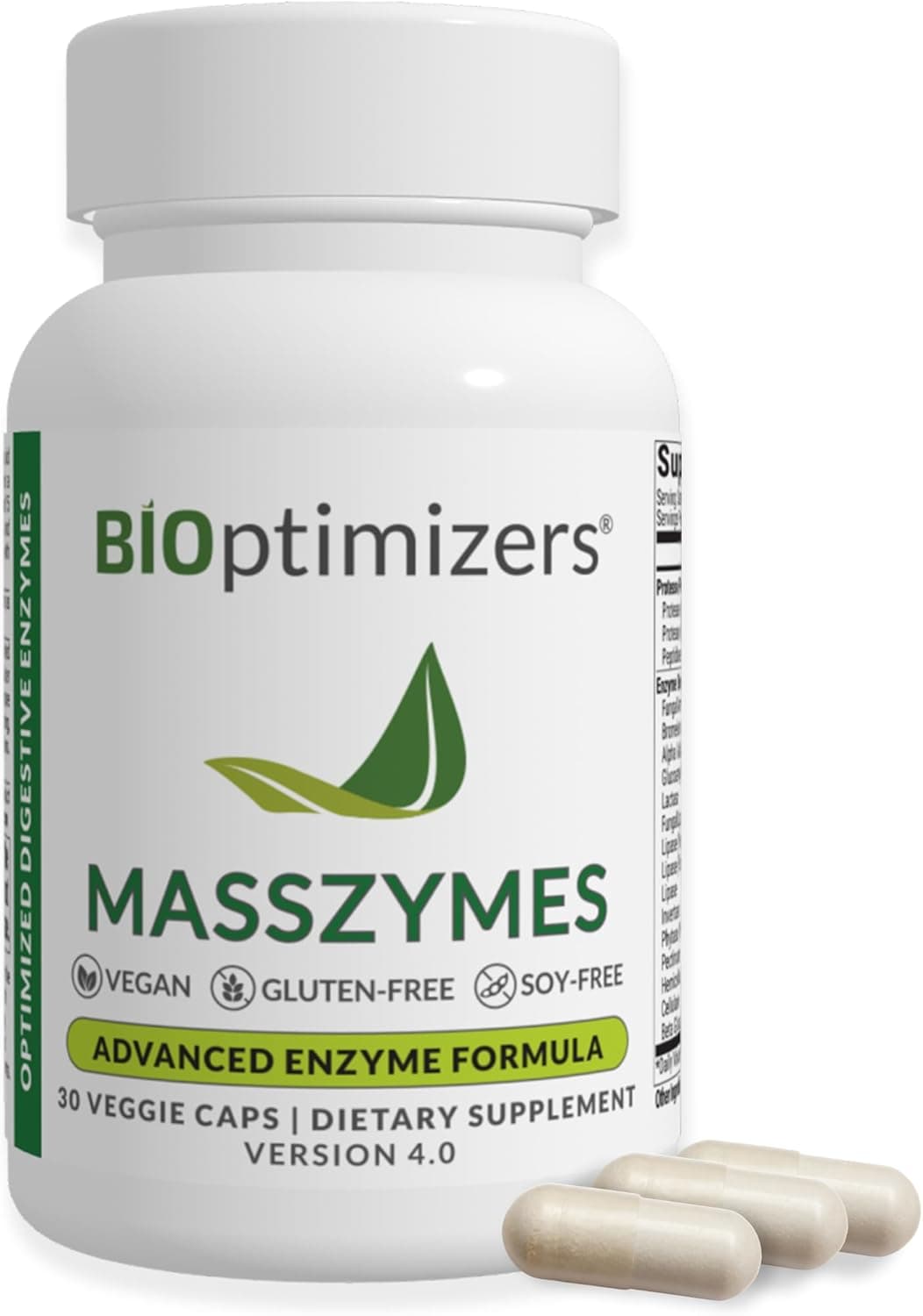
The forms it comes in.
5 more forms
The essence, in one line each.
- Engineered whole-cell Saccharomyces cerevisiae was used as a biocatalyst to synthesise amines for active pharmaceutical ingredients.In vitro study. Kwiatos N et al., 2026 (Chembiochem). PMID 42107106 ↗
6 more findings
- A Saccharomyces cerevisiae fermentation product was assessed for effects on diet palatability and intestinal measures in cats.Animal study. Ishii PE et al., 2025 (Animals). PMID 40941346 ↗
- Live yeast supplementation was reported to attenuate heat stress responses in dairy cows.Animal study. Cabrita ARJ et al., 2025 (Veterinary Sciences). PMID 41012716 ↗
- Reviews yeast-derived postbiotics and their proposed mechanisms in farm animal gut health.Narrative review, in animals. Cerdan-Alduan M et al., 2026 (Veterinary Sciences). PMID 41893704 ↗
- Probiotic and yeast culture supplementation altered selected biochemical and immunological parameters in growing animals.Animal study. Mahmoud MM et al., 2020 (Polish Journal of Veterinary Sciences). PMID 32233295 ↗
- Dietary yeast supplementation was associated with changes in growth, glutathione peroxidase activity and biochemical status in juvenile barramundi.Animal study. Ilham I et al., 2017 (Fish Physiology and Biochemistry). PMID 28028742 ↗
- Enzymes displayed on the yeast cell surface were used to produce functional dipeptides.In vitro study. Geum S et al., 2026 (Journal of Microbiology and Biotechnology). PMID 41814588 ↗
Chosen from the 7 we read for Saccharomyces cerevisiae.
The studies, linked.
6 sources behind our Saccharomyces cerevisiae verdict, every one linked to PubMed, the journal or ClinicalTrials.gov.
- Clinical trialEffect of S.Cerevisiae vs Placebo on the Improvement of Gastrointestinal Disorders,Especially During Irritable Bowel Syndrome. Randomized, Double-blind StudyClinicalTrials.gov ↗364 participants, Completed
5 more linked trials
- Clinical trialEvaluation of the Effect of Saccharomyces Cerevisiae on the Improvement of the Conventional Treatment for Vulvo-vaginal Infection to Candida Spp (Local Administration)ClinicalTrials.gov ↗80 participants, Terminated
- Clinical trialEffectiveness of a Dietary Supplement Based on a Synergistic Combination of Beta-Glucans and Saccharomyces Cerevisiae Yeast Enriched With Zinc and Selenium in Allergic Patients Undergoing Subcutaneous Immunotherapy Study.ClinicalTrials.gov ↗Phase 4, 60 participants, Completed
- Clinical trialRandomized, Double-blind, Placebo-controlled Clinical Study Evaluating the Effect of Oral Probiotic Yeast on the Composition of the Vaginal Microbiota in Healthy WomenClinicalTrials.gov ↗60 participants, Completed
- Clinical trialA Phase 2 Study of GI-6207 in Patients With Recurrent Medullary Thyroid CancerClinicalTrials.gov ↗Phase 2, 35 participants, Completed
- Clinical trialEfficacy and Safety of Saccharomyces Cerevisiae for Abdominal Pain and Discomfort in Irritable Bowel Syndrome (IBS) PatientsClinicalTrials.gov ↗Phase 1, 30 participants, Completed
From clinical trials and PubMed, ranked by study type and citation weight, not cherry-picked.
Problems people have reported.
Read this carefully. These are 2,796 voluntary, unverified reactions reported to the FDA (openFDA). The number mostly reflects how popular Saccharomyces cerevisiae is, not how risky it is. A report is not proof Saccharomyces cerevisiae caused anything. It is a signal of what to watch for, nothing more.
3 more reported effects
Source: openFDA adverse-event reports. Voluntary reporting, not an incidence rate.
FDA Disclaimer: These statements have not been evaluated by the Food and Drug Administration. This information is for educational purposes only and is not intended to diagnose, treat, cure, or prevent any disease. Consult your healthcare provider before starting any supplement regimen.