Selenomethionine.
It's the form of selenium your body can store in tissue, feeding the roughly 25 selenoproteins that run antioxidant defence and thyroid hormone conversion.
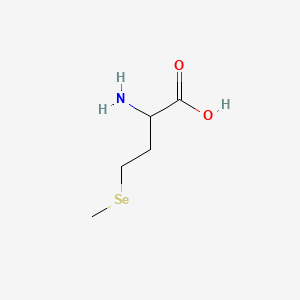 Amino acid
- Category
- Amino acid
What Selenomethionine is, and what it does.
- Does it work
- Suits plant-based eaters, people in low-selenium soil regions, and anyone supporting normal thyroid function. Regular Brazil nut eaters are usually well covered already.
- How much to take
- No dose figure is on record here. Selenium has a narrow gap between adequate and excessive, so start with a modest daily amount and count every source you take.
- Time to feel it
- Weeks. Selenoprotein activity climbs gradually and shows up on a plasma selenium or glutathione peroxidase reading rather than in how you feel.
- The first dose
- Quiet. It's taken up within hours through the transporters that carry neutral amino acids and starts going into body protein, with no sensation attached.
- With regular use
- Weeks of daily use build a tissue reservoir, because it slots into proteins anywhere methionine would go. That reservoir is something inorganic selenium salts don't build.
- How well tolerated
- Well tolerated at everyday intakes. It accumulates over months, so total selenium from all sources matters. Check with a clinician if you take thyroid medication.
- How it feels
- Nothing subjective. This is a background nutrient whose change lands on a blood panel and in enzyme activity rather than in mood or energy.
- The overlooked benefit
- The enzymes converting thyroxine into the active thyroid hormone are selenoproteins, so selenium status sits inside normal thyroid signalling, not just antioxidant defence.
The proof, claim by claim.
What these words mean
These words describe the research, not the molecule's worth. Research strength is how much work stands behind one claim, and it is never a product score.
- selenium statusRandomised trial
- glutathione peroxidase activityRandomised trial
4 more claims
- thyroid hormone conversionRandomised trial
- immune cell functionRandomised trial
- sperm quality markersRandomised trial
- antioxidant defenceNarrative review
Why these belong in the same formula, 10 pairings
Why these belong in the same formula. Each row says what the basis is, from settled biochemistry through to a trial that measured the pair.
Methionyl-tRNA synthetase loads selenomethionine in place of methionine, so selenomethionine is incorporated non-specifically into body proteins wherever methionine would go. The share that ends up in general protein rather than in the regulated selenium pool depends on how much dietary methionine is present. A methionine-rich diet lowers non-specific incorporation and pushes more selenium toward the transsulfuration route that feeds selenoprotein synthesis. This competition is the main reason selenomethionine builds a tissue store while inorganic selenium forms do not.
Vitamin E intercepts lipid peroxyl radicals in the membrane, and selenium-dependent glutathione peroxidases reduce the hydroperoxides that form. Neither covers the full sequence alone, which is why classical deficiency studies showed one partly sparing the other. The pairing is about the peroxidation pathway, not about any clinical endpoint. It is one of the better established nutrient interactions in the field.
Glutathione peroxidase uses a selenocysteine residue at its active site and consumes reduced glutathione as its reducing substrate. Selenium status sets how much enzyme can be made, glutathione supply sets how fast it can turn over. Low glutathione limits the enzyme even when selenium is plentiful. The two constrain the same reaction from different sides.
Cysteine availability usually limits how much glutathione a cell can make. Raising it supports the reducing substrate that selenium-dependent peroxidases consume. This is an upstream supply relationship rather than a direct interaction with selenomethionine itself. It matters most when glutathione is depleted rather than in someone already well supplied.
Iodine is built into thyroxine, and the enzymes that convert thyroxine to the active triiodothyronine are selenoproteins. The thyroid also holds one of the highest selenium concentrations of any tissue, which supports the peroxide handling that hormone synthesis generates. Adequacy of both nutrients matters for the axis to run normally. Correcting one while the other stays low leaves the sequence incomplete.
High-dose ascorbate reduces sodium selenite to elemental selenium, which is poorly absorbed, so the two should not be swallowed together. Selenomethionine is an amino acid and is absorbed through amino acid transport, so it is not subject to that reduction. This is a practical reason a formulator picks selenomethionine over selenite in a multivitamin containing vitamin C. The distinction is about the selenium form, not about vitamin C being a problem in itself.
Zinc supports superoxide dismutase and a wide set of structural roles, while selenium supports the peroxidase and deiodinase families. They cover different steps of the same antioxidant defence sequence. Unlike zinc and copper, there is no well described absorption competition with selenomethionine, which takes an amino acid transporter. The pairing is complementary rather than interfering.
Total selenium intake from all forms is what matters for the upper limit, and selenomethionine builds a tissue reservoir that inorganic forms do not. Stacking a selenium-enriched yeast product with a separate selenium tablet can quietly push intake higher than intended. The margin between adequate and excessive intake for selenium is narrower than for most nutrients. Add the elemental amounts, not the compound weights.
Thioredoxin reductase is a selenoprotein and is one of the enzymes that reduces lipoic acid back to dihydrolipoate. Selenium status therefore affects how efficiently lipoate cycles. The relationship runs from selenium to lipoate rather than the other way. It is enzymology rather than a measured clinical pairing.
Mixed tocopherols cover membrane compartments that alpha-tocopherol alone reaches less well, while selenium-dependent peroxidases clear the hydroperoxide products. The two sit in sequence along the same chain reaction. Formulations pair them for that reason. The evidence is mechanistic and well characterised rather than outcome-based.
Nothing specific on file for Selenomethionine. Match the label to the daily amount above, and tell your doctor what you take.
Not medical advice. Show the label to your pharmacist.What Selenomethionine actually does.
Selenomethionine looks like methionine to the body's protein-making machinery, so it gets built into body proteins wherever methionine would normally go. That's what creates a tissue reserve of selenium that other forms don't build.
3 more mechanisms
To become active selenium, selenomethionine first has to be freed from protein and converted through several steps into a different form before it can be used to build selenium-dependent proteins.
Selenium does its work through roughly 25 different proteins in the body, the biggest groups being glutathione peroxidases, thioredoxin reductases and the enzymes that activate thyroid hormone.
Some of those selenium-dependent proteins are the enzymes that convert thyroxine into the more active thyroid hormone, which is the direct link between selenium status and thyroid hormone activation.
Where Selenomethionine comes from.
The selenium itself is mined material, a by-product of copper production. From there it either gets built into an amino acid in a chemical plant, or yeast is fed selenium and does the building. The yeast route gives a mix of selenium compounds with selenomethionine as the main one, so the two are not identical material.
What this route gives you
The same molecule is reached more than one way. Which route a given product used is a manufacturing choice, and the finished compound is the same either way.
5 steps on record
Commercial selenium is recovered largely as a by-product of copper refining, then converted to a soluble salt.
Either the amino acid backbone is built synthetically around the selenium atom, or yeast is fermented on selenium-enriched medium and builds selenomethionine itself.
Synthetic material is crystallised to a defined purity. Yeast material is heat-inactivated, washed and dried as whole cells.
Total selenium and the selenomethionine share are measured, usually by mass spectrometry after enzymatic digestion, because total selenium alone does not identify the form.
Diluted onto a carrier because active doses are in the tens of micrograms and neat material cannot be weighed accurately at that scale.
Labels usually state micrograms of selenium but not which species, and yeast products rarely state what fraction is actually selenomethionine.
Getting Selenomethionine from food.
The whole-food sources on file. A supplement closes the gap, it does not replace dinner.
A gram-for-gram figure (how much of each you would eat to match a dose) will appear here once it is sourced and reviewed. This page will not print a number it cannot cite.
The forms it comes in.
4 more forms
The essence, in one line each.
- In a 6-month randomised trial in children and adolescents with a diagnosed autoimmune thyroid condition, L-selenomethionine supplementation (200 mcg daily) reduced levels of anti-Tg antibodies compared to placebo, but the change in anti-TPO antibodies was not statistically different.Randomised trial, in children and adolescents with autoimmune thyroiditis. Kyrgios I et al., 2019 (Journal of Clinical Pharmacy and Therapeutics). PMID 30306604 ↗
12 more findings
- In a 60-day randomised trial in 40 adults with a diagnosed thyroid condition, 200 micrograms of selenium from selenomethionine-enriched yeast significantly decreased a marker of cell damage and increased hemoglobin, but did not significantly change thyroid hormones, liver enzymes, or blood lipids.Randomised trial, in patients with Hashimoto's thyroiditis. Hajyasini A et al., 2025 (Archives of Razi Institute). PMID 40951555 ↗
- In a meta-analysis of trials in adults with a diagnosed thyroid condition, selenium supplementation was linked to lower levels of thyroid peroxidase antibodies at 3 and 6 months, lower thyroglobulin antibodies at 3 months, and lower thyroid-stimulating hormone at 6 months.Meta-analysis, in patients with Hashimoto thyroiditis. Zhang H et al., 2025 (Medicine). PMID 40898469 ↗
- After selenomethionine supplementation the authors mapped the resulting selenometabolites, including selenosugars and selenocysteine, showing how the amino acid form is processed and excreted.Animal study. Bierla K et al., 2023 (Metallomics). PMID 37898557 ↗
- Selenomethionine supplementation was associated with better antioxidant enzyme measures and less liver injury in an induced-stress model.Animal study. Zhong H et al., 2024 (Antioxidants). PMID 38539829 ↗
- Selenomethionine reduced markers of liver cell death and inflammation in an animal fluoride exposure model, which the authors linked to a specific signalling pathway.Animal study. Wang T et al., 2024 (Science of the Total Environment). PMID 39142410 ↗
- Short-term dietary selenomethionine changed liver and kidney gene expression patterns under a mycotoxin challenge.Animal study. Kövesi B et al., 2025 (Toxins). PMID 41003523 ↗
- Hydroxy-selenomethionine given through gestation and lactation was associated with improved reproductive measures and antioxidant status in the authors' report.Animal study. Wang J et al., 2025 (Antioxidants). PMID 40427408 ↗
- L-selenomethionine supplementation altered nutrient digestibility, antioxidant capacity and hormone measures in the treated animals.Animal study. Li M et al., 2026 (BMC Veterinary Research). PMID 41689060 ↗
- Pooling studies across selenium sources, organic forms including selenomethionine showed different tissue retention than inorganic salts.Animal study. Yano AA et al., 2025 (Journal of the Science of Food and Agriculture). PMID 39996306 ↗
- Dietary selenomethionine changed redox status and lipid metabolism measures in muscle tissue.Animal study. Chen G et al., 2026 (Poultry Science). PMID 41539236 ↗
- Combining n-3 fatty acids with selenomethionine changed oxidative stability of the resulting tissue compared with the fatty acids alone.Animal study. Sun Y et al., 2024 (Food Chemistry: X). PMID 39582640 ↗
- The authors found diet type drove oxylipin and antioxidant metabolite patterns more than the selenium source did.Animal study. Bidon M et al., 2025 (Free Radical Biology and Medicine). PMID 40752637 ↗
Chosen from the 14 we read for Selenomethionine.
The studies, linked.
12 sources behind our Selenomethionine verdict, every one linked to PubMed, the journal or ClinicalTrials.gov.
- Clinical trialSelenium and Vitamin E Cancer Prevention Trial (SELECT) for Prostate CancerClinicalTrials.gov ↗Phase 3, 35,533 participants, Completed
11 more linked trials
- Clinical trialS0000B: Prevention of Cataract and Age-Related Macular Degeneration With Vitamin E and Selenium - SELECT Eye Endpoints (SEE)ClinicalTrials.gov ↗Phase 3, 13,475 participants, Completed
- Clinical trialPhase III Chemoprevention Trial Of Selenium Supplementation In Persons With Resected Stage I Non-Small Cell Lung CancerClinicalTrials.gov ↗Phase 3, 1,772 participants, Completed
- Clinical trialL-Selenium-Based Chemoprevention Of Prostate Cancer Among Men With High Grade Prostatic Intraepithelial NeoplasiaClinicalTrials.gov ↗Phase 3, 619 participants, Completed
- Clinical trialL-selenomethionine Supplementation in Children and Adolescents With Autoimmune Thyroiditis: a Randomized Blind Placebo-controlled Clinical TrialClinicalTrials.gov ↗Phase 4, 100 participants, Completed
- Clinical trialRandomised Phase Ib Trial to Determine the Optimal Selenium Status to Prevent Colorectal Adenoma Recurrence: OSCARClinicalTrials.gov ↗Phase 1, 56 participants, Completed
- Clinical trialA Pilot Study of Selenomethionine and Myo-inositol(SOLOWAYS_TM) in Patients With Autoimmune Thyroiditis Carrying the DIO2 Thr92Ala PolymorphismClinicalTrials.gov ↗40 participants, Completed
- Clinical trialA Phase I and Pharmacokinetic Study of Selenomethionine With Fixed Dose Irinotecan in Advanced Solid TumorsClinicalTrials.gov ↗Phase 1, 36 participants, Completed
- Clinical trialRandomized, Double-Blind, Placebo-Controlled, Multi-Center, Phase II Trial of Selenomethionine as a Modulator of Efficacy and Toxicity of Chemoradiation in Locally-Advanced Squamous Cell Carcinoma of the Head and NeckClinicalTrials.gov ↗Phase 2, 18 participants, Terminated
- Clinical trialConcurrent Carboplatin, Paclitaxel and Selenomethionine in Combination With Radiation for Patients With Unresectable Stage III Non-Small Cell Lung Cancer: A Phase II, Multi-Center TrialClinicalTrials.gov ↗Phase 2, 16 participants, Terminated
- ClinicalTrials.gov ↗
- Clinical trialDietary Intervention in Stage III/IV Follicular Lymphoma. Impact on Markers of Cell Proliferation, Apoptosis, Host Immune Cell Infiltrate and Oxidative Stress.ClinicalTrials.gov ↗Phase 2, 45 participants, Unknown
From clinical trials and PubMed, ranked by study type and citation weight, not cherry-picked.
Problems people have reported.
Read this carefully. These are 929 voluntary, unverified reactions reported to the FDA (openFDA). The number mostly reflects how popular Selenomethionine is, not how risky it is. A report is not proof Selenomethionine caused anything. It is a signal of what to watch for, nothing more.
3 more reported effects
Source: openFDA adverse-event reports. Voluntary reporting, not an incidence rate.
FDA Disclaimer: These statements have not been evaluated by the Food and Drug Administration. This information is for educational purposes only and is not intended to diagnose, treat, cure, or prevent any disease. Consult your healthcare provider before starting any supplement regimen.