Steviol Glycosides.
The sweet compounds extracted from stevia leaves that provide zero-calorie sweetness and may help with blood sugar management. Provides intense zero-calorie sweetness. May modestly help with blood pressure and blood sugar at high doses.
Reviewed March 2026
- Category
- Compound
- Also filed under
- Zero calorie sweetenerMay reduce blood pressurePossible blood sugar regulationDental neutral (doesn't cause cavities)
What Steviol Glycosides is, and what it does.
- Does it work
- Excellent sweetener. The health benefits require doses far above what's in your supplement.
- How much to take
- As sweetener: minimal. For blood pressure: 750-1500mg stevioside (research doses).
- Time to feel it
- Sweetness arrives the moment it touches your tongue. Anything beyond taste was studied at the top of the band and shows up on a blood panel over weeks.
- The first dose
- Sweet taste. No health effect at sweetening doses.
- With regular use
- Clean sweetener with no downsides. Health benefits require much higher doses.
- How well tolerated
- Well tolerated. FDA GRAS. ADI of 4mg/kg body weight.
- How it feels
- Clean sweetness with minimal aftertaste compared to crude stevia.
- The overlooked benefit
- Your own enzymes can't break these glycosides apart, so they pass the small intestine intact and add no glucose to whatever they sweeten.
The proof, claim by claim.
These words describe the research, not the molecule's worth. Research strength is how much work stands behind one claim, and it is never a product score.
- Zero-calorie sweetener
- Blood pressure benefits
- Better than artificial sweeteners
Questions people ask about Steviol Glycosides.
- Are steviol glycosides better than whole stevia?
- For taste, yes. Purified glycosides have less bitterness. For potential health benefits, whole leaf may have additional compounds.
- What's the difference between Reb A and stevioside?
- Reb A tastes cleaner with less bitter aftertaste. Stevioside is slightly more bitter but has more blood pressure research.
- Are these well tolerated in diabetics?
- Yes. Zero glycemic impact. May actually help with blood sugar regulation at higher doses.
- Why does my stevia taste bitter?
- Lower-purity products contain more of the bitter glycosides. Look for 95%+ Reb A for the cleanest taste.
Why these belong in the same formula. Each row says what the basis is, from settled biochemistry through to a trial that measured the pair.
Steviol glycosides are intensely sweet at milligram doses and carry no bulk, so erythritol supplies the volume, mouthfeel and cooling that sugar would provide. Erythritol also blunts the lingering bitterness of rebaudioside A.
Mogrosides and steviol glycosides peak at different points on the taste curve, so blending them shortens the lingering aftertaste each has alone. This is standard practice in sugar-reduced formulations.
Monk fruit concentrate brings early sweetness onset while steviol glycosides carry the tail, so a blend reads closer to sucrose than either does alone. Formulators use the pair to cut total sweetener load.
Xylitol supplies bulk and a cooling effect that offsets the licorice note of steviol glycosides. The combination is common in chewables and powders where texture matters.
Inulin carries a faint sweetness and gives body to powders sweetened at milligram doses, so it is used as the bulking carrier for steviol glycosides. It also avoids the glycaemic load a sugar bulking agent would add.
Soluble corn fiber provides mass and mouthfeel in powdered blends that use a high-intensity sweetener. It is chosen when a low-viscosity carrier is wanted.
Steviol glycosides are not hydrolysed by human digestive enzymes and pass intact to the colon, where bacterial glycosidases cleave the sugar units and release steviol. Steviol is then absorbed, glucuronidated in the liver and cleared in urine. Anything that shifts colonic microbial composition can in principle shift the rate of that hydrolysis, though the downstream clearance route is the same.
Steviol glycosides produce sweetness by binding the T1R2 and T1R3 sweet taste receptor on the tongue. Gymnemic acids occupy the same receptor and blunt sweet perception for a period after contact. Taken close together, gymnema noticeably flattens the sweetness a stevia-sweetened product delivers.
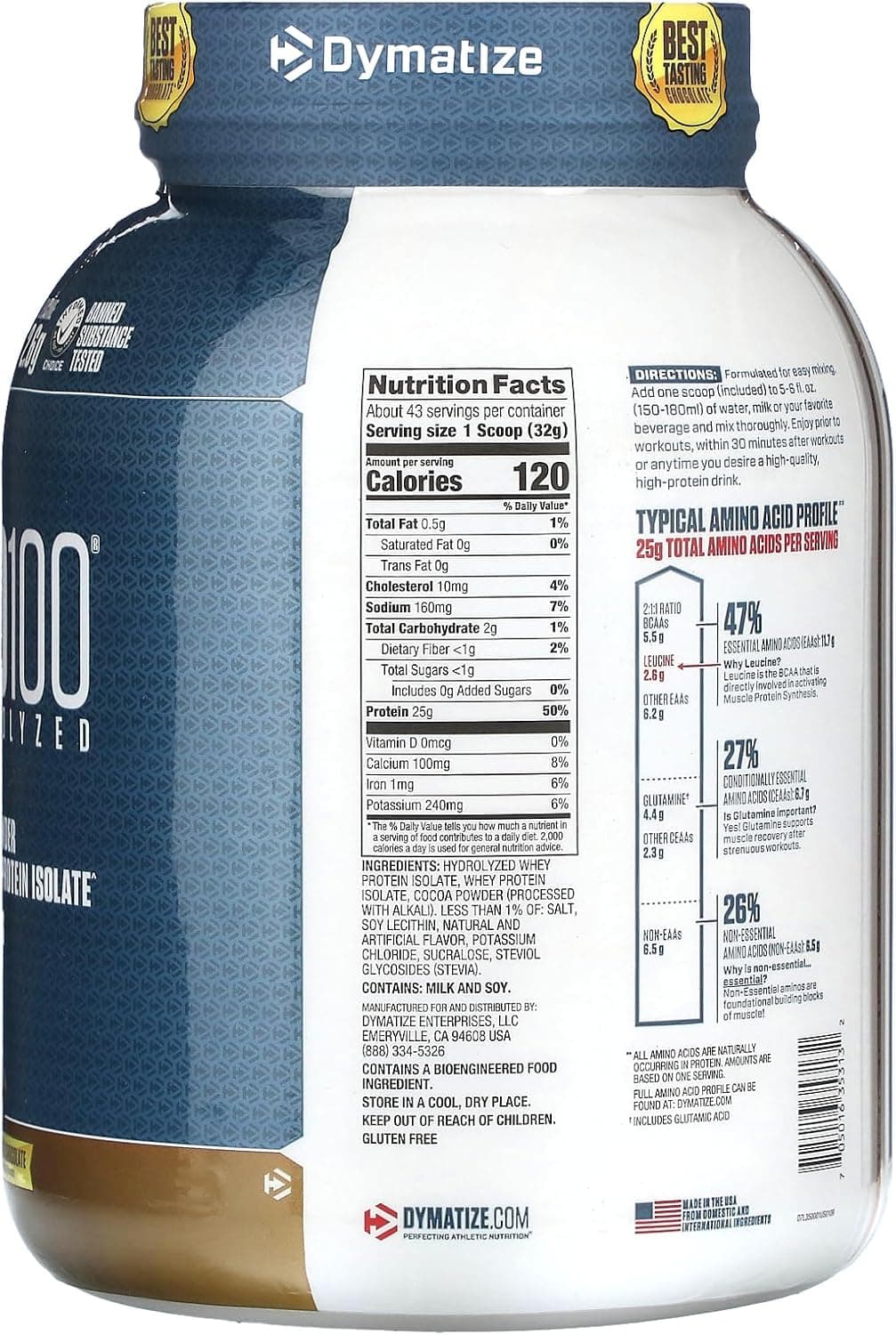
Whey isolate carries a chalky, slightly bitter base note that most formulators cover with a high-intensity sweetener. Steviol glycosides do that at a fraction of the mass sugar would need, which keeps the protein percentage per scoop high. The trade-off is stevia's own liquorice-like tail, which is why it is often paired with a bulk polyol.
Creatine monohydrate is gritty and near flavourless but sits in drinks that need palatability without added carbohydrate. Steviol glycosides sweeten the mix without contributing digestible sugar. Nothing here changes creatine uptake. It is a palatability pairing.
Magnesium salts, particularly the chloride and the citrate, are markedly bitter and metallic in drink powders. High-intensity sweeteners including steviol glycosides are used to bring those formats within range for daily use. Absorption of the magnesium salt itself is unchanged by the sweetener.
Caffeine is intensely bitter at the doses used in energy drinks and pre-workout powders. Steviol glycosides mask that bitterness without adding calories, which is why the two appear together so often in zero-sugar formats. There is no pharmacokinetic interaction implied by the pairing.
Catechin-rich green tea extract is astringent and bitter in solution. Steviol glycosides are commonly used to bring green tea beverages and powders to a drinkable profile at zero added sugar. The interaction is sensory rather than metabolic.
Fructooligosaccharides are mildly sweet and give body to a zero-sugar powder, so they are often used as the bulking partner to a high-intensity sweetener. Both reach the colon largely intact and are acted on by resident bacteria. Combining two fermentable ingredients raises the total fermentable load, which some people notice as gas or looseness.
Replacing sugar with steviol glycosides lowers the carbohydrate load of a drink, and chromium is used to support normal glucose metabolism. The two act at different points, one on what enters the gut and one on cellular handling. No trial of the pair was identified, so this is a rationale rather than a measured effect.
Cinnamon is used both as a flavour that pairs well with stevia's profile and for its role in supporting normal blood sugar handling. Sweetening with a non-nutritive glycoside avoids the carbohydrate that would otherwise accompany the flavour. No combination trial was identified.
Berberine is taken to support normal glucose metabolism and is very bitter, so products carrying it often need a masking sweetener. Steviol glycosides fill that role without adding digestible carbohydrate. Any metabolic additivity is inferred from the separate mechanisms, not measured together.
Talk to a doctor before taking Steviol Glycosides if any of these apply to you: Bitter aftertaste at high concentrations, May interact with blood pressure medications, Some people sensitive to taste. These are flags to check first, not effects Steviol Glycosides is known to cause.
Not medical advice. Show the label to your pharmacist.What Steviol Glycosides actually does.
Our digestive enzymes can't break down steviol glycosides, so they travel intact to the colon, where gut bacteria release the core compound, steviol.
Once steviol is absorbed, the liver modifies it and it's excreted in urine, which is why steviol glycosides don't provide any usable calories.
The sweetness comes from binding the same taste receptor that sugar activates, just at roughly two to three hundred times the intensity per gram.
Since no glucose gets released for absorption in the small intestine, steviol glycosides themselves don't add to a food's blood sugar impact after eating.
Getting Steviol Glycosides from food.
The whole-food sources on file. A supplement closes the gap, it does not replace dinner.
A gram-for-gram figure (how much of each you would eat to match a dose) will appear here once it is sourced and reviewed. This page will not print a number it cannot cite.
The forms it comes in.
The essence, in one line each.
- In a multicentre trial, replacing sugar with sweeteners including steviol glycosides was examined for effects on body weight management and gut bacteria composition.Randomised trial. Pang et al., 2025 (Nature metabolism). PMID 41057614 ↗
- In adults with high blood sugar, pooled trials of non-nutritive sweeteners found no clear difference in blood sugar control compared with sugar or placebo, with the evidence rated very uncertain.Meta-analysis. Lohner et al., 2020 (The Cochrane database of systematic reviews). PMID 32449201 ↗
- Pooling trials in children and adolescents, non-nutritive sweeteners were examined for their effect on body mass index over time.Meta-analysis. Espinosa et al., 2024 (Advances in nutrition (Bethesda, Md.)). PMID 39299839 ↗
- Steviol glycoside supplementation altered lipid metabolism markers in high-fat fed rats. These are biochemical markers in animals, not human outcomes.Animal study. Kurek et al., 2020 (Nutrients). PMID 33396905 ↗
- A dietary steviol glycoside mixture changed expression of gut chemoreceptor genes in pigs, a mechanistic readout in livestock rather than a human effect.Animal study. Xiong et al., 2025 (Porcine Health Management). PMID 39915811 ↗
- A narrative review of natural bioactive compounds and glycaemic control that names steviol glycosides among non-nutritive sweeteners. A review of the field, not new measurement.Narrative review. Pelczynska et al., 2025 (Nutrients). PMID 41515170 ↗
- A review of Stevia rebaudiana covering chemical composition and pharmacokinetics of its glycosides, including their passage to the colon and conversion before absorption.Narrative review. Peng et al., 2026 (Frontiers in Nutrition). PMID 41777858 ↗
These are the studies our verdict leans on, chosen from the 219 we read for Steviol Glycosides. The full linked list is below.
The studies, linked.
3 sources behind our Steviol Glycosides verdict: peer-reviewed studies and registered clinical trials. Every one links straight to PubMed, the journal, or ClinicalTrials.gov. Read them yourself.
- Clinical trialThe Effects of Steviol Glycosides on Acute Appetite Hormone Release in Men and Women with Normal Weight, Overweight and Type 2 DiabetesClinicalTrials.gov ↗69 participants, Completed
- Clinical trialThe Impact of a 28-day Steviol Glycoside Beverage on Human Gut Microflora Profile and Function vs. a Sucrose Beverage in Healthy AdultsClinicalTrials.gov ↗59 participants, Completed
- Clinical trialCompositions Comprising a Steviol Glycoside for Use in Restoring Muscle Glycogen by Increasing the Rate of Glycogen Re-synthesis in MusclesClinicalTrials.gov ↗22 participants, Unknown
Evidence surfaced via Semantic Scholar (Allen Institute for AI) and ClinicalTrials.gov. Ranked by study type and citation weight, not cherry-picked.
FDA Disclaimer: These statements have not been evaluated by the Food and Drug Administration. This information is for educational purposes only and is not intended to diagnose, treat, cure, or prevent any disease. Consult your healthcare provider before starting any supplement regimen.